A well-built American flag charcuterie board lands the moment it hits the table: crisp red stripes, bright white lines, and that deep blue canton all read instantly, even from across the room. The trick is giving each section enough visual weight to hold its shape. Tight packing matters here. Loose gaps make the design look blurry, while a dense layout makes the whole board feel intentional and generous.
What makes this version work is the mix of shapes and colors. Pepperoni slices lay down cleanly for the red stripes, mozzarella balls and provolone give the white stripes a solid block of color, and rolled salami pieces create a star-like texture in the blue corner without any fussy cutting. A few rosemary sprigs finish the edges and keep the board from looking flat. Build it on a large rectangular board so the stripes have room to stay straight.
Below, you’ll find the best way to map out the flag before you start placing food, plus a few smart swaps if you need to work with what’s already in the fridge.
The stripes held their shape the whole party, and the rolled salami in the blue corner made the flag look much more polished than I expected. I used strawberries for the extra red rows and the board was wiped out in minutes.
Like this American flag charcuterie board? Save it to Pinterest for your next patriotic spread or no-cook party appetizer.
The One Thing That Keeps the Flag Looking Sharp
The board only works if the lines stay distinct. If the stripes wander or the canton gets loose, the whole design turns into a snack pile with a theme instead of a flag. Start by mentally mapping the board before you place a single ingredient, then pack each section tightly enough that the edges read cleanly from above.
Blueberries belong in the canton because they fill space fast and create a solid color block. Rolled salami gives that corner height and texture, which keeps the blue field from looking flat. For the stripes, use the widest ingredients for the longest visual lines and save the softer items, like strawberries and prosciutto, for filling gaps after the main pattern is in place.
What Each Ingredient Is Actually Doing on the Board
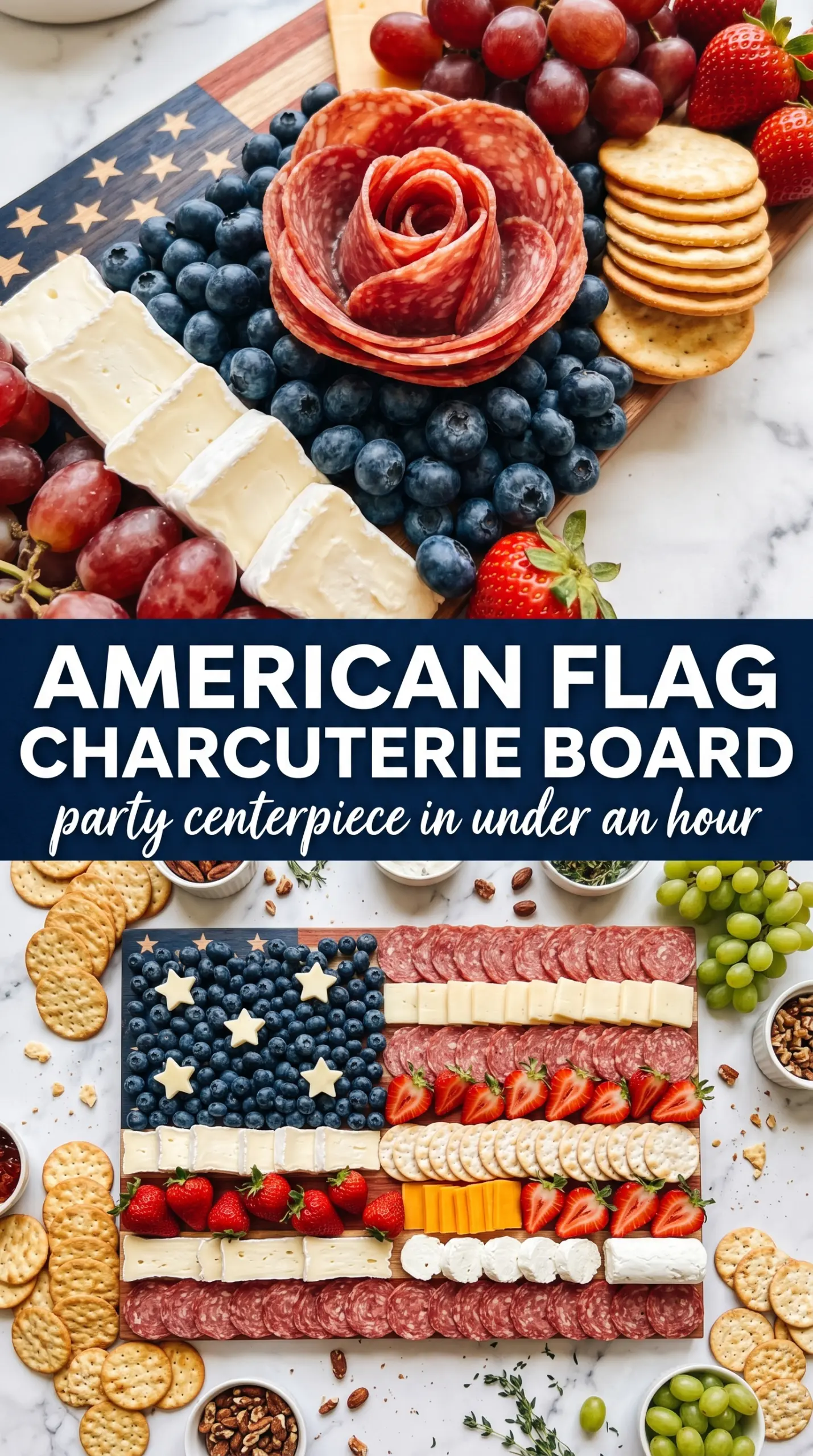
- Pepperoni slices — These are your easiest red stripe. The slices overlap cleanly and hold their color, which matters more than flavor here. If yours are small, slightly overlap them in rows so the stripe looks continuous.
- Salami — Rolling the salami turns it into the most convincing stand-in for stars. Thin slices work best because they hold the spiral shape without springing open. If your salami is thicker, the rolls will look bulky instead of neat.
- Prosciutto — This softens the red rows and fills awkward gaps without making the board feel heavy. Tear or fold it loosely rather than laying it flat so it adds movement. It’s less about structure and more about coverage.
- Fresh mozzarella and provolone — These create the white stripes with a clean, bright contrast. Mozzarella balls are great for quick filling, while sliced provolone gives straighter lines. Use both if you want the stripes to look full and balanced.
- Blueberries — They build the canton fast and give you the deep blue block the flag needs. Smaller berries fit better than oversized ones because they pack tightly. If the berries are sparse, the blue section will read patchy from a distance.
- Strawberries — These reinforce the red stripes and make the board look abundant. Halved strawberries are easiest to nestle into open spaces, but they soften quickly, so add them near the end. Their job is color first, freshness second.
- Rosemary sprigs — They frame the board and keep the edges from feeling unfinished. Use them sparingly or they’ll start competing with the pattern. A few small sprigs at the corners are enough.
How to Build the Pattern Without Losing the Flag Shape
Mark the Canton First
Set the board down and mentally divide the upper left corner before you place anything else. Fill that rectangle tightly with blueberries so the blue field reads as one solid block. Then tuck the rolled salami pieces into the center and around the berries, almost like you’re pressing them into place, not dropping them on top. If you start with the stripes first, you’ll keep fighting for space and the layout gets messy fast.
Lay the Stripes in Clean, Full-Length Runs
Work across the board from the top right, alternating red and white rows. Pepperoni slices should overlap just enough to cover the board without obvious gaps, and white cheese should run in straight bands whenever possible. If a stripe looks thin, tighten the spacing before adding more ingredients. The board looks best when every row carries all the way across instead of breaking into little clusters.
Fill Gaps at the End, Not the Beginning
Once the main pattern is down, use prosciutto folds, strawberry halves, and extra cheese to patch any empty spots. This is where most boards go wrong: people overfill too early and lose the flag shape. Stop before the board feels crowded. A flag should still read as a flag, not just a mix of red, white, and blue food.
Make It Meat-Lighter
Cut back on the pepperoni and salami and lean harder on mozzarella, provolone, blueberries, and strawberries. You’ll get a fresher, lighter board with the same flag look, though it won’t have quite as much salty bite. This version works especially well if you’re serving it before dinner.
Gluten-Free Serving Board
Keep the board itself the same and just serve it with certified gluten-free crackers. The flag arrangement doesn’t change at all, but you’ll want to check labels on cured meats and cheese if you’re buying packaged versions. This is the easiest adaptation because the design is already naturally gluten-free aside from the crackers.
Swap the Fruit for What’s Ripe
If strawberries are soft or out of season, use raspberries or even thin watermelon triangles for the red stripes. Raspberries give you a brighter, more delicate look, while watermelon adds a juicier, more casual feel. Either one changes the texture of the board, so use them only if you’re serving right away.
Storage and Reheating
- Refrigerator: Store leftovers covered for up to 1 day. The crackers will soften, and the berries can weep a little, so the board is best assembled close to serving time.
- Freezer: This doesn’t freeze well. The fresh fruit and cheese will lose their texture, and the cured meats won’t come back in a useful way.
- Reheating: No reheating needed. If the board has been chilled, let it sit at room temperature for about 15 minutes before serving so the cheese tastes less firm and the flavors open up.
Answers to the Questions Worth Asking
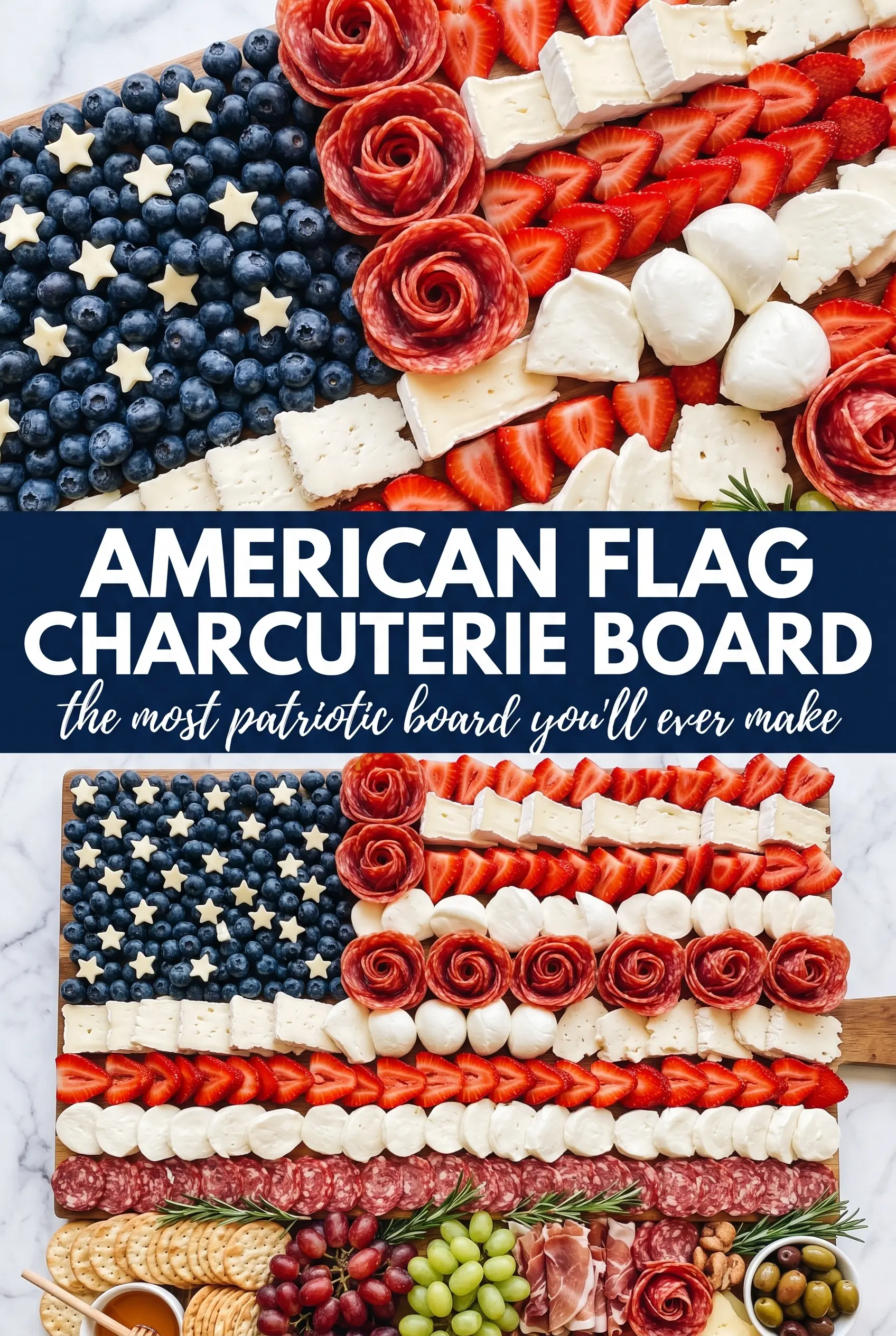
American Flag Charcuterie Board
Ingredients
Equipment
Method
- Place a large rectangular wooden board or serving tray on a flat surface and mentally divide the upper-left into a canton rectangle.
- Pack the canton with fresh blueberries tightly together so the blue area is clearly defined.
- Tuck rolled salami pieces into the center of the blueberry canton to resemble stars.
- Starting from the top right, layer pepperoni slices in a clean row across the full width of the board to form a red stripe.
- Create the white stripes by adding rows of sliced white cheddar or provolone, alternating with the red pepperoni stripes down the length of the board.
- Add prosciutto folds or strawberry halves along the red stripes to reinforce the pattern and fill any gaps.
- Tuck rosemary sprigs at the corners and edges for garnish and a clean finishing touch.
- Arrange assorted crackers around the perimeter of the board and serve immediately.