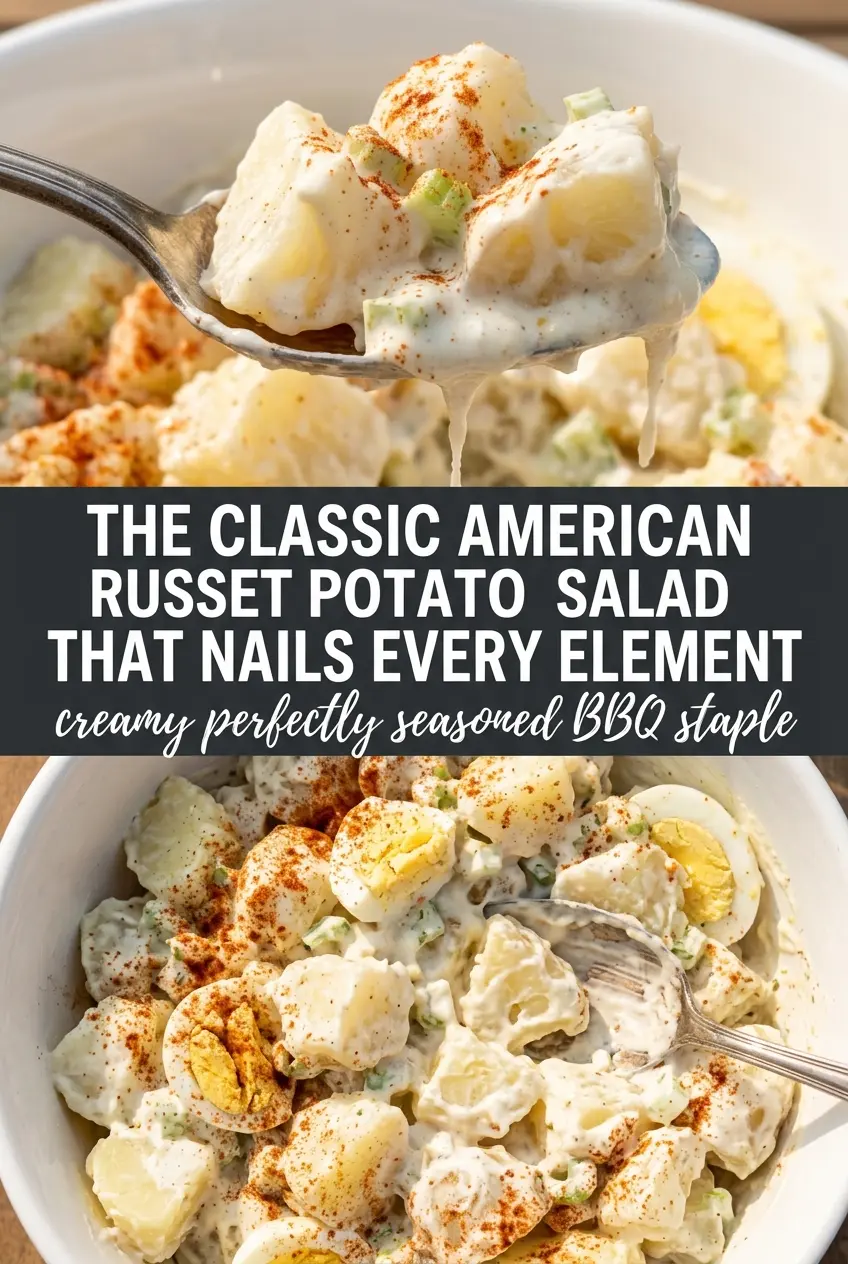
American russet potato salad has that old-school comfort that shows up at cookouts, potlucks, and Sunday suppers because it eats like a proper side dish, not an afterthought. The russet potatoes give it a soft, fluffy body that holds onto the dressing in a way waxy potatoes never quite do, and the chopped eggs bring just enough richness to make every bite feel complete. Cold from the fridge, it turns creamy and cohesive without becoming heavy.
The trick is in how the potatoes are cooked and cooled. Russets need to be tender all the way through, but not falling apart in the pot, and they need time to steam off before the dressing goes in. If they’re still hot, the mayonnaise loosens too much and the salad goes greasy instead of creamy. The vinegar and mustard keep the dressing from tasting flat, while the sweet relish adds the sharp-sweet note that makes this style of potato salad taste familiar in the best way.
Below, I’ve included the small details that keep the texture right, plus a few swaps and fixes for when you need to work with what’s in the fridge.
The dressing soaked into the potatoes just enough after chilling, and the salad held together without turning mushy. My dad went back for seconds before the burgers were even ready.
Save this russet potato salad for potlucks, cookouts, and the kind of creamy chilled side dish that gets better after it rests.
The Mistake That Turns Russet Potato Salad Gluey
Russets are the right potato here because they break down a little at the edges and give the dressing something to cling to. That’s also why they can go wrong fast. If you stir them while they’re hot or overcook them until they’re collapsing, you get mashed-potato salad instead of distinct chunks coated in dressing. The goal is tender cubes with just enough structure left so the salad looks creamy, not muddy.
The other common failure is dressing the potatoes before they’ve cooled. Warm potatoes drink in flavor, but they also loosen mayonnaise and thin the whole bowl. Letting them cool completely gives you a salad that stays thick and spoonable after chilling. That resting time isn’t passive; it’s when the vinegar, mustard, and relish settle into the potatoes and the whole dish starts tasting like the version you remember.
What Each Ingredient Is Actually Doing in This Salad

- Russet potatoes — These give the salad its classic fluffy texture. Waxy potatoes stay firmer and cleaner, but they don’t absorb the dressing in the same way. Peel them so the texture stays smooth and the chunks break down just enough to thicken the bowl naturally.
- Mayonnaise — This is the base that makes the salad creamy and carries the seasoning. A good full-fat mayo matters here because lighter versions can taste thin once the potatoes chill. If you need to swap, use half mayo and half sour cream for a tangier finish, but the salad will be a little looser.
- Yellow mustard and white vinegar — These keep the dressing from tasting flat. The mustard gives that familiar picnic-salad bite, and the vinegar cuts through the starch and mayo so the salad tastes balanced instead of heavy. Don’t skip the acid; it’s what wakes the whole dish up.
- Sweet pickle relish — This adds sweetness, crunch, and that unmistakable old-fashioned potato salad note. If you only have chopped pickles, use them, but add a pinch of sugar to replace the sweetness you lost. Drain extra liquid if the relish is watery or the dressing will thin out.
- Hard-boiled eggs — The eggs make the salad feel more substantial and add richness without making it heavier. Chop them after they’ve cooled so the yolks stay clean and don’t smear into the dressing. Overcooked eggs can taste sulfurous, so aim for fully set yolks without the gray ring.
Cooling, Folding, and Chilling the Salad the Right Way
Boiling the Potatoes Until Just Tender
Cook the cubed potatoes in salted water until a knife slides in without resistance, but stop before they start falling apart at the edges. If they’re overcooked, they’ll shatter when you stir them and the salad turns pasty. Drain them well, then spread them out for a few minutes so the steam escapes instead of trapping moisture in the bowl.
Mixing the Dressing Before It Hits the Potatoes
Stir the mayonnaise, mustard, vinegar, sugar, salt, and pepper together first so the seasoning is even. If you dump the condiments straight onto the potatoes, you’ll end up with pockets of mustard and bland spots elsewhere. The dressing should taste a touch sharper than you want in the finished salad because the potatoes will soften that edge after chilling.
Folding Without Smashing the Chunks
Add the dressing to the potato mixture and fold gently with a spatula, working from the bottom up. Heavy stirring breaks the potatoes and turns the salad dense. You want coated pieces with some visible shape left, plus bits of egg, celery, and relish scattered through the bowl.
Letting It Rest in the Fridge
Chill the salad for at least two hours before serving. That rest firms up the texture and gives the dressing time to settle into the potatoes. If it tastes a little tight after chilling, a spoonful of mayo stirred in just before serving brings it back without making it soupy.
How to Adjust This Potato Salad Without Losing Its Classic Feel
Dairy-Free and Naturally Creamy
This salad is already dairy-free if you use a standard mayonnaise made without milk, which makes it an easy fit for mixed gatherings. Check the label if you need to be strict, then keep the rest of the recipe the same. The texture and flavor stay classic because the creaminess comes from the mayo, not from any dairy ingredient.
For a Brighter, Less Sweet Salad
Cut the sugar in half and use dill pickle relish instead of sweet relish. That swap gives you a sharper, more savory potato salad with a cleaner finish. It’s a better move if you’re serving it alongside smoked meats or anything already on the sweet side.
Making It Ahead for a Crowd
You can make the salad a full day ahead, and the flavor often improves by the next day. Hold back a spoonful of mayo and stir it in right before serving if the potatoes have absorbed more dressing than you expected. That keeps the salad creamy instead of stiff.
Storage and Reheating
- Refrigerator: Store covered for up to 4 days. The potatoes will soften a bit more as it sits, but the salad should stay creamy and spoonable.
- Freezer: Don’t freeze it. Mayonnaise and potatoes both change texture after thawing, and the salad turns grainy and watery.
- Reheating: This salad is meant to be served cold. If it’s been in the fridge and tastes too firm, let it sit at room temperature for 15 to 20 minutes before serving rather than heating it.
Answers to the Questions Worth Asking
American Russet Potato Salad
Ingredients
Equipment
Method
- Add peeled, cubed russet potatoes to a Dutch oven and cover with water; bring to a boil. Boil for 12–15 minutes, until a fork slides in easily, then drain in a colander and cool completely.
- Hard-boil the eggs before starting the potato salad. Chop once fully cooled so the mix stays creamy and the chunks hold shape.
- In a large mixing bowl, combine cooled potatoes, chopped hard-boiled eggs, diced celery, finely diced onion, and sweet pickle relish. Fold gently so the potatoes stay intact.
- In a bowl, mix mayonnaise, yellow mustard, white vinegar, sugar, salt, and black pepper until smooth. Taste and adjust with a pinch more salt and pepper if needed.
- Pour the dressing over the potato mixture. Fold gently until every bite looks coated and glossy.
- Cover and refrigerate the potato salad for at least 2 hours to set the flavors. Chill until cold and thickened slightly, not soupy.
- Just before serving, sprinkle paprika over the top. Add as a light dusting so the garnish shows without overpowering the salad.