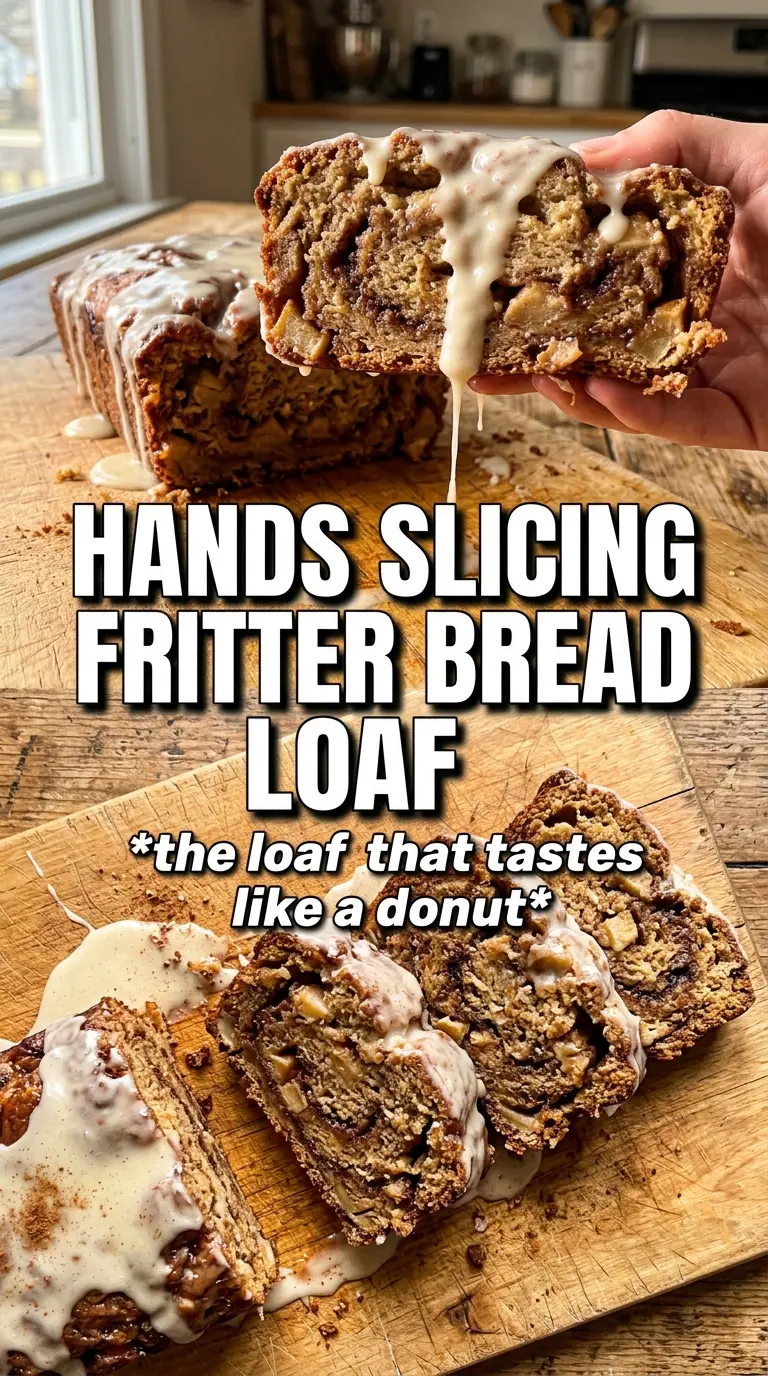
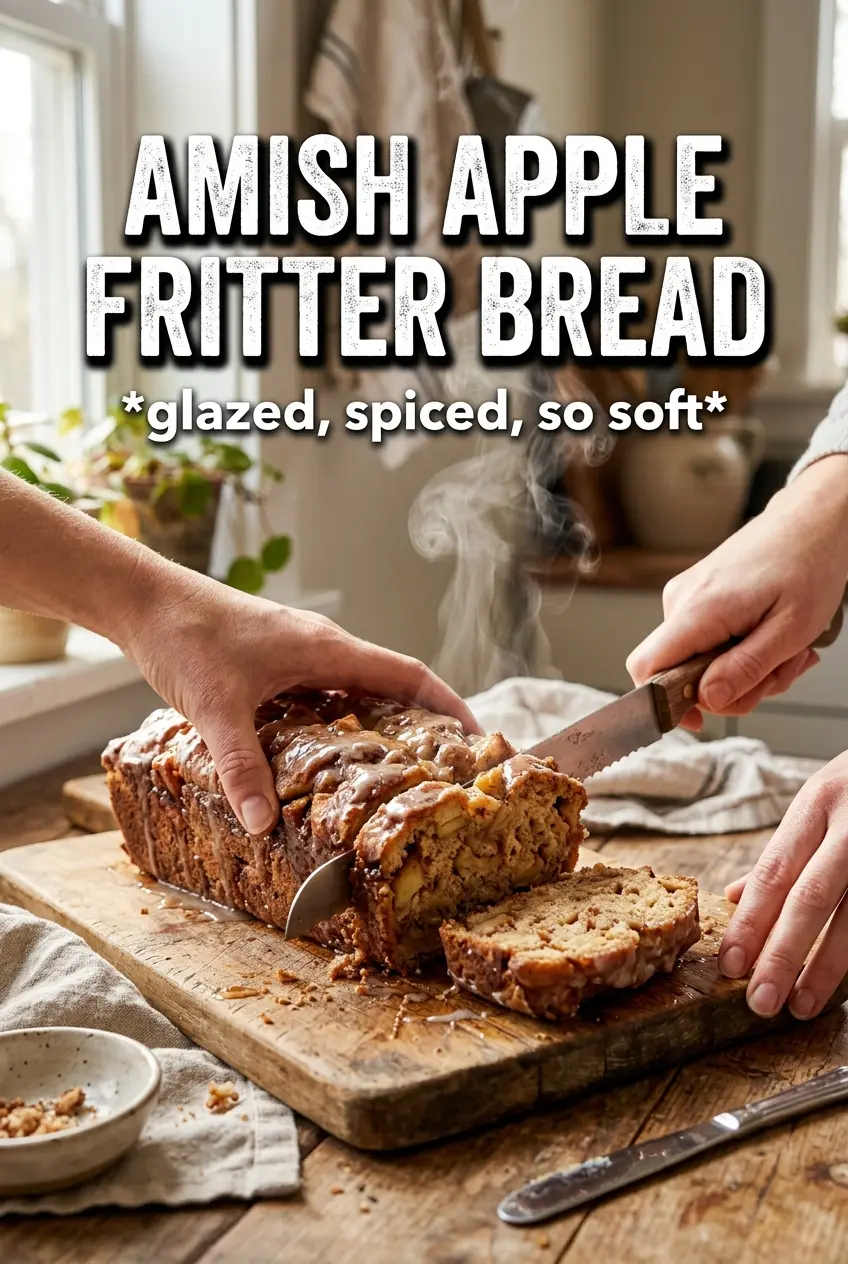
Amish apple fritter bread bakes up with a tender, cake-like crumb, a ribbon of cinnamon-sugar apples, and a glossy glaze that sinks just enough into the top to keep every slice moist. It tastes like the best part of a bakery apple fritter, only in neat, sliceable loaf form. The edges caramelize into a little crust, while the middle stays soft and packed with warm apple pieces.
What makes this version work is the way the apples get split between the batter and the cinnamon sugar layer. That keeps the loaf from tasting flat or one-note, and it gives you pockets of concentrated apple flavor instead of a soggy middle. The butter and sugar need to be beaten until light before the eggs go in, because that air helps the loaf rise with a fine, tender crumb instead of turning dense.
Below, I’ll walk through the part that keeps the apple layer from sinking, plus a few smart swaps if your apples are extra juicy or you want to make the loaf ahead.
The cinnamon apples stayed put in every layer, and the glaze soaked into the top just enough without making the loaf wet. I baked mine right at 58 minutes and it sliced clean once it cooled a bit.
Love the cinnamon-sugar apple layers and glossy glaze? Save Amish Apple Fritter Bread to Pinterest for the next time you want a bakery-style breakfast loaf.
The Layering Trick That Keeps the Apples From Sinking
The biggest mistake with apple bread is dumping every bit of fruit straight into the batter and hoping for the best. That usually leads to apples dropping to the bottom and a loaf that bakes up heavy in the center. Here, half the apples get tossed with the cinnamon sugar first, which coats them just enough to help them stay suspended in the batter and flavor every bite.
The other thing that matters is not overmixing once the flour goes in. Stir only until the dry spots disappear. If you beat the batter after that, the loaf gets tight and the apples can leak extra moisture into the crumb, which is how you end up with a gummy slice instead of a tender one.
What Each Ingredient Is Doing in This Loaf
- Brown sugar — This gives the apple layer its caramel note and helps the cinnamon melt into the fruit. Light or dark brown sugar both work, but dark brown sugar gives a deeper molasses flavor.
- Cinnamon — It does more than season the apples. It also gives the loaf that fritter-shop aroma once it bakes through the kitchen.
- Butter and sugar — Creaming them well builds the structure of the loaf. If the butter is too cold, the mixture won’t lighten properly and the bread bakes up more compact.
- Milk — Whole milk keeps the crumb soft without thinning the batter too much. Lower-fat milk works in a pinch, but the loaf won’t taste quite as rich.
- Apples — Peel and dice them finely so they soften by the time the loaf finishes baking. A firm baking apple such as Honeycrisp, Granny Smith, or Fuji holds its shape best.
- Powdered sugar glaze — This is the finish that makes the loaf taste like a fritter. It should be thin enough to drip but thick enough to cling to the top of the bread.
Building the Batter and Swirling the Apple Layers
Mix the Cinnamon Sugar First
Stir the brown sugar and cinnamon together before you do anything else, then toss part of that mixture with the diced apples. This step keeps the fruit from clumping and gives the apple pieces a light coating that helps them bake into the loaf instead of sliding around in wet batter. Set both bowls aside while you build the batter so the sugar starts pulling a little moisture from the apples.
Cream the Butter Until It Turns Pale
Beat the butter and granulated sugar until the mixture looks fluffy and a shade lighter in color. That’s the air you’re counting on for lift. Add the eggs one at a time, then mix in the vanilla. If the mixture looks curdled after the eggs go in, keep going; it usually comes back together once the flour is added.
Alternate the Dry Ingredients and Milk
Whisk the flour, baking powder, baking soda, and salt together, then add them to the butter mixture in batches with the milk. This keeps the batter smooth and prevents overworking the gluten. Stop mixing as soon as the flour disappears. A thick batter is exactly what you want here, because a loose batter lets the apples sink.
Layer the Apples So Every Slice Gets Some
Spread half the batter into the pan, then add half the plain apples and half the cinnamon-sugar apples. Top with the remaining batter, then finish with the rest of the apples and sugar. Don’t stir the layers together. The layered build is what gives you those swirls and pockets instead of one muddy apple cake.
Bake Until the Center Springs Back
Bake at 350°F until a toothpick comes out clean or with just a few moist crumbs, usually 55 to 60 minutes. If the top browns too fast, tent it loosely with foil for the last 15 minutes. Let the loaf cool in the pan for a bit before turning it out, because rushing it can make the center collapse while it’s still tender.
How to Adapt This Loaf Without Losing the Apple Fritter Feel
Make It Dairy-Free
Use a plant-based butter that bakes well and swap in an unsweetened dairy-free milk. The loaf will still be tender, but the flavor will be a little less rich, so don’t skip the vanilla. Keep the glaze thin; some non-dairy milks make it thicker faster.
Use a Different Apple
Granny Smith gives you the sharpest contrast against the sweet glaze, while Honeycrisp or Fuji taste a little softer and sweeter. Just use a firm apple and dice it small. Soft apples release too much moisture and can make the center heavy.
Turn It Into Muffins
Scoop the batter into a lined muffin tin and bake until the tops spring back and a tester comes out clean. You’ll get more cinnamon-sugar crust in every bite and a shorter bake time, but the texture will be a little more cupcake-like than loaf-like.
Storage and Reheating
- Refrigerator: Store covered for up to 4 days. The crumb stays soft, though the glaze will soak in more by day two.
- Freezer: Freeze slices tightly wrapped for up to 2 months. Thaw at room temperature before warming so the glaze doesn’t turn sticky and wet.
- Reheating: Warm slices for 10 to 15 seconds in the microwave or a few minutes in a low oven. Don’t overheat them or the bread dries out fast and the apples turn mushy.
Answers to the Questions Worth Asking
Amish Apple Fritter Bread
Ingredients
Equipment
Method
- Preheat the oven to 350°F and grease a 9x5 loaf pan so the bread releases cleanly.
- Mix the brown sugar and 2 teaspoons cinnamon, then toss half with the diced apples and set both the spiced apples and remaining sugar mixture aside for layering.
- Beat the softened butter and granulated sugar until light and fluffy, then beat in the eggs and vanilla extract.
- Whisk the flour, baking powder, baking soda, and salt together.
- Alternate adding the dry mixture and whole milk to the butter mixture, mixing just until combined.
- Pour half the batter into the prepared pan to create the first layer.
- Layer half the apple mixture over the batter, then sprinkle the remaining cinnamon-brown sugar mixture over the apples.
- Add the remaining batter and top with the remaining apples so the loaf bakes with visible apple pockets.
- Bake for 55-60 minutes at 350°F until a toothpick comes out clean (look for a golden top).
- Whisk powdered sugar with 2 tablespoons milk to form a drizzleable glaze.
- Drizzle the glaze over the loaf while it is still warm so it soaks slightly into the crumb.