Apple biscuits come out best when they bake up tall, flaky, and just sweet enough to blur the line between breakfast and a warm pastry. The little bits of apple soften in the oven and leave tiny pockets of moisture, while the honey butter glaze sinks into the top crust and gives every bite a glossy finish with a gentle cinnamon note. They’re the kind of biscuits people reach for before the plate even hits the table.
The part that makes this version work is the balance: cold butter for lift, dry apple for flavor without extra wetness, and a light hand once the buttermilk goes in. If the apple is too juicy, the dough gets sticky and the biscuits spread. If the butter warms up, you lose those flaky layers, so the whole method is built around keeping things cold and moving fast.
Below, I’ve added the small details that matter most, from how finely to dice the apple to the fold that gives the biscuits a better rise. The glaze goes on right away, while the biscuits are still hot, so it clings instead of sliding off.
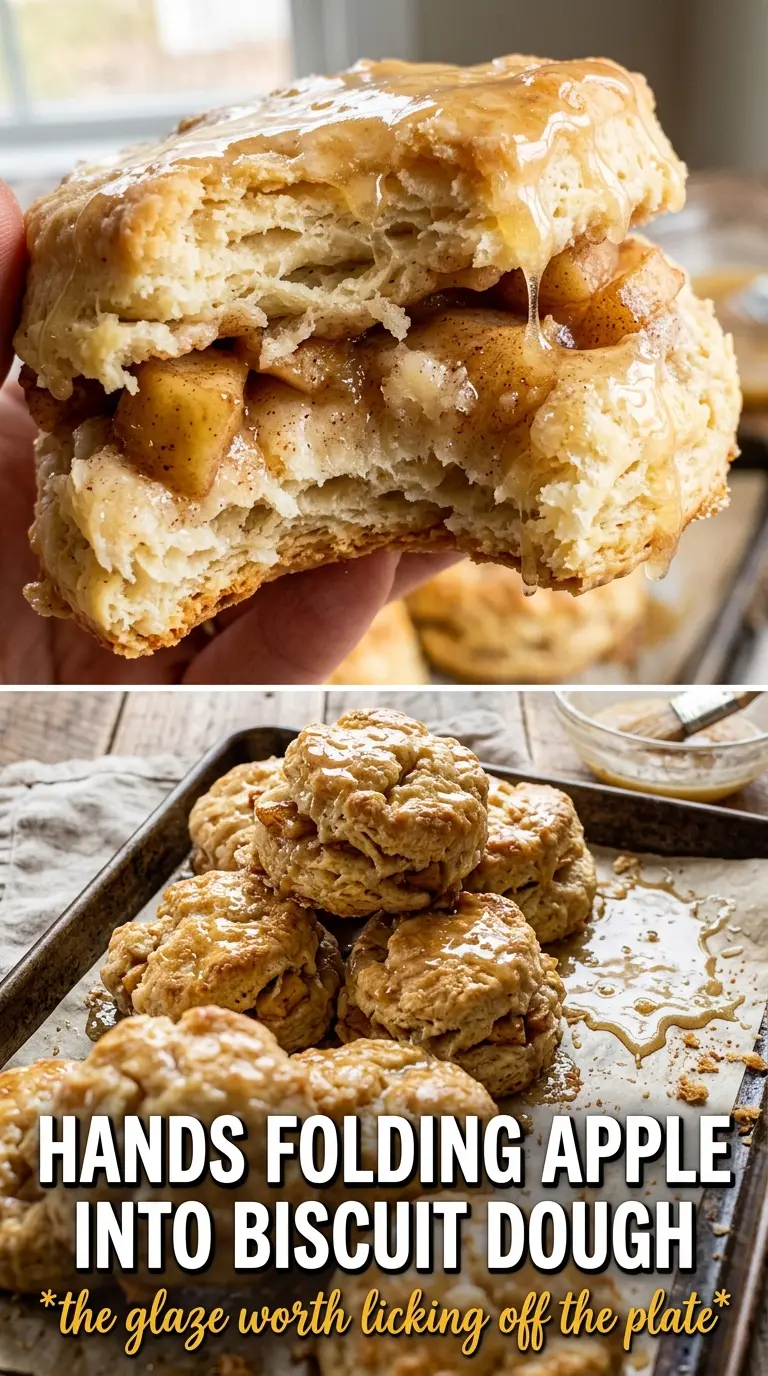
The biscuits baked up light and flaky, and the apple pieces stayed tiny enough that they didn’t weigh the dough down. That honey butter glaze on top made them taste like something from a bakery.
Save these apple biscuits with honey butter glaze for mornings when you want flaky layers, tender apple bits, and a glossy sweet finish.
The Small Mistakes That Keep Apple Biscuits From Rising High
Most biscuit trouble starts before the oven even preheats. Warm butter melts into the flour instead of staying in little pieces, and once that happens you lose the steam pockets that create lift. The apple can cause a second problem: if it’s chopped too large or left wet, the dough turns patchy and heavy instead of tender.
The fix is simple, but it matters. Keep the butter cold, dice the apple very finely, and pat it dry before it goes into the bowl. Then stop mixing as soon as the dough comes together. A biscuit dough should look a little rough. That roughness is what gives you flaky layers once it hits the heat.
- Cold butter — This is what creates the flake. Cubes are easier to cut in evenly than grated butter here, and you want pieces that still look distinct in the flour.
- Very finely diced apple — Bigger chunks can tear the dough and leave wet pockets. Tiny pieces soften fast and spread the apple flavor through every biscuit.
- Buttermilk — The acidity helps the baking soda do its job and gives the biscuits a little tang. Whole milk won’t work the same way unless you add a splash of lemon juice or vinegar.
What Each Ingredient Is Doing in These Biscuits
- All-purpose flour — Gives the biscuits enough structure to rise without turning tough. Cake flour is too soft here.
- Baking powder and baking soda — The powder provides the main lift, while the soda reacts with the buttermilk for extra rise and a better browned top.
- Sugar, cinnamon, and nutmeg — These don’t make the biscuits dessert-sweet, but they round out the apple flavor and warm up the glaze.
- Cold unsalted butter — Unsalted butter gives you control over the salt level, and cold butter is non-negotiable for layered biscuits.
- Cold buttermilk — Cold liquid helps protect the butter from softening too early. If you need a substitute, use milk mixed with a little lemon juice, but the dough won’t be quite as tender.
- Apple — Peel it so the bits soften cleanly, and keep the dice tiny. If the apple seems juicy, let it sit on paper towels for a few minutes after chopping.
- Honey butter glaze — Brushed on while the biscuits are hot, it melts into the ridges and gives the tops that sticky, bakery-style finish.
Building the Dough So the Biscuits Stay Tall
Cutting in the butter
Work the butter into the dry ingredients until you have coarse crumbs with some pea-sized pieces left behind. Those bigger pieces are the future layers, so don’t grind the mixture into sand. If the butter starts to smear, pause and chill the bowl for a few minutes. The dough should still look uneven when you move on.
Adding the apple and buttermilk
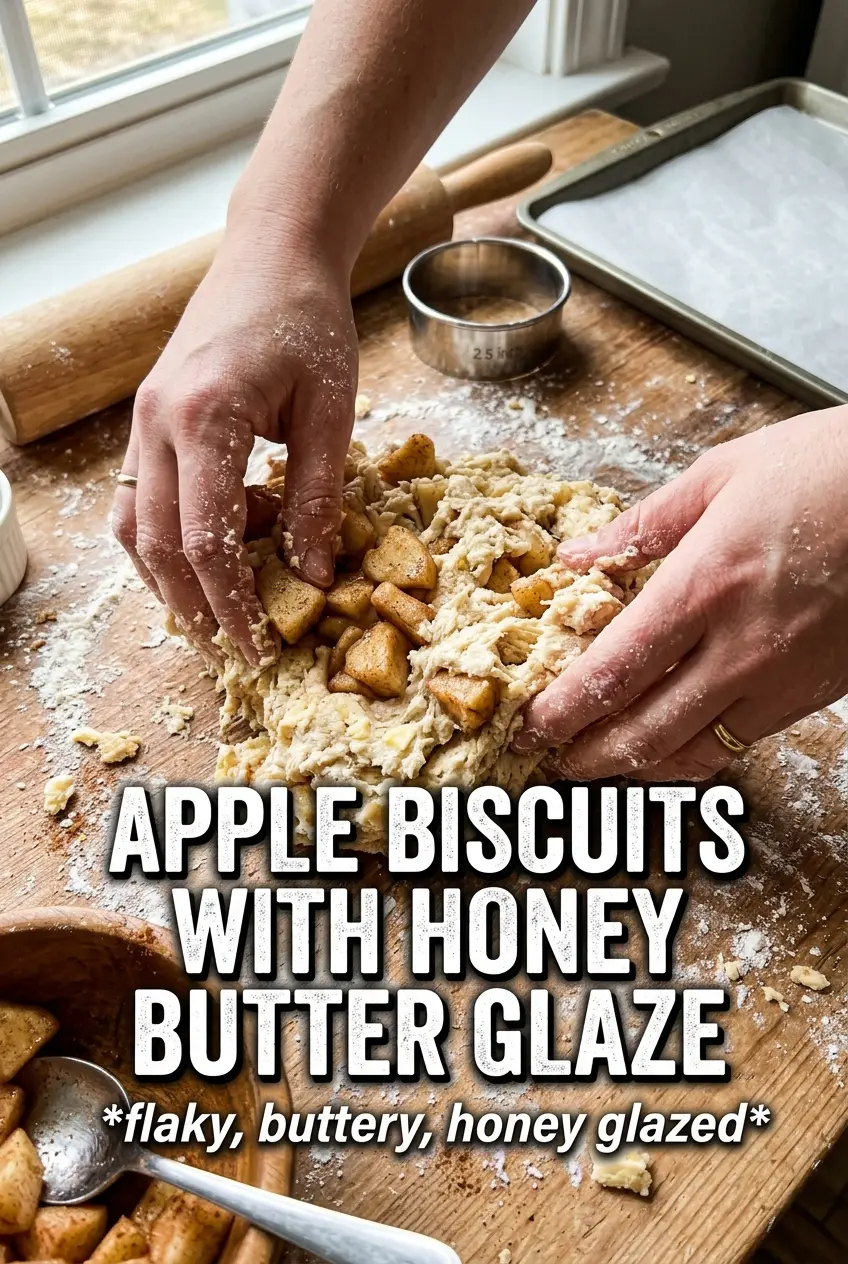
Stir the apple in first so it gets coated in flour, then add the buttermilk and mix only until the dry spots disappear. The dough will look shaggy, not smooth. Overmixing makes biscuits dense because it develops the flour too much and warms the butter. If there’s a little flour left on the bottom, use your hands to bring it together instead of stirring longer.
Folding for layers
Pat the dough to about three-quarters of an inch thick, fold it into thirds, then pat it out again before cutting. That single fold gives you a better stack of layers without turning the dough tough. Press straight down with the cutter and don’t twist it, or the edges seal and the biscuits won’t rise evenly. Gather scraps only once, and handle them gently.
Finishing in the oven
Bake until the tops are deeply golden and the sides look set, not pale and doughy. The biscuits should feel light when lifted and smell like toasted butter and warm spice. Brush the glaze on right away while the surface is still hot enough to melt it slightly. That’s what makes the sheen cling instead of sitting on top.
Maple Glaze Instead of Honey
Swap the honey for pure maple syrup and keep the cinnamon. The glaze will taste a little deeper and less floral, and it pairs nicely if your apples lean tart. It’s not quite as sticky as honey, so it sets with a softer shine.
Dairy-Free Biscuits
Use a firm plant-based butter and unsweetened non-dairy milk mixed with 1 tablespoon lemon juice for the buttermilk swap. The texture will still be tender, though the flavor is a little less rich and the layers brown a bit differently. Chill the dough well if your butter substitute softens fast.
Gluten-Free Version
Use a cup-for-cup gluten-free flour blend with xanthan gum already added. The biscuits won’t have quite the same layered pull, but they’ll still bake up tender if you keep the dough cold and avoid overworking it. Let the cut biscuits sit on the tray for 10 minutes before baking so the starches hydrate.
Storage and Reheating
- Refrigerator: Store leftovers in an airtight container for up to 3 days. The tops soften a little, but the biscuits stay pleasant.
- Freezer: Freeze baked biscuits for up to 2 months, wrapped well. You can also freeze unbaked cut biscuits on a tray, then bake from frozen with a few extra minutes.
- Reheating: Warm in a 325F oven for 8 to 10 minutes. The microwave makes the butter layers soggy, so skip it if you want the edges to stay crisp.
Questions I Get Asked About This Recipe
Apple Biscuits With Honey Butter Glaze
Ingredients
Equipment
Method
- Preheat the oven to 425F and line a baking sheet with parchment for easy release.
- Whisk together the all-purpose flour, baking powder, baking soda, sugar, cinnamon, nutmeg, and salt until evenly combined.
- Cut in the cold cubed unsalted butter until the mixture resembles coarse crumbs with pea-sized pieces, keeping the butter cold.
- Stir in the buttermilk and diced apple until just combined—do not overmix to keep the biscuits tender.
- Turn the dough onto a floured surface and pat to 3/4-inch thickness.
- Fold the dough in thirds, pat again to 3/4-inch thickness, then cut into rounds using a 2-1/2 inch cutter.
- Arrange the biscuits on the prepared baking sheet and bake for 15-18 minutes until deeply golden.
- Brush the biscuits immediately with honey butter glaze so the tops glisten as the glaze melts.