Apple Bundt Cake comes out with a tender, damp crumb, warm spice in every bite, and enough apple to keep it from tasting like plain vanilla cake in disguise. The walnut or pecan crunch gives it some backbone, and the caramel glaze settles into the ridges instead of sliding right off, which is exactly what you want on a bundt cake.
What makes this version work is the balance of oil and sour cream. Oil keeps the cake soft for days, while sour cream adds just enough richness and structure so the crumb stays plush instead of greasy. I also like the mix of granulated sugar and brown sugar here because it gives the cake a deeper sweetness and helps the edges bake up with a little more color.
Below, I’ve included the part that matters most with bundt cakes: how to keep the cake from sticking, how to know when it’s baked all the way through, and what to do if you want to swap the nuts or skip them altogether.
The cake released cleanly from the pan, and the glaze soaked into the ridges just enough to make every slice taste bakery-style. I used pecans and the crumb stayed incredibly moist for three days.
Like this apple bundt cake? Save it to Pinterest for the days when you want a moist, spiced cake with caramel glaze and plenty of apple in every slice.
The Bundt Pan Problem Nobody Talks About
The hard part with a bundt cake isn’t mixing the batter. It’s getting a heavy, fruit-studded cake out of the pan in one piece after it has baked for more than an hour. Apples add moisture and weight, which is great for the crumb but unforgiving if the pan isn’t greased every single ridge and valley. A bundt pan that looks fine at a glance can still hold on to the cake in the deeper curves.
This batter also sits on the dense side before baking, so you want it mixed just until the flour disappears. Overmixing turns the crumb tough, and that’s the last thing you want in a cake that already has enough structure from the fruit and nuts. The sour cream helps soften that edge, but it can’t fix a batter that’s been beaten too long.
- Thorough pan prep matters most here — use butter or baking spray with flour and get into every ridge. If the pan has a complicated design, a pastry brush helps more than fingers.
- Don’t wait for a jammy toothpick — the center should test clean or with a few moist crumbs. Wet batter on the tester means the middle still needs time, and bundt cakes often need the full bake window.
- Let it rest before turning out — 20 minutes is enough for the cake to firm up without clinging tightly to the pan.
What the Apples, Sour Cream, and Nuts Are Really Doing
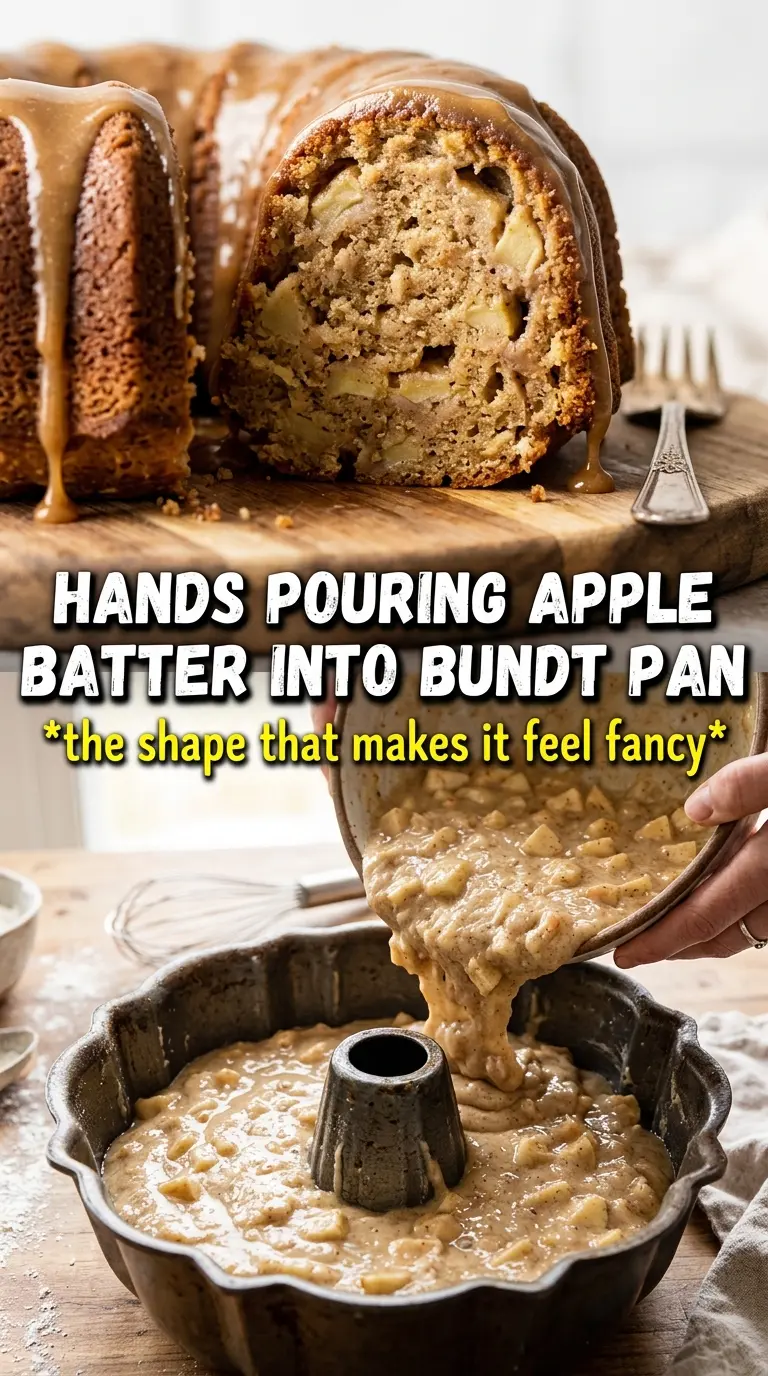
- Apples — diced apples melt slightly as the cake bakes and leave pockets of moisture throughout the crumb. Tart baking apples hold their shape best, but a mix of sweet and tart works fine. Peel them so the texture stays tender instead of chewy.
- Sour cream — this adds fat and acidity, which gives the cake a softer crumb and a little lift. Plain full-fat yogurt can stand in if needed, but the cake will taste a touch brighter and a little less rich.
- Oil — unlike butter, oil keeps this cake soft even after it cools. That matters because bundt cakes are often served later, not warm from the oven.
- Walnuts or pecans — these add texture and keep the cake from eating like pure apple spice cake. If you skip them, the cake will still work, but it will feel softer and a little more uniform.
- Brown sugar in the glaze — this is what gives the caramel topping its depth. White sugar won’t give you the same round, buttery finish.
Building the Batter and Finishing the Glaze
Mix the Dry Ingredients First
Whisk the flour, baking soda, cinnamon, nutmeg, allspice, and salt together before anything else touches them. This keeps the leavening and spices evenly distributed, which matters in a cake this thick because you don’t want one bite that tastes underseasoned and another that tastes like a spice cabinet. The baking soda also needs to be spread out evenly so the cake rises in a consistent shape.
Bring the Wet Ingredients Together
Beat the granulated sugar, brown sugar, oil, eggs, vanilla, and sour cream until the mixture looks smooth and glossy. It won’t turn fluffy the way butter and sugar do, and that’s fine. You’re aiming for a well-blended batter base, not a whipped cake batter. If the eggs are cold and the mixture looks curdled at first, keep mixing for a few more seconds and it will come together.
Fold in the Fruit Without Crushing It
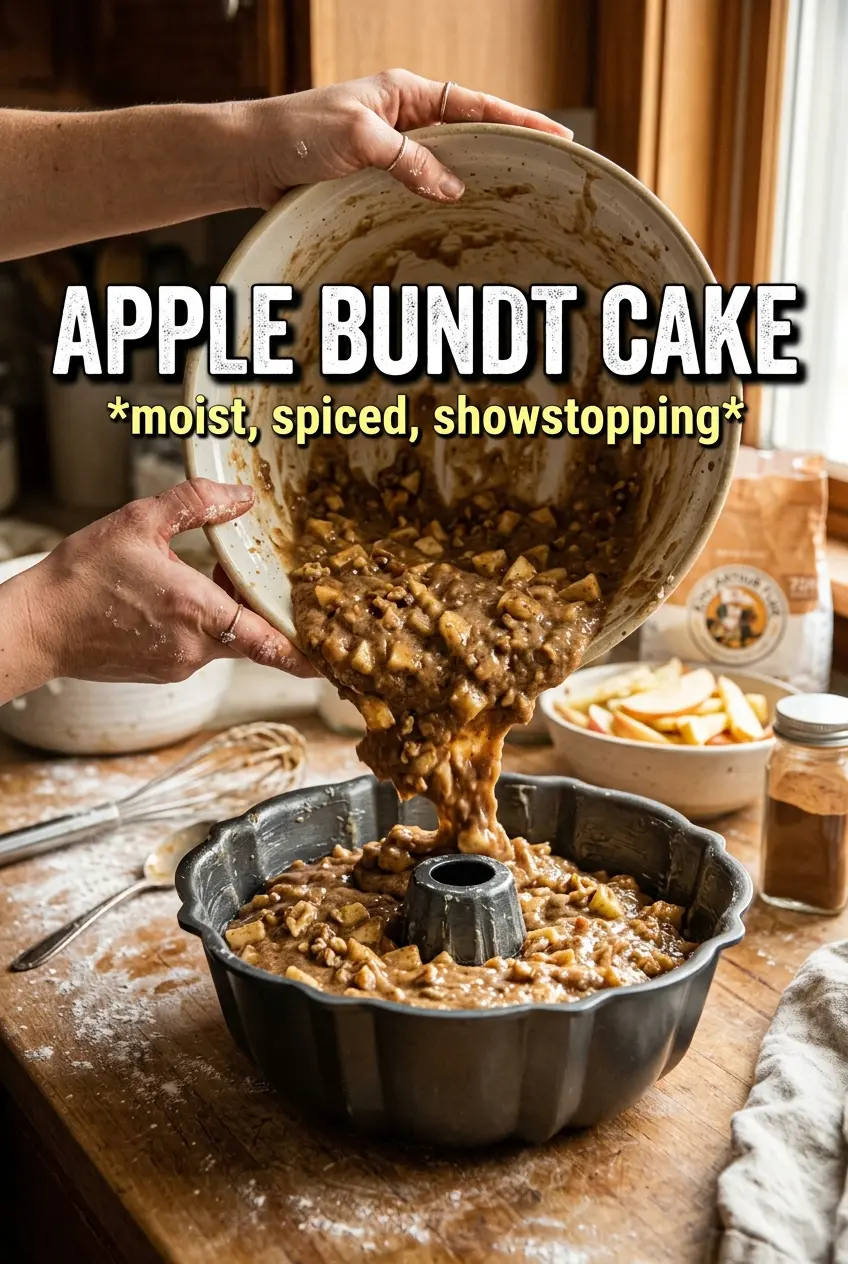
Add the dry ingredients and stir only until the flour disappears, then fold in the diced apples and nuts. A heavy hand here turns the cake dense, and the fruit can start breaking down if you keep mixing after it’s distributed. The batter will be thick, almost spoonable, which is exactly what helps the apples stay suspended instead of sinking.
Bake Until the Center Is Set
Scrape the batter into the prepared bundt pan and bake at 325°F for 65 to 75 minutes. The cake is done when a tester comes out clean and the top springs back lightly when touched. If the top browns too quickly, tent it loosely with foil for the last stretch of baking. Let it cool in the pan for 20 minutes, then invert it onto a rack before glazing.
Cook the Caramel Glaze Until It Naps the Spoon
Melt the butter, brown sugar, heavy cream, vanilla, and salt together and bring it to a gentle boil. Stir until the sugar dissolves and the glaze looks smooth and slightly thickened, then pour it over the cooled cake. If you pour it while the cake is still hot, the glaze runs off too fast and disappears into the rack. A slightly cooled cake holds the glaze on the ridges where it belongs.
How to Adapt This Cake for Different Kitchens and Crowds
Make it dairy-free
Use dairy-free butter in the glaze and swap the sour cream for an unsweetened dairy-free yogurt with some body, like coconut or soy. The cake will still stay moist, but the glaze will taste a little less buttery and a little more streamlined.
Skip the nuts without changing the crumb
Leave out the walnuts or pecans and replace them with an equal amount of diced apple if you want more fruit in every slice. The cake will be softer and a little less textured, but it won’t lose moisture or structure.
Use a different pan shape
If you don’t have a bundt pan, two loaf pans work well. Start checking earlier, since the smaller pans bake faster, and the glaze can be drizzled over the loaves instead of poured. You’ll lose the classic ridged look, but the texture stays the same.
Storage and Reheating
- Refrigerator: Store covered for up to 5 days. The crumb stays moist, though the glaze will firm up a little.
- Freezer: Freeze slices or the whole cake, well wrapped, for up to 2 months. Freeze before glazing if you want the cleanest texture after thawing.
- Reheating: Warm slices at room temperature or in short 10-second microwave bursts. Long heating dries out the apples and makes the glaze sticky instead of glossy.
Answers to the Questions Worth Asking
Apple Bundt Cake
Ingredients
Equipment
Method
- Preheat the oven to 325°F, then grease and flour a 10-inch bundt pan so the cake releases cleanly after baking.
- Whisk together all-purpose flour, baking soda, cinnamon, nutmeg, allspice, and salt until evenly combined.
- Beat granulated sugar and brown sugar with vegetable oil, eggs, vanilla, and sour cream until the batter looks smooth and fully incorporated.
- Fold the flour mixture into the wet mixture just until no dry streaks remain.
- Fold in apples and walnuts or pecans, distributing them through the batter.
- Pour the batter into the prepared bundt pan and bake at 325°F for 65–75 minutes, until a toothpick comes out clean.
- Cool the cake for 20 minutes, then invert it onto a rack to prevent sogginess on the bottom.
- In a pan, combine butter, brown sugar, heavy cream, vanilla, and salt for the caramel glaze and cook until thick enough to coat a spoon.
- Pour the caramel glaze over the cooled cake, letting it cascade into the ridges.