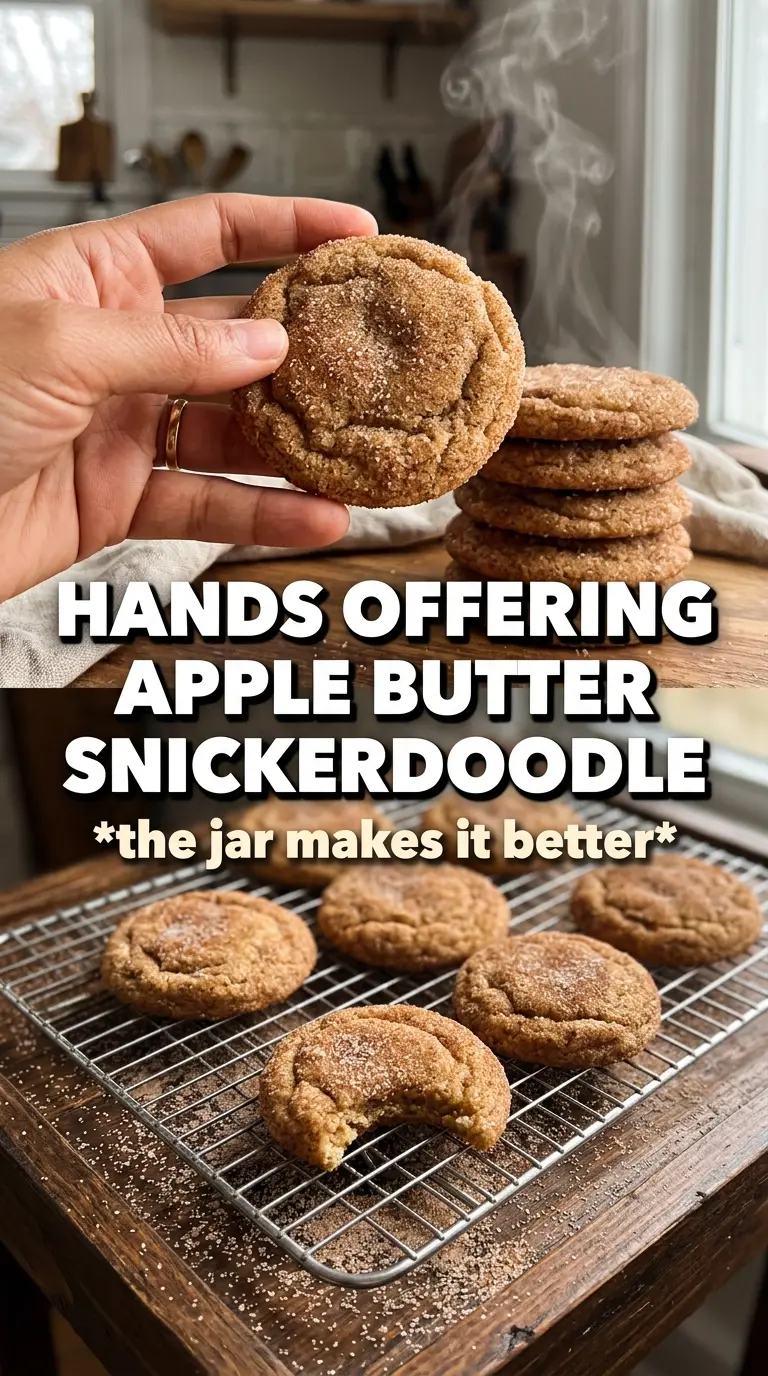
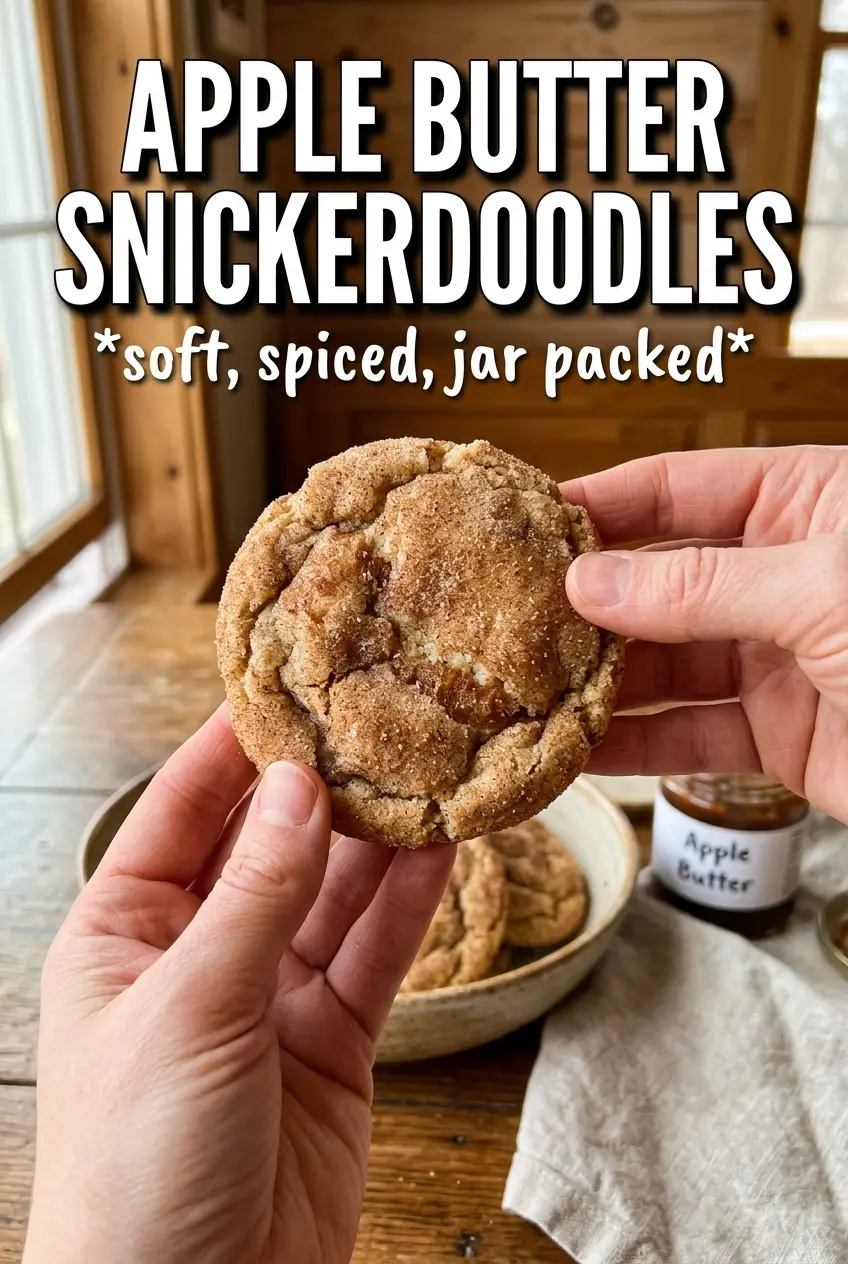
Apple butter snickerdoodles bake up soft in the middle with crisp, cinnamon-sugar edges and that classic snickerdoodle tang underneath the apple butter warmth. The first bite lands like a familiar cookie with a deeper, more rounded flavor — sweet, spiced, and just a little caramel-like from the apple butter. They’re the kind of cookie that disappears from the cooling rack faster than you expect.
What makes this version work is the balance. Cream of tartar keeps the cookie from tasting flat and gives the dough its signature snickerdoodle lift, while apple butter brings moisture and concentrated fruit flavor without making the dough cakey. The dough is meant to be soft, and that’s a good thing; a short chill helps it handle cleanly, but you don’t want to overwork it or the cookies lose that tender center.
Below, I’ve included the small details that matter most: how to keep the dough from spreading too much, why the spice coating tastes better when it’s a little heavier than you think, and what to do if you want to make these ahead.
The dough was soft but not hard to scoop after a quick chill, and the cookies came out with those perfect crackly tops and a chewy middle. The apple butter came through without making them taste heavy.
Love the soft centers and cinnamon-spice coating in these apple butter snickerdoodles? Save this one for the next time you want a cookie that bakes up crinkly, chewy, and warmly spiced.
The Reason These Cookies Stay Soft Instead of Drying Out
Most snickerdoodles lean on butter and sugar alone, which can leave them light but a little one-note. Here, apple butter changes the texture in a good way: it adds moisture and body, so the centers stay tender even after the edges set. The trick is keeping enough structure in the dough so that extra moisture doesn’t turn the cookies dense or sticky.
Cream of tartar still matters. It gives snickerdoodles that subtle tang and helps the cookies rise with a softer, more crackled top rather than spreading into flat rounds. If you skip it, you’ll still get a cinnamon cookie, but it won’t taste like a real snickerdoodle.
- Apple butter — Use a thick, smooth apple butter, not a thin applesauce-style spread. If yours is loose, simmer it briefly to concentrate it, then cool it before using so it doesn’t throw off the dough.
- Cream of tartar — This is the ingredient that gives the cookie its classic snickerdoodle tang and texture. Baking powder won’t give the same flavor or the same gentle chew.
- Softened butter — Butter should yield easily when pressed, but not look greasy or partially melted. If it’s too warm, the cookies spread too fast and lose their crinkled tops.
- Rolling spice mix — The extra apple pie spice nudges the cinnamon sugar toward a deeper, warmer finish. That coating is what makes the outside taste as good as the inside.
What Each Ingredient Is Actually Doing in This Recipe
- Primary ingredient (the star) — Quality matters most. Choose the best you can find.
- Cooking medium (oil, butter, or broth) — This carries flavors and prevents dryness.
- Seasonings (salt, pepper, spices, herbs) — Layer flavors so nothing overpowers. Build depth gradually.
- Aromatics (garlic, onion, herbs) — Cook with fat to bloom flavors. Become the foundation.
- Supporting ingredients — Complement the main ingredient without overpowering it.
- Sauce or liquid (if applicable) — Brings flavors together. Balance richness with acid.
- Acid (lemon, vinegar, wine, or other) — Brightens and prevents flat-tasting results.
- Final finish (garnish, glaze, or sauce) — Prevents one-dimensional taste and adds visual appeal.
What Happens When You Cream, Chill, and Bake in the Right Order
Whisking the Dry Mix First
Combine the flour, cream of tartar, baking soda, cinnamon, nutmeg, and salt before the wet ingredients go in. That keeps the leavening and spices evenly distributed, which matters because apple butter can make the dough look streaky if the dry ingredients aren’t already balanced. A quick whisk is enough; you’re not trying to aerate, just remove pockets of baking soda that can leave bitter spots.
Beating the Butter Until It Looks Pale
Cream the butter and sugar until the mixture turns noticeably lighter and fluffier. That step traps air, which helps the cookies puff and crack instead of baking up heavy. If the butter is too soft, the mixture will look shiny and greasy instead of fluffy, and the cookies will spread before the centers set.
Bringing in the Apple Butter
Add the eggs, apple butter, and vanilla after the butter and sugar are light. The dough will look softer than a classic snickerdoodle dough, and that’s expected. If it still looks loose enough to scoop like batter, it needs a short chill before you move on; the flour needs time to hydrate and the butter needs time to firm up.
Coating and Baking for the Crackly Finish
Scoop small portions and roll them generously in the cinnamon-sugar mixture. The extra coating helps the tops crinkle as they bake and gives you that slightly crunchy shell around the soft center. Pull them when the edges are just set and the middles still look a little underdone; they finish on the pan, and overbaking is the fastest way to lose the chewy middle.
Make Them More Spiced
If you want the apple butter to read more clearly, add another 1/4 teaspoon cinnamon and a pinch more nutmeg to the dough. That pushes the cookie into warmer territory without changing the texture. Don’t overdo it, or the spice will cover the apple flavor instead of supporting it.
Gluten-Free Version
Use a 1:1 gluten-free baking blend that includes xanthan gum. The cookies will still be soft, but they may spread a touch less and taste a little more delicate on the edges. Chill the dough before baking so the structure has time to set.
Dairy-Free Swap
Use a plant-based butter stick, not a tub spread. The stick version holds shape better and behaves more like real butter in the oven, which matters for the crinkled top and chewy center. The flavor changes a little, but the cookies still bake up well.
For a Bigger Cinnamon Finish
Roll the dough balls twice in the cinnamon sugar for a thicker outer crust. That gives you more of the crackly, sweet edge people expect from a bakery-style snickerdoodle. It also helps protect the softer center from drying out in the oven.
Storage and Reheating
- Refrigerator: Store in an airtight container for up to 5 days. They stay soft, though the cinnamon coating loses a little crunch by day two.
- Freezer: Freeze baked cookies for up to 2 months, layered with parchment. You can also freeze the dough balls after rolling, then bake straight from frozen with 1 to 2 extra minutes.
- Reheating: Warm baked cookies in a 300°F oven for 3 to 5 minutes. Skip the microwave if you want to keep the edges intact; it makes the centers gummy instead of soft.
Questions I Get Asked About This Recipe
Apple Butter Snickerdoodles
Ingredients
Equipment
Method
- Preheat the oven to 375F and line baking sheets with parchment for easy release.
- Whisk together the flour, cream of tartar, baking soda, cinnamon, nutmeg, and salt until evenly combined.
- Beat the softened butter and granulated sugar until very light and fluffy, then mix in the eggs, apple butter, and vanilla extract.
- Fold the flour mixture into the wet ingredients until just combined; the dough should be soft.
- Refrigerate for 30 minutes if the dough is very sticky, so it’s easier to scoop and roll.
- Mix the rolling spices in a shallow bowl using the sugar, cinnamon, and apple pie spice.
- Scoop the dough into 1-1/2 tablespoon balls and roll generously in the cinnamon-spice sugar so they’re fully coated.
- Bake at 375F for 10-12 minutes until the cookies are crinkled and the edges are just set.
- Cool on the pan for 5 minutes, so the centers finish firming as they cool.