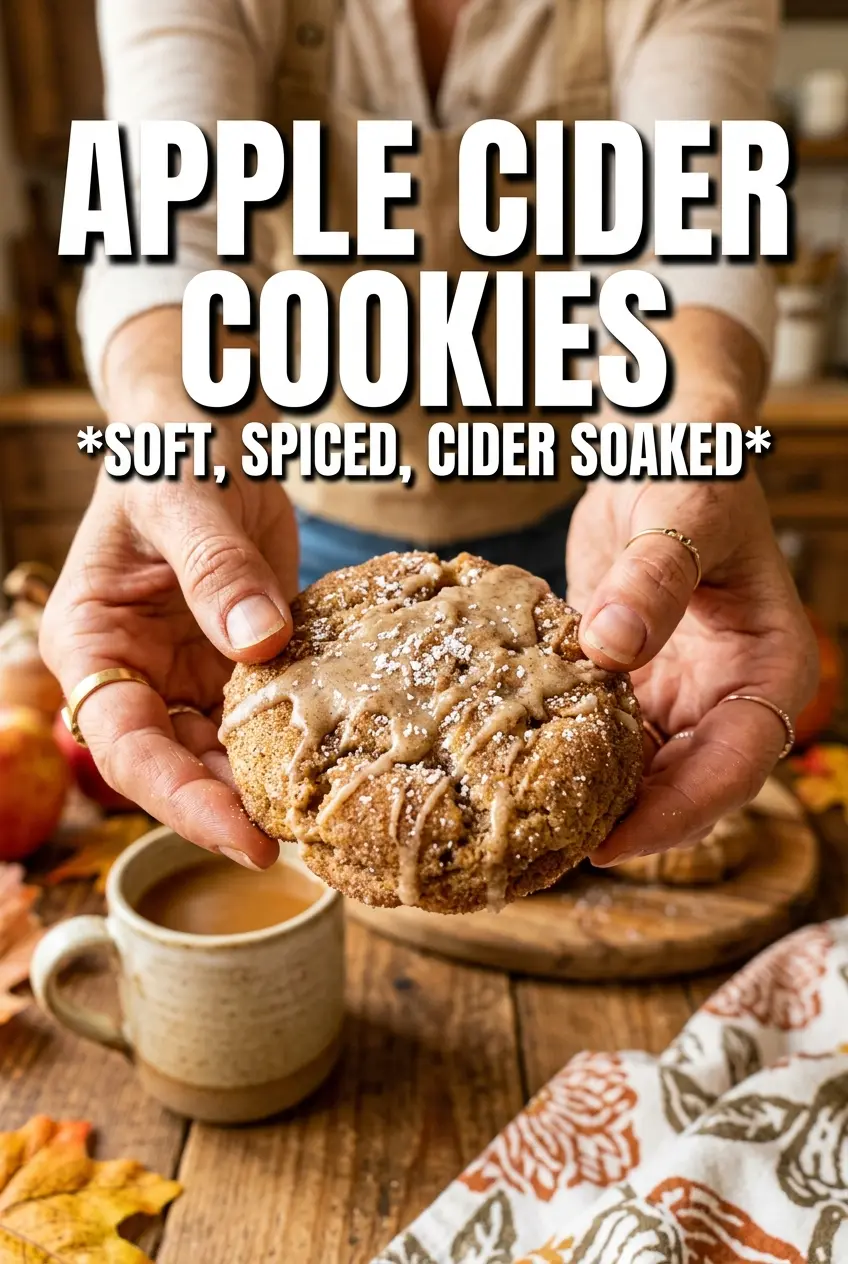
Apple cider cookies land with a soft, cake-like center, lightly crisp edges, and a cinnamon sugar finish that gives each bite a little sparkle. The apple flavor stays present without turning muddy or overly sweet, and that matters here. These cookies taste like someone paid attention to the cider instead of tossing in a splash and hoping for the best.
The trick is reducing the cider first until it turns syrupy. That step concentrates the flavor and keeps the dough from getting loose, which is the difference between a cookie that bakes up plush and one that spreads into something flat and forgettable. Brown sugar adds chew, the spice blend gives the dough depth, and a short bake keeps the centers tender.
Below, I’ll walk through the part that matters most: how far to reduce the cider, what the dough should look like before baking, and how to keep the cinnamon sugar coating from disappearing into the cookie.
The cider reduction made all the difference. The cookies stayed soft in the middle, and the cinnamon sugar still had that little crackly bite after cooling.
Love the crackly cinnamon sugar and soft apple cider center? Save these Apple Cider Cookies for the next time you want a cookie that actually tastes like cider, not just spice.
The Cider Reduction Is What Keeps These Cookies from Spreading
Most apple cider cookie doughs fail in one of two ways: the cider goes in full-strength and makes the dough too wet, or the spice takes over and the apple disappears. Reducing the cider fixes both problems at once. You end up with a concentrated apple flavor and far less extra moisture, which means the cookies bake up thick instead of thin and puffy instead of cakey in the wrong way.
The other thing that matters is cooling the reduction completely before it touches the butter mixture. Warm cider melts the butter too early, and once that happens the dough gets greasy and spreads. You want the reduced cider to look glossy and almost like a loose syrup, not watery. If it still pours like juice, keep going.
- Reduced apple cider — This is the flavor engine. Fresh cider gives you a cleaner apple taste than juice, and reducing it is non-negotiable if you want the cookies to hold their shape.
- Brown sugar — It adds moisture and chew, which helps the centers stay soft after baking. Granulated sugar alone would make these flatter and crisper.
- Cinnamon sugar coating — This is more than decoration. It gives the outside a light crunch and keeps the cookies from tasting one-note.
What Each Ingredient Is Actually Doing in the Dough

- All-purpose flour — Just enough structure for a soft cookie without turning it bready. Spoon and level it if you can; packing in too much flour makes the dough dry and the cookies thick in a dull way.
- Baking soda — It helps the cookies spread a little and brown at the edges. Baking powder would give a different lift and a softer, puffier crumb.
- Warm spices — Cinnamon, ginger, nutmeg, and allspice work together here, but none of them should overpower the cider. If you only have cinnamon and nutmeg, the cookies will still work, just with a simpler spice note.
- Butter — Softened butter traps air when it’s beaten with the sugars, which gives the cookies their light texture. Don’t melt it; melted butter makes the dough looser and the cookies denser.
- Egg and vanilla — The egg binds the dough, and vanilla rounds out the cider so the flavor tastes finished instead of sharp.
The Short Bake That Keeps the Centers Soft
Reducing the Cider
Set the cider over medium heat and let it bubble until it shrinks to about half its original volume and looks syrupy enough to coat the back of a spoon. It will still be thin while hot, so don’t chase a heavy caramel texture. Pull it off the heat before it gets too sticky, because it thickens more as it cools.
Building the Dough
Beat the butter with both sugars until the mixture looks pale and fluffy. That step matters because it gives the cookies some lift before the flour goes in. Add the egg, vanilla, and cooled cider reduction next, then mix only until the batter looks smooth. If the mixture looks slightly curdled at that point, it usually comes back together once the flour is added.
Mixing Without Toughening
When the dry ingredients go in, fold them just until no streaks of flour remain. Overmixing here tightens the dough and makes the cookies bake up tougher than they should. The finished dough should be soft enough to scoop but not sticky enough to run across the bowl.
Baking to the Right Finish
Roll the dough balls in cinnamon sugar, then bake until the edges are set and the centers still look a little underdone. That’s the sweet spot. They finish setting on the pan during the first five minutes of cooling, and moving them too soon can make them fall apart.
Make Them a Little Chewier
Bake the cookies for the full 12 minutes and let them cool completely on the pan before moving them. The centers will stay softer and the edges will set with a slight chew, which works nicely if you like a less cakey cookie.
Gluten-Free Version
Use a 1:1 gluten-free baking blend that includes xanthan gum. The cookies will still be soft, though they may spread a touch less and taste best once fully cooled, when the crumb has had time to set.
Extra-Spiced Cookie Tops
Add another 1/4 teaspoon cinnamon to the rolling sugar if you want a stronger spice finish. That makes the outside a little bolder and helps balance a sweeter cider reduction.
Storage and Reheating
- Refrigerator: Store in an airtight container for up to 5 days. They stay soft, though the sugar coating softens a little.
- Freezer: Freeze baked cookies for up to 2 months, or freeze the shaped dough balls and roll them in sugar right before baking.
- Reheating: Warm a cookie for 8 to 10 seconds in the microwave if you want the center soft again. Don’t overheat them or the sugar coating turns sticky and the cookie dries out fast.
Answers to the Questions Worth Asking
Apple Cider Cookies
Ingredients
Equipment
Method
- Reduce apple cider in a small saucepan over medium heat until thick and syrupy, then cool completely.
- Preheat oven to 350F, then line baking sheets with parchment.
- Whisk flour, baking soda, cinnamon, ginger, nutmeg, allspice, and salt.
- Beat butter and both sugars until light and fluffy.
- Add egg, vanilla extract, and the reduced cider, and beat until combined.
- Fold the flour mixture into the wet ingredients until no dry streaks remain.
- Scoop dough into 1-1/2 tablespoon balls, then roll in cinnamon sugar made from sugar and cinnamon.
- Bake 10-12 minutes at 350F, until edges are set and the centers look slightly soft.
- Cool on the pan for 5 minutes before transferring, then let cookies finish setting.