Apple cider pound cake bakes into a dense, buttery loaf with a tight crumb that still stays tender, and the cider glaze settles into every ridge of the pan with just enough sweetness to sharpen the spice. The texture is what makes people come back for a second slice: sturdy enough to slice cleanly, soft enough to melt on the tongue, and fragrant with cinnamon and nutmeg without tasting heavy.
The detail that matters most here is reducing the cider before it goes into the batter. That concentrates the apple flavor so it doesn’t disappear behind the butter and sugar, and it keeps the cake from baking up bland. Sour cream gives the crumb a little insurance too, adding richness and moisture without making the batter loose. The result is a bundt cake that tastes like actual cider, not just spice cabinet seasoning.
Below, I’ve included the trick for getting a clean release from the bundt pan, plus the small adjustments that help this cake hold together beautifully for serving or gifting.
The cider flavor came through in every bite, and the glaze set up instead of running off the cake. I loved that the crumb stayed moist for days without getting gummy.
Save this apple cider pound cake for the days when you want a dense, cinnamon-spiced bundt with a glossy cider glaze.
The Reason the Cider Has to Be Reduced First
Skipping the reduction is the fastest way to end up with a cake that tastes like spice cake with a whisper of apple. Reduced cider carries actual apple flavor into the batter without adding extra liquid, which keeps the crumb tight and classic instead of loose or wet. It also helps the glaze taste like cider, not just sugar diluted with juice.
The other trap is beating the butter and sugar too briefly. Pound cake depends on incorporating enough air at the beginning so the batter can carry the weight of the eggs and flour. If the mixture still looks dense and grainy after a minute or two, keep going until it turns pale and fluffy and clings to the bowl in a lighter, almost whipped way.
- Reduced apple cider — This is where the flavor comes from. Boil it down to about half so the cake stays bold without becoming soggy.
- Sour cream — It keeps the crumb tender and helps the cake stay moist for days. Plain Greek yogurt works in a pinch, but the cake will be a touch tangier and a little less plush.
- Butter — Use unsalted butter so you control the salt level. It needs to be softened, not melted, or the batter won’t trap air properly.
- Bundt pan prep — Grease every ridge and dust with flour. A bundt pan rewards careful prep and punishes shortcuts.
Building a Bundt Cake That Releases Cleanly
- All-purpose flour — This gives the cake its sturdy pound-cake structure. Cake flour makes it softer, but you lose that classic sliceable density.
- Eggs — Add them one at a time so the batter stays emulsified. If you dump them in together, the mixture can look curdled and bake unevenly.
- Cinnamon and nutmeg — These should support the cider, not cover it. Fresh nutmeg is worth using here because the cake is simple enough that every spice shows.
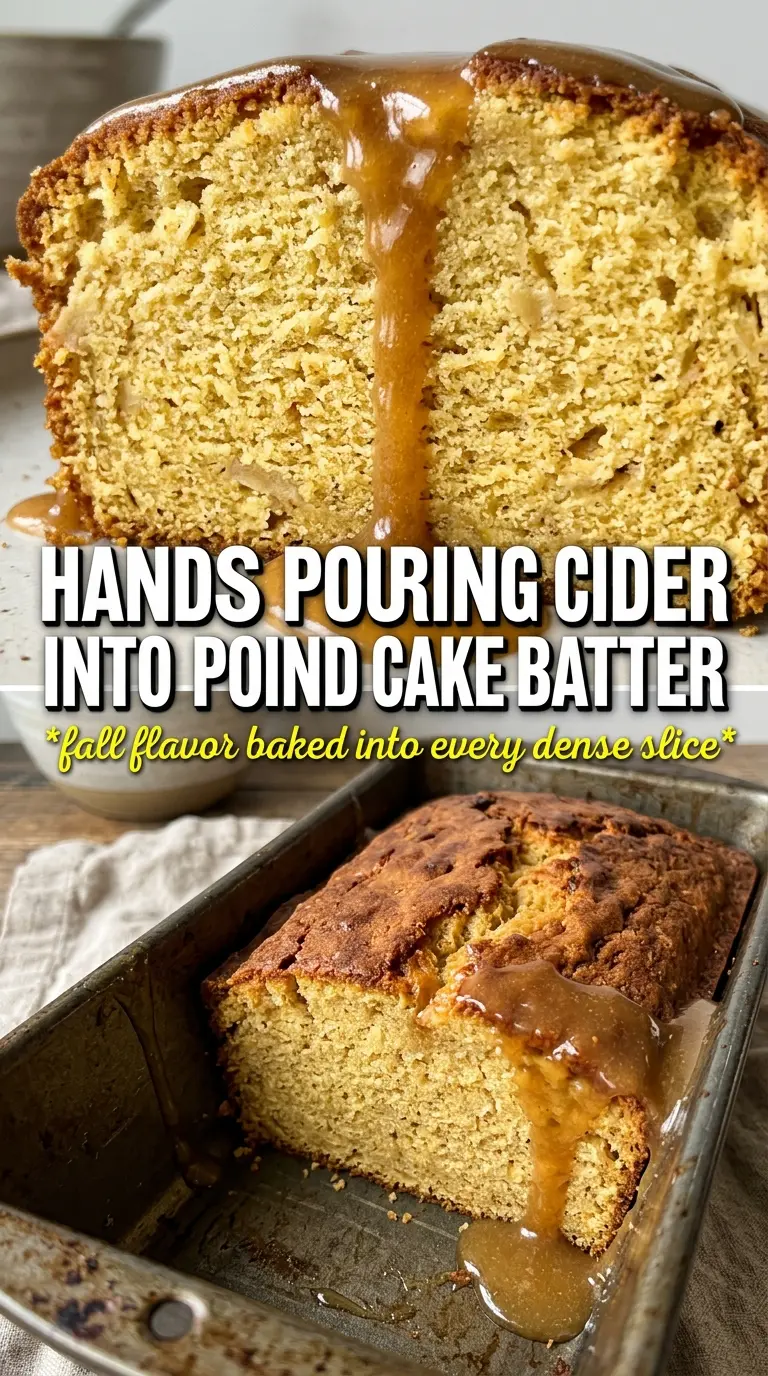
- Powdered sugar glaze — The glaze is thin enough to drip into the grooves but thick enough to cling. Add the cider a teaspoon at a time if you want a more opaque finish.
Mixing in the Right Order Keeps the Crumb Tight
Start With the Reduced Cider
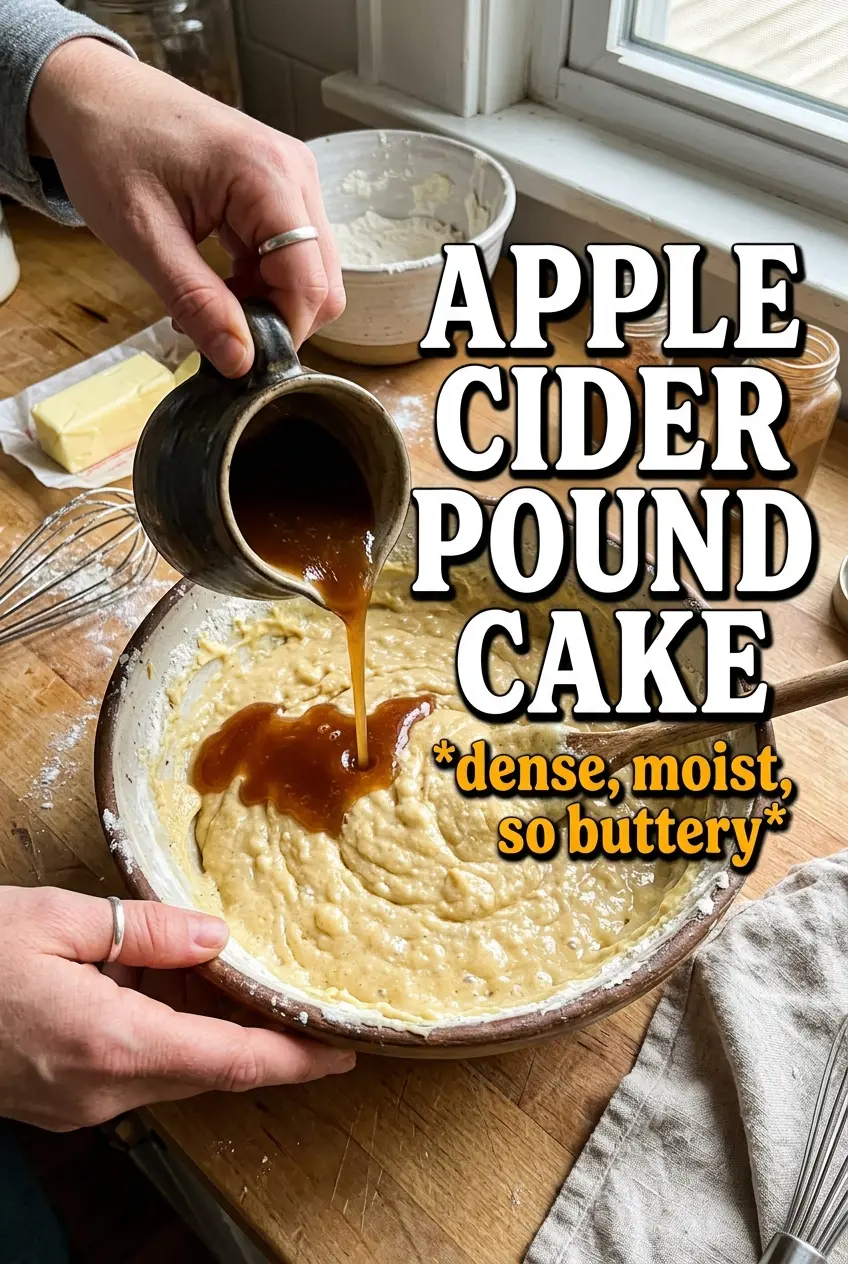
Cook the cider until it’s cut in half, then let it cool completely before it touches the batter. Warm cider can soften the butter too early and throw off the texture. If you rush this, the cake can bake up greasy around the edges and a little heavy in the center.
Whip the Butter and Sugar Until Pale
Beat the butter and sugar for a full five minutes, until the mixture looks fluffy and lighter in color. This isn’t cosmetic; it creates the lift that makes a pound cake slice cleanly instead of eating like a brick. When you stop too soon, the cake still bakes, but the crumb ends up compact in a dull, heavy way.
Alternate the Dry Ingredients and Sour Cream
Add the flour mixture and sour cream in batches, beginning and ending with flour. That keeps the batter from separating and helps the gluten stay controlled. If you dump in all the sour cream at once, the batter can look broken and the finished cake may bake with a tunnel or uneven pockets.
Bake Until the Center Springs Back
The cake needs 70 to 80 minutes in a 325°F oven, and the best test is a toothpick that comes out clean or with a few dry crumbs. The top should be deep golden and slightly cracked, and the cake should pull just a touch from the sides of the pan. Let it cool in the pan for 15 minutes before turning it out, or it may stick and break in the ridges.
Maple Glaze Instead of Cider Glaze
Swap the cider in the glaze for pure maple syrup thinned with a spoonful of milk. You lose the sharper apple finish, but you gain a deeper, more caramel-like sweetness that works well if you want the cake to lean more autumn bakery than cider mill.
Dairy-Free Version
Use a plant-based butter that bakes well and swap the sour cream for an unsweetened dairy-free yogurt with some body. The cake will still rise and slice properly, but it won’t have quite the same rich, buttery finish, so the spice and cider flavor should be kept bold.
Gluten-Free Adjustment
Use a cup-for-cup gluten-free baking blend with xanthan gum already included. The cake will be a little more delicate when unmolding, so let it cool in the pan the full 15 minutes and support the cake well when you invert it.
Make It Ahead for Serving
Bake the cake a day ahead and glaze it after it has cooled completely. The crumb actually settles nicely overnight, and the cider flavor reads even better the next day once the spice has had time to blend.
Storage and Reheating
- Refrigerator: Store covered for up to 5 days. The crumb stays moist, though the glaze may soften a little.
- Freezer: Freeze the unglazed cake tightly wrapped for up to 2 months. Thaw overnight at room temperature, then glaze before serving.
- Reheating: Warm individual slices in the microwave for 10 to 15 seconds. Don’t heat too long or the cake turns dry at the edges and loses that tender pound-cake bite.
Questions I Get Asked About This Recipe
Apple Cider Pound Cake
Ingredients
Equipment
Method
- Reduce 1 cup apple cider to 1/2 cup over medium heat, then cool completely.
- Preheat oven to 325F, then grease and flour a 10-inch bundt pan.
- Whisk all-purpose flour, baking powder, baking soda, salt, cinnamon, and nutmeg in a bowl.
- Beat unsalted butter and granulated sugar until very light and fluffy, about 5 minutes.
- Add eggs one at a time, then mix in vanilla extract and the reduced apple cider.
- Alternate adding the flour mixture and sour cream, beginning and ending with flour, mixing just until combined.
- Pour the batter into the prepared bundt pan, then bake 70-80 minutes until a toothpick comes out clean.
- Cool the cake in the pan for 15 minutes, invert, and cool completely.
- Whisk powdered sugar, apple cider, and cinnamon to make the cider glaze, then drizzle over the cooled cake.