Soft, chewy apple cinnamon cookies bake up with tender centers, crisp sugar-kissed edges, and little pockets of fresh apple that stay bright instead of disappearing into the dough. The vanilla glaze on top pulls everything together without making the cookies heavy, and that cinnamon-sugar coating gives each bite a little extra crunch.
The trick here is balancing moisture. Applesauce keeps the dough soft and the cookies stay tender for days, but fresh diced apple gives them that real apple-cake flavor you can taste in every bite. Chilling the dough matters, too. It firms up a sticky batter-like dough just enough so the cookies spread in a controlled way instead of baking flat and greasy.
Below you’ll find the small details that make these work: how to keep the apple pieces from turning watery, why the cookies should come off the oven while the centers still look slightly underdone, and how to glaze them without losing that pretty cinnamon-sugar finish.
The cookies stayed soft for two days and the diced apple gave them a real apple pie taste without making the centers soggy. Chilling the dough was worth it — they baked up thick and the cinnamon sugar edges were perfect.
Save these apple cinnamon cookies for the days when you want soft centers, fresh apple flavor, and a vanilla glaze with just enough spice.
The Reason These Cookies Stay Soft Instead of Turning Cakey
Apple cookies go wrong when the dough gets too wet or the apples are too chunky. Then the cookies puff oddly, bake up bready, and lose that clean, tender bite. This version stays soft because the applesauce adds moisture in a controlled way, while the flour, baking soda, and baking powder keep the texture balanced instead of dense.
The other thing that matters is the apple itself. Finely diced pieces melt into the dough just enough to turn tender in the oven, but they still give you little bursts of real fruit. If the dice is too large, the cookies can tear when you scoop them and the centers bake unevenly. Keep the pieces small enough that they sit inside the dough instead of punching through it.
- Applesauce — This gives the cookies softness and a little apple flavor without adding extra chunks of moisture. Use unsweetened if you want more control over sweetness.
- Fresh apples — These are what keep the cookies from tasting flat. A crisp baking apple works best, but any firm apple is fine as long as it’s peeled and diced small.
- Chilling the dough — Don’t skip it. The dough starts out sticky, and the rest time helps the flour hydrate so the cookies hold their shape instead of spreading too fast.
What Each Ingredient Is Actually Doing in These Cookies

- All-purpose flour — The standard structure here. Bread flour would make these tougher, and cake flour would soften them too much for this dough.
- Butter — Use softened, not melted. Softened butter traps air when you beat it with the sugars, which gives the cookies a lighter texture.
- Brown sugar — This brings moisture and a deeper caramel note that pairs with the apples. White sugar alone would make the cookies taste flatter and bake a little drier.
- Cinnamon and nutmeg — Cinnamon does most of the work, but the nutmeg keeps the flavor from tasting one-note. Don’t increase the nutmeg much or it starts to take over.
- Apples — Dice them finely so they soften quickly and disappear into the crumb. A firm apple like Granny Smith or Honeycrisp holds up best.
- Vanilla glaze — The glaze is thin on purpose. It adds sweetness and a polished finish without hiding the cinnamon sugar top.
How to Keep the Dough Manageable and the Centers Tender
Building the Base
Beat the butter and both sugars until the mixture looks fluffy and a little paler in color. That step matters because it gives the cookies a lighter crumb before any flour goes in. Add the eggs, vanilla, and applesauce next, and mix only until smooth. If the mixture looks slightly loose, that’s normal; the flour will bring it together.
Folding in the Dry Ingredients
Stir the flour mixture in gently, then fold in the diced apples by hand. Overmixing at this point makes the cookies tough, and it also smears the apple pieces into the dough instead of keeping them distinct. The finished dough should be sticky and thick, almost scoopable but not shapeable.
Chilling Before Scooping
Let the dough rest in the refrigerator for a full hour. That’s what turns a sticky mess into something you can portion cleanly. If you try to bake it right away, the cookies spread too fast and the apple pieces leak moisture into the pan. A chilled dough gives you thicker cookies with defined edges.
Baking to the Right Finish
Scoop 1 1/2-tablespoon portions and roll the tops in the cinnamon sugar mixture. Bake until the edges are set and the centers still look a little soft, because they keep cooking on the hot pan after you pull them out. If you wait until the centers look fully baked in the oven, they’ll end up dry once they cool.
Make Them Without the Glaze
Leave off the vanilla glaze and the cookies taste more like a soft apple snickerdoodle. You’ll still get the cinnamon sugar finish on top, and the texture stays a little less sweet and more bakery-style.
Use Gluten-Free Flour Blend
A good 1:1 gluten-free flour blend can work here, but the dough may need an extra 10 to 15 minutes of chilling. The cookies usually bake up a little more delicate, so let them cool completely on the pan before moving them.
Make Them More Spiced
Add an extra 1/2 teaspoon cinnamon or a pinch of cardamom if you want a warmer, more aromatic cookie. That pushes the flavor closer to apple pie, but keep the nutmeg modest so it doesn’t overpower the fruit.
Storage and Reheating
- Refrigerator: Store in an airtight container for up to 5 days. The cookies stay soft, but the glaze will sink in a little over time.
- Freezer: Freeze the unglazed cookies for up to 2 months. Thaw at room temperature, then glaze after they’ve come back to room temp.
- Reheating: A few seconds in the microwave softens them again, but don’t overdo it or the apples get gummy. If they’re already glazed, warm them gently at room temperature instead.
Answers to the Questions Worth Asking
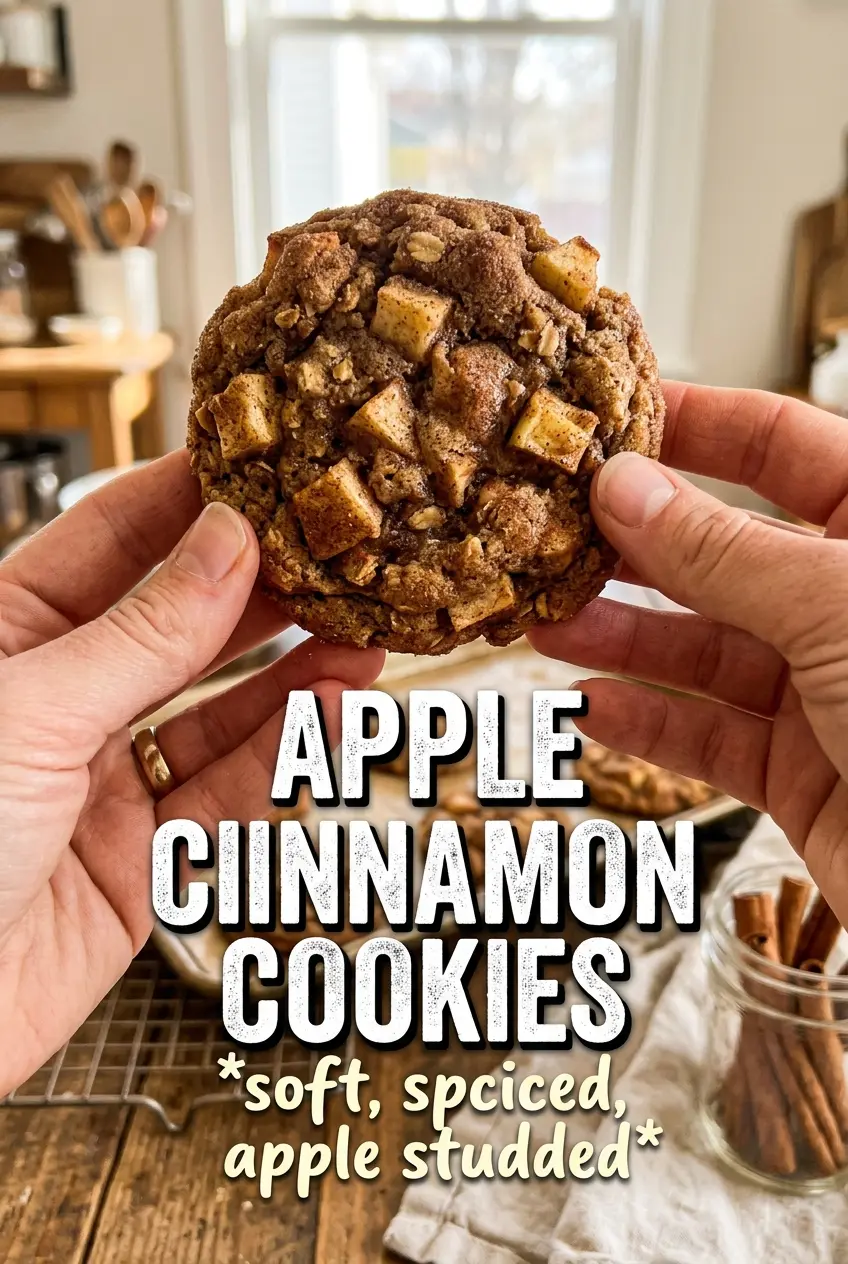
Apple Cinnamon Cookies
Ingredients
Equipment
Method
- Preheat oven to 350F and line baking sheets with parchment, keeping the sheets ready for portioning.
- Whisk all-purpose flour, baking soda, baking powder, cinnamon, nutmeg, and salt until evenly combined and no dry streaks remain.
- Beat unsalted butter, granulated sugar, and brown sugar until fluffy and lighter in color.
- Add eggs, vanilla extract, and applesauce, then beat just until smooth.
- Fold in the flour mixture until no dry flour remains.
- Fold in diced apples so they’re evenly distributed through the dough.
- Refrigerate the dough for 1 hour so it firms up and becomes scoopable.
- Scoop 1-1/2 tablespoon portions, then roll the tops in cinnamon sugar to coat.
- Bake for 10-12 minutes at 350F until the edges just set while the centers remain soft.
- Cool completely on the pan so cookies finish setting before glazing.
- Drizzle vanilla glaze over the cooled cookies, letting some drip down the sides for a finished look.