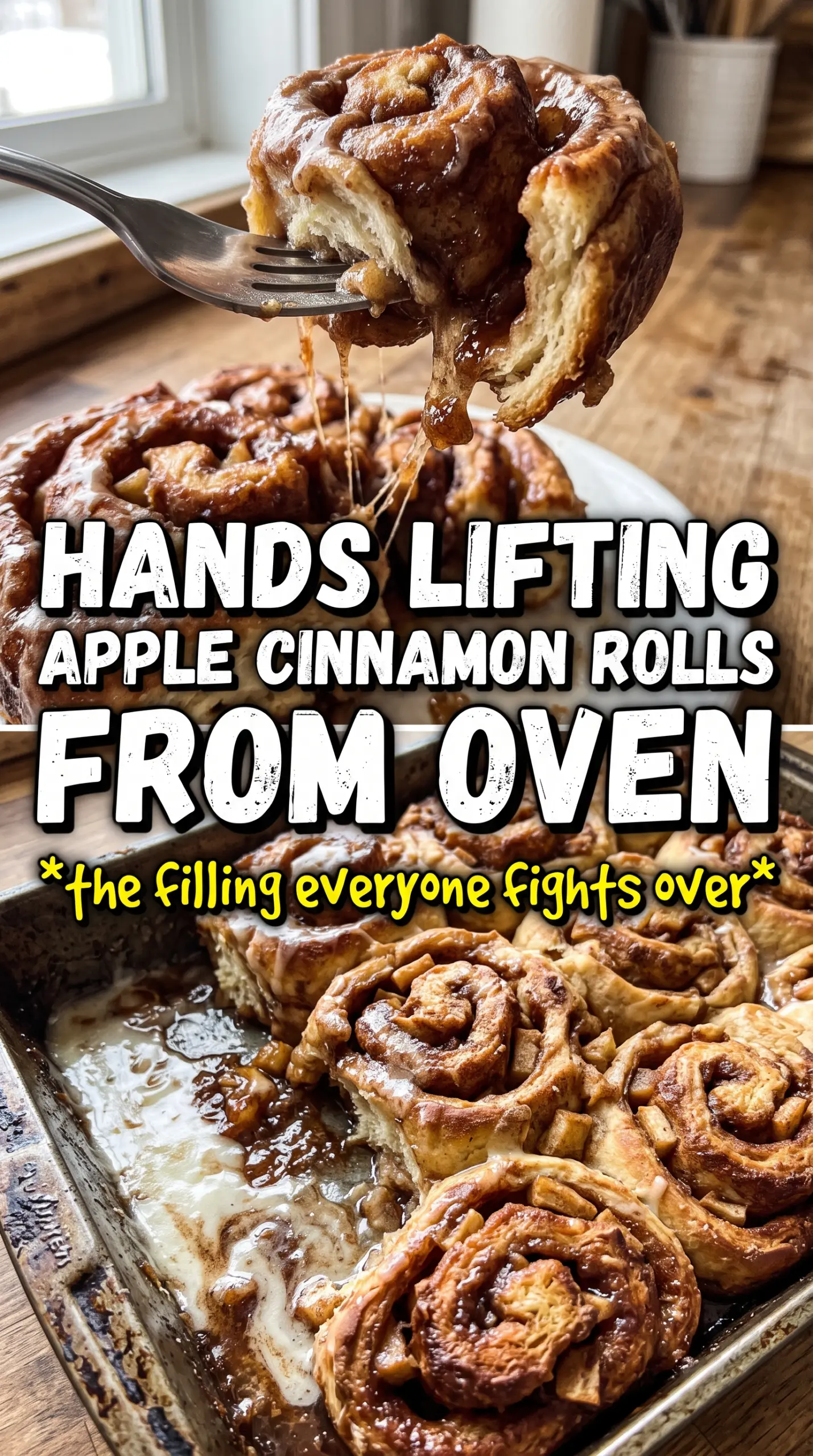
Soft, pillowy apple cinnamon rolls pull apart in thick spirals with caramelized apple tucked into every layer and a tangy cream cheese glaze melting into the warm swirls. The filling stays juicy without soaking the dough, and the edges bake up golden and sticky, which is exactly what you want when breakfast needs to feel a little special without turning fussy.
The difference here is in the apple filling. Cooking the apples first drives off excess moisture and concentrates the cinnamon, brown sugar, and butter into a thick mixture that sits on the dough instead of leaking out during the rise and bake. That one extra pan step keeps the rolls fluffy instead of gummy.
Below, you’ll find the trick for rolling and cutting clean spirals, plus the small detail that keeps the glaze smooth instead of lumpy. If you’ve had cinnamon rolls spread out or go soggy before, this version fixes both problems.
The apples cooked down just enough that the rolls baked up fluffy instead of soggy, and the glaze melted into every swirl. My kitchen smelled like a bakery for hours.
Like these apple cinnamon rolls? Save them for the next time you want soft breakfast rolls with caramelized apple layers and cream cheese glaze.
The Part Most Cinnamon Rolls Get Wrong: A Wet Filling
Most apple cinnamon rolls fail because the filling starts out too wet. Raw apples release juice as they bake, and that liquid can pool in the pan, make the centers dense, and wash out the cinnamon-sugar layer. Cooking the apples first solves that problem by reducing the moisture before the dough ever sees it.
You’re looking for apples that are softened but still hold their shape, with the pan looking glossy and nearly syrupy rather than watery. If the filling is still loose when you spread it, it will slide out when you roll the dough. Let it cool completely before assembly so the butter in the dough doesn’t melt early and make the spirals messy.
- Cooked apples — This is what keeps the rolls from going soggy. The filling should be thick enough to spoon, not pour.
- Brown sugar — It adds deeper caramel notes than white sugar and helps the filling cling to the apples.
- Cinnamon and nutmeg — Cinnamon carries the classic flavor, but nutmeg gives the filling a warmer finish. Don’t skip it if you want that bakery-style smell.
- Cool filling — Hot filling softens the dough before baking and makes tight spirals harder to cut cleanly.
What Each Ingredient Is Actually Doing in These Rolls
- Warm milk — This wakes up the yeast and helps the dough come together smoothly. It should feel warm, not hot, or you’ll kill the yeast.
- Active dry yeast — The foamy bloom tells you it’s alive. If it never bubbles, start over before you waste the flour.
- Butter — Melted butter gives the dough tenderness and flavor. For the filling, it helps the apples cook evenly and gives the sugar something to caramelize in.
- Apples — Use a firm baking apple that holds its shape, like Honeycrisp or Granny Smith. Softer apples can turn mushy in the skillet and disappear in the roll.
- Cream cheese — This keeps the glaze tangy and thick enough to drape over warm rolls. Softened cream cheese blends smoothly; cold cream cheese leaves little lumps.
Getting the Dough, Filling, and Bake Time to Work Together
Bloom the Yeast First
Stir the warm milk and yeast together and wait until the surface looks foamy and a little puffy. That tells you the yeast is active and ready to lift the dough. If the milk is too hot, nothing will happen; if it’s too cool, the yeast will wake up slowly and the rise will drag.
Mix Until the Dough Feels Soft, Not Sticky and Wet
After adding the sugar, butter, eggs, vanilla, flour, and salt, mix until the dough comes together into a soft mass. It should feel supple and slightly tacky, but not wet enough to smear all over your hands. If it’s too sticky, add flour a tablespoon at a time; too much flour makes the rolls dry and tight.
Cook the Apples Until the Pan Looks Glossy
Cook the diced apples with butter, brown sugar, cinnamon, and nutmeg until the fruit softens and the liquid reduces. The best cue is the smell: it should smell like warm caramel and spice, not raw sugar. Cool the filling completely before spreading it on the dough so the butter stays firm enough to help with rolling.
Roll Tight, Then Cut Cleanly
Roll the dough into a 12×18-inch rectangle and spread the filling edge to edge. Roll from the long side with steady pressure so the log stays even, then cut into 12 pieces with a sharp knife or unflavored dental floss. If the slices squash when you cut, chill the log for a few minutes first so the spiral holds.
Bake Until the Centers Are Set
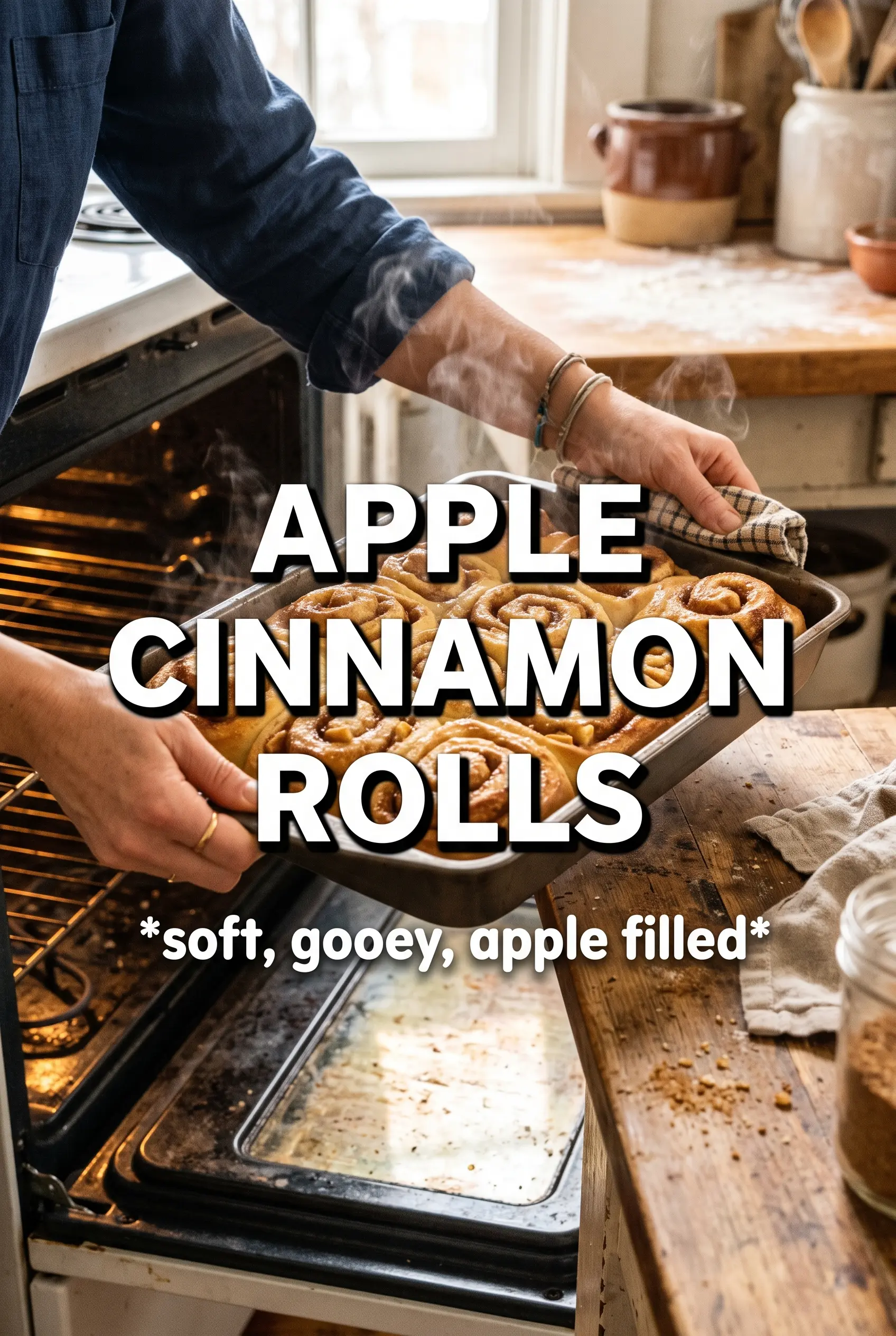
After the second rise, bake the rolls until the tops are golden and the center rolls look puffed rather than doughy. The middle should spring back lightly when touched. If the tops brown too quickly before the centers are done, tent the pan loosely with foil for the last few minutes.
Glaze Them While They’re Warm
Beat the cream cheese glaze ingredients until smooth, then drizzle it over the rolls while they’re still warm. Warm rolls help the glaze melt into the ridges without disappearing completely. If you wait until the rolls are cold, the glaze will sit on top instead of sinking into the swirls.
How to Adapt These Rolls for Different Kitchens and Different Mornings
Dairy-Free Apple Cinnamon Rolls
Swap the milk for unsweetened oat milk and use a plant-based butter. The dough still rises well, but the glaze will be a little less rich unless you use a dairy-free cream cheese that softens smoothly.
Make-Ahead Overnight Rolls
Assemble the rolls in the pan, cover tightly, and refrigerate overnight after shaping. In the morning, let them sit at room temperature until they look puffy again before baking. Cold dough straight from the fridge usually bakes up dense in the center.
Extra-Spiced Filling
Add a pinch of cardamom or a little more cinnamon if you want the filling to lean warmer and more aromatic. Keep the amount modest so the apple flavor still comes through instead of turning into a generic spice bun.
Storage and Reheating
- Refrigerator: Store covered for 3 days. The rolls stay tender, though the glaze firms up in the fridge.
- Freezer: Freeze baked rolls without glaze for up to 2 months. Wrap them well and thaw before reheating so the centers warm evenly.
- Reheating: Warm individual rolls in the microwave for 20 to 30 seconds, or cover the pan with foil and reheat in a low oven. High heat dries the dough and makes the glaze separate.
Questions I Get Asked About This Recipe
Apple Cinnamon Rolls
Ingredients
Equipment
Method
- Combine warm milk and active dry yeast in a bowl, then let sit 5 minutes until foamy.
- Mix in granulated sugar, melted unsalted butter, eggs, and vanilla extract, then add all-purpose flour and salt until a soft dough forms.
- Knead the dough 8 minutes until smooth, then place it in a greased bowl, cover, and let rise 1 hour until doubled.
- Cook diced medium apples with unsalted butter, brown sugar, cinnamon, and nutmeg in a skillet 5-7 minutes until softened and caramelized.
- Cool the apple filling completely before using.
- Roll the dough into a 12x18 inch rectangle, then spread the cooled apple filling evenly over the surface.
- Roll tightly from the long side, then cut into 12 equal rolls.
- Arrange the rolls in a greased 9x13 baking dish, cover, and let rise 45 minutes.
- Bake at 375F for 22-25 minutes until golden.
- Beat cream cheese, powdered sugar, milk, and vanilla extract together until smooth.
- Drizzle the cream cheese glaze over warm rolls so it melts into the swirls.