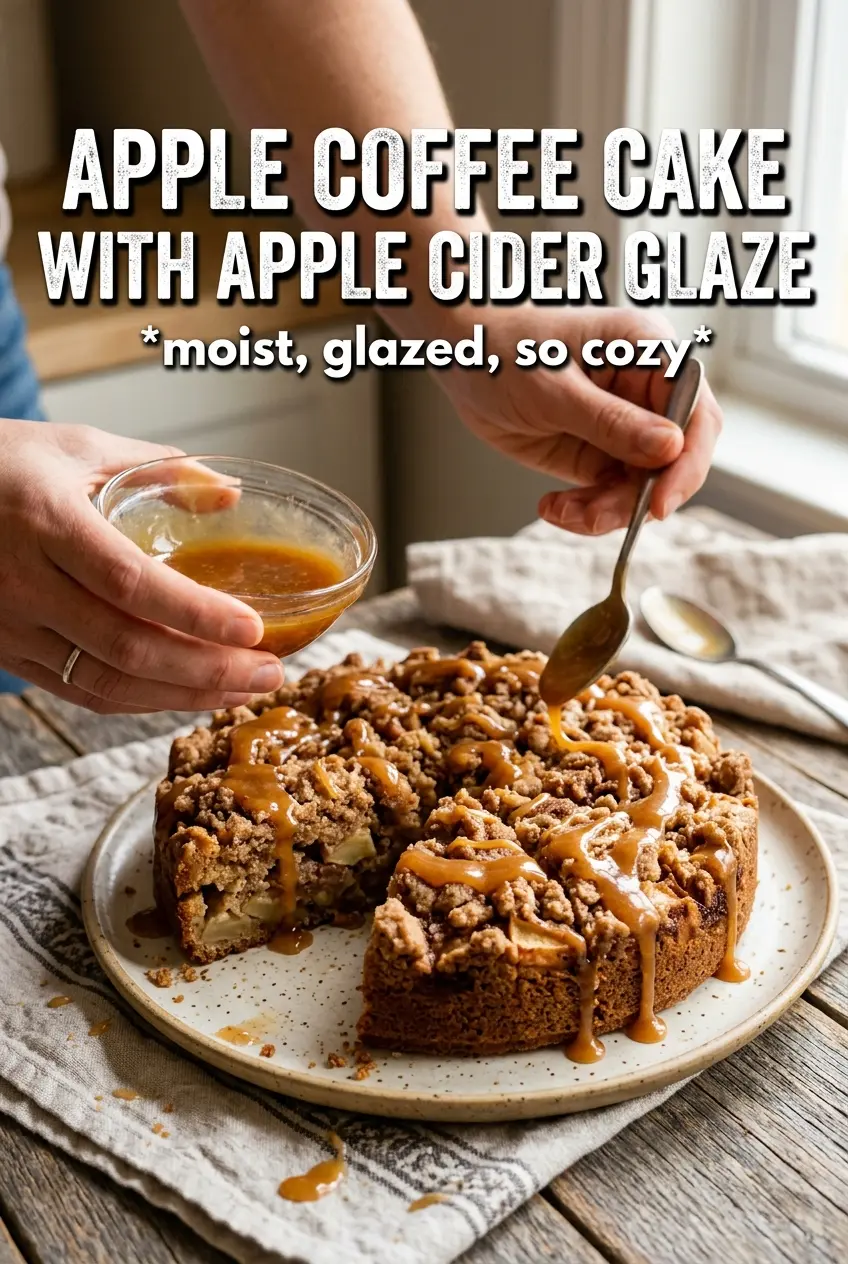
Moist apple coffee cake with a thick brown sugar streusel and a glossy apple cider glaze is the kind of breakfast that disappears fast. The crumb stays tender, the apples bake down into soft little pockets, and that cinnamon-streusel top turns crisp in the oven instead of sinking into the batter. The glaze drips into every ridge and makes each slice taste like it came from a bakery case, not a standard sheet pan.
What makes this version work is the balance. Sour cream keeps the cake plush without making it heavy, while the diced apples add moisture and little bursts of texture. The streusel starts with cold butter, which matters more than people think; if the butter softens too much before it goes into the oven, you lose those sandy crumbles and end up with a flat sugar crust instead of a real topping.
Below, I’ll walk through the one detail that keeps the cake from turning dense, plus the easiest way to reduce the cider so the glaze tastes sharp and apple-forward instead of watered down. If you’ve ever had coffee cake that looked good on top but ate dry underneath, this version fixes that.
The streusel stayed crisp even after the glaze went on, and the apple pieces baked up tender instead of disappearing into the batter. I used Honeycrisp and it was perfect with the cinnamon.
Save this apple coffee cake with apple cider glaze for mornings when you want a tender crumb, crisp streusel, and a glaze that tastes like reduced cider, not plain sugar.
The Streusel That Stays Crumbly Instead of Melting In
The biggest mistake with coffee cake is letting the topping turn into paste before it ever hits the oven. Cold butter is the safeguard here. You want the flour, brown sugar, and cinnamon to cling to small butter pieces, because those bits melt later and create the sandy, crunchy top that breaks cleanly when you cut into the cake.
If the butter gets too soft, the streusel turns dense and glossy. It still bakes, but it loses that crisp contrast against the tender cake below. Cut the butter in until the mixture looks like uneven crumbs with a few pea-sized bits left behind. That unevenness is a good sign.
- Brown sugar brings the caramel note that makes the topping taste deeper than plain cinnamon sugar.
- Cold butter is what creates texture; softened butter won’t give you the same crumble.
- Flour gives the topping structure so it bakes into clusters instead of disappearing.
What Each Ingredient Is Doing in the Cake Batter

- Sour cream keeps the cake moist and plush. Yogurt can work in a pinch, but sour cream gives a richer crumb and a softer bite.
- Diced apples should be small enough to distribute evenly through the batter. Large chunks can sink, and they also leave the cake unevenly baked in the middle.
- Butter and sugar need to be beaten until light before the eggs go in. That step traps air and keeps the cake from eating heavy.
- Baking powder and baking soda work together here because the sour cream needs a little extra lift. Skip one and the texture changes fast.
- Apple cider in the glaze should be reduced first. Raw cider makes the topping thin and sharp; reduced cider gives you concentrated apple flavor without watering down the sugar.
Building the Batter So the Apples Don’t Sink
Cream the Base Properly
Start by beating the butter and sugar until the mixture looks pale and fluffy, not just mixed. That extra air matters because this cake is dense enough from the sour cream and apples already. Add the eggs one at a time, then the vanilla, and stop as soon as everything looks smooth. If the mixture looks curdled, don’t panic — the flour will bring it back together.
Fold, Don’t Beat, the Dry Ingredients
Mix the flour, baking powder, baking soda, cinnamon, nutmeg, and salt in a separate bowl, then add them to the wet ingredients just until the streaks disappear. Overmixing here builds too much gluten and gives you a tight, bready crumb instead of a tender one. Fold in the apples last so they stay evenly distributed. The batter should look thick and scoopable, not pourable.
Bake Until the Center Springs Back
Spread the batter evenly in a greased 9×13 pan and scatter the streusel over the top in a full layer. Bake until the top is deeply golden and a toothpick comes out with a few moist crumbs, usually 45 to 50 minutes. If the center still looks shiny and wet, give it a few more minutes; the apples add moisture, and underbaking is the main reason coffee cake turns gummy in the middle.
Reduce the Cider Before the Glaze
Simmer the apple cider until it turns syrupy and drops down to a few tablespoons. Let it cool before whisking it with powdered sugar and cinnamon, or the glaze will turn too thin and slide right off the cake. Drizzle it over the coffee cake once the cake is warm, not piping hot, so it settles into the top without disappearing completely.
How to Adapt This Coffee Cake for Different Kitchens and Schedules
Make It Gluten-Free
Use a 1:1 gluten-free baking blend in place of the all-purpose flour in both the cake and streusel. The texture will be a little more delicate, but the sour cream keeps it from drying out. Let the baked cake cool fully before slicing so it sets cleanly.
Use Yogurt Instead of Sour Cream
Plain full-fat yogurt works if that’s what you have, but the cake will be slightly lighter and less rich. Thick Greek yogurt is the best swap because it behaves more like sour cream. Thin yogurt makes the batter looser, which can lead to a denser center.
Change the Apples, Not the Method
Honeycrisp, Granny Smith, and Braeburn all work well. Granny Smith brings more tartness, while Honeycrisp gives you a sweeter, juicier bite. Just keep the pieces small and even so the cake bakes through at the same rate.
Storage and Reheating
- Refrigerator: Store covered for 4 to 5 days. The streusel softens a little, but the cake stays moist.
- Freezer: Freeze individual slices tightly wrapped for up to 2 months. Glaze after thawing for the cleanest finish.
- Reheating: Warm slices in a 300°F oven or in short bursts in the microwave. Don’t overheat it or the cake dries out and the glaze gets sticky instead of glossy.
Questions I Get Asked About This Recipe
Apple Coffee Cake With Apple Cider Glaze
Ingredients
Equipment
Method
- Preheat oven to 350F, then grease a 9x13 pan so the cake releases cleanly after baking. The pan should look evenly coated with no bare dry spots.
- Cut cold butter into flour, brown sugar, and cinnamon until the mixture turns crumbly and clumps when pressed. Stop once it looks like coarse sandy crumbs.
- Beat butter and sugar until smooth and lighter in color. Mix until the texture looks creamy rather than grainy.
- Add eggs and vanilla, then beat again until fully incorporated. The batter should look uniform and glossy.
- Beat in sour cream until smooth. The batter should thicken slightly and look cohesive.
- Fold in flour, baking powder, baking soda, cinnamon, nutmeg, and salt until just combined. Stop as soon as no dry streaks remain.
- Fold in diced apple so the pieces are evenly distributed through the batter. Spread the apple throughout rather than leaving pockets.
- Spread the batter in the prepared pan, then scatter the streusel over the top in an even layer. Keep an eye out for any uncovered spots.
- Bake at 350F for 45-50 minutes, until the center is set and the top is deep golden with a lightly crisp streusel. A toothpick should come out with moist crumbs.
- Reduce apple cider, then cool slightly so it won’t melt the glaze. Aim for a thickened, more concentrated cider.
- Whisk reduced apple cider into powdered sugar and cinnamon until smooth and pourable. The glaze should coat a spoon in a slow ribbon.
- Drizzle the glaze over the cooled cake in thick ribbons so it sits on top rather than soaking in immediately. Let the glaze set briefly before slicing.