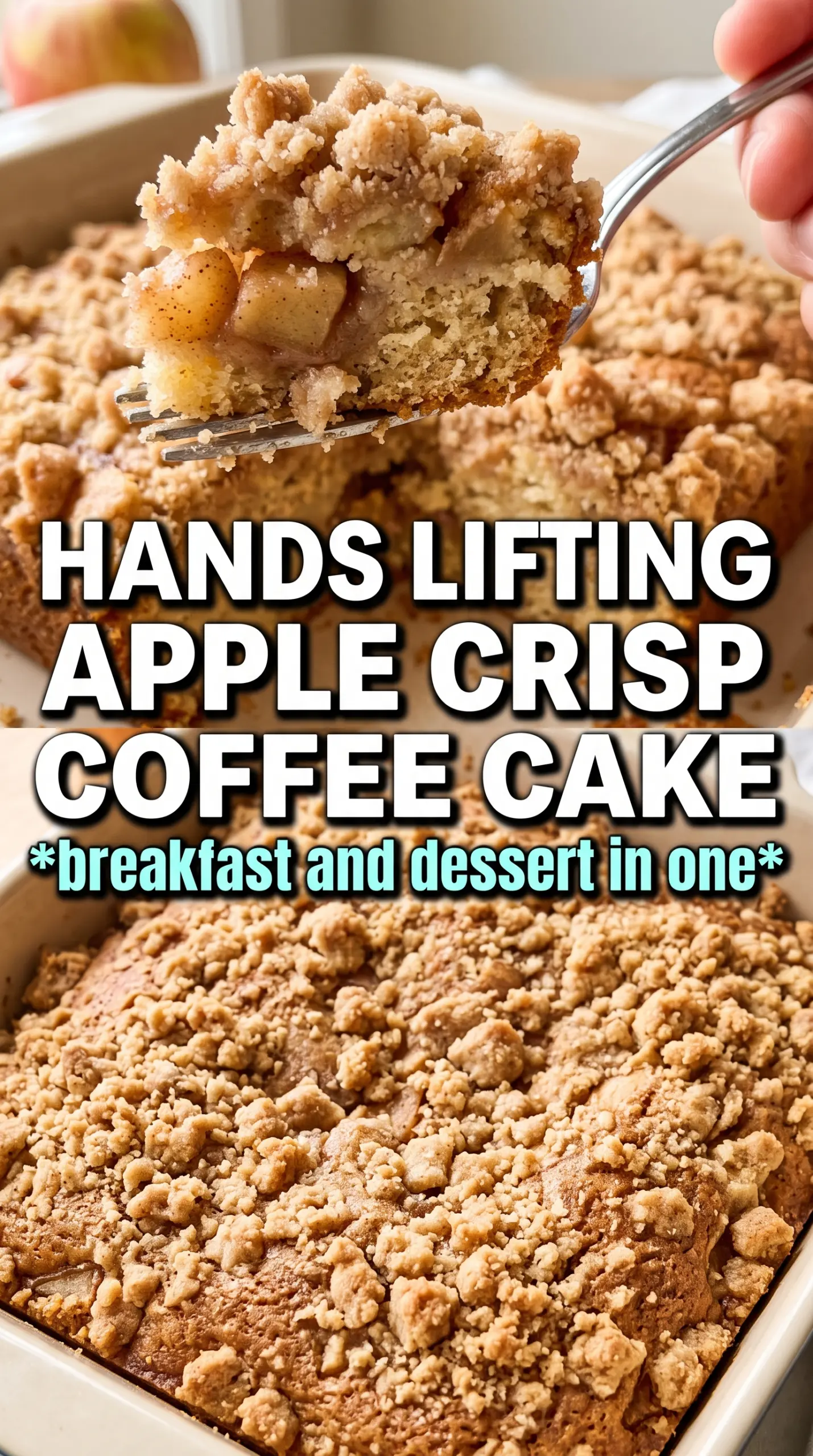
Apple crisp coffee cake lands in that perfect middle ground between breakfast cake and dessert. The crumb stays soft and moist from sour cream, the diced apples bake into little pockets of tenderness, and the oat crumble on top turns deep golden with those caramelized edges that crackle when you cut into it. It feels familiar in the best way, but each layer earns its place.
The trick is keeping the topping cold while the batter stays light. Cold butter in the crumble gives you those big sandy clumps instead of a dry blanket of crumbs, and sour cream in the cake keeps the texture plush without making it dense. The apples go in raw, which means they soften just enough in the oven and release their juice right into the cake as it bakes.
Below you’ll find the timing cue that matters most, a few smart swaps, and the one storage note that keeps the crumble from going soggy the next day.
The crumb topping baked up crisp instead of sinking into the batter, and the apples stayed tender without turning mushy. I served it warm for brunch and everyone went back for a second piece.
Save this Apple Crisp Coffee Cake for brunch days when you want a buttery crumb topping and soft spiced apple layers in one pan.
The Step That Keeps the Crumble Crisp Instead of Melting In
A coffee cake like this can go wrong in one very specific way: the topping softens before the cake is done, and you end up with a damp layer instead of an actual crumble. The fix is cold butter and a chilled topping. Once the oats, flour, brown sugar, cinnamon, and salt come together, the mixture should look clumpy and uneven, not like sand. Those clumps are what bake into crisp, jagged pieces on top.
The batter underneath needs to be thick enough to hold the apples without letting them sink. If your butter and sugar aren’t fully beaten until pale and fluffy, the cake can bake up heavy. I also like folding the apples in at the very end so they stay distributed through the batter instead of breaking down while you mix.
What Each Ingredient Is Actually Doing in This Cake
- Apples — Use a firm baking apple if you can, because soft apples turn mushy before the cake sets. Granny Smith, Honeycrisp, or a mix of both all work well. Dice them small so they soften evenly and don’t create wet pockets in the crumb.
- Sour cream — This keeps the cake tender and rich without making it greasy. Plain Greek yogurt works in a pinch, but the texture will be a touch tighter and the flavor a little tangier. Use full-fat if you want the softest crumb.
- Rolled oats — Old-fashioned oats give the topping its crisp, rustic texture. Quick oats will work, but the crumble will be finer and less defined. Steel-cut oats won’t soften enough here.
- Cold butter for the topping — This is what creates those bakery-style clusters. If the butter gets soft before it goes into the oven, the topping bakes into a thin sheet instead of a crisp crumble. Keep it cold and cut it in just until the mix holds together when squeezed.
Building the Batter and Crumble So They Bake at the Same Pace
Make the crumble first
Start with the topping so it has time to chill. Combine the oats, flour, brown sugar, cinnamon, and salt, then cut in the cold butter until you get rough clumps. If you keep working it until it looks uniform, the topping loses its texture, so stop as soon as it starts holding together. Set it in the fridge while you build the batter.
Whip the base until it turns light
Beat the softened butter and sugar until the mixture looks pale and fluffy, not just mixed. That step traps air and gives the cake lift before the leaveners even start working. Add the eggs one at a time if possible, then vanilla, then sour cream. If the batter looks a little curdled after the sour cream goes in, that’s fine; it smooths out once the dry ingredients are folded in.
Fold the apples in last
Add the flour mixture in two additions and stop mixing as soon as the streaks disappear. Overmixing turns the cake chewy instead of tender. Fold in the diced apples gently so they stay intact, then spread the batter into the pan and scatter the crumble over the top in an even layer. Don’t press it down or it will bake into the cake instead of staying crisp on top.
Bake until the center is set
Bake at 350°F until the top is deeply golden and a toothpick inserted into the center comes out clean or with just a few moist crumbs. If the top browns too quickly before the center is done, tent it loosely with foil for the last 10 to 15 minutes. Let the cake cool at least slightly before slicing so the crumb topping can set instead of sliding off.
How to Adapt This Apple Crisp Coffee Cake Without Losing the Good Part
Make it dairy-free
Use a good plant-based butter in both the cake and the crumble, and swap the sour cream for unsweetened dairy-free yogurt. The cake will still be tender, though the topping may brown a little faster, so start checking a few minutes early.
Use a different fruit
Pears work well if they’re firm and not overly ripe. Blueberries also fit, but they’ll add more moisture and a juicier streak through the cake, so keep the dice smaller and don’t overload the batter.
Make it gluten-free
A 1:1 gluten-free baking blend works best in the cake and topping. The texture will be a little more delicate, so let the coffee cake cool well before slicing or it can crumble apart.
Turn it into a smaller pan bake
Halve the recipe and bake it in an 8×8-inch pan. The edges will set faster, so start checking for doneness around 40 minutes. You’ll get a thicker crumb layer and a slightly higher ratio of topping to cake.
Storage and Reheating
- Refrigerator: Store covered for up to 4 days. The crumble softens a little in the fridge, but the cake stays moist.
- Freezer: Freeze slices tightly wrapped for up to 2 months. The texture holds up better than you might expect, especially if you freeze individual pieces.
- Reheating: Warm slices in a 300°F oven or toaster oven until just heated through. The microwave works in a pinch, but it softens the topping fast, so use short bursts if you go that route.
Questions I Get Asked About This Recipe
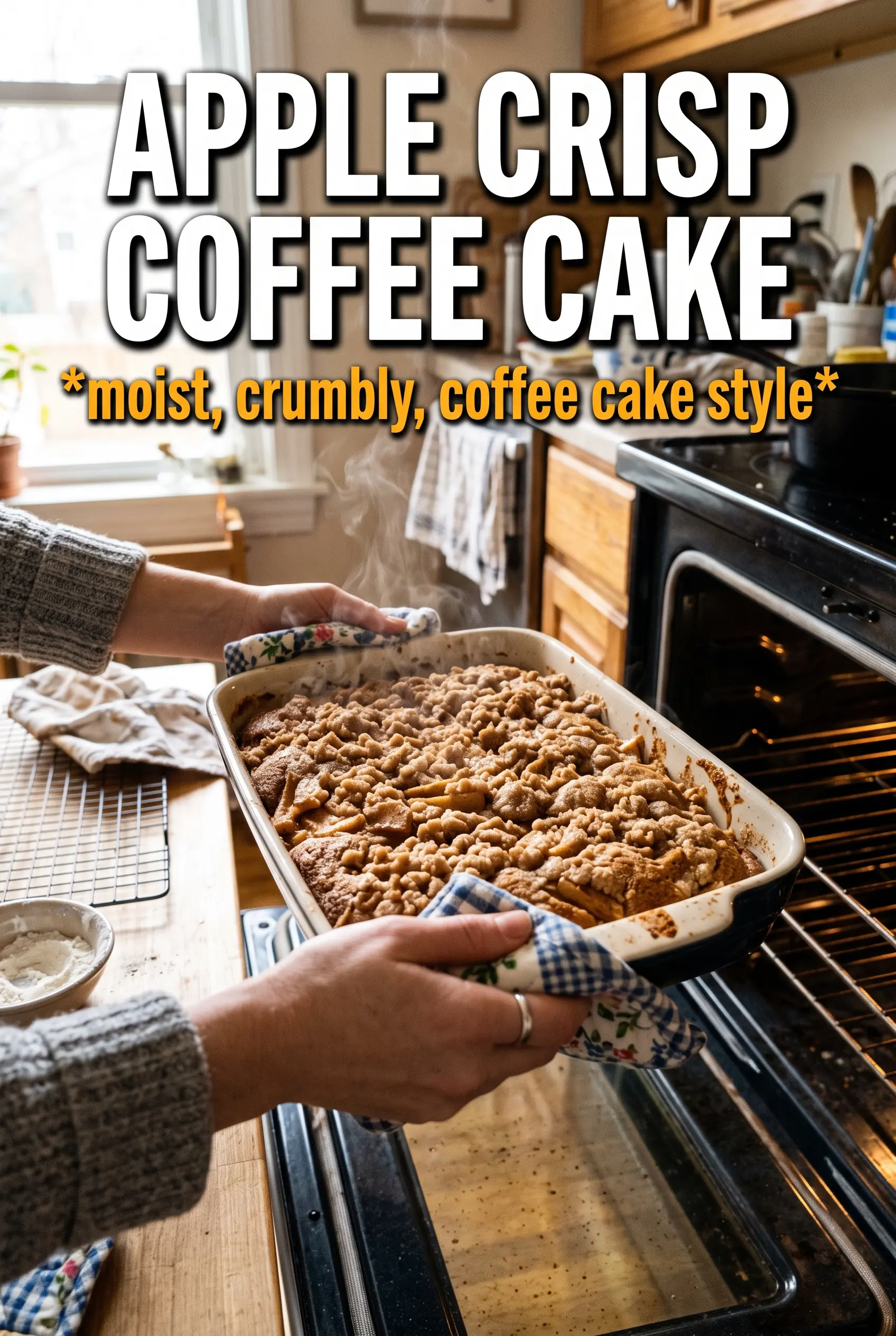
Apple Crisp Coffee Cake
Ingredients
Equipment
Method
- Preheat the oven to 350F, then grease a 9x13 baking dish. Keep the dish ready so you can spread the batter immediately.
- Combine rolled oats, all-purpose flour, brown sugar, cinnamon, and salt in a bowl. Rub/cut in the cold butter until the mixture is clumpy with visible oat bits.
- Refrigerate the topping. Chill it just until the cake batter is ready so it stays crumbly and browns on top.
- Whisk all-purpose flour, baking powder, baking soda, cinnamon, and salt together. Make sure the dry spices and leaveners are evenly distributed.
- Beat softened unsalted butter and granulated sugar until fluffy. Add eggs and vanilla, then beat in sour cream until smooth.
- Fold the flour mixture into the wet ingredients until no dry streaks remain. Fold in diced apples so you see apple pieces throughout the batter.
- Spread the batter into the prepared pan in an even layer. Scatter the oat crumble generously over the top so it fully covers the surface.
- Bake at 350F for 50-55 minutes, until a toothpick comes out clean and the crumble is golden. You should see caramelized brown edges around the apple pockets.
- Let the coffee cake cool briefly, then dust with powdered sugar if desired. Slice and serve while still warm for the best crumb contrast.