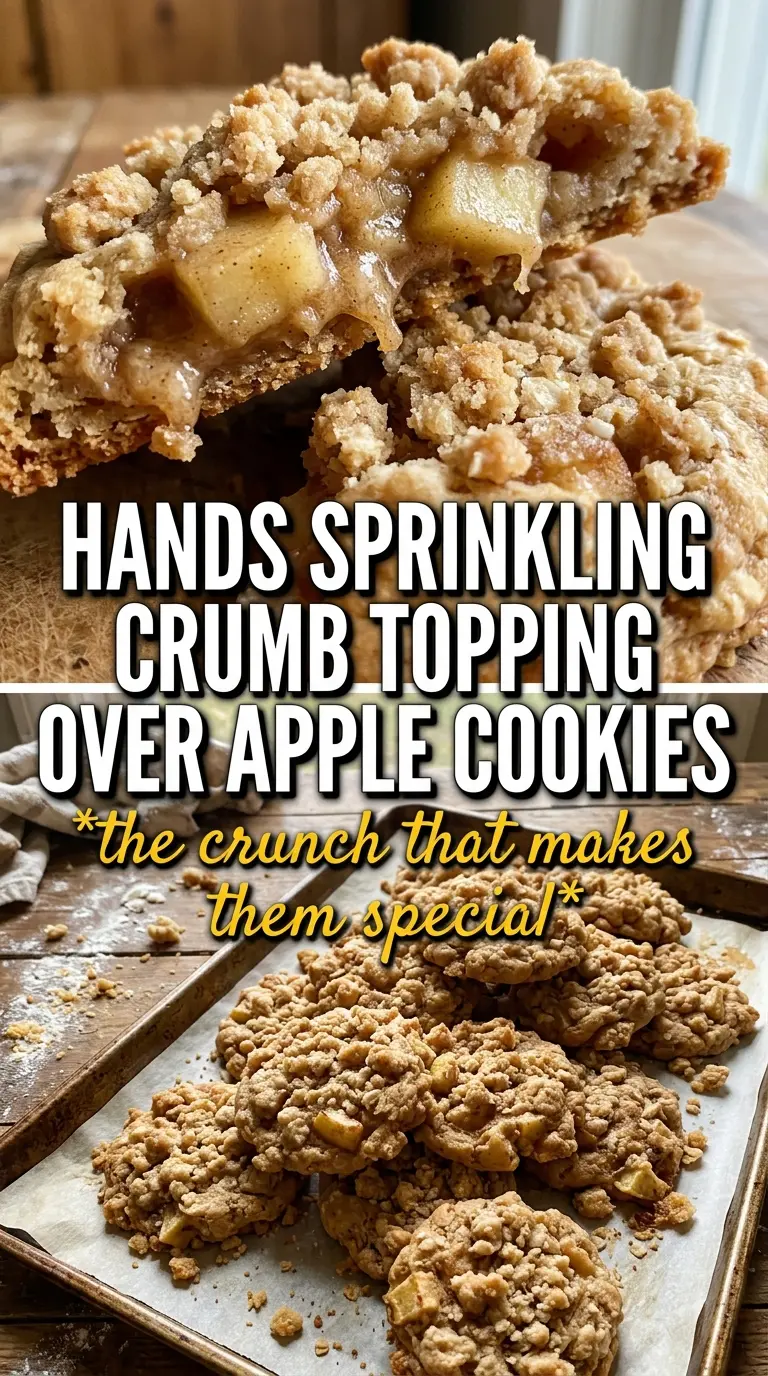
Apple crumb cookies bake up soft in the center with crisp edges, a buttery oat topping, and little pockets of tender apple in every bite. The crumb stays nubbly and toasted instead of melting into the dough, and that contrast is what makes these cookies worth repeating. The caramel drizzle on top ties the whole thing together without making them cloying.
What keeps this version on track is the balance of moisture. Applesauce brings gentle apple flavor and a plush texture, while the diced apple gives you the fresh fruit bite that applesauce alone can’t deliver. Patting the apple dry matters more than people think; too much surface moisture makes the cookies spread and softens the crumb topping before it has a chance to brown.
Below, I’ve included the small details that help the cookies hold their shape, stay soft for days, and keep that oat crumble from disappearing into the dough. The method is straightforward, but a couple of choices make the difference between a decent apple cookie and one you’ll keep reaching for off the cooling rack.
The cookies stayed thick, the oat crumble browned on top, and the diced apple gave them the best little soft bites. I chilled the dough for 30 minutes like you said and they didn’t spread at all.
Like these apple crumb cookies? Save them to Pinterest for the soft, oat-topped cookie with caramel drizzle you’ll want to bake again.
The Secret Is in the Chill, Not the Mix
Apple cookies can turn cakey or overly puffy fast, and the usual culprit is warm dough. This dough needs a short chill after the flour and apple go in because the butter firms back up and the flour hydrates before baking. That gives you thicker cookies with edges that set before the centers over-expand.
The other thing that matters is the oat crumble. Press it on gently, don’t bury it in the dough. If the topping gets packed too hard, it bakes into a dense cap instead of staying loose and sandy with those crisp little brown edges people actually want.
- Chilling the dough keeps the cookies from spreading too much and gives the apple time to settle into the batter.
- Patting the diced apple dry prevents excess moisture from thinning the dough and weakening the crumble.
- Pressing, not mixing, the topping keeps the crumb visible and textured on top of each cookie.
What Each Ingredient Is Actually Doing in These Cookies
- Applesauce adds moisture and apple flavor without loading the dough with extra chunks. It helps the cookies stay soft for days.
- Finely diced apple gives the fresh fruit bite that makes these taste like apples instead of just cinnamon cookies. Pat it dry after dicing so the dough doesn’t get wet.
- Brown sugar deepens the flavor and keeps the cookies tender. You can use light brown sugar here; dark brown sugar will push the molasses note a little harder.
- Cold butter for the crumble is non-negotiable. Cold butter cuts into the dry ingredients and bakes into crumbs instead of a paste.
- Oats give the topping its nubby texture and toasty finish. Quick oats work in a pinch, but old-fashioned oats hold more shape.
Building the Dough So the Cookies Stay Thick
Mix the Crumble First and Park It in the Fridge
Start with the oat crumble so it has time to firm up while you make the dough. Work the cold butter into the oats, flour, brown sugar, and cinnamon until you have uneven crumbs, not a smooth paste. If the butter is too soft, the topping melts before the cookies set and you lose that crunchy layer on top.
Beat the Base Until It Looks Light and Creamy
Beat the butter with both sugars until the mixture looks fluffy and a little paler. That step traps air, which helps the cookies bake up with a soft center instead of a heavy, dense crumb. Add the eggs, vanilla, and applesauce after that, and stop mixing as soon as the batter looks smooth. Overmixing here can make the dough loose and harder to portion cleanly.
Fold in the Dry Ingredients and Chill the Dough
Stir in the flour, baking soda, baking powder, cinnamon, nutmeg, salt, and diced apple just until no dry streaks remain. The dough will look thick and a little sticky, which is exactly what you want. Chill it for 30 minutes so the flour absorbs the moisture and the cookies hold their shape in the oven.
Bake Until the Edges Set and the Centers Still Look Soft
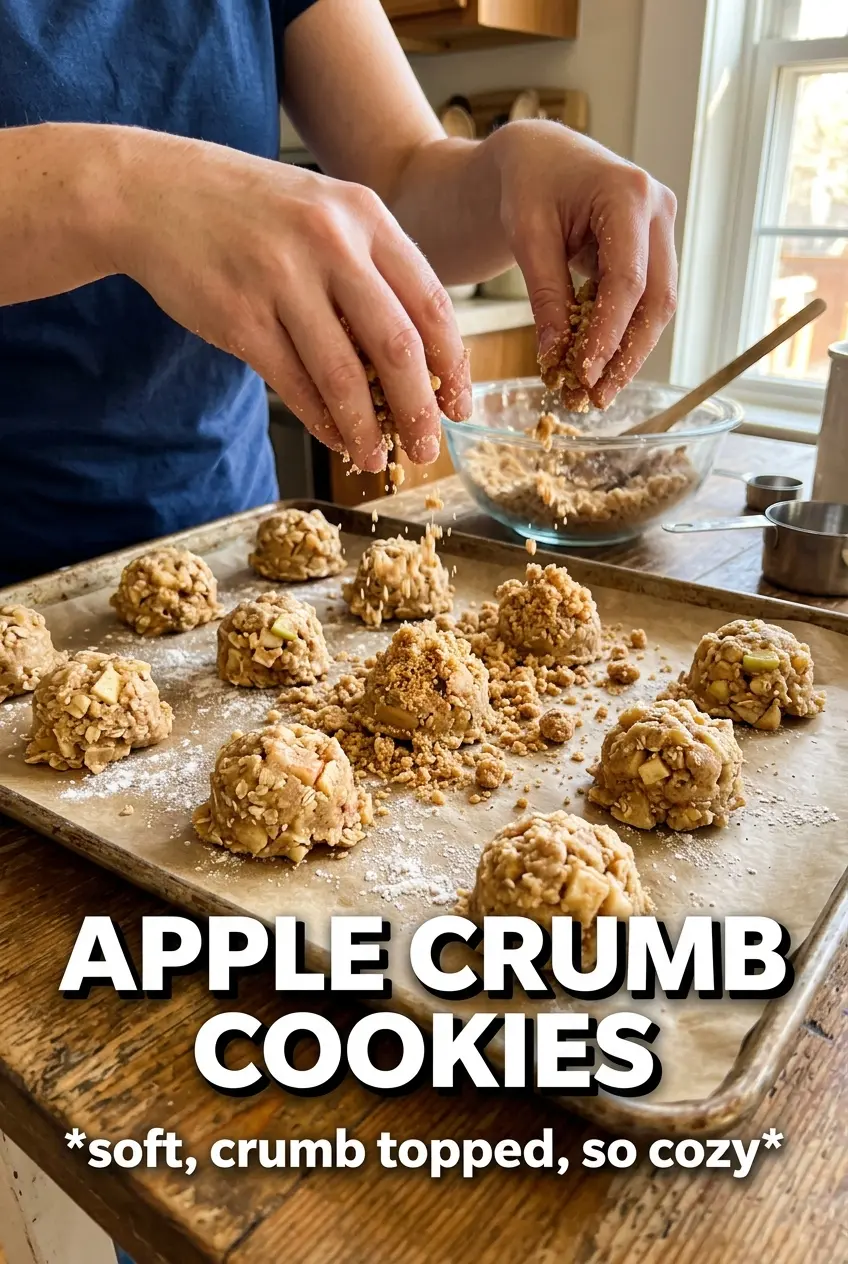
Scoop the dough into 2-tablespoon rounds, then press a generous pinch of crumble onto each one. Bake at 375°F until the edges are golden and the centers still look slightly underdone; they finish setting on the pan as they cool. If you wait until the tops look fully dry in the oven, they’ll end up firmer than you want.
Finish With Caramel While They’re Warm
Drizzle the caramel while the cookies are still warm so it settles across the crumble instead of sitting in hard ribbons on top. Warm cookies will absorb a tiny bit of the drizzle at the edges, which tastes better than a cold glaze that just sits there. Let them cool long enough to set before stacking, or the topping will smear.
How to Adapt These for Different Pans, Diets, and Substitutions
Gluten-Free Version
Use a good 1:1 gluten-free baking flour in both the cookie dough and the crumble. The texture will be a little softer and more delicate, but chilling the dough becomes even more important because gluten-free doughs can spread faster.
Dairy-Free Swap
Use a plant-based butter that bakes well in both the dough and the topping. You’ll lose a little of the classic butter-forward aroma, but the cookies will still hold their shape and the crumble will brown nicely if the butter substitute has enough fat.
Making Them More Apple-Forward
Add a little extra cinnamon and use a tart apple like Granny Smith for sharper apple flavor. Don’t add more applesauce to compensate; that pushes the dough into cakey territory and makes the cookies spread more.
Storage and Reheating
- Refrigerator: Store in an airtight container for up to 4 days. The crumble softens a little, but the cookies stay tender.
- Freezer: Freeze baked cookies for up to 2 months, layered with parchment. You can also freeze the dough balls without the crumble and add the topping just before baking.
- Reheating: Warm cookies in a 300°F oven for 4 to 6 minutes. The microwave makes the crumble soft and the edges sticky, so skip it if you want the best texture.
Questions I Get Asked About This Recipe
Apple Crumb Cookies
Ingredients
Equipment
Method
- Combine oats, flour, brown sugar, and cinnamon, then cut in cold butter until the mixture looks sandy and clumps when pressed. Refrigerate until firm, about 30 minutes.
- Preheat the oven to 375F and line baking sheets with parchment or a silicone mat. Keep the sheets ready for scooping.
- Beat butter and both sugars until smooth, then add eggs, vanilla, and applesauce and mix until combined. Stop and scrape the bowl so no streaks remain.
- Fold in the dry ingredients and the finely diced apple, then mix just until no flour pockets show. Refrigerate the dough for 30 minutes.
- Scoop dough into 2-tablespoon rounds and arrange them on the lined baking sheets with space between cookies. Press a generous pinch of the oat crumble topping onto each cookie.
- Bake for 12-14 minutes at 375F until the tops are golden and the edges look set. Visual cue: the crumble should look lightly toasted.
- Drizzle caramel over the cookies while they are still warm. Let the caramel set for a few minutes before serving.