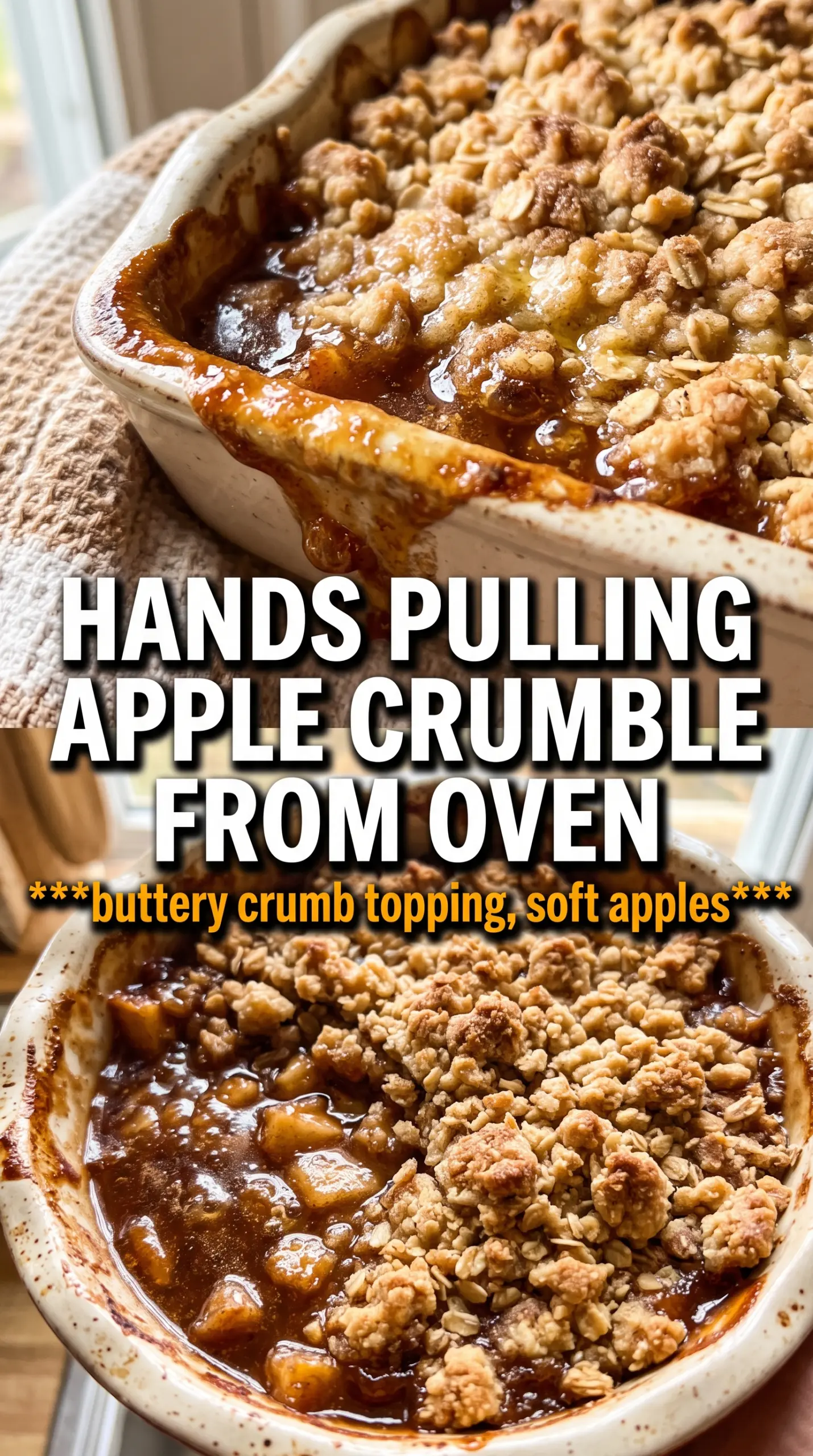
Apple crumble lands on the table with the kind of contrast that keeps people going back for a second spoonful: soft, tangy apples underneath and a sandy, golden topping that turns crisp at the edges while staying tender in the middle. When it’s baked right, the fruit bubbles up through the crumble and perfumes the whole kitchen with cinnamon and butter.
The version that works best keeps the topping loose instead of pressed into a dough. Cold butter rubbed into the flour gives you those irregular bits that brown at different rates, which is what makes the topping taste toasted instead of flat. A little lemon juice keeps the apples bright, and brown sugar in the crumble brings a deeper caramel note without making it sticky.
Below, I’ve included the small details that matter most here: how to keep the topping crumbly, how to tell when the filling has cooked through, and a few easy ways to adapt it if your pantry is missing one piece.
The topping stayed perfectly crumbly and crunchy, and the apples softened all the way through without turning watery. I served it with custard and my husband asked for the last scoop before dinner was even cleared away.
Save this apple crumble for the nights when you want buttery crumble topping, tender cinnamon apples, and custard on the side.
The Bake That Keeps the Apples Soft and the Topping Crisp
The biggest mistake with apple crumble is packing the topping down like a crust. That turns the surface dense and pasty instead of crumbly, and it can trap steam over the fruit. Scatter it over the apples in an even layer and leave it loose so the butter can melt, the flour can toast, and the sugars can caramelize around the edges.
The other thing that matters is the apple size. Thin, even slices cook at the same pace, which means you don’t end up with some pieces collapsing into sauce while others stay firm. Cooking apples hold their shape better than dessert apples here, so the filling turns soft and spoonable without disappearing.
- Cooking apples — Use a tart, firm variety if you can. They soften into a proper filling instead of turning sweet and mushy.
- Lemon juice — It keeps the apples tasting fresh and stops the filling from going dull. You don’t need much, but don’t skip it.
- Cold butter — This is what creates the crumbly texture. If the butter is soft, the topping turns greasy and heavy instead of crisp and sandy.
- Brown sugar — The light brown sugar adds a deeper, almost toffee-like note that plain white sugar can’t give you. If you’re out, use all granulated sugar, but expect a flatter flavor.
What the Butter, Sugar, and Apples Are Each Doing Here
- Plain flour — It gives the topping structure and lets the butter cling to something. Self-raising flour isn’t needed here; it can make the crumble feel cakier.
- Cold unsalted butter — Unsalted butter gives you control over the seasoning, and cold butter is what keeps the topping from melting into a paste before it bakes. Cube it first so it rubs in evenly.
- Granulated and light brown sugar — The mix gives you both crispness and depth. All white sugar makes the topping cleaner and sharper; all brown sugar makes it softer and darker.
- Cinnamon — A small amount is enough to warm the apples without making the dish taste heavy. If your cinnamon is old and flat, replace it; stale spice shows up in a short ingredient list.
- Salt — It sharpens the butter and sugar and keeps the topping from tasting one-note. That tiny amount matters more than people think.
Rubbing in the Topping So It Bakes Up Crumbly, Not Dense
Preparing the apples
Preheat the oven first, then grease the dish before you touch the apples. Toss the slices with sugar, cinnamon, and lemon juice until every piece is lightly coated, then spread them in an even layer. If you pile the apples too deeply, the top browns before the fruit has time to soften, and you end up with a raw center.
Making the crumble
Rub the flour and cold butter together with your fingertips until the mixture looks like coarse breadcrumbs with a few bigger pieces mixed in. Those bigger pieces are what give you the best texture after baking. If the mixture turns greasy or paste-like, the butter warmed up too much; chill it for a few minutes and keep going.
Baking to the right finish
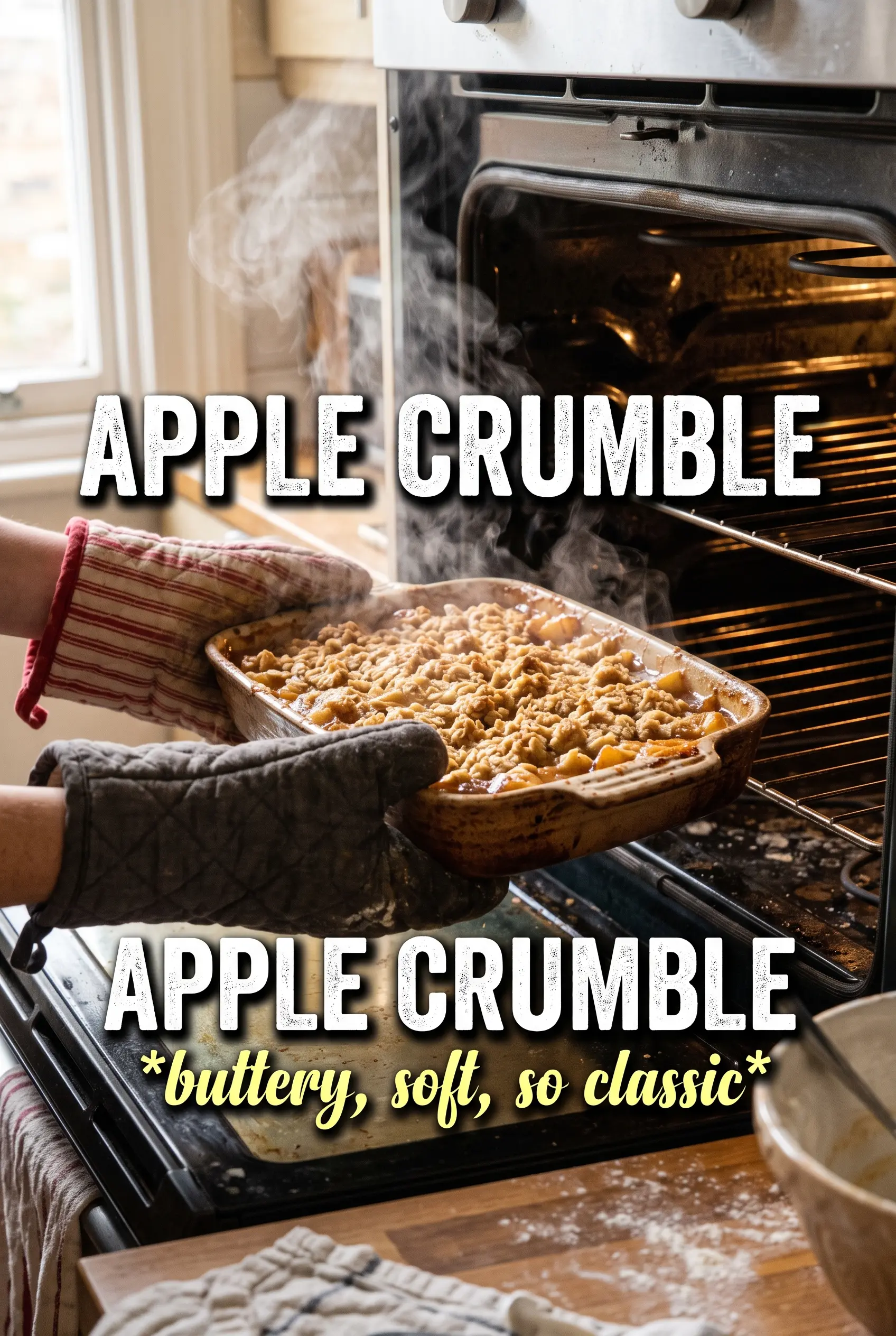
Scatter the crumble over the apples without pressing it down, then bake until the top is pale golden and the filling is bubbling at the edges. The bubbles are the signal that the apples have released their juices and the filling has thickened enough to serve. If the topping is dark but the fruit still looks quiet, the dish needs more time, not a hotter oven.
Three Useful Ways to Bend This Crumble Without Ruining It
Make it gluten-free
Swap the plain flour for a good gluten-free plain flour blend that already includes a binder. The topping will be a little more delicate and less sandy, but it still bakes up with plenty of crunch if you keep the butter cold and don’t overwork it.
Use pears with the apples
Replace about a third of the apples with firm pears for a softer, juicier filling. Pears cook faster, so cut them slightly larger than the apples or they can disappear too much by the time the crumble is done.
Make it dairy-free
Use a firm plant-based block butter, not a soft spread, so the topping still rubs into crumbs instead of melting immediately. The flavor stays close to the original, though the crust won’t taste quite as rich as one made with dairy butter.
Storage and Reheating
- Refrigerator: Store covered for up to 4 days. The topping softens a little in the fridge, but the flavor stays good.
- Freezer: It freezes well once baked and cooled. Wrap tightly and freeze for up to 2 months, then thaw overnight in the fridge before reheating.
- Reheating: Warm it in a 180C (350F) oven until the filling is hot and the top crisps again. The mistake to avoid is using the microwave alone, which makes the crumble topping limp.
Answers to the Questions Worth Asking
Apple Crumble
Ingredients
Equipment
Method
- Preheat the oven to 190C (375F) and grease a large baking dish.
- Toss the apple slices with granulated sugar, cinnamon, and lemon juice, then spread them in the prepared dish.
- Make the crumble by combining plain all-purpose flour and cold unsalted butter in a bowl, then rub with your fingertips until it looks like coarse breadcrumbs with some larger pieces.
- Stir in both sugars, cinnamon, and salt until evenly mixed.
- Spread the crumble evenly over the apples without packing it down.
- Bake for 35-40 minutes, until the topping turns pale golden and the apple filling bubbles at the edges.
- Serve warm with custard, double cream, or vanilla ice cream right after baking.