Apple fritter bread bakes up with the same cinnamon-apple comfort of a bakery fritter, but in a sliceable loaf that stays tender for days. The crumb comes out moist and dense in the best way, with pockets of soft cooked apples and a vanilla glaze that sinks into the top just enough to give every bite a little sweetness without turning sticky.
The part that makes this version work is cooking the apples first. Raw diced apples can throw off too much moisture in a loaf pan, leaving you with a soggy center and underbaked streaks around the fruit. A quick cook with butter, brown sugar, and cinnamon softens them, concentrates the flavor, and keeps the bread from collapsing around wet spots.
Below, I’ll walk through the step that keeps the batter balanced, the way I layer the apples so they stay in the middle, and a few swaps if you need to work with what’s already in the kitchen.
The apple layer stayed right in the middle and the loaf sliced cleanly after cooling. Cooking the apples first made all the difference — no wet pockets, just soft cinnamon pieces in every slice.
Save this apple fritter bread for when you want a soft cinnamon-apple loaf with a thick vanilla glaze and no bakery run.
The Trick to Keeping the Apple Layer in the Middle
Apple fritter bread can go wrong when the fruit gets too close to the edges or when the batter is loose enough to let it sink. Cooking the apples first helps, but the other important move is using a thick batter and layering it in two parts. That gives the loaf enough structure to hold the filling instead of swallowing it whole.
Swirling gently matters more than people think. You’re not trying to marble the loaf like a coffee cake. You just want a few visible ribbons so the apples stay distributed without breaking the batter into streaks that bake up gummy.
- Cooked apples — They shrink a little and lose excess moisture before they ever hit the loaf pan, which keeps the center from turning wet.
- Butter and sugar creamed well — This traps air in the batter and gives the loaf a lighter crumb, even though it still eats like a rich breakfast bread.
- Gentle swirling — Too much mixing knocks out the layering and pushes the apples into the batter instead of keeping them in pockets.
What Each Ingredient Is Actually Doing in This Loaf
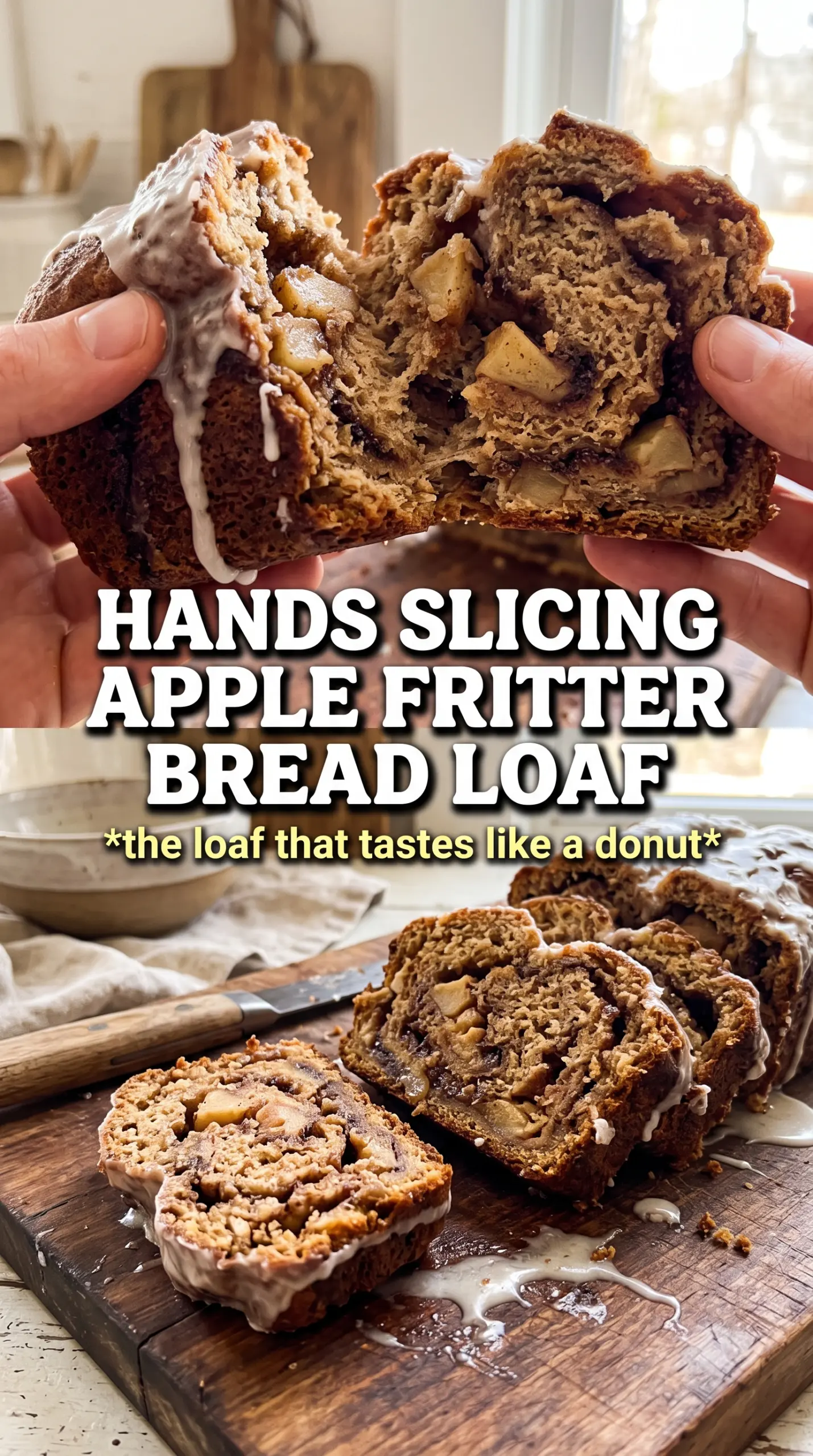
- All-purpose flour — This gives the loaf its structure. Bread flour would make it tighter and chewier, which isn’t what you want here.
- Baking powder and baking soda — The two leaveners work together to lift the loaf and keep it from baking up heavy under the apple layer. If your loaf ever turns flat, this is the first place to check for old ingredients.
- Butter — Use real butter here. It carries the cinnamon flavor and gives the crumb that soft bakery texture. Softened butter creams with the sugar much better than melted butter.
- Whole milk — The fat in whole milk helps the batter stay tender. Lower-fat milk works in a pinch, but the loaf won’t feel as plush.
- Apples — Firm baking apples hold their shape best after cooking. If all you have are softer apples, cook them a minute less so they don’t turn to mush.
- Brown sugar in the filling — This deepens the apple layer and helps it taste more like fritter filling than plain spiced fruit.
How to Build the Loaf So the Center Bakes Through
Cooking the Apples First
Start with the apple filling and cook it just until the cubes soften and the juices turn syrupy. You want the fruit tender, not falling apart, because it will keep cooking in the oven. Let it cool completely before it goes into the batter, or it can melt the butter in the loaf and leave you with a greasy, uneven crumb.
Mixing the Batter Without Tearing It
Cream the butter and granulated sugar until the mixture looks pale and fluffy, then add the eggs and vanilla. When you alternate the dry ingredients with the milk, stop mixing as soon as the flour disappears. Overmixing tightens the crumb and makes the loaf tough around the edges while the center still tries to finish baking.
Layering and Swirling
Spread half the batter in the pan, add the cooled apple mixture, then cover it with the rest of the batter. Run a knife through once or twice with a light hand. If you swirl too deeply, the apples drift downward and can leave the top plain and the bottom heavy.
Baking to the Right Center Texture
Bake until the top is deep golden and a toothpick comes out clean or with just a few moist crumbs. Start checking at 55 minutes, but don’t pull the loaf just because the surface looks done. The middle needs enough time to set around the fruit, and a loaf pan can hide a wet center under a browned top.
Make It Dairy-Free
Use a plant-based butter that bakes well and swap in an unsweetened non-dairy milk. The loaf will still hold together, but the crumb won’t be quite as rich, so don’t skip the vanilla in the glaze.
Use a Gluten-Free Flour Blend
A cup-for-cup gluten-free blend works best here, especially one that includes xanthan gum. The loaf will be a little more delicate when sliced, so let it cool fully before cutting.
Turn It Into Muffins
Spoon the batter and apple filling into a lined muffin tin and bake until the centers spring back when touched. You’ll lose some of the loaf’s layered look, but you gain faster baking and built-in portions.
Storage and Reheating
- Refrigerator: Store covered for up to 4 days. The glaze will sink in a bit, and the crumb gets denser after day two.
- Freezer: Freeze the unglazed loaf tightly wrapped for up to 2 months. Thaw at room temperature, then glaze after it’s fully defrosted so the topping stays fresh.
- Reheating: Warm slices in a low oven or briefly in the microwave. Don’t overheat them, or the apples dry out and the glaze turns sticky instead of soft.
Answers to the Questions Worth Asking
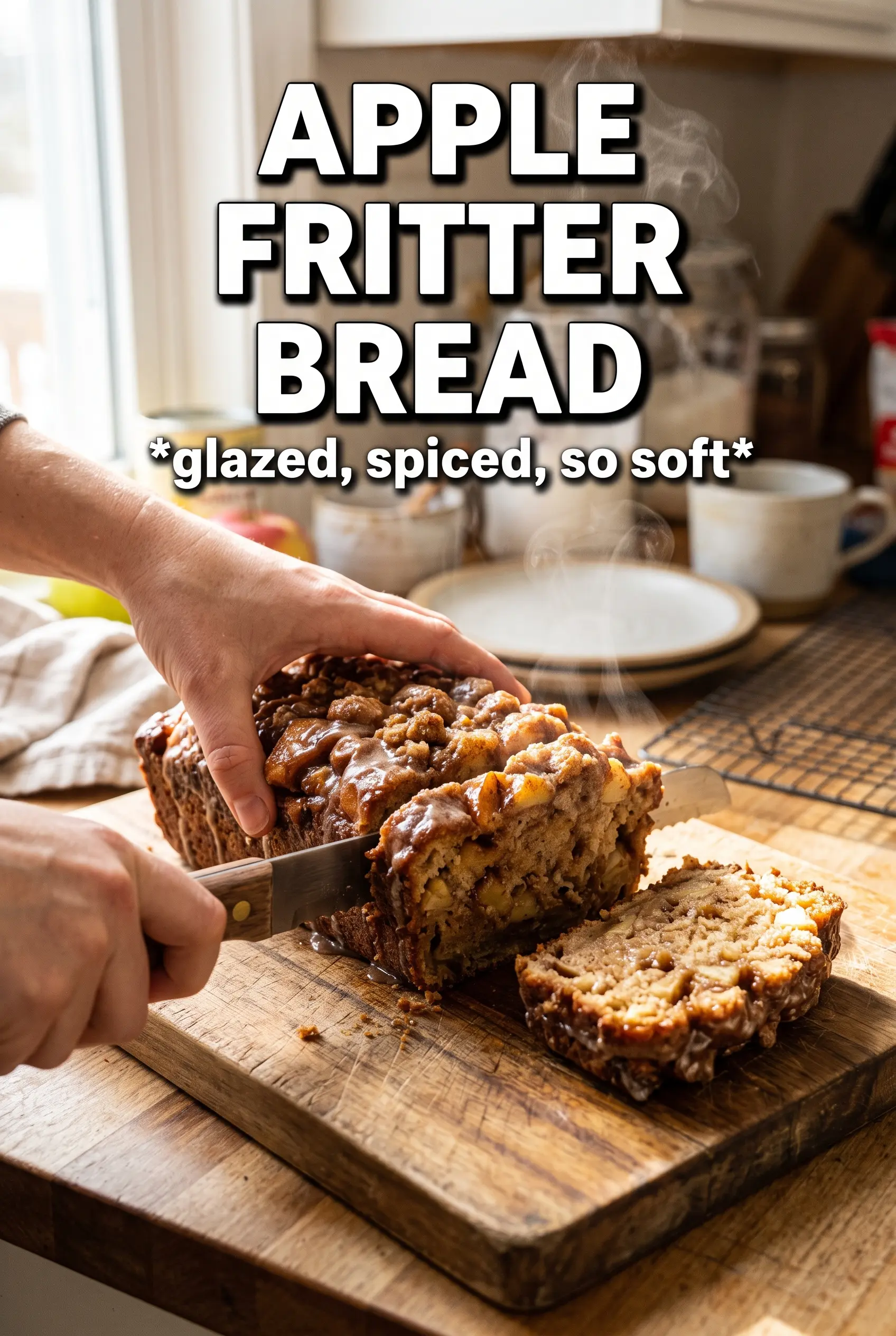
Apple Fritter Bread
Ingredients
Equipment
Method
- Preheat oven to 350F, then grease a 9x5 loaf pan. Set it aside so the batter can go in right away.
- Cook diced apples with butter, brown sugar, and cinnamon in a skillet for 5 minutes until softened. Spread the filling on a plate and cool completely before using.
- Beat softened butter and granulated sugar until fluffy. This should look lighter in color and feel aerated.
- Add eggs and vanilla extract, then beat until smooth. Stop once the mixture looks uniform and glossy.
- Whisk all-purpose flour, baking powder, baking soda, salt, and cinnamon in a bowl. Alternate adding the dry mixture and whole milk to the butter mixture until just combined.
- Pour half the batter into the greased loaf pan. Tap once to level the top.
- Layer all the cooled cinnamon-apple mixture over the batter. Distribute it evenly so each slice gets apples.
- Top with the remaining batter, then swirl gently with a knife. Make 2-3 gentle passes to create a ribbon effect.
- Bake at 350F for 55-60 minutes until a toothpick comes out clean. Cool in the pan for 15 minutes.
- Whisk powdered sugar with milk and vanilla until thick and pourable. Drizzle generously over the warm loaf so the glaze sets on top.