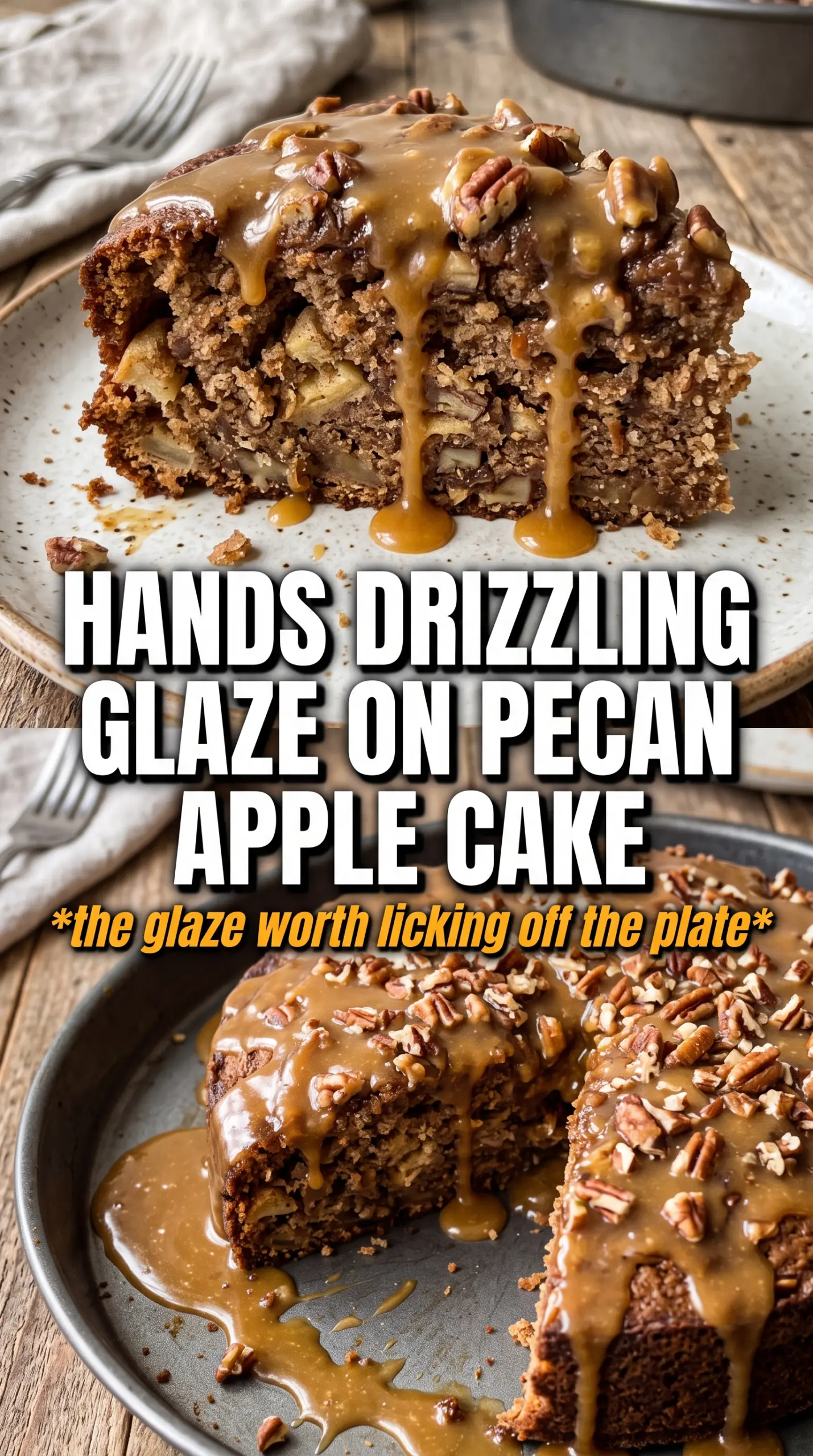
Apple pecan cake has a way of tasting even better the next day, when the crumb has settled and the caramel glaze sinks into every ridge of the bundt. The cake stays moist from the apples and oil, while the chopped pecans give each slice a little crunch so it never feels heavy or flat. Warm spices, brown sugar, and that buttery glaze make it the kind of dessert people keep sneaking back to.
What makes this version work is the balance. The batter is mixed just enough to come together, which keeps the crumb tender instead of tough, and the apples go in diced so they soften during baking without disappearing. The caramel glaze is cooked just long enough to thicken slightly, then poured over the cooled cake so it clings instead of running straight off.
If bundt cakes have ever stuck to the pan or turned out dry around the edges, the sections below will help. I’ve included the little details that matter here, from pan prep to the best way to glaze the cake cleanly.
The cake came out super moist and the caramel glaze settled into the ridges instead of sliding off. I used tart apples and the pecans stayed crunchy even after baking.
Save this apple pecan cake with caramel glaze for the days when you want a bundt cake that slices cleanly and pours on glossy, buttery caramel.
The Trick to Keeping Bundt Cakes Moist Without Making Them Dense
Bundt cakes like this one can go wrong in two different ways: they turn dry from overbaking, or they turn heavy from overmixing. The oil helps here because it stays tender at room temperature, and the apples release just enough moisture into the batter as the cake bakes. The key is stopping the mixing as soon as the flour disappears. Once the batter turns pasty and elastic, the cake starts heading toward a tight crumb.
The other detail that matters is the pan. A bundt pan has more surface area than a standard cake pan, so a weak coat of grease and flour can leave you with stuck corners and broken ridges. Use a thorough coating, get into every curve, and let the cake rest in the pan for about 20 minutes after baking. That gives it time to set up so it releases cleanly without tearing.
- Apples — Diced apples keep the crumb moist and give you little soft pockets throughout the cake. A firm baking apple holds its shape best, but you can use what you have as long as it isn’t mealy.
- Pecans — Chop them roughly so you get texture in the bite, not dust in the batter. Toasting them first adds more flavor, but it isn’t required.
- Vegetable oil — Oil keeps this cake softer than butter-based batters once it cools. Melted butter won’t give the same moist, even crumb.
- Brown sugar — The brown sugar deepens the cake and helps the caramel glaze taste more rounded. Light or dark brown sugar both work; dark will push the molasses note a little further.
What Each Ingredient Is Actually Doing in This Recipe
- Primary ingredient (the star) — Quality matters most. Choose the best you can find.
- Cooking medium (oil, butter, or broth) — This carries flavors and prevents dryness.
- Seasonings (salt, pepper, spices, herbs) — Layer flavors so nothing overpowers. Build depth gradually.
- Aromatics (garlic, onion, herbs) — Cook with fat to bloom flavors. Become the foundation.
- Supporting ingredients — Complement the main ingredient without overpowering it.
- Sauce or liquid (if applicable) — Brings flavors together. Balance richness with acid.
- Acid (lemon, vinegar, wine, or other) — Brightens and prevents flat-tasting results.
- Final finish (garnish, glaze, or sauce) — Prevents one-dimensional taste and adds visual appeal.
Building the Batter and Glaze So They Work Together
Mixing the Base Without Toughening It
Start by whisking the dry ingredients together so the baking soda and cinnamon are evenly distributed. In a separate bowl, beat the sugars, eggs, and oil until the mixture looks smooth and a little thickened, then add the vanilla. When you fold in the flour, stop as soon as no dry streaks remain. If you keep stirring after that point, the cake loses its tender texture and bakes up chewy instead of soft.
Adding the Apples and Pecans
Fold the apples and pecans in at the end so they don’t get crushed. The batter will look thick, and that’s exactly what you want for a bundt cake that holds its shape. If the apples are very juicy, toss them with a spoonful of the flour mixture first so they don’t sink as much in the pan. The goal is an even distribution, not a perfectly smooth batter.
Baking Until the Center Is Set
Pour the batter into the prepared pan and spread it evenly into the ridges. Bake until a toothpick inserted into the thickest part comes out clean or with a few dry crumbs, usually 65 to 75 minutes. If the top browns early, that doesn’t mean it’s done inside, so trust the center more than the color. Let it cool in the pan for 20 minutes before turning it out; if you invert it too soon, the cake can split.
Making the Caramel Glaze
Melt the butter and brown sugar together over medium heat, then stir in the cream, vanilla, and salt. Let it simmer for about 2 minutes, just until it thickens slightly and looks glossy. If it boils too hard, the glaze can turn grainy or separate, so keep the heat moderate and stir often. Pour it over the cooled cake while the glaze is still warm and fluid.
Three Ways to Adapt This Apple Pecan Cake
Make It Dairy-Free
Use a dairy-free butter substitute in the glaze and swap the cream for full-fat canned coconut milk. The glaze will taste a little less buttery and a little more coconut-forward, but it still pours beautifully and sets with the same glossy finish.
Make It Gluten-Free
Use a good 1:1 gluten-free baking blend in place of the all-purpose flour. The cake may be a little more delicate when unmolding, so let it cool the full 20 minutes before turning it out and slice it after it has cooled completely.
Swap the Pecans for Walnuts
Walnuts bring a slightly earthier, less sweet bite, which works well if your apples are very sweet. Chop them the same way you would the pecans so the texture stays even throughout the cake.
Bake It as Loaves Instead of a Bundt
You can divide the batter between two greased 9×5-inch loaf pans. The baking time will be shorter, and the cakes may brown faster on top, so start checking well before the full bundt time. You lose the dramatic glaze drip down the ridges, but you gain easier slicing and faster cooling.
Storage and Reheating
- Refrigerator: Store covered for up to 5 days. The cake stays moist, and the glaze may firm up a little on the surface.
- Freezer: Freeze slices or the whole cake, tightly wrapped, for up to 2 months. Thaw overnight in the refrigerator so the glaze doesn’t weep.
- Reheating: Warm individual slices in the microwave for 10 to 15 seconds, just until the glaze softens. Too much heat dries out the crumb and makes the caramel sticky instead of silky.
Answers to the Questions Worth Asking
Apple Pecan Cake With Caramel Glaze
Ingredients
Equipment
Method
- Preheat the oven to 325F and grease and flour a 10-inch bundt pan.
- Whisk all-purpose flour, baking soda, cinnamon, and salt together.
- Beat granulated sugar, brown sugar, eggs, and vegetable oil until combined, then beat in vanilla extract.
- Fold the flour mixture in just until combined.
- Fold in the diced apples and roughly chopped pecans.
- Pour the batter into the prepared bundt pan and bake for 65-75 minutes, until a toothpick comes out clean, with the top turning deep golden brown.
- Cool in the pan for 20 minutes, then invert onto a rack until fully cooled.
- Melt unsalted butter and brown sugar together over medium heat until smooth and glossy.
- Add heavy cream, vanilla extract, and salt, then simmer for 2 minutes, stirring until thickened and pourable.
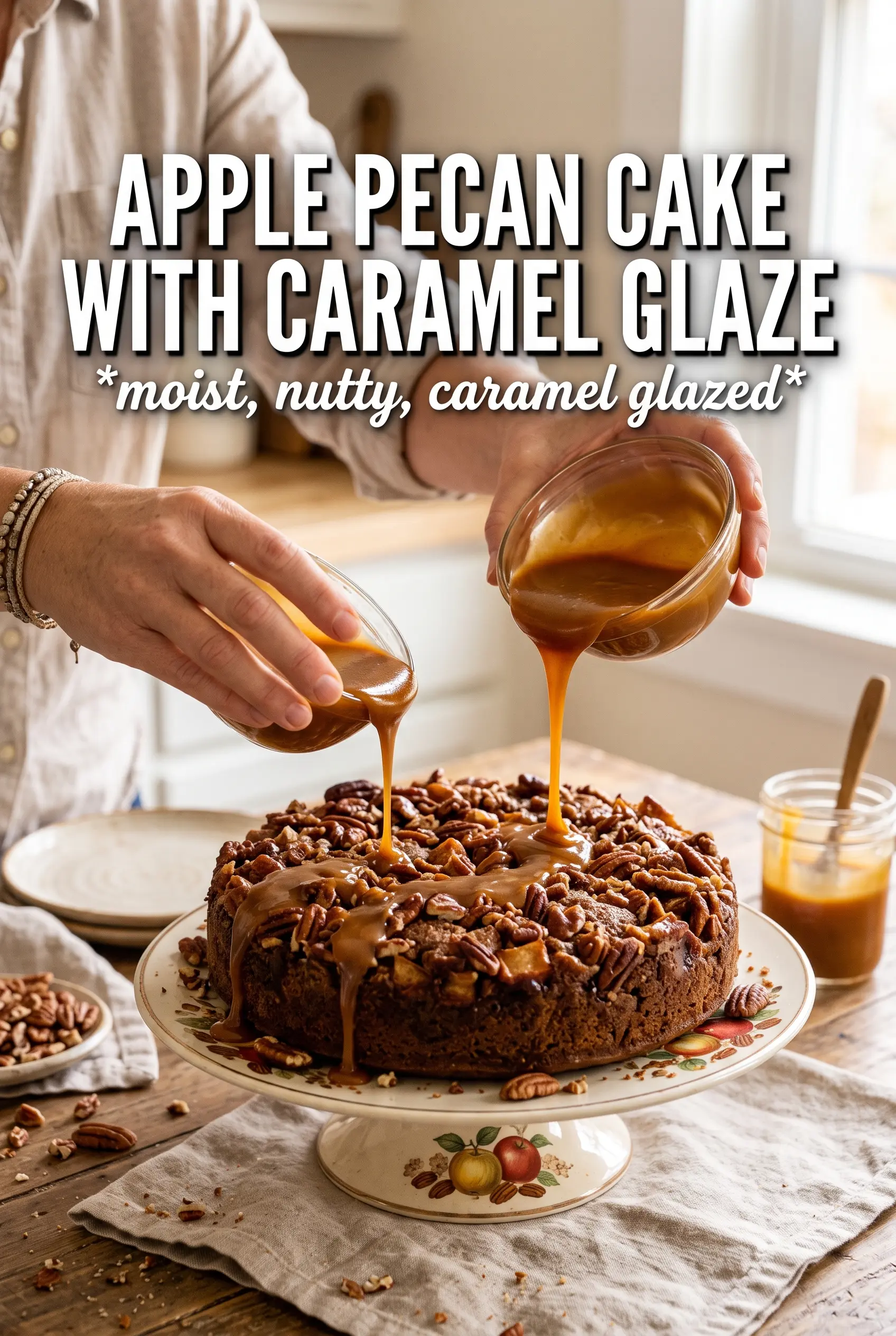
- Pour warm caramel glaze over the cooled cake so it cascades down the ridges.