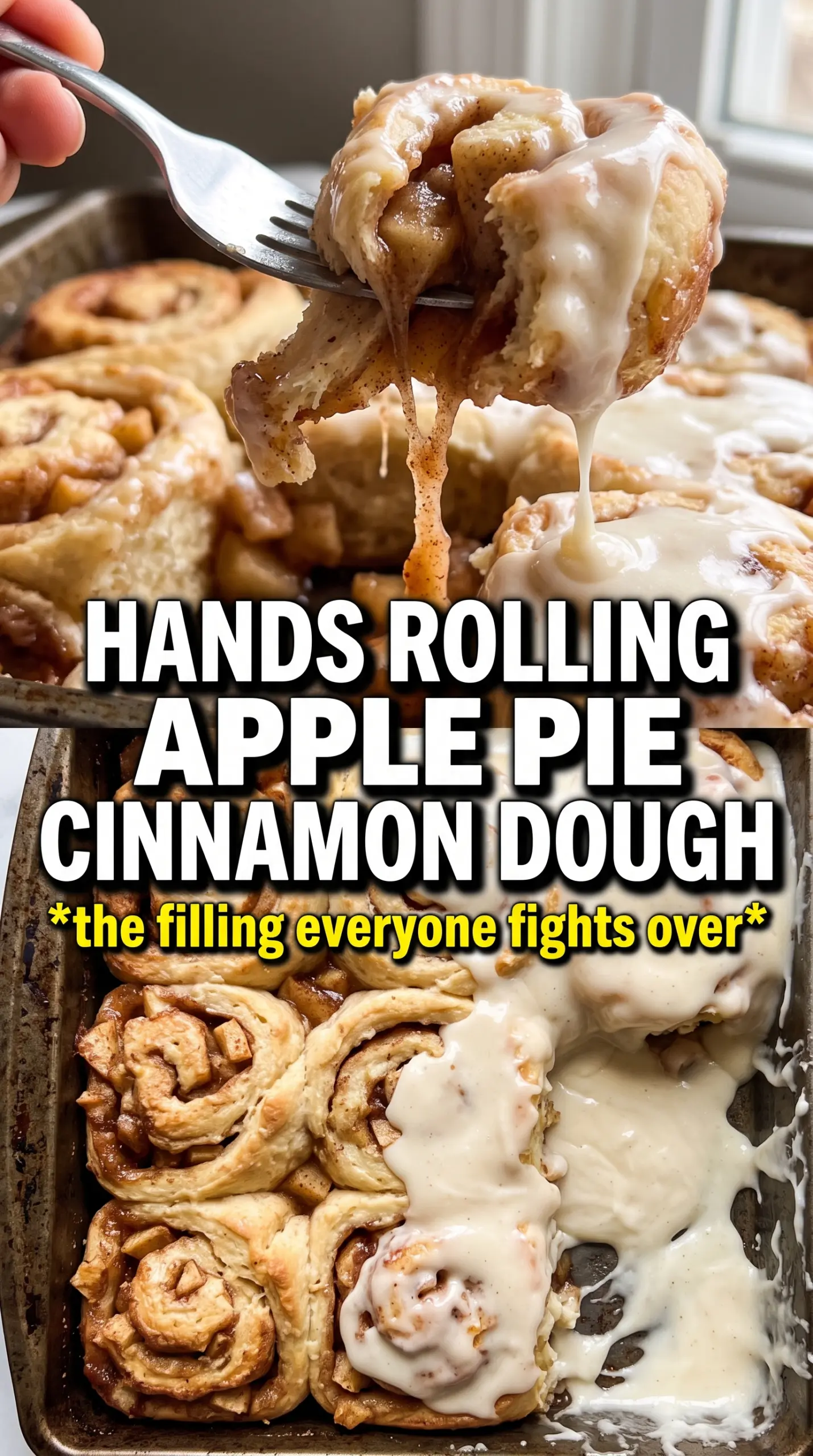
Warm, tender cinnamon rolls stuffed with apple pie filling turn into something that feels special without asking for any extra fuss at the table. The dough bakes up soft and pillowy, the apples stay thick and spiced instead of running out into the pan, and the cream cheese glaze melts into every swirl before the caramel finishes the job. You get all the comfort of apple pie and the pull-apart satisfaction of a fresh pan of rolls in one bake.
What makes this version work is the balance of moisture and structure. The filling is cooked on the stove first, so the apples soften and the cornstarch has a chance to thicken the juices before they ever touch the dough. That step keeps the centers from going wet and gummy. A simple enriched dough gives you those fluffy layers, and the tight roll-up keeps the filling tucked in where it belongs.
Below, I’ve included the parts that matter most: how to keep the filling from leaking, which apples give the best bite, and a few variations if you want to make these ahead or adjust them for different needs.
The apple filling thickened up beautifully, and the rolls baked up soft instead of soggy. I was worried the caramel would overpower everything, but it just tied the glaze and cinnamon together.
Save these apple pie cinnamon rolls for the morning when you want gooey apple filling, soft dough, and a caramel drizzle in one pan.
The part that keeps the apple filling from soaking the rolls
Apple pie rolls fail when the filling behaves like pie filling instead of roll filling. If the apples go in raw, they release too much liquid in the oven and you end up with dense centers and sticky bottoms. Cooking the filling first solves that problem because the cornstarch thickens the juices before they ever meet the dough, and the apples soften just enough to stay tender after baking.
The dough also needs a clean cut when you slice it. A loose spiral lets the filling squeeze out, so roll it up tightly and use a sharp knife or unflavored dental floss to divide the log. If the filling looks glossy and thick in the pan before you cool it, you’re on the right track.
- Cooked apple filling — This is the difference between a roll that holds its shape and one that turns watery. You want the filling thick enough to mound on a spoon, not run across the skillet.
- Brown sugar — It gives the apples a deeper, caramel note that white sugar can’t match. In a pinch, white sugar works, but the filling tastes flatter.
- Cornstarch — It thickens the apple juices as the filling cooks. Flour won’t give you the same clean, glossy finish here.
- Soft enriched dough — Eggs, butter, and milk keep the rolls tender. A lean dough will bake up drier and won’t give you the same pillowy bite.
What each ingredient is doing in the pan
- Warm milk and yeast — The milk should feel warm, not hot, or it can kill the yeast. When it turns foamy after five minutes, you know the yeast is active and ready.
- Butter, eggs, and vanilla — These make the dough rich and give it a soft crumb. Melted butter is fine here; just let it cool slightly so it doesn’t scramble the eggs.
- All-purpose flour — This gives enough structure to roll and slice the dough without making it tough. Add only enough to bring it together into a soft, slightly tacky dough.
- Apples — Use a firm baking apple if you can. Honeycrisp, Granny Smith, or a mix of both keeps the filling from turning to mush.
- Cinnamon, nutmeg, and allspice — Cinnamon leads, but the other spices make the filling taste like actual pie instead of just sweet apples.
- Cream cheese glaze — The tang cuts through the sweetness and gives the rolls that bakery-style finish. If it seems too thick, add the milk a teaspoon at a time until it drizzles.
Rolling, filling, and baking without leaking the good stuff
Making the dough smooth and elastic
Mix the warm milk, sugar, and yeast first, then wait until the surface looks foamy. That tells you the yeast is awake. Add the butter, eggs, and vanilla, then work in the flour and salt until the dough comes together into a soft ball. Knead for about 8 minutes until it feels smooth and springs back slowly when pressed. If it tears easily, it needs a few more minutes; if it feels dry, you’ve added too much flour.
Cooking the apple filling until it holds
Put the apples, sugar, spices, cornstarch, and butter in a skillet and cook over medium heat until the mixture turns thick and glossy, 8 to 10 minutes. The apples should still have a little shape, but the juices should look syrupy instead of watery. Cool the filling before spreading it on the dough, because warm filling softens the dough and makes rolling messy. If you rush this part, the rolls can uncoil and leak in the pan.
Cutting clean spirals and proofing the rolls
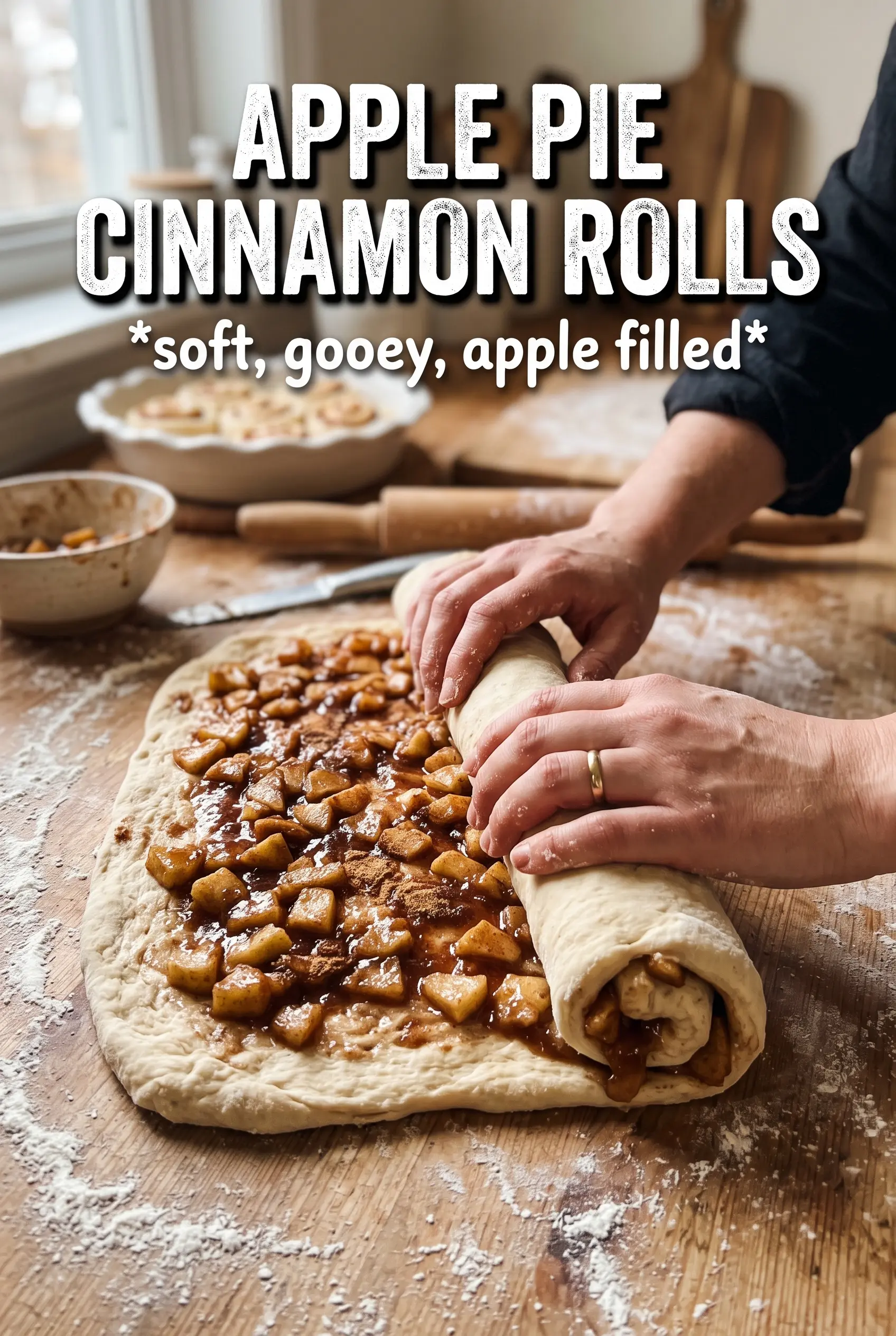
Roll the dough into a 12×18 rectangle and spread the cooled filling all the way to the edges, leaving only a small strip bare on one long side so the seam seals. Roll it tightly from the long side, then cut into 12 equal pieces. Arrange them in a greased 9×13 dish with a little space between each one, then let them rise until puffy and touching. If they don’t expand enough before baking, they’ll bake up dense instead of light.
Baking until golden, not dry
Bake at 375°F until the tops are deeply golden and the centers look set, 22 to 25 minutes. The rolls should feel soft when pressed lightly but not look wet in the middle. Pull them before the edges get dark, because the glaze will add moisture back and you don’t want to overbake them. Let them cool for a few minutes before glazing so the cream cheese topping doesn’t melt straight off.
Three smart ways to bend these rolls without breaking them
Make them ahead for a slower morning
Assemble the rolls through the cutting step, then cover the pan and refrigerate overnight. In the morning, let them sit at room temperature until they look puffy again before baking. This keeps the dough from overproofing and gives you fresh-baked rolls without doing the full process before breakfast.
Dairy-free version
Use unsweetened plant milk, dairy-free butter, and a dairy-free cream cheese for the glaze. The rolls will still bake up soft, though the glaze won’t have quite the same tang or richness. Keep the filling the same, since the apple mixture doesn’t depend on dairy to work.
Add chopped nuts for more texture
A handful of finely chopped pecans or walnuts scattered over the filling adds crunch and a toastier finish. Keep the pieces small so they don’t tear the dough when you roll it up. This makes the rolls feel a little more like apple pie with a streusel topping.
Reduce the sweetness
Cut the brown sugar in the filling to 1/3 cup if you like a sharper apple flavor, then keep the glaze as written. The caramel drizzle still gives you that dessert-like finish, but the apples taste brighter and less candy-like.
Storage and Reheating
- Refrigerator: Store covered for up to 4 days. The rolls will firm up a little in the fridge because of the glaze and filling.
- Freezer: Freeze baked rolls without glaze for up to 2 months. Wrap tightly, then thaw overnight in the refrigerator before warming and glazing.
- Reheating: Warm individual rolls in the microwave for 20 to 30 seconds or cover the pan and reheat in a 300°F oven until just warmed through. Don’t overheat them or the dough will dry out and the glaze will separate.
Answers to the questions worth asking
Apple Pie Cinnamon Rolls
Ingredients
Equipment
Method
- Combine warm milk and sugar, then sprinkle active dry yeast over the top and let stand 5 minutes until foamy, showing activity at the surface.
- Stir in melted unsalted butter, eggs, and vanilla, then mix in all-purpose flour and salt until a soft dough forms.
- Knead the dough for 8 minutes until smooth and elastic.
- Place the dough in a greased bowl, cover, and let rise 1 hour until doubled in size.
- In a skillet over medium heat, combine apples, brown sugar, cinnamon, nutmeg, allspice, cornstarch, and butter, then cook 8-10 minutes until thickened and saucy.
- Cool the apple pie filling completely so it spreads without melting the dough.
- Roll the dough into a 12x18 rectangle and spread the apple pie filling over the surface evenly.
- Roll the dough tightly, then cut into 12 rolls.
- Arrange the rolls in a greased 9x13 dish, cover, and let rise 45 minutes until puffy.
- Bake at 375F for 22-25 minutes until the rolls are golden on top.
- Drizzle the cream cheese glaze over the warm rolls and finish with caramel sauce for a crisscross drizzle.