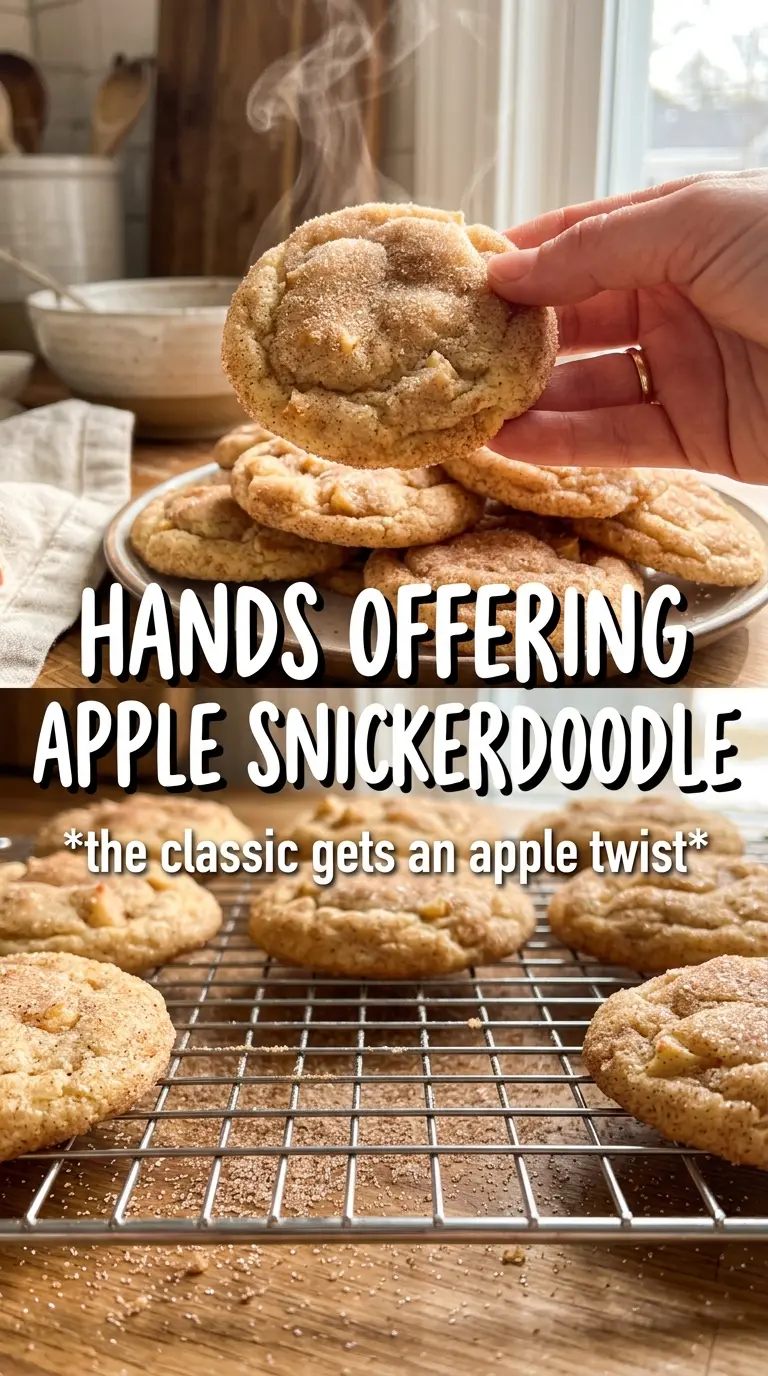
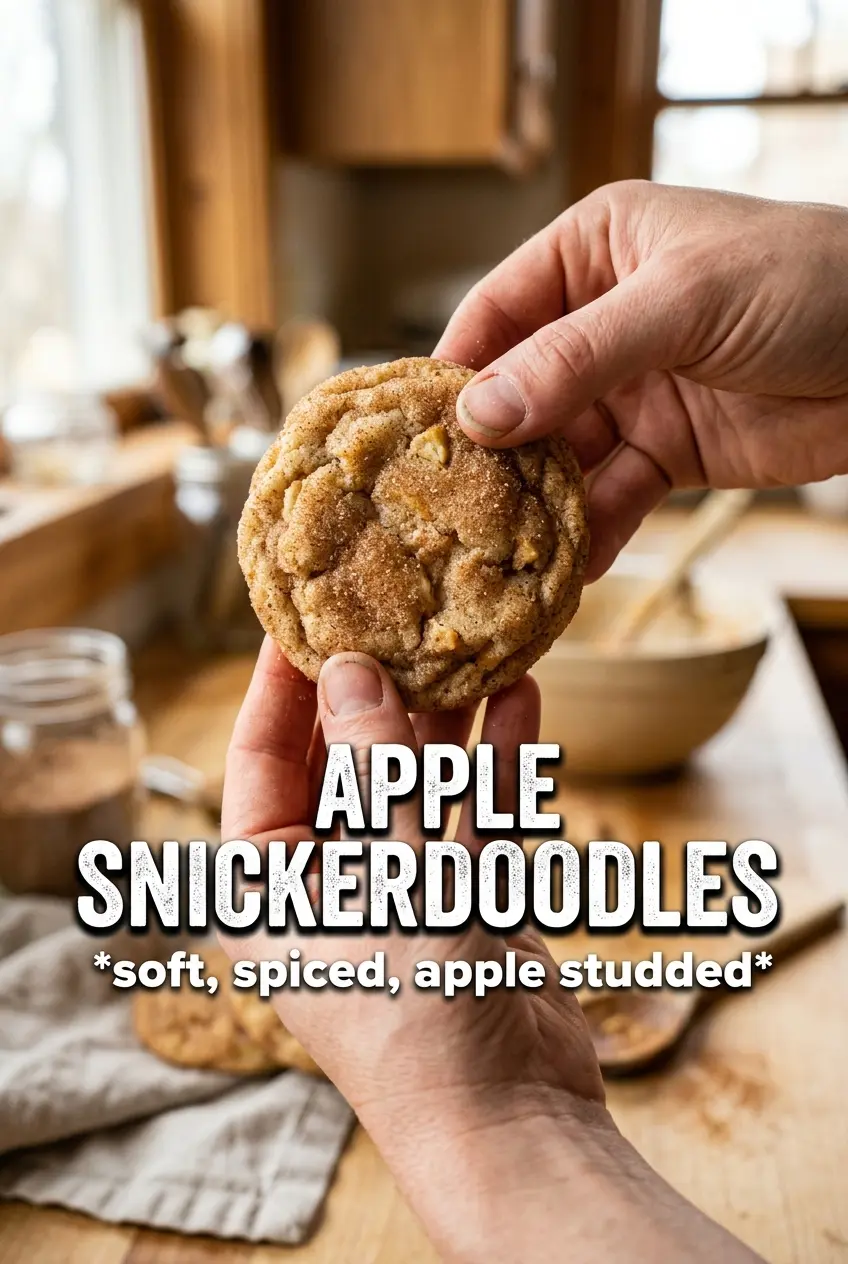
Apple snickerdoodles bake up with crisp cinnamon-sugar edges, soft centers, and little pops of chewy apple in every bite. They’ve got the classic tangy snickerdoodle flavor, but the dried apple pieces and warm spices make them taste deeper and more homey than the usual version. The cookies come out crinkled on top, tender in the middle, and just sturdy enough to hold their shape without turning dry.
The trick here is using finely chopped dried apple instead of fresh fruit. Fresh apples bring too much moisture and can make the cookies cakey or unevenly baked. Dried apples give you concentrated flavor without throwing off the dough, and they stay pleasantly chewy after baking. The spice blend matters too: cinnamon does the obvious work, but a little nutmeg, allspice, and apple pie spice in the rolling sugar makes the outside taste complete, not flat.
Below you’ll find the little details that keep these cookies soft in the center and bold in flavor, plus a few swaps if you need to adjust what’s in your pantry.
The cookies stayed soft in the middle even the next day, and the little bits of dried apple gave them a chewy bite that kept everyone reaching for another one.
Save these apple snickerdoodles for the day you want chewy centers, crisp cinnamon edges, and real apple flavor without a fussy dough.
The Dough Mistake That Makes Snickerdoodles Spread Too Much
Snickerdoodles depend on a dough that’s soft but structured. If the butter is too warm or the dough gets overmixed after the flour goes in, the cookies spread before the centers have a chance to set. That’s the difference between a puffy, crinkled cookie and one that bakes thin with greasy edges.
Finely chopping the dried apple matters here too. Big chunks create weak spots in the dough and can leave you with uneven scoops that bake at different rates. Keep the mix-ins small enough that they disappear into the dough instead of fighting it.
- Cream of tartar — This gives snickerdoodles their signature tang and helps keep the texture tender. It’s not a decorative ingredient; it’s part of what makes the cookie taste like a snickerdoodle instead of a plain cinnamon sugar cookie.
- Dried apple pieces — These add apple flavor without releasing water into the dough. If you only have dried apple rings, chop them very fine so they distribute evenly.
- Butter — Softened butter should give slightly when pressed, not look oily or melty. If it starts out too warm, chill the scooped dough for a few minutes before baking.
- Apple pie spice in the rolling sugar — This gives the crust a warmer, more apple-forward finish. If you don’t have it, add a tiny extra pinch of cinnamon and allspice instead.
What Each Ingredient Is Actually Doing in This Recipe
- Primary ingredient (the star) — Quality matters most. Choose the best you can find.
- Cooking medium (oil, butter, or broth) — This carries flavors and prevents dryness.
- Seasonings (salt, pepper, spices, herbs) — Layer flavors so nothing overpowers. Build depth gradually.
- Aromatics (garlic, onion, herbs) — Cook with fat to bloom flavors. Become the foundation.
- Supporting ingredients — Complement the main ingredient without overpowering it.
- Sauce or liquid (if applicable) — Brings flavors together. Balance richness with acid.
- Acid (lemon, vinegar, wine, or other) — Brightens and prevents flat-tasting results.
- Final finish (garnish, glaze, or sauce) — Prevents one-dimensional taste and adds visual appeal.
Getting the Crinkled Tops and Soft Centers at the Same Time
Whisking the Dry Base
Whisk the flour, cream of tartar, baking soda, cinnamon, nutmeg, allspice, and salt until the color looks even and the spices are fully dispersed. If the leavening isn’t mixed well, some cookies will rise properly while others stay dense in the middle. This dry mixture should smell warm and spiced before it ever hits the butter.
Building the Creamed Dough
Beat the butter and sugar until the mixture turns light and almost fluffy, then add the eggs and vanilla. That long creaming step gives the cookies lift, which is what helps those crinkled tops form. If the mixture looks curdled after the eggs go in, keep mixing; it usually comes together once the flour is added.
Folding in the Apple
Add the flour mixture in batches and stop as soon as no dry streaks remain, then fold in the chopped dried apples. Overmixing here tightens the dough and can make the cookies tougher than they should be. The finished dough should be soft enough to scoop but not sticky enough to cling heavily to your hands.
Baking Until the Edges Set
Roll the dough balls in the cinnamon-sugar mixture, then bake just until the edges are set and the tops have cracked. The centers should still look a little soft when they come out; they finish cooking on the pan. If you wait until the middle looks fully baked in the oven, the cookies will be dry by the time they cool.
Swap the Dried Apple for Raisins
Raisins work if that’s what you have, but they change the cookie from apple-cinnamon to a more traditional spice cookie with chew. Chop them if they’re large, or the dough can get lumpy and bake unevenly.
Gluten-Free Version
Use a cup-for-cup gluten-free flour blend that includes xanthan gum. The cookies may spread a little less and taste slightly more delicate, but the apple and spice still come through clearly.
Dairy-Free Adjustment
Use a plant-based butter stick, not a tub spread. Tub-style substitutes hold more water and can make the cookies spread too much, while a baking stick keeps the dough closer to the original texture.
Make Them Bigger for Bakery-Style Cookies
Use 2 tablespoon scoops and add a minute or two to the bake time. Larger cookies stay softer in the middle and give you a thicker crackled top, but they need the extra time so the centers don’t collapse after cooling.
Storage and Reheating
- Refrigerator: Store in an airtight container for up to 5 days. The cinnamon sugar coating softens a little, but the cookies stay chewy.
- Freezer: Freeze baked cookies for up to 2 months, or freeze the portioned dough balls and roll them in sugar just before baking. Dough freezes especially well and bakes from frozen with a minute or two added.
- Reheating: Warm cookies in a 300F oven for 3 to 5 minutes. The mistake people make is microwaving them too long, which turns the centers rubbery and melts the sugar coating into a sticky patch.
Questions I Get Asked About This Recipe
Apple Snickerdoodles
Ingredients
Equipment
Method
- Preheat the oven to 375F, then line baking sheets with parchment for easy release and quick cleanup.
- Whisk all-purpose flour, cream of tartar, baking soda, cinnamon, nutmeg, allspice, and salt until evenly combined.
- Beat unsalted butter (softened) and granulated sugar until very light and fluffy, then beat in eggs and vanilla extract until smooth.
- Fold the flour mixture into the wet ingredients just until incorporated, then fold in the finely chopped dried apple pieces.
- Stir the rolling spices together in a shallow bowl using sugar, cinnamon, and apple pie spice.
- Scoop dough into 1-1/2 tablespoon balls, roll them in the cinnamon spice sugar, and place them on the lined baking sheets with space between cookies.
- Bake for 10-12 minutes at 375F until the edges are set and the tops are crinkled, with centers still soft.
- Cool the cookies on the pan for 3 minutes, then transfer them so they finish setting without overbaking.