Apple sour cream cake lands in that sweet spot between snack cake and old-fashioned coffee cake: soft, plush, and packed with tender apple pieces that stay juicy instead of turning mushy. The cinnamon sugar topping bakes into a crackly, lightly crisp lid that gives each slice a little crunch before you hit the moist crumb underneath. It’s the kind of cake people keep cutting into “just one more sliver” because it stays good from the first slice to the last.
The sour cream matters here. It keeps the cake rich without making it heavy, and it gives the crumb a fine, velvety texture that holds up beautifully around the apples. The other thing that makes this version work is the order: a proper creaming of butter and sugar builds structure, while the apples get folded in at the end so they don’t bleed into the batter or sink to the bottom.
Below you’ll find the trick for getting that topping crumbly instead of sandy, plus a few smart swaps if you only have certain apples on hand. It’s a simple cake, but the little details are what make it feel bakery-worthy.
The topping turned into this perfect crumbly layer and the cake stayed super moist even on day two. I used Honeycrisp apples and they held their shape without getting watery.
Save this apple sour cream cake for the kind of day that calls for a soft crumb, cinnamon topping, and tender apple slices in every bite.
The Difference Between a Tender Crumb and a Dense Cake
This cake has a couple of built-in safeguards against dryness, but they only work if you respect the batter. The butter and sugar need to be beaten until light and fluffy so the cake has enough structure to hold the apples without turning heavy. If you rush that step, the crumb bakes up tighter and the topping can feel like it’s sitting on top of a flat base instead of a real cake.
The other common failure is overmixing after the flour goes in. Once the dry ingredients are added, stir only until the streaks disappear. Overworking the batter develops gluten and squeezes out the tender, fine texture that sour cream is supposed to give you.
- Butter and sugar build the lift, so start with softened butter, not melted butter.
- Sour cream adds moisture and a slight tang that keeps the cake from tasting flat.
- Dice the apples small and even so they bake through at the same rate and don’t create wet pockets.
- Let the batter stay a little thick. That’s what holds the apples in place and keeps the slices neat.
What Each Ingredient Is Doing in the Pan
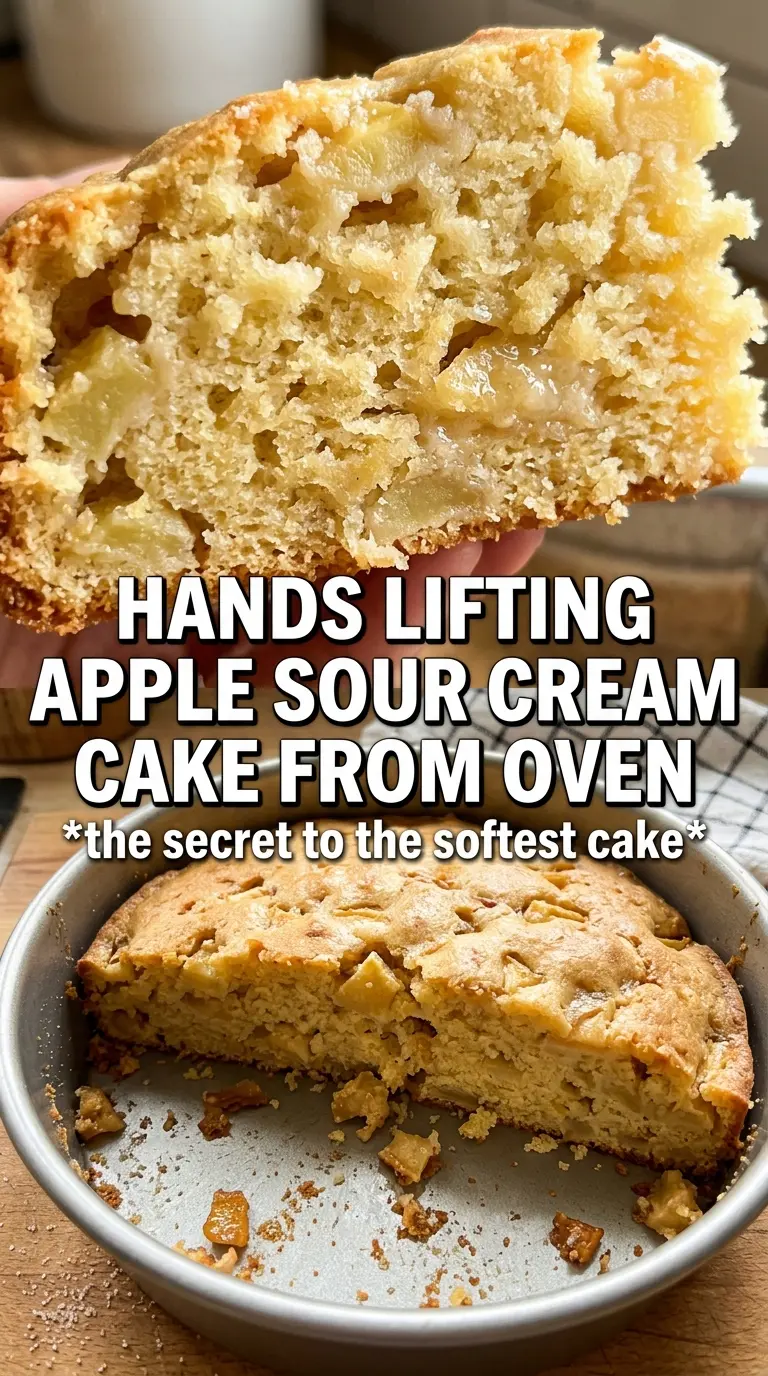
- Apples — These are the heart of the cake. Use a baking apple that holds its shape, like Honeycrisp, Granny Smith, or Fuji. A mealy apple breaks down and leaves the crumb wet and uneven.
- Sour cream — This is what gives the cake its plush texture. Full-fat sour cream gives the best result, but plain full-fat Greek yogurt works in a pinch. The cake will be a little less rich and slightly tangier, but still tender.
- Brown sugar topping — The brown sugar melts into the top layer and gives you that sweet, cinnamon-caramel crust. Cold butter is what makes it crumbly instead of paste-like, so keep it cold right until you cut it in.
- Cinnamon — It’s used in both the batter and the topping for warmth without overpowering the apples. Fresh cinnamon matters more here than in a heavily spiced cake because there aren’t a lot of competing flavors.
- All-purpose flour — Standard flour gives the right structure without making the crumb dry. Don’t swap in whole wheat unless you’re ready for a denser cake with a more rustic texture.
Getting the Batter and Topping to Bake in the Right Order
Building the Cinnamon Crumb
Mix the brown sugar, cinnamon, and flour first, then cut in the cold butter until the mixture looks like damp sand with some pea-sized clumps. Those clumps are what create the crunchy top. If the butter gets too soft, the topping melts into a slick instead of baking into a crumb. Set it aside while you make the batter so it stays cold.
Creating the Cake Base
Beat the butter and sugar until pale and fluffy, then add the eggs and vanilla before the sour cream goes in. That order matters because the fat and sugar need air before the batter gets heavier. When you add the dry ingredients, stop mixing as soon as the flour disappears. A few streaks at the end are fine; overmixing is what makes this cake tough.
Folding in the Apples
Add the diced apples last and fold them in with a spatula, not a mixer. You want them distributed, not mashed. If the apples look especially juicy, pat them dry before folding them in so they don’t water down the batter. Spread the batter into the pan, then scatter the topping evenly across the surface so every slice gets that cinnamon layer.
Baking Until the Center Sets
Bake until the top is deeply golden and a toothpick inserted in the center comes out clean or with a few moist crumbs. If you pull it too early, the middle can sink as it cools, especially in the thicker center of a springform pan. Let the cake cool before slicing. The crumb finishes setting as it rests, and you’ll get cleaner pieces with visible apple pockets instead of a warm crumble.
How to Adapt This Apple Sour Cream Cake Without Losing the Good Part
Make it with Greek yogurt
Use full-fat plain Greek yogurt in place of the sour cream in a 1:1 swap. The cake will still be moist and tender, but the tang will be a little sharper and the crumb slightly less rich. Low-fat yogurt tends to thin the batter too much, so stick with full-fat if you want the same soft texture.
Use a springform pan for a taller slice
A 9-inch springform gives you a more bakery-style height and makes unmolding easier. A 9×13 pan works too, but the cake will bake a little thinner and may finish a few minutes sooner. Watch the center, not the clock.
Choose apples for texture, not just sweetness
Honeycrisp, Granny Smith, Pink Lady, and Fuji all hold up well. A mix of tart and sweet apples gives the best balance, but the key is firmness. Soft apples collapse and disappear into the batter, which changes the whole texture of the cake.
How to store and reheat it
- Refrigerator: Store covered for up to 4 days. The crumb stays moist, and the topping softens a little after day one.
- Freezer: Freeze individual slices tightly wrapped for up to 2 months. Thaw in the refrigerator so the topping doesn’t turn soggy.
- Reheating: Warm slices in a 300°F oven for 8 to 10 minutes or microwave briefly. Don’t blast it on high heat or the cake dries out before the center is warm.
Questions I Get Asked About This Recipe
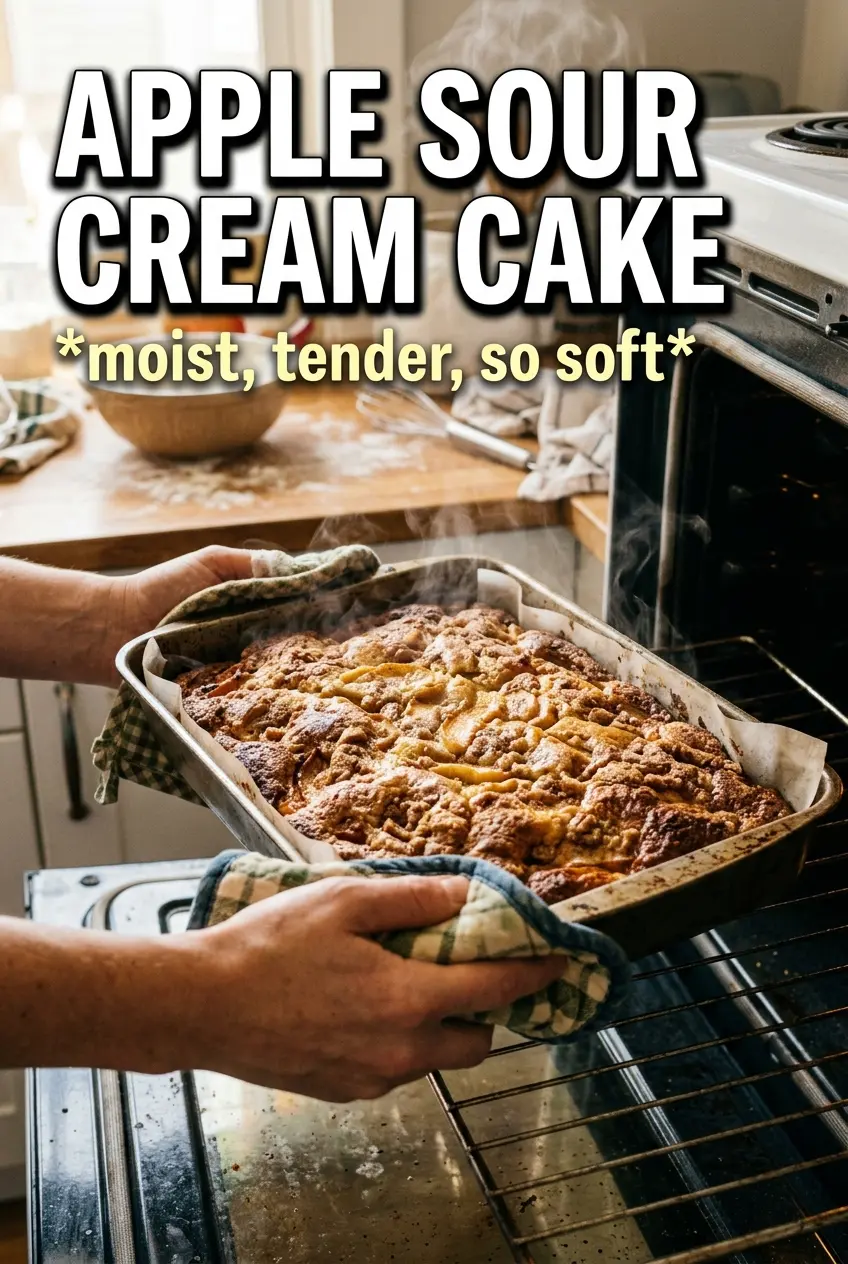
Apple Sour Cream Cake
Ingredients
Equipment
Method
- Preheat oven to 350F, then grease a 9-inch springform or 9x13 pan for easy release later.
- Make cinnamon topping by combining brown sugar, cinnamon, and flour, then cut in cold butter until the mixture looks like coarse crumbs.
- Whisk together all-purpose flour, baking powder, baking soda, cinnamon, and salt until evenly blended.
- Beat softened unsalted butter and granulated sugar until fluffy, with a lighter color and a thicker texture.
- Add eggs and vanilla extract to the butter-sugar mixture and beat until smooth.
- Beat in sour cream until the batter looks glossy and fully combined.
- Fold in the flour mixture just until no dry streaks remain, keeping the batter thick rather than overmixed.
- Fold in diced apples evenly through the batter so they’re distributed across the pan.
- Spread the batter in the prepared pan, then scatter the cinnamon topping over the surface.
- Bake at 350F for 50-55 minutes, until a toothpick inserted in the center comes out clean.
- Cool before slicing so the crumb sets and the cinnamon topping stays intact.