Crisp romaine and sturdy kale give this Caesar the backbone it needs, while the roasted delicata squash brings the part that makes people pause at the first bite: caramelized edges, soft centers, and just enough sweetness to play against the salty dressing. It still eats like a real Caesar salad, but the squash turns it into something with more texture, more color, and a little more staying power on the table.
The trick is treating the squash like croutons, not a side vegetable. A hot oven, a light coating of maple syrup, and a short roast are what give those half-moons their browned edges without turning them mushy. Massaging the kale for a minute before tossing it in the dressing takes away the harsh bite and keeps the greens from tasting stubborn or fibrous.
Below, you’ll find the small details that matter here — how to keep the squash crisp, why the kale gets dressed separately first, and the swaps that still keep the salad balanced if you want to adjust it for what you have.
The delicata came out browned at the edges and stayed tender in the middle, and massaging the kale for a minute kept the salad from feeling tough at all. My husband kept picking out the squash croutons before we even sat down.
Save this Autumn Caesar Salad with Delicata Squash Croutons for a crisp, creamy salad with golden roasted squash and plenty of crunch.
The Trick to Keeping the Squash Crisp Instead of Soggy
Delicata squash is perfect here because it softens faster than winter squash but still holds enough shape to act like a crouton when roasted at high heat. The mistake most people make is crowding the pan. If the slices are stacked or touching too much, they steam, and you lose the browned edges that make this salad worth serving.
The maple syrup helps the squash caramelize, but it also works against you if the oven isn’t hot enough. At 425°F, the surface dries and colors before the centers collapse. Flip the slices halfway through so both sides catch some direct heat, and pull them when the edges look deep gold and the centers give lightly when pressed.
What Each Ingredient Is Actually Doing in This Salad

- Delicata squash — This is the piece that turns the salad into something seasonal without making it heavy. The skin is tender enough to leave on, so once it’s roasted, the half-moons hold their shape and eat like built-in croutons. If you can’t find delicata, butternut works, though you’ll want smaller cubes and a little more roast time.
- Maple syrup — Just a tablespoon is enough to boost browning and round out the squash’s edges. It doesn’t make the salad sweet; it helps the squash roast with a deeper, glossier finish. Honey works in a pinch, but it browns a little faster, so watch the pan closely.
- Lacinato kale — This kale stays pleasant after dressing because the leaves are sturdy and the texture softens without turning limp. Massaging it for a minute with a spoonful of dressing breaks down the fibers and makes the greens taste less sharp. Curly kale can work, but it takes a little more massaging and won’t feel quite as silky.
- Caesar dressing — The dressing needs enough body to coat both greens without pooling in the bottom of the bowl. A thick, creamy version clings better to the kale and romaine and supports the salty Parmesan. If yours is very garlicky or tangy, use a little less at first and add more only after tossing.
- Pepitas and Parmesan — These finish the salad with crunch and salt, which the greens and squash both need. The pepitas bring a nutty snap, while the shaved Parmesan gives little sharp bites instead of melting into the dressing. Don’t skip one or the other unless you plan to replace that texture somewhere else.
Building the Salad So the Greens Stay Crisp and the Squash Stays Front and Center
Roasting the Squash First
Toss the delicata with olive oil, maple syrup, smoked paprika, and salt until every piece looks lightly coated, then spread it out in a single layer. The squash should roast until the edges darken and the cut sides look glossy and a little blistered. If it starts to brown too fast before the centers soften, your oven is running hot and the pan may be too close to the top rack.
Softening the Kale Without Turning It Limp
Add just a tablespoon of dressing to the chopped kale and massage it with your hands for about a minute. The leaves should look darker, softer, and slightly glossy, but they shouldn’t collapse into a wet pile. This step keeps the kale from fighting the dressing later and makes the salad easier to eat right away.
Tossing the Greens at the Last Moment
Dress the romaine and kale right before serving so the leaves stay crisp and the romaine doesn’t wilt under the weight of the squash. Toss gently, then layer the roasted squash on top instead of mixing it in aggressively. That keeps the best texture where people can see and taste it first.
Finishing with Crunch and Acid
Add the Parmesan and pepitas after the greens are coated so they don’t disappear into the bowl. Serve with lemon wedges on the side, then squeeze right before eating. That bright finish cuts through the creamy dressing and keeps the whole salad from leaning too rich.
How to Adapt This for Different Tables and Different Pantries
Make It Dairy-Free
Swap in a dairy-free Caesar and use nutritional yeast or a dairy-free Parmesan-style topping. You’ll lose a little of the salty, sharp finish that real Parmesan brings, so add the lemon wedges generously to keep the salad bright and balanced.
Make It Vegetarian
Use a vegetarian Caesar dressing that skips anchovy, but keep the Parmesan if you eat dairy. The flavor stays creamy and garlicky, though a vegetarian dressing can taste a little lighter, so the lemon and smoked paprika help keep the salad from feeling flat.
Swap the Squash When Delicata Isn’t Available
Butternut squash works, but cut it into small cubes instead of half-moons so it cooks through at the same rate. The texture won’t be quite as crouton-like, but you’ll still get caramelized edges and a sweet contrast to the dressing.
Storage and Reheating
- Refrigerator: Store the dressed greens and toppings separately for up to 2 days. The squash softens after chilling, so it loses the crisp edges that make it special.
- Freezer: Don’t freeze the assembled salad. The greens collapse and the dressing breaks when thawed.
- Reheating: Warm the squash on a baking sheet at 375°F for a few minutes until the edges wake back up. Don’t microwave it, or the texture goes soft and wet.
Answers to the Questions Worth Asking
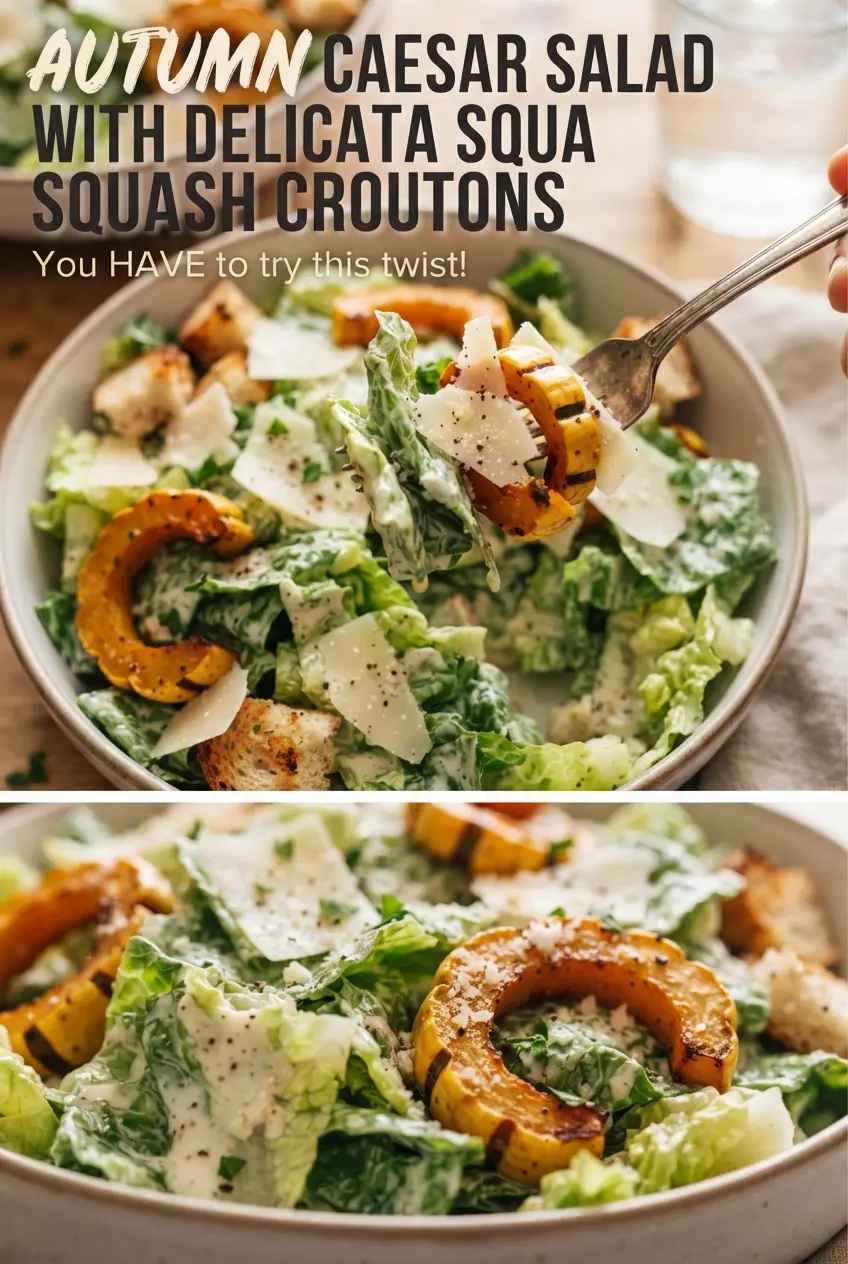
Autumn Caesar Salad with Delicata Squash Croutons
Ingredients
Equipment
Method
- Preheat oven to 425F, then toss the delicata squash with olive oil, maple syrup, smoked paprika, and salt until evenly coated. Spread in a single layer on a sheet pan.
- Roast for 22-25 minutes, flipping halfway, until the squash is golden and crisp at the edges. Remove from the oven and set aside while you assemble the salad.
- Massage the lacinato kale with 1 tablespoon of the Caesar dressing for 1 minute to soften. Keep the kale slightly damp from the dressing.
- Toss the chopped romaine and the softened kale with the remaining Caesar dressing until coated. Distribute greens evenly in serving bowls.
- Top each salad with the roasted delicata squash croutons, shaved Parmesan, and roasted pepitas. Finish by serving with lemon wedges on the side.