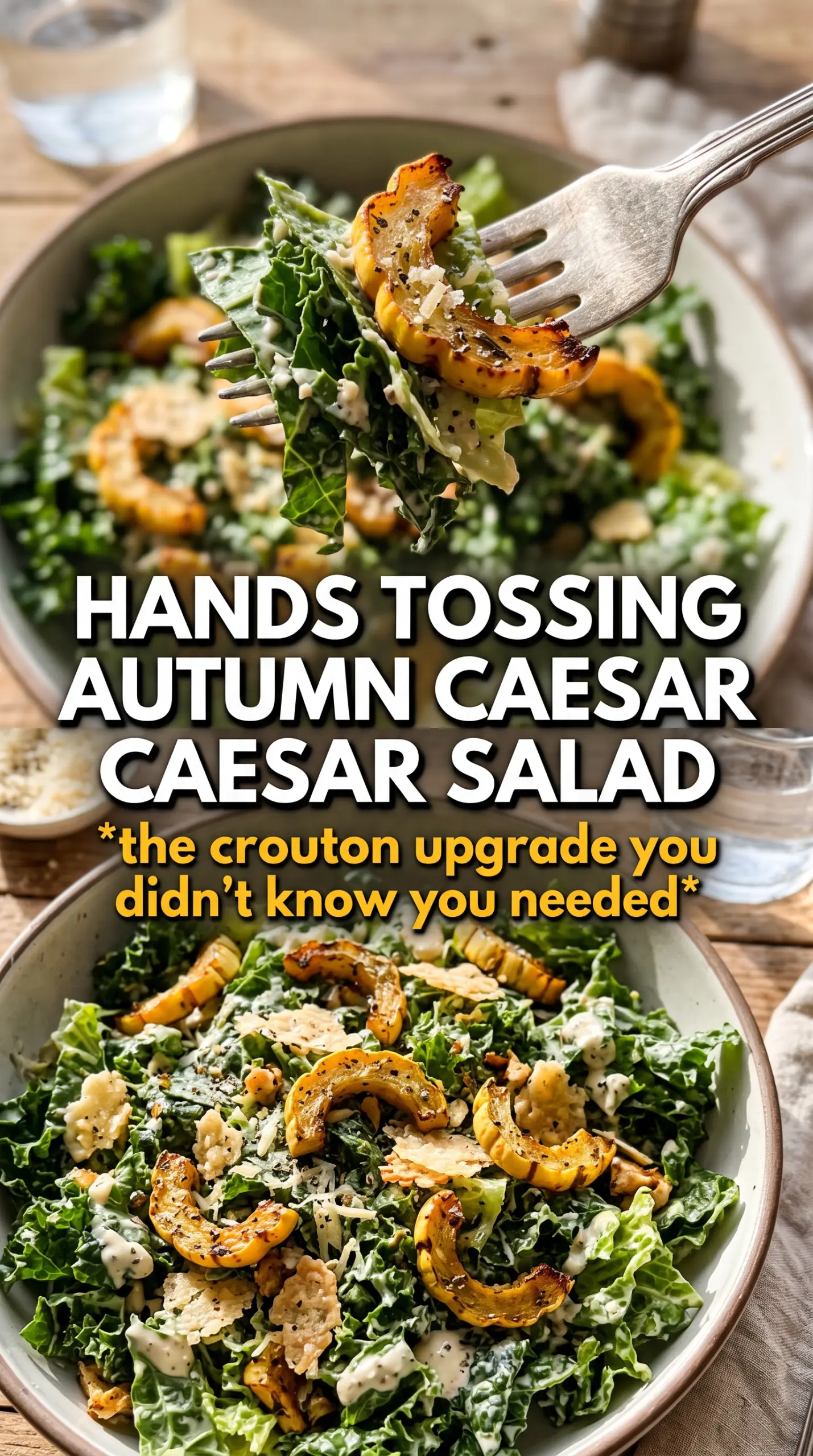
Roasted delicata squash gives Caesar salad a sweeter, sturdier crunch that regular croutons can’t match. The edges caramelize, the centers stay tender, and the whole bowl eats like a proper side dish instead of a token pile of lettuce. It’s the kind of salad that disappears fast because every bite has salt, acid, creaminess, and a little toasted snap.
The trick is roasting the squash rings until they’re deeply browned at the edges before they go anywhere near the salad. Delicata has thin skin, so you can leave it on; that saves time and helps the rings hold together like little edible croutons. The dressing also matters here. Mayo gives you body without fuss, while lemon juice and Dijon keep it sharp enough to stand up to the squash’s sweetness.
Below, I’ve included the timing that keeps the romaine crisp, the squash caramelized, and the dressing balanced. There’s also a few swap ideas if you want to make it dairy-free or turn it into more of a main-dish salad.
The squash got caramelized on the edges and held up like little croutons, and the dressing was creamy without tasting heavy. My husband kept picking the roasted rings off the top before I could even serve it.
Save this Autumn Caesar Salad With Delicata Squash Croutons for a crisp salad with roasted squash, shaved parmesan, and a creamy lemon-Dijon dressing.
The Reason Delicata Works Better Than Croutons Here
Most Caesar salads lean on bread for crunch, but bread goes soft the minute it touches dressing. Delicata squash keeps more of its shape, and the roasted rings give you a chewier, sweeter bite that still feels substantial after they’re tossed with romaine. That matters here because this salad needs something that can sit next to a bold dressing without disappearing.
The mistake people make is roasting squash that’s just warmed through. You want real color on the edges, because that browning is what keeps the salad from tasting flat. If the squash is pale, it’ll read soft and one-note instead of crisp-edged and savory.
- Delicata squash — The thin skin is part of the appeal, since it softens in the oven and saves you from peeling. Slice the rings evenly so they roast at the same pace.
- Romaine — This is the lettuce that gives you the right crunch without fighting the dressing. Chop it fairly large so it still has structure after tossing.
- Parmesan — Shaved parmesan gives salty pockets instead of disappearing into the dressing. If you only have grated, use it in the dressing and keep a little extra for finishing.
- Pepitas — They add a toasted finish and a nutty snap that fills the gap where croutons would normally be. Toast them first; raw pepitas taste dull beside the roasted squash.
- Mayo-based Caesar dressing — Mayo makes the dressing creamy without needing eggs or anchovies, and it comes together fast. The lemon and Worcestershire keep it sharp and savory so it doesn’t taste heavy.
What Each Ingredient Is Actually Doing in This Recipe
- Primary ingredient (the star) — Quality matters most. Choose the best you can find.
- Cooking medium (oil, butter, or broth) — This carries flavors and prevents dryness.
- Seasonings (salt, pepper, spices, herbs) — Layer flavors so nothing overpowers. Build depth gradually.
- Aromatics (garlic, onion, herbs) — Cook with fat to bloom flavors. Become the foundation.
- Supporting ingredients — Complement the main ingredient without overpowering it.
- Sauce or liquid (if applicable) — Brings flavors together. Balance richness with acid.
- Acid (lemon, vinegar, wine, or other) — Brightens and prevents flat-tasting results.
- Final finish (garnish, glaze, or sauce) — Prevents one-dimensional taste and adds visual appeal.
Roasting the Squash Until It Actually Behaves Like a Crouton
Getting the Rings Ready
Halve the delicata, scoop out the seeds, and slice it into half-inch rings. Keep the slices close to the same thickness or you’ll end up with some pieces collapsing before others brown. Toss them with olive oil, salt, and pepper until every edge looks lightly coated, not greasy. If they’re swimming in oil, they’ll soften before they caramelize.
Building Color in a Hot Oven
Roast at 425°F for 20 to 25 minutes, flipping halfway through. You’re looking for browned edges and a fork-tender center, not mush. If the rings stick when you try to turn them, they need another minute or two to set up; pulling them early is how you end up with pale, limp squash that doesn’t earn its place in the salad. Let them cool just enough to handle before assembling.
Whisking a Caesar That Stays Smooth
Whisk the mayo, parmesan, lemon juice, Worcestershire, garlic, Dijon, salt, and pepper until the dressing turns glossy and smooth. The garlic should be fine and dispersed, not in sharp little piles. If the dressing tastes too thick, add a teaspoon of water or extra lemon juice, but stop there; a Caesar for salad should cling to the leaves, not run off the plate.
Assembling Without Losing the Crunch
Toss the romaine with just enough dressing to coat the leaves, then add shaved parmesan. Arrange the squash rings on top instead of stirring them in first; that keeps them from breaking apart and lets them stay crisp at the edges. Finish with pepitas and a little more parmesan right before serving. If you let it sit too long after dressing, the romaine will soften and the whole bowl loses its snap.
How to Adapt This Autumn Caesar for Different Tables
Make it dairy-free without losing the creamy dressing
Swap the parmesan in the dressing for a dairy-free parmesan-style alternative and use a plant-based mayo. You’ll lose a little of the sharp, aged-cheese depth, so add a touch more salt and lemon to keep the dressing lively. The salad still eats creamy and balanced.
Turn it into a more filling main-dish salad
Add sliced grilled chicken, roasted chickpeas, or a jammy egg on top. That gives the salad more protein without changing the structure, and the squash still plays the role of the crunchy, sweet element. Keep the dressing slightly lighter if you’re adding a lot of extra toppings.
Use pecans instead of pepitas if that’s what you have
Chopped toasted pecans bring a sweeter, richer crunch than pepitas. They work well with the squash, but they make the salad taste a little more autumn-forward and less savory. Keep the pieces small so they scatter evenly over the greens.
Storage and Reheating
- Refrigerator: Store the dressed lettuce and roasted squash separately for up to 2 days. The romaine softens after that, but the squash keeps its texture.
- Freezer: Don’t freeze this salad. Romaine turns watery and limp, and the dressing separates.
- Reheating: If the squash has been chilled, warm it in a 350°F oven for a few minutes so it tastes roasted again. Don’t microwave it or the edges go soft and the rings lose that crouton-like bite.
Answers to the Questions Worth Asking
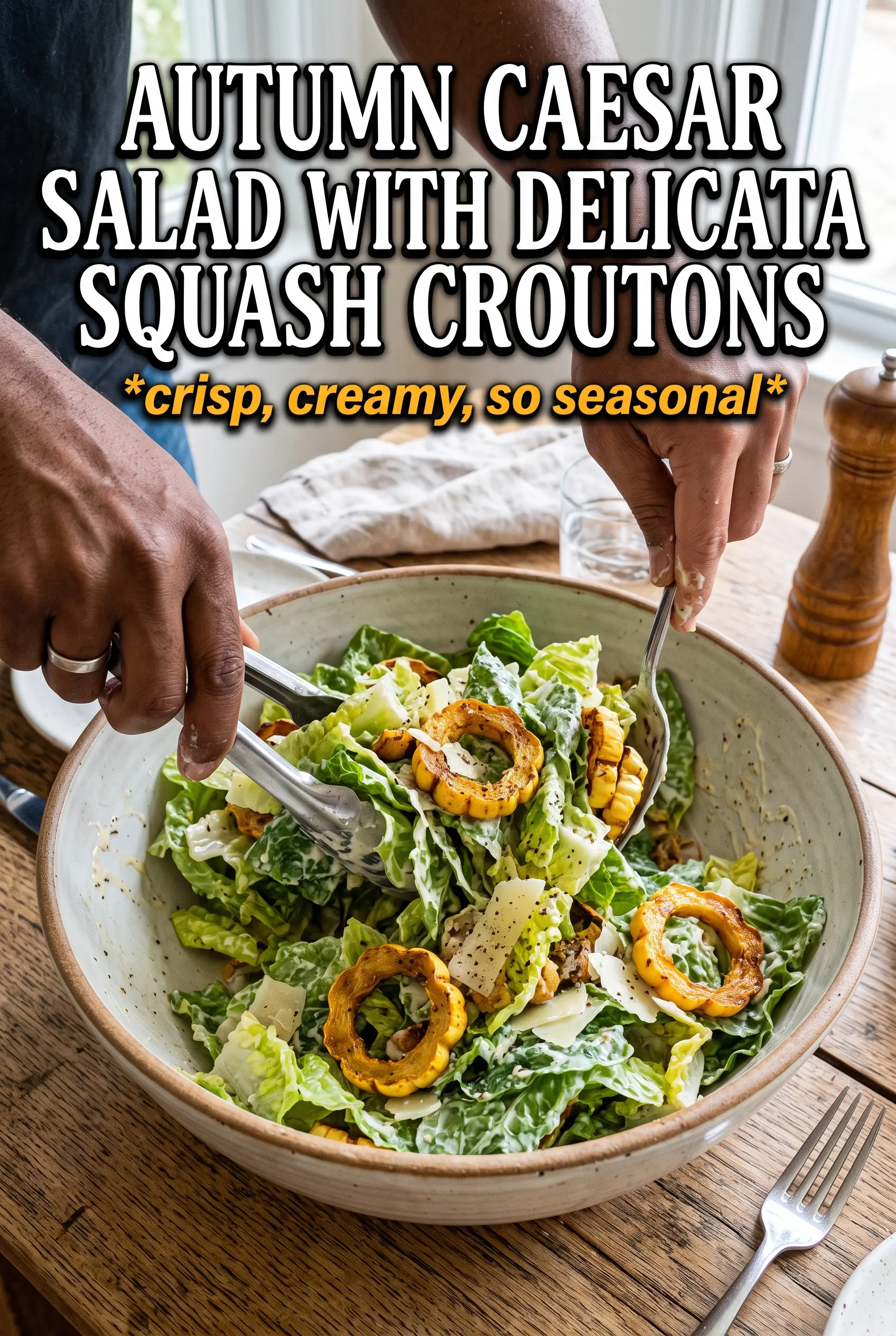
Autumn Caesar Salad With Delicata Squash Croutons
Ingredients
Equipment
Method
- Preheat oven to 425°F. Toss delicata squash rings with olive oil, salt, and black pepper.
- Spread the squash in a single layer on a sheet pan. Roast 20-25 minutes, flipping halfway, until caramelized.
- In a bowl, whisk together mayo, parmesan, lemon juice, Worcestershire sauce, minced garlic, and Dijon until smooth. Season with salt and black pepper to taste.
- In a large bowl, toss chopped romaine with Caesar dressing and shaved parmesan. Mix until the greens are evenly coated.
- Arrange the dressed romaine on plates. Top with the roasted delicata squash rings as croutons.
- Scatter toasted pepitas over the salad. Finish with extra parmesan if desired.