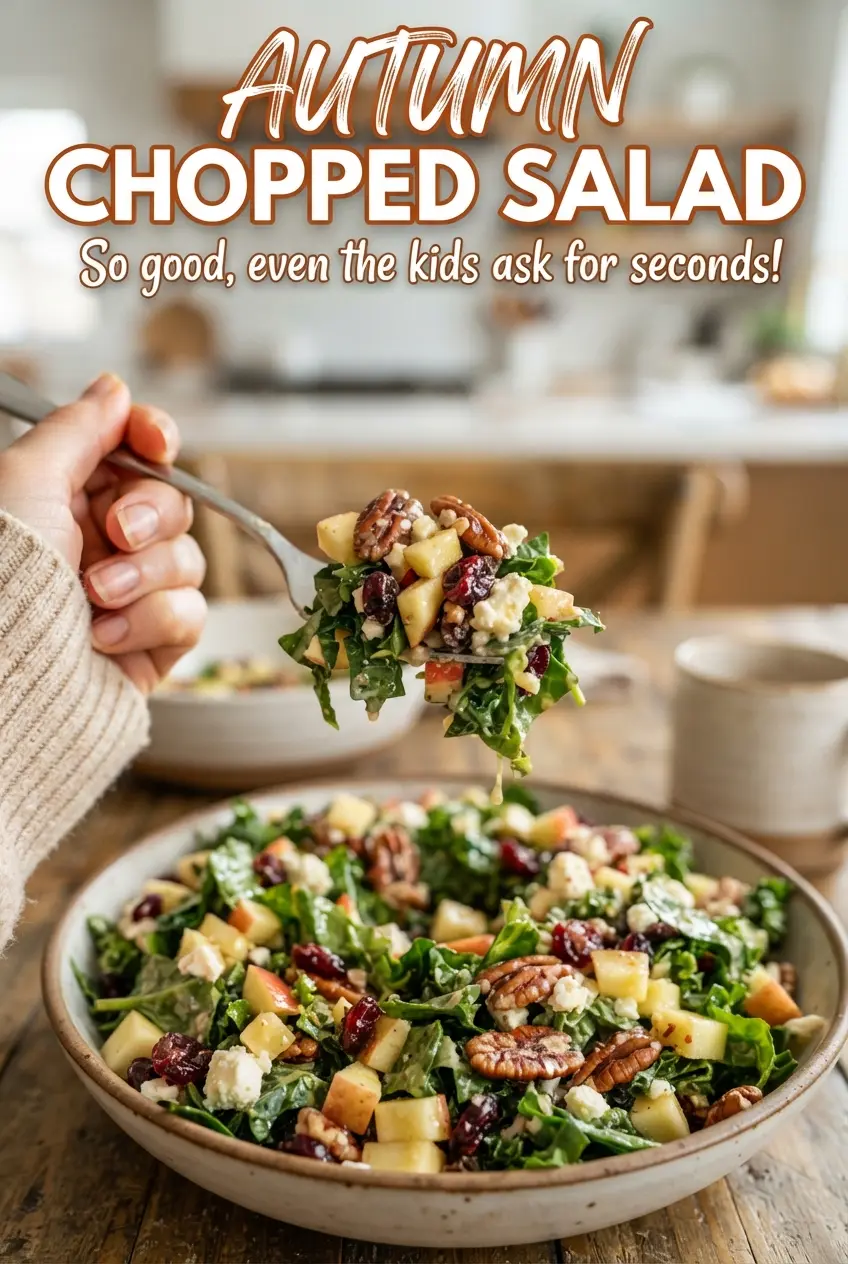
Autumn chopped salad hits that sweet spot between crisp and substantial. The finely chopped kale and shredded Brussels sprouts give it a sturdy crunch, while apple, pear, cranberries, and candied pecans bring the kind of sweet-tart contrast that keeps every bite interesting. It eats like a side dish but holds its own as lunch, which is exactly why it ends up in the rotation again and again.
The trick here is in the chop and the massage. Smaller pieces mean the dressing clings to everything instead of sliding off the greens, and a quick toss with a little of the vinaigrette takes the raw edge off the kale without turning it soft. The maple-Dijon dressing pulls the whole bowl together with enough acidity to balance the fruit and feta.
Below, I’ll show you how to keep the greens crisp, how to cut the fruit so it doesn’t disappear into the salad, and the small swap that makes this work just as well for a make-ahead lunch or a holiday table.
The kale softened just enough after the quick massage, and the dressing coated every little piece. I loved that the pears stayed crisp and the feta kept each bite from feeling too sweet.
Save this Autumn Chopped Salad for the days when you want crisp kale, sweet fruit, and maple-Dijon dressing in one bowl.
The Part That Keeps the Greens Crisp Instead of Limp
The biggest mistake with chopped salads like this is dressing everything too early and walking away. Kale and Brussels sprouts can handle a little time, but apples, pears, and feta all start losing their best texture if they sit in acid for long. That first small toss of dressing into the kale is what softens the leaves just enough so the final salad tastes cohesive instead of raw and shaggy.
Chopping also matters more than people think. Fine pieces catch the vinaigrette, and the salad eats cleanly with a fork instead of falling out of the bowl. If your kale still feels tough after massaging, it probably needed another minute and a firmer hand.
What Each Ingredient Is Doing in the Bowl
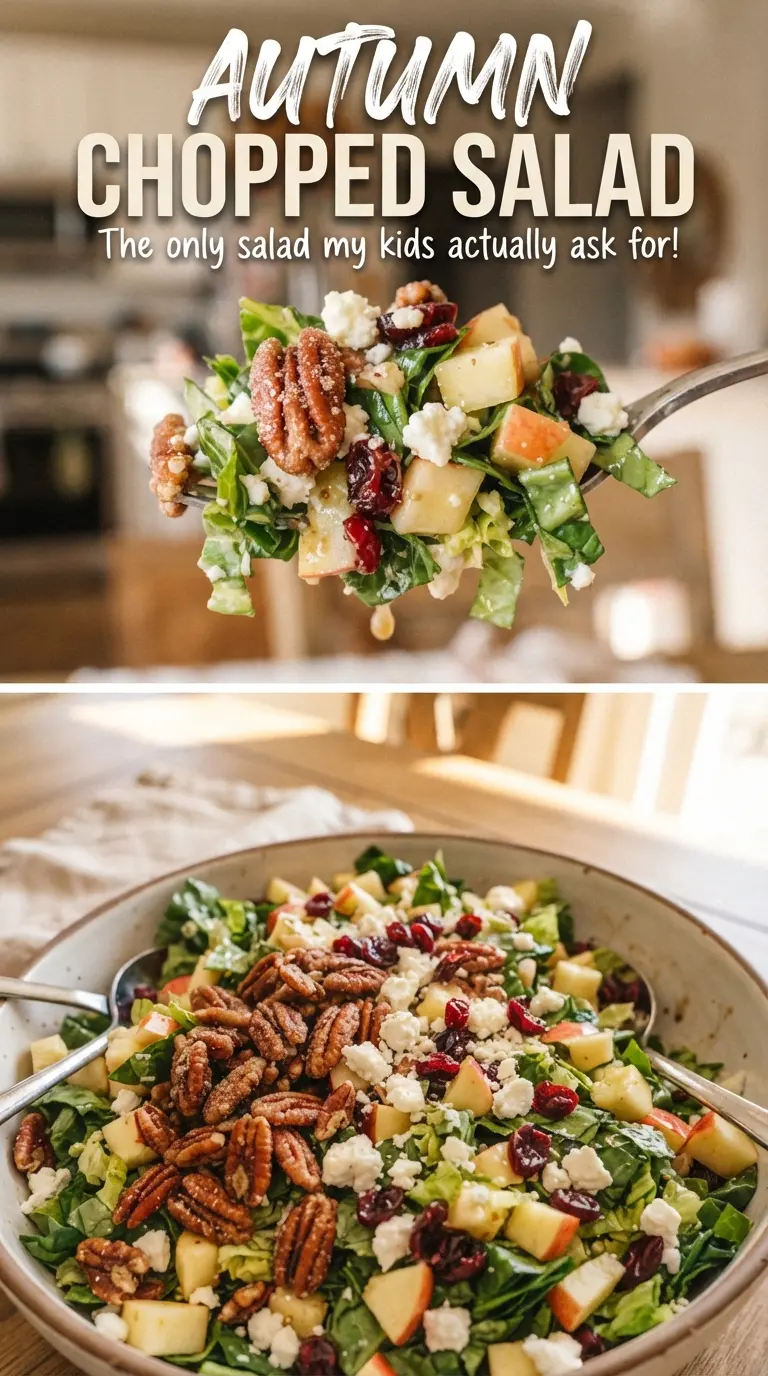
- Kale — This is the sturdy base that holds up to dressing and leftovers. Chop it finely so the stems don’t dominate each bite, and massage it long enough that the leaves darken and soften slightly.
- Brussels sprouts — Shredded sprouts add crunch and a mild cabbage-like bite that plays well with sweet fruit. A bag of shredded Brussels sprouts saves time here, and it works just as well as shaving them yourself.
- Apple and pear — The combination gives you crispness plus juiciness. Use one variety that stays firm; softer fruit turns mushy once the salad is tossed.
- Maple syrup and Dijon — Maple rounds out the vinegar, and Dijon keeps the dressing emulsified instead of thin and slippery. If you swap the maple for honey, use the same amount and whisk a little longer until the dressing looks glossy.
- Candied pecans and pepitas — The pecans bring sweetness and crunch, while the pepitas add a toasted, savory note. Add them just before serving if you want maximum crunch.
- Feta — Salty feta keeps the salad from leaning too sweet. Goat cheese works in a pinch, but it will make the bowl creamier and less crumbly.
Building the Salad So Every Bite Tastes Balanced
Whisking the Dressing Until It Looks Smooth
Start with the olive oil, vinegar, maple syrup, Dijon, salt, and pepper, and whisk until the dressing looks slightly thickened and uniform. If the oil sits in a separate layer, keep whisking a little longer; Dijon helps emulsify everything, but it still needs a minute to come together. The dressing should cling lightly to a spoon instead of looking watery.
Softening the Kale Without Turning It Wilty
Toss the chopped kale with just 1 tablespoon of dressing and work it with your hands for about a minute. The leaves should look darker, feel supple, and lose that dry, scratchy texture. If you massage it until it collapses, the finished salad will taste flat, so stop as soon as the kale bends easily.
Adding the Fruit and Crunch at the End
Once the kale is ready, add the Brussels sprouts, apple, pear, cranberries, pecans, feta, and pepitas. Pour in the remaining dressing and toss just until coated. The goal is a glossy bowl with distinct pieces, not a soggy mix. Serve right away for the crispest texture, or chill it briefly if you want the flavors to meld a little more.
How to Adapt This Salad for Different Tables
Dairy-Free Version
Leave out the feta and add a little extra salt plus another handful of pepitas or pecans. The salad stays bright and complete, but you lose the salty creaminess that feta brings, so the dressing should be tasted and adjusted at the end.
Nut-Free Swap
Skip the candied pecans and use extra roasted pepitas or sunflower seeds. You still get crunch, but the salad will taste a little less caramel-like and a little more savory, which works well if you want it less sweet.
Make-Ahead Lunch
Keep the dressing separate and store the fruit, nuts, and cheese in their own container until serving. The dressed greens hold up well for a short stretch, but the apples and pears stay crisper if you slice them right before eating.
Storage and Reheating
- Refrigerator: Store the tossed salad up to 2 hours for the best texture. After that, the fruit softens and the nuts lose their crunch.
- Freezer: This salad doesn’t freeze well. The greens and fruit turn watery and lose their texture when thawed.
- Reheating: No reheating needed. If it has been chilled, let it sit at room temperature for 10 to 15 minutes so the dressing loosens up again before serving.
Answers to the Questions Worth Asking
Autumn Chopped Salad
Ingredients
Method
- Whisk olive oil, apple cider vinegar, maple syrup, Dijon mustard, salt, and pepper until fully combined.
- Massage the kale with 1 tablespoon of the dressing for 1 minute until tender and slightly softened.
- Add Brussels sprouts, apple, pear, dried cranberries, candied pecans, feta, and roasted pepitas to the kale.
- Pour the remaining dressing over the salad and toss well to coat every ingredient.
- Serve right away for the crunchiest texture, or chill up to 2 hours before serving.