Warm pearl couscous, sweet roasted squash, tart cranberries, and creamy goat cheese make this salad land somewhere between hearty side dish and light meal. The couscous stays pleasantly chewy, the squash gives it substance, and the maple balsamic dressing ties everything together without turning the greens soggy.
What makes this version work is timing. The couscous needs to cool before it hits the greens so the arugula stays crisp, and the squash should be roasted until the edges take on a little color, not just softened. That contrast of warm and cool, soft and crisp, is what makes each bite feel balanced instead of muddy.
Below, I’ve included the small details that keep the salad from getting limp, plus the swaps I’d use when I want to make it a little more filling or adjust it for what’s in the pantry.
The couscous stayed chewy even after I tossed it with the dressing, and the roasted squash added just enough sweetness to balance the cranberries. I served it at room temperature and it held up beautifully for dinner.
Like this autumn pearl couscous salad? Save it to Pinterest for a make-ahead side dish with roasted squash, goat cheese, and a maple balsamic dressing that doesn’t drown the greens.
The Trick Is Letting the Couscous Cool Before It Hits the Greens
Pearl couscous can turn a salad from crisp and lively into soft and heavy if you toss it in while it’s still hot. The steam wilts the arugula, softens the cranberries too quickly, and makes the dressing taste flat instead of bright. Cooling the couscous to room temperature keeps each component distinct, which is what gives this salad its good texture.
The squash matters for the same reason. Roast it until the edges take on color and the cubes are tender enough to split with a fork, but not collapsing into mash. If the squash is underdone, it reads starchy; if it’s overdone, it disappears into the bowl and you lose the sweet-savory contrast that makes the salad worth serving.
- Cool couscous completely — It should be just warm or fully room temperature before mixing. That one step protects the greens and keeps the dressing from getting absorbed too fast.
- Roast for color, not just tenderness — The browned edges add depth. Pale squash tastes fine, but it won’t carry the salad the same way.
- Toss gently at the end — Pearl couscous is sturdy, but the arugula and goat cheese are not. Use a light hand so the cheese stays in soft crumbles instead of disappearing into the dressing.
What Each Ingredient Is Actually Doing in This Bowl
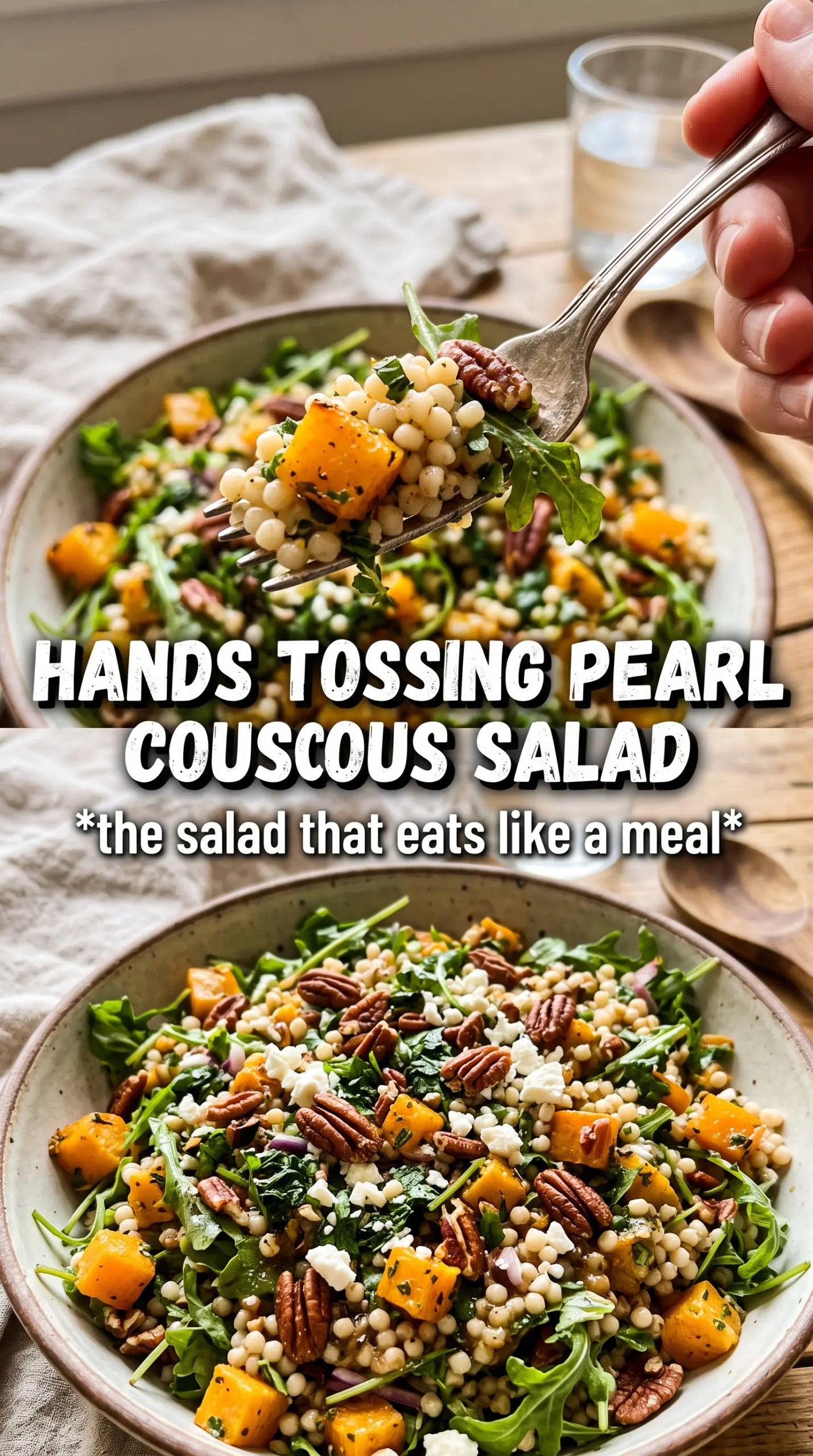
- Pearl couscous — This gives the salad body. It has enough chew to hold up under dressing, which makes it a better base here than smaller grains that can turn dense or gummy.
- Butternut squash — Roast it until the natural sugars concentrate. You can buy pre-cut squash to save time, and it works well as long as the pieces are similar in size so they cook evenly.
- Arugula or mixed greens — Arugula adds peppery bite that keeps the salad from leaning too sweet. Mixed greens are milder and work if you want a softer finish.
- Dried cranberries — These bring acidity and chew. If yours are especially dry, a short soak in warm water for 5 minutes plumps them up without making the salad wet.
- Pecans and pumpkin seeds — Toasting matters here. Untoasted nuts taste flat beside the squash and dressing; toasted ones add crunch and a little bitterness that balances the maple.
- Goat cheese — Use a good creamy goat cheese if you can. Feta will work in a pinch, but it shifts the salad from tangy and soft to saltier and firmer.
- Maple balsamic dressing — The Dijon is not optional. It helps the oil and vinegar stay together long enough to coat the couscous instead of sliding off in a sharp layer at the bottom of the bowl.
Building the Salad So Nothing Turns Soggy
Roast the Squash Until It Browns
Spread the squash in a single layer and give it space on the pan. Crowding traps steam, and steam is the enemy of caramelization. You want tender centers with browned edges, because that slight crust gives the salad more flavor and keeps the squash from collapsing when you toss it.
Whisk the Dressing Until It Looks Smooth and Glossy
Combine the oil, balsamic, maple syrup, Dijon, salt, and pepper in a small bowl or jar and whisk until it thickens slightly and looks cohesive. If it separates immediately, keep whisking for a few more seconds; the mustard needs a moment to bind everything together. A broken dressing won’t ruin the salad, but it won’t cling to the couscous the same way.
Toss in Layers, Not All at Once
Start with couscous, squash, greens, cranberries, and pecans, then add most of the dressing and toss gently. Taste before adding the rest. The couscous should be lightly coated, not drenched, because it keeps absorbing dressing as it sits. Finish with goat cheese and pumpkin seeds so they stay visible and crunchy instead of getting crushed into the mix.
How to Adapt This for a Bigger Crowd or a Different Pantry
Make it dairy-free without losing richness
Skip the goat cheese and add extra toasted pumpkin seeds or pecans for richness. The salad loses the creamy tang, so I’d add an extra teaspoon of balsamic and a pinch more salt to keep the dressing from tasting one-note.
Swap in farro when you want a chewier base
Cooked farro stands in well for couscous if you want something nuttier and a little more substantial. It gives the salad a heartier bite, but it also makes the dish feel more grain-forward and less delicate.
Use feta for a saltier, sharper finish
Feta works if that’s what you have, but it’s firmer and saltier than goat cheese. Crumble it over the top at the end, since stirring it in too early makes the salad taste harsher and can muddy the look of the bowl.
Storage and Reheating
- Refrigerator: Store the salad for up to 3 days. The greens soften a bit, but the couscous and squash hold up well if the dressing was added lightly.
- Freezer: Don’t freeze this salad. The greens, cheese, and dressing all break down after thawing, and the texture turns watery.
- Reheating: This salad is best served at room temperature. If you want it slightly warm, heat only the couscous and squash first, then add the greens, cheese, and nuts right before serving so the salad stays fresh.
Answers to the Questions Worth Asking
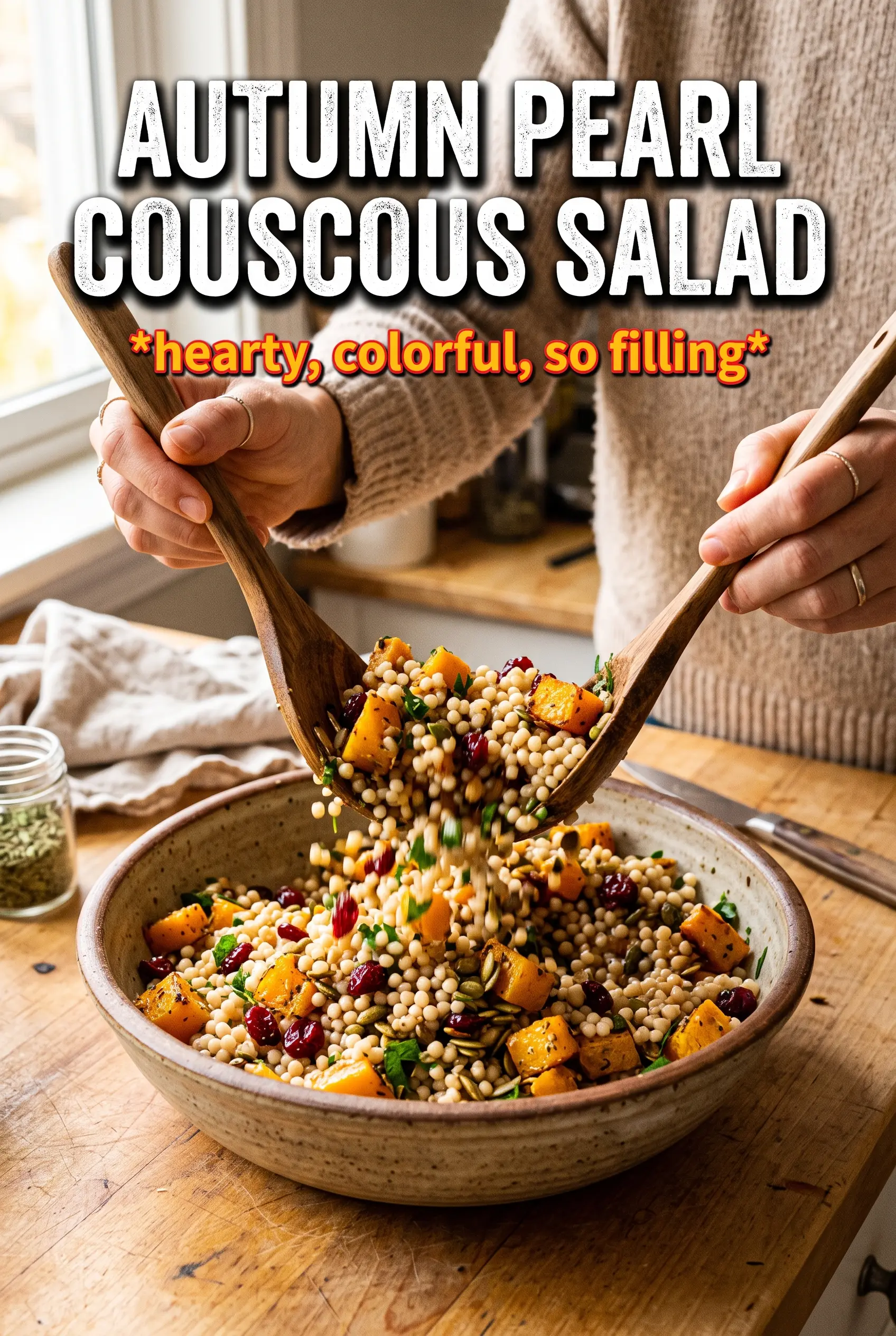
Autumn Pearl Couscous Salad
Ingredients
Equipment
Method
- Cook the pearl (Israeli) couscous per package instructions, then cool to room temperature for better texture.
- Roast the butternut squash at 425F with olive oil, salt, and pepper until golden, about 25 minutes.
- Whisk olive oil, balsamic vinegar, maple syrup, Dijon, salt, and pepper until emulsified, forming a smooth dressing.
- Combine the cooled pearl couscous, roasted butternut squash, arugula or mixed greens, dried cranberries, and pecans in a large bowl.
- Drizzle the dressing over the salad and toss gently to coat without crushing the greens.
- Top with crumbled goat cheese and toasted pumpkin seeds before serving for a fresh, crunchy finish.