Bacon ranch chicken foil packets deliver the kind of dinner that comes out steaming, savory, and complete without dirtying a stack of pans. The chicken stays juicy inside the foil, the bacon bastes everything as it cooks, and the potatoes soak up all that ranchy drippings along the way. When the packets open, you get tender chicken, soft vegetables, and melted cheese in one tidy meal.
What makes this version work is the order. The potatoes need to sit close to the heat long enough to turn tender, so they go in cut-side down and tucked around the chicken instead of buried under it. Heavy-duty foil matters here because thin foil tears once the bacon starts rendering and the packet gets moved around on a grill or campfire grate. Ranch seasoning gives the whole packet enough salt and herbs that you don’t need a complicated marinade or sauce.
Below you’ll find the one detail that keeps the chicken from drying out, the best way to seal the packets, and a few smart swaps if you’re cooking this at home instead of over a fire.
The bacon crisped up around the edges and the potatoes were tender without falling apart. I opened the packets at the table and the cheese melted right into everything.
Bacon ranch chicken foil packets are the kind of no-mess dinner that earns a spot in your camping rotation and your weeknight backup plan.
The Packet Setup That Keeps the Chicken Juicy and the Potatoes Tender
The biggest mistake with foil packet dinners is piling everything in a way that cooks unevenly. Chicken breast dries out when it sits exposed on hot foil for too long, and potatoes stay hard when they don’t get enough direct contact with the heat. This recipe fixes both problems by giving the potatoes their own space around the chicken and by sealing the packet tightly so the steam stays trapped inside.
- Heavy-duty foil — This is one place where the sturdy version matters. Thin foil tears when you flip or move the packets, especially once bacon fat starts to render. If all you have is standard foil, use two layers.
- Baby potatoes — Halving them is important. Whole potatoes won’t finish in the same window as the chicken. Cut-side down gives them more contact with the hot foil and helps them soften faster.
- Broccoli florets — Add them as florets, not large stalk pieces, so they cook through without turning woody. They should still have some bite when the packets open.
- Ranch seasoning mix — This does more than season the chicken. It also flavors the potatoes and broccoli as the bacon drippings move through the packet. A homemade ranch blend works too, but the store-bought packet is dependable and balanced.
What Each Ingredient Is Actually Doing in Foil Packet
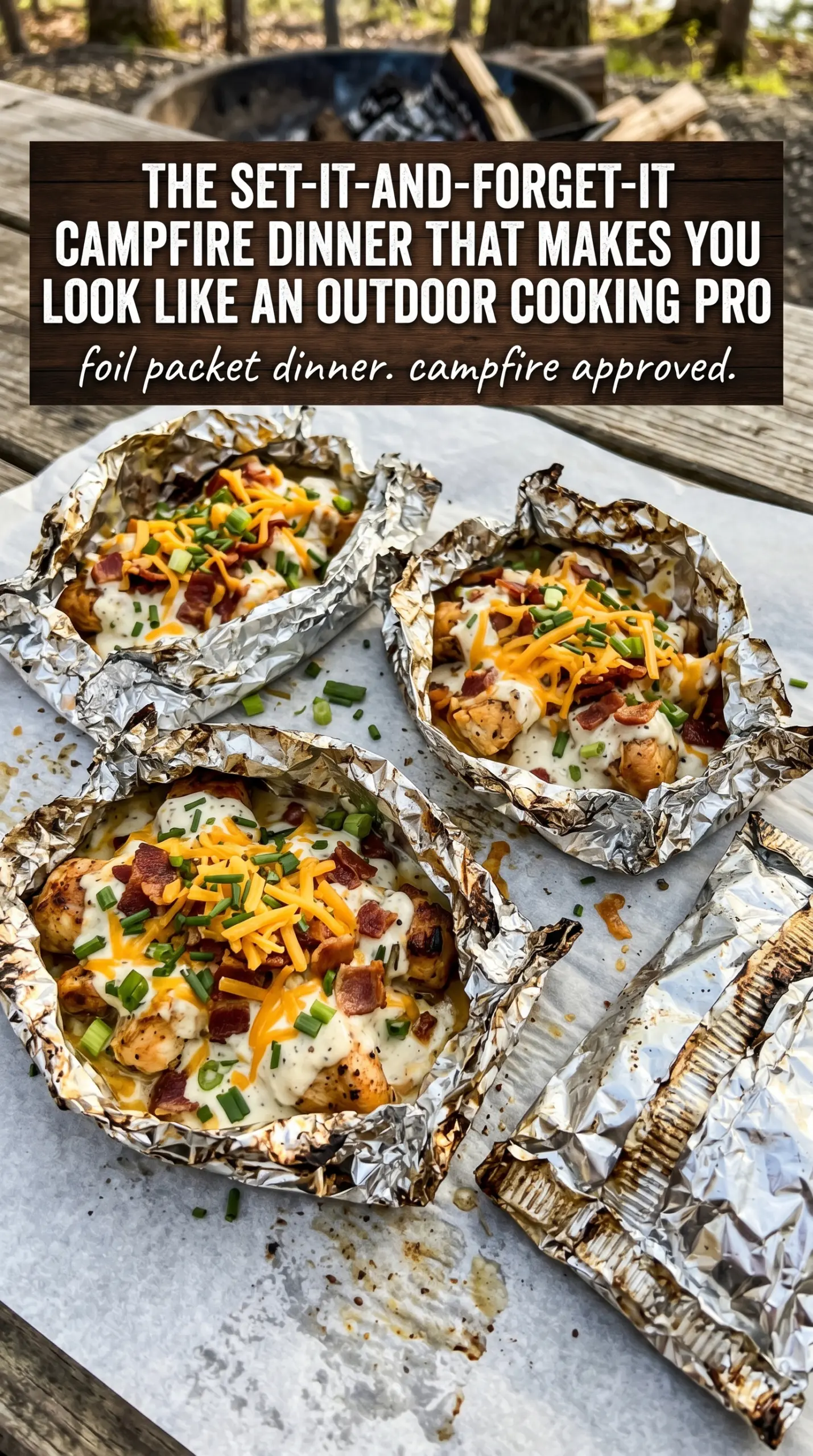
- Foil packet (sealed well so steam doesn’t escape) — The seal traps steam that cooks everything gently. A loose seal lets steam escape and things dry out.
- Protein (chicken or fish, thin-cut evenly) — Even thickness means even cooking. Thin pieces cook through without the edges drying out.
- Potatoes (cut thin so they cook through in time) — Thick potatoes won’t cook through before the chicken overcooks. Cut them the same thickness as the chicken.
- Fat (oil or butter for moisture) — The fat steams everything and prevents drying. Don’t skip this or the packet contents will be tough.
- Seasoning (distributed between layers) — Season each layer so flavor is even throughout. Don’t just sprinkle on top.
- Vegetables (tender ones that cook quickly) — Harder vegetables like broccoli take longer than softer ones like zucchini. Choose vegetables with similar cook times.
- Liquid (light sauce or broth) — A little liquid helps everything steam evenly. Too much liquid creates a stew; too little dries things out.
- Fire temperature (medium, not blazing) — High heat can burn the outside before the inside cooks. Medium heat cooks everything evenly.
How to Build the Packets So Nothing Burns Before the Chicken Is Done
Season the Chicken First
Lay each chicken breast on its own sheet of foil and sprinkle the ranch seasoning directly over the top. That gives the meat the strongest flavor where it matters most. If the chicken breasts are very thick, pound them lightly to even them out so the thinner end doesn’t overcook before the center is safe.
Wrap With Bacon, Then Tuck the Vegetables Around It
Wrap two slices of bacon around each breast before adding the potatoes and broccoli. The bacon keeps the chicken from drying out and gives the whole packet its salty richness. Tuck the potatoes close to the chicken and keep the broccoli nearer the edges, because broccoli cooks faster and you want it tender, not collapsing.
Seal Tight and Cook Over Medium Heat
Fold the foil into a tight packet with a little room for steam to move inside. A loose seal lets moisture escape and leaves the chicken stringy. Set the packets on a campfire grate or grill over medium heat for 20 to 25 minutes, then check the thickest part of the chicken; it needs to hit 165°F. If the potatoes still feel firm, close the packet again and give it a few more minutes instead of leaving it open over the heat.
Finish With Cheese at the End
Open the packets carefully because the steam will rush out hard. Sprinkle the cheddar over the hot chicken and vegetables, then reseal the packet for a minute or two just long enough to melt the cheese. If you leave it closed much longer, the broccoli softens too far and the cheese can turn greasy instead of creamy.
How to Adapt These Foil Packets for the Grill, the Oven, or a Different Diet
Oven-Baked Version
Bake the sealed packets on a sheet pan at 400°F for about 25 to 30 minutes. The bacon won’t get the same grilled edge, but the chicken stays just as juicy and the cleanup is still minimal. Open carefully at the end so the trapped steam doesn’t hit you in the face.
Dairy-Free Packets
Skip the cheddar or replace it with a dairy-free shreds that melts well. You’ll lose some of the creamy finish, but the bacon and ranch seasoning still carry the dish. Add the cheese substitute only at the very end so it doesn’t dry out.
Swap the Vegetables
You can trade the broccoli for green beans, bell peppers, or sliced zucchini depending on what you have. Green beans hold up best and behave a lot like the broccoli. Zucchini cooks faster and needs to go in thick slices so it doesn’t vanish into the packet.
Storage and Reheating
- Refrigerator: Store leftovers in an airtight container for up to 3 days. The potatoes soften a little more as they sit, but the flavor holds up well.
- Freezer: This freezes better than most foil packet dinners if you strip off the foil and cool everything first. Freeze in a sealed container for up to 2 months, though the broccoli will be softer after thawing.
- Reheating: Reheat covered in a 325°F oven until hot, or use the microwave in short bursts. The mistake to avoid is blasting it on high heat, which tightens the chicken and makes the bacon rubbery.
Answers to the Questions Worth Asking
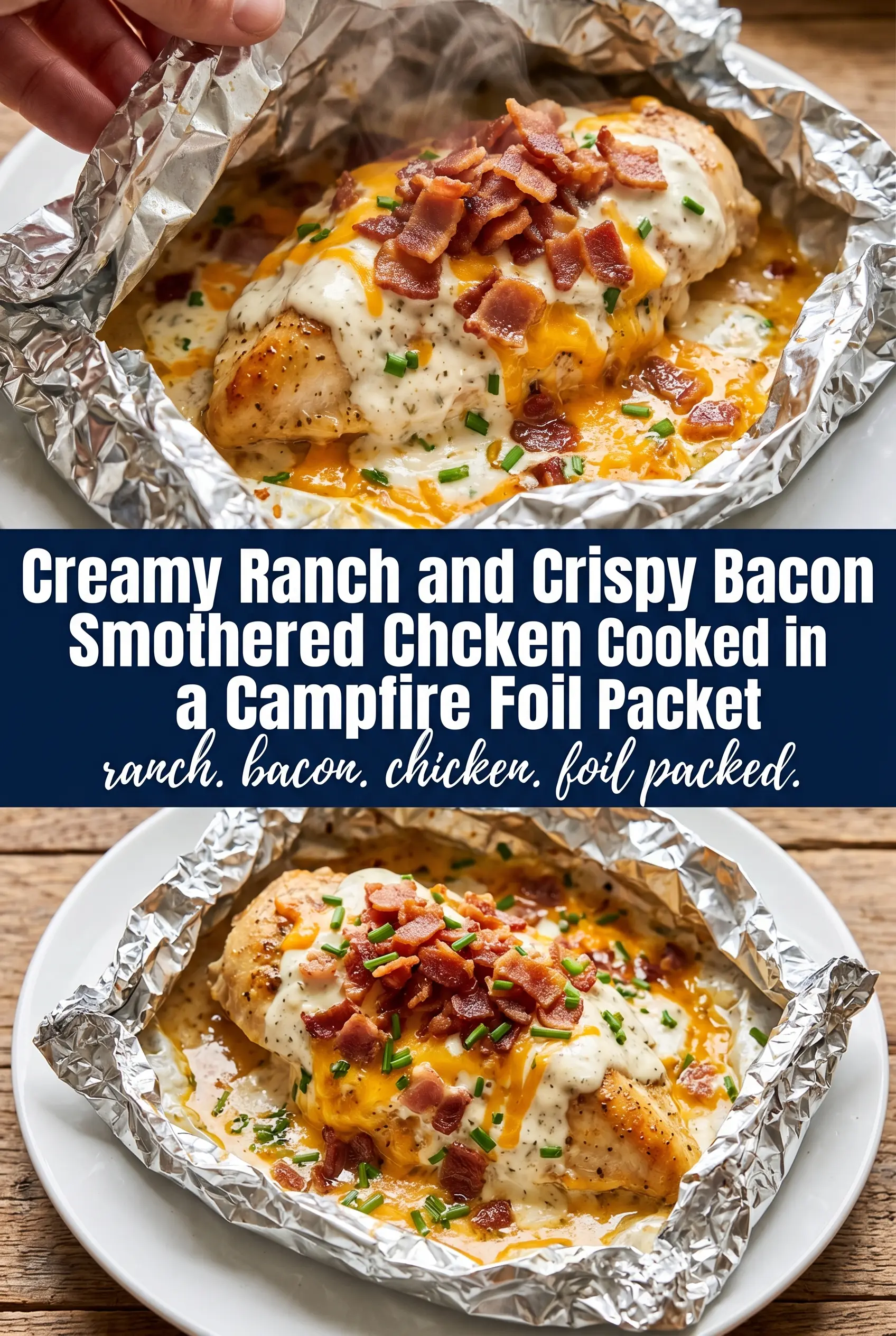
Bacon Ranch Chicken Foil Packets
Ingredients
Equipment
Method
- Lay 4 sheets of heavy-duty aluminum foil flat, then place 1 chicken breast on the center of each sheet.
- Sprinkle each chicken breast with the ranch seasoning mix.
- Wrap each chicken breast with 2 slices of bacon, pressing gently so the bacon adheres to the chicken.
- Arrange the halved baby potatoes and broccoli florets around each chicken breast so the foil packs are evenly filled.
- Fold the foil up and over the filling, then crimp and seal the packets tightly to keep steam inside (leave no gaps).
- Place the foil packets on a campfire grate over medium heat and cook for 20 to 25 minutes, steaming actively, until the chicken reaches 165°F.
- Carefully open each packet, then sprinkle shredded cheddar cheese over the hot chicken and bacon (steam will rise visibly).
- Reseal the packets briefly and wait until the cheese melts, then serve right away while hot and bubbling.