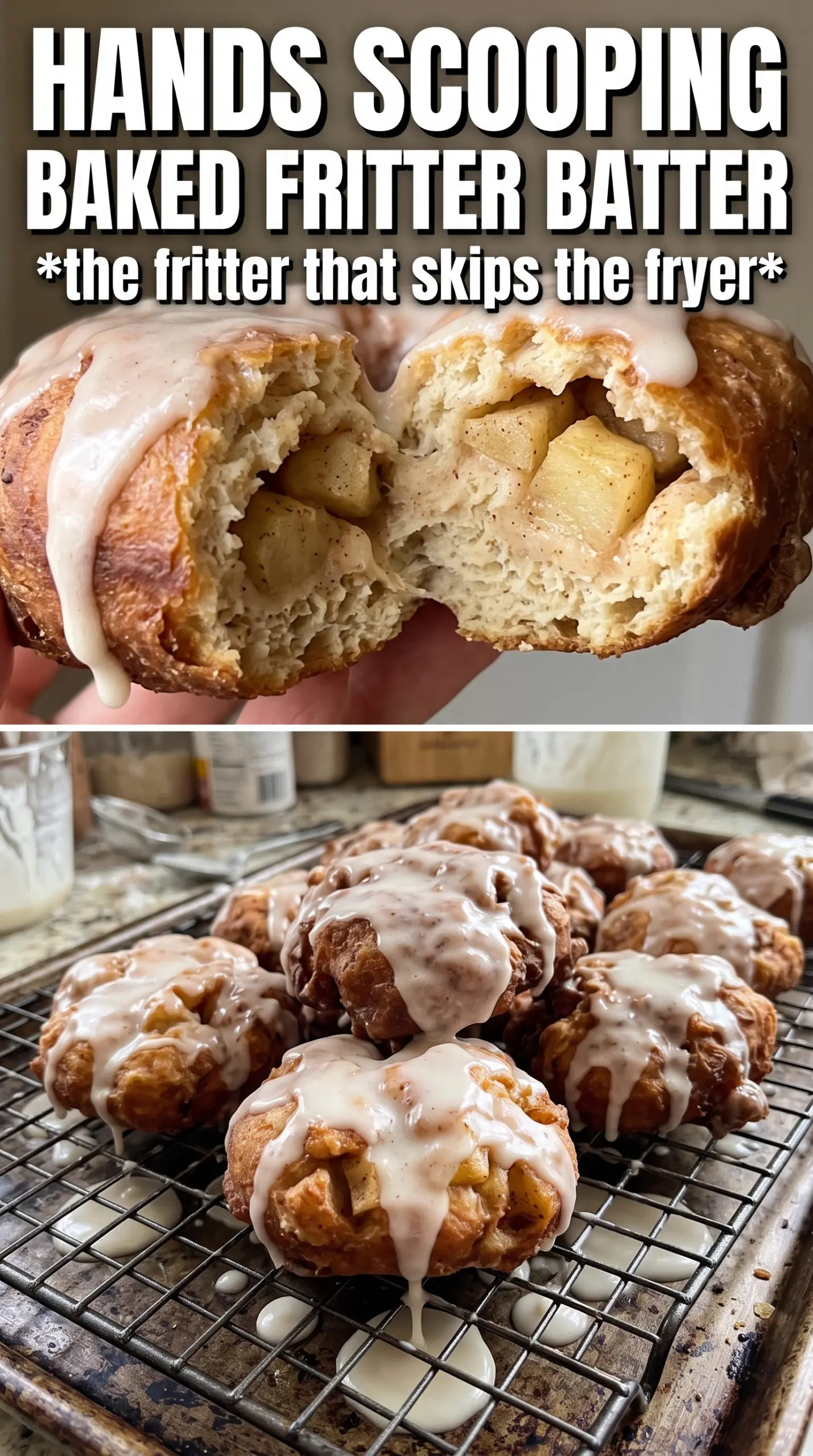
Golden-baked apple fritters hit that sweet spot between tender cake and crisp-edged pastry, with caramelized apple pieces tucked through every bite and a glaze that sets into a thin, crackly finish. They scratch the same itch as the fried version, but without the heavy batter or the mess of hot oil, which makes them the kind of breakfast you can actually pull off on a regular morning.
The trick here is keeping the batter thick enough to hold those rough fritter shapes while still staying soft inside. Diced apples go in at the end so they don’t bleed juice into the flour and turn the mixture gummy, and the tops get a quick spray before baking so they brown instead of drying out. Flipping them once halfway through gives both sides that bakery-style color you want from a fritter.
Below you’ll find the small details that matter most, from getting the glaze to the right drizzling consistency to the texture change you can expect if you swap in a different apple.
The fritters baked up with crisp edges and stayed soft in the middle, and the glaze soaked in just enough without making them soggy. I used Honeycrisp and the apple pieces held their shape perfectly.
Save these baked apple fritters for a breakfast that bakes crisp on the outside, stays tender inside, and finishes with a cinnamon glaze.
The Mistake That Makes Baked Fritters Turn Dense
The biggest problem with baked fritters is overmixing. Once the flour hits the wet ingredients, the batter should look rough and a little shaggy, not smooth like cake batter. If you keep stirring to chase out every lump, the fritters bake up tight instead of tender, and the apples get trapped in a stiff base that feels more like muffin tops than fritters.
Spacing matters too. These need room for the edges to brown and set before the centers finish baking, and if they’re crowded together, they steam. A generous spray of cooking spray on the parchment and on the tops of the fritters helps them brown the way a fried fritter would, which is the whole point of baking them instead of frying them.
- Let the batter stay uneven. A few streaks of flour disappear as the fritters sit for a minute or two, and that rest keeps the texture softer.
- Use finely diced apples. Big chunks weigh the batter down and can leave raw pockets around the fruit.
- Flip once, not repeatedly. One clean flip halfway through gives both sides color without deflating the fritters.
What Each Ingredient Is Actually Doing Here
- All-purpose flour gives the fritters enough structure to hold their shape on the baking sheet. A 1:1 gluten-free flour blend can work, but the batter may need a minute or two to hydrate before scooping.
- Apples are the whole reason this works. Firm, tart-sweet apples like Honeycrisp, Granny Smith, or Braeburn hold their shape and keep the fritters from tasting flat.
- Whole milk and melted butter keep the crumb soft and tender. You can use 2% milk in a pinch, but the fritters lose a little richness.
- Cinnamon and nutmeg give the glaze and batter that bakery-style warmth. Freshly ground nutmeg is stronger, so don’t overdo it if yours is especially potent.
- Powdered sugar glaze needs just enough milk to drizzle. If it gets too thin, it slides off; if it’s too thick, it sits in a paste on top instead of setting into a clean finish.
The 20 Minutes That Turn Batter Into Fritters
Mix the Dry Base First
Whisk the flour, sugar, baking powder, cinnamon, nutmeg, and salt until the spices are evenly distributed. That quick step keeps you from biting into a pocket of cinnamon or a bitter pinch of nutmeg. Baking powder does the lift here, so if yours is old and weak, the fritters will spread before they rise.
Bring the Wet Ingredients Together
Whisk the eggs, milk, melted butter, and vanilla in a separate bowl until the mixture looks smooth and unified. The butter should be melted, not hot, or it can scramble the eggs and leave tiny cooked bits in the batter. Pour it into the dry ingredients and stir only until the flour disappears in broad strokes.
Fold in the Apples Last
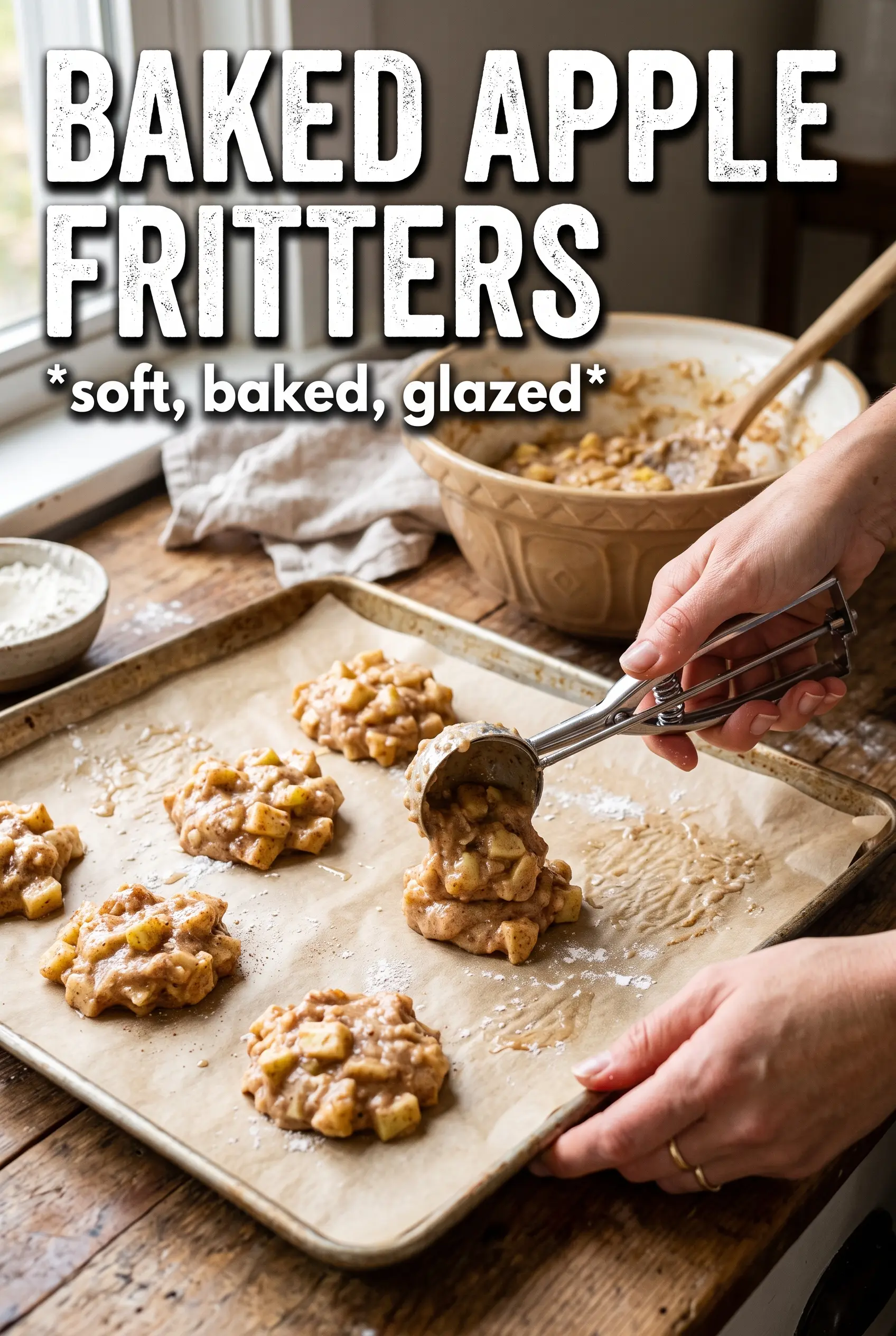
Add the diced apples and fold just enough to distribute them. If you stir hard at this point, the fruit starts releasing juice and the batter turns wet fast. The final mixture should be thick enough to mound on a spoon and hold rough edges when dropped onto the pan.
Bake Until Deeply Golden
Drop 1/4 cup portions onto a parchment-lined sheet that has been sprayed generously with cooking spray, then spray the tops too. Bake at 400°F for 16 to 18 minutes, flipping once at the 10-minute mark, until both sides are golden and the centers spring back lightly when touched. If the fritters look pale after flipping, give them a little more time; underbaked centers turn gummy once the glaze goes on.
Glaze While They’re Warm
Whisk the powdered sugar, milk, vanilla, and cinnamon until the glaze runs in a thick ribbon off the whisk. Drizzle it over the fritters while they’re still warm so it softens slightly and clings instead of cracking off. If the fritters cool completely first, warm them for a minute or two before glazing so the finish sets the right way.
How to Adjust These for Different Kitchens and Different Mornings
Use Pears Instead of Apples
Firm pears can stand in for apples if you want a softer, more floral fritter. Peel them and dice them a little smaller than you would apples, since pears break down faster and can make the batter wetter.
Make Them Dairy-Free
Swap the whole milk for an unsweetened non-dairy milk and use melted coconut oil or a neutral dairy-free butter substitute in place of the butter. The fritters will still bake up tender, though the flavor will be a little less rich and the glaze may need a touch less liquid if your milk is thinner.
Add a Little Extra Spice
A pinch of cloves or allspice gives the fritters a deeper bakery-style warmth. Keep it light, because too much spice can drown out the apples and make the glaze taste heavy.
Storage and Reheating
- Refrigerator: Store glazed or unglazed fritters in an airtight container for up to 3 days. The glaze softens a little in the fridge, but the fritters keep their flavor well.
- Freezer: Freeze unglazed fritters for up to 2 months, wrapped well and sealed in a freezer bag. Glaze them after reheating for the best texture.
- Reheating: Warm in a 325°F oven for 8 to 10 minutes or until heated through. The mistake to avoid is microwaving them until they’re steamy, which makes the edges soft and the glaze sticky instead of set.
Answers to the Questions Worth Asking
Baked Apple Fritters
Ingredients
Equipment
Method
- Preheat the oven to 400F and line a baking sheet with parchment, then spray generously with cooking spray (for easy release and browning).
- Whisk all-purpose flour, granulated sugar, baking powder, cinnamon, nutmeg, and salt until evenly combined.
- Whisk eggs, whole milk, melted butter, and vanilla extract, then fold into the dry ingredients until just combined.
- Fold in diced apples so the batter holds the fruit pieces evenly.
- Drop 1/4 cup portions onto the prepared baking sheet and spray the tops with cooking spray so they bake up golden.
- Bake 16-18 minutes, flipping once at 10 minutes, until golden on both sides.
- Whisk powdered sugar, milk, vanilla, and cinnamon until smooth and pourable.
- Drizzle the glaze over warm fritters so it sets into a thicker ribbon.