Golden baked brie wrapped in puff pastry is the kind of appetizer that disappears fast because it hits every mark at once: crisp, buttery pastry, warm jam, and a center that turns molten without turning into a puddle. When it comes out of the oven with that deep golden shell and a little cheese starting to ooze at the seams, people head straight for the crackers before you even set it down.
This version works because the brie stays chilled until it goes into the pastry, which helps it hold its shape long enough for the crust to brown. The jam adds sweetness and moisture, but the small amount of brown sugar on top gives the filling a more caramelized edge than jam alone. Pecans bring crunch, and the egg wash is what gives the pastry that lacquered finish instead of a pale, bready look.
Below, I’ll walk through the one step that keeps the cheese from leaking out early, plus a few swaps if you want to change the jam or make it nut-free. The timing matters here, but it’s forgiving once you know what the pastry should look and feel like before it comes out of the oven.
The pastry browned evenly and the brie stayed in place until I cut into it. The raspberry jam and pecans made it taste like something from a fancy wine bar, and it was gone in minutes.
Love the gooey center and flaky crust? Save this baked brie for the next time you need a fast appetizer that feels special.
The One Thing That Keeps Baked Brie From Bursting Out of Its Pastry
The biggest mistake with baked brie is sealing warm cheese inside pastry and then giving it no time to settle before baking. Brie softens fast, and if it starts too warm, the pressure builds before the pastry has a chance to brown. Keeping the wheel cold and wrapping it snugly but not tightly gives the crust time to set before the filling turns fully molten.
The other detail that matters is where the seam ends up. Flipping the bundle seam-side down keeps the pastry from opening in the oven, and trimming excess dough helps prevent a thick, underbaked fold at the bottom. You want a pastry shell that looks sealed and neat, not bulky.
- Puff pastry — This gives you the lift and crisp edges that make baked brie worth making. Thaw it just enough to unfold cleanly, then keep it cold so the butter layers stay distinct.
- Brie — A full wheel holds its shape better than wedges or rindless pieces. Leave the rind on; it helps the cheese stay contained as it softens.
- Jam — Raspberry and fig both work because they bring enough sweetness and body to balance the cheese. A thick jam is better than a loose preserve, which can leak and soak the pastry.
- Pecans — They add crunch and a toasted, buttery note that keeps the filling from tasting one-note. Chop them small so they stay inside the pastry instead of tearing it when you fold.
- Egg wash — This is what gives the pastry that glossy, deep golden finish. Skip it and the crust will bake up pale and dull, even if it’s cooked through.
Building the Brie So It Bakes Cleanly and Cuts Beautifully
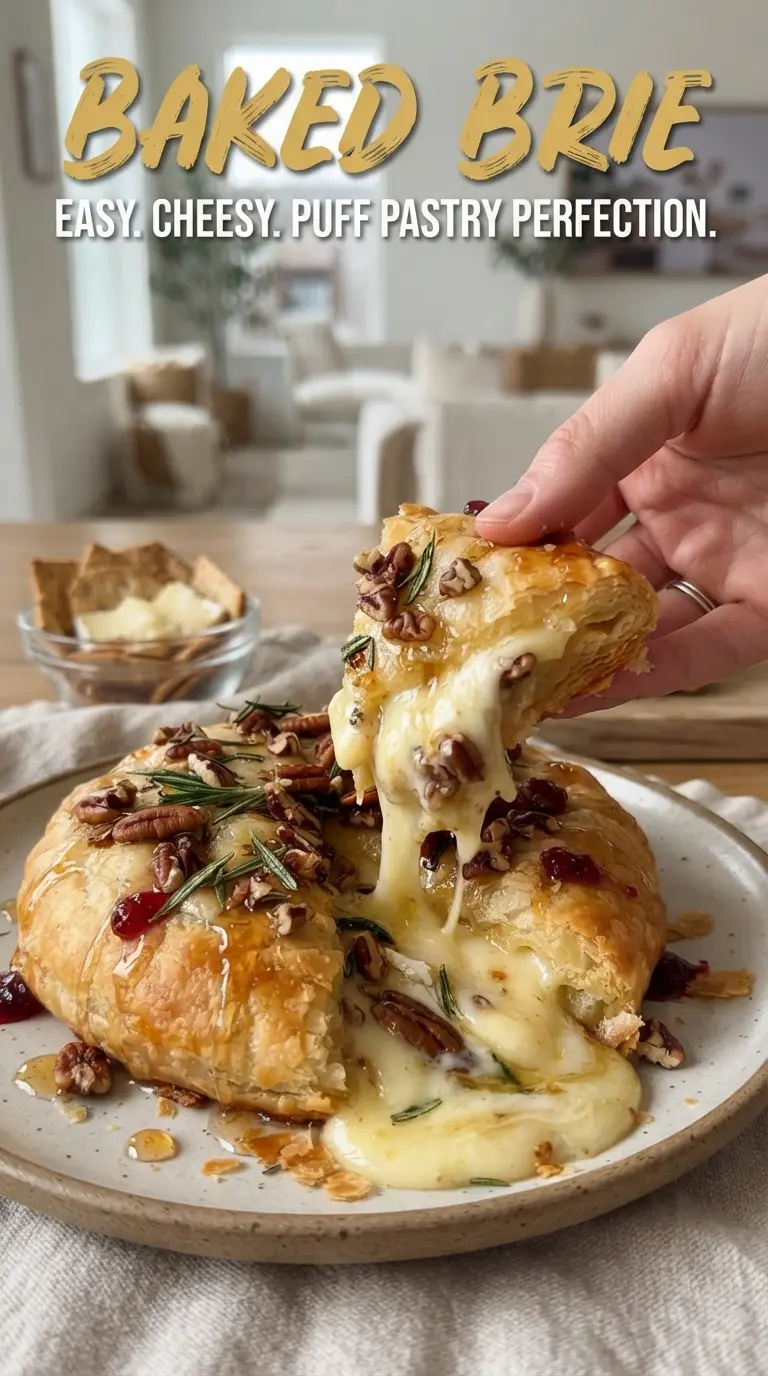
- Puff pastry — Roll it just enough to smooth the folds and give yourself a little extra surface area. If it gets too warm and sticky, the butter softens and the crust loses its lift in the oven.
- Brie — Use it cold from the fridge. That chill buys you the few extra minutes needed to bake the pastry fully before the center becomes a flood.
- Raspberry or fig jam — Raspberry gives a brighter finish; fig tastes deeper and a little more savory. Use what’s thick and spoonable, not runny, or it will push out from the seams.
- Pecans and brown sugar — The sugar helps the top caramelize and the nuts keep each bite from being soft all the way through. If you skip them, the baked brie will still work, but it loses that crackly-sweet contrast.
- Crackers and apple slices — They matter more than they look like they should. You need something crisp and something fresh to balance the richness once the cheese opens up.
How to Wrap, Bake, and Rest the Brie Without Losing the Filling
Getting the Pastry Ready
Preheat the oven to 400F and line a baking sheet with parchment so the pastry doesn’t stick once the cheese starts to soften. Roll the puff pastry slightly, just enough to even it out, then place the brie in the center. Spread the jam over the top, scatter the pecans and brown sugar, and keep the filling in the middle instead of pushing it right to the edges. That border is what helps you seal the bundle without traps of jam squeezing out.
Sealing the Wheel
Fold the pastry up and over the brie, trimming off obvious excess so the bottom doesn’t turn thick and doughy. Press the seams firmly so they hold, then flip the package seam-side down onto the parchment. If the pastry tears, pinch it back together; tiny cracks are fine, but open seams are where the filling escapes first.
Baking Until Deep Golden
Brush the top with egg wash and bake for 22 to 25 minutes, until the pastry is deeply browned and the surface looks dry and flaky instead of shiny and pale. The color matters here; blonde pastry usually means the center is still waiting on the edges to finish. If the top is browning too quickly, the oven is running hot, and a loose piece of foil over the top will keep it from going too far before the middle catches up.
Resting Before Serving
Let it rest for 10 minutes before cutting in. That pause gives the cheese a chance to thicken slightly, so it flows instead of racing across the pan. Slice too early and the filling pours out before anyone can scoop it.
Three Ways to Change the Filling Without Losing the Melt
Fig and walnut baked brie
Swap the raspberry jam for fig jam and use chopped walnuts instead of pecans. The result is a deeper, earthier filling that leans a little more savory and feels especially good with crisp crackers.
Dairy-free version
Use a plant-based wheel that melts similarly and check that your puff pastry is made without butter. The texture won’t be quite as lush as traditional brie, but you’ll still get a crisp shell and a creamy center.
Nut-free baked brie
Leave out the pecans and add an extra spoonful of jam if you want a little more sweetness. You lose the crunch, so serve with sturdy crackers or sliced apples for contrast.
Storage and Reheating
- Refrigerator: Store leftovers covered for up to 3 days. The pastry softens in the fridge, but the flavor still holds.
- Freezer: It’s best baked fresh. Freezing after baking makes the pastry soggy once thawed, and the cheese texture turns a little grainy.
- Reheating: Warm leftovers in a 325F oven until the pastry crispes back up and the center loosens again. The microwave will melt the cheese, but it will collapse the crust and leave it tough.
Questions I Get Asked About This Recipe
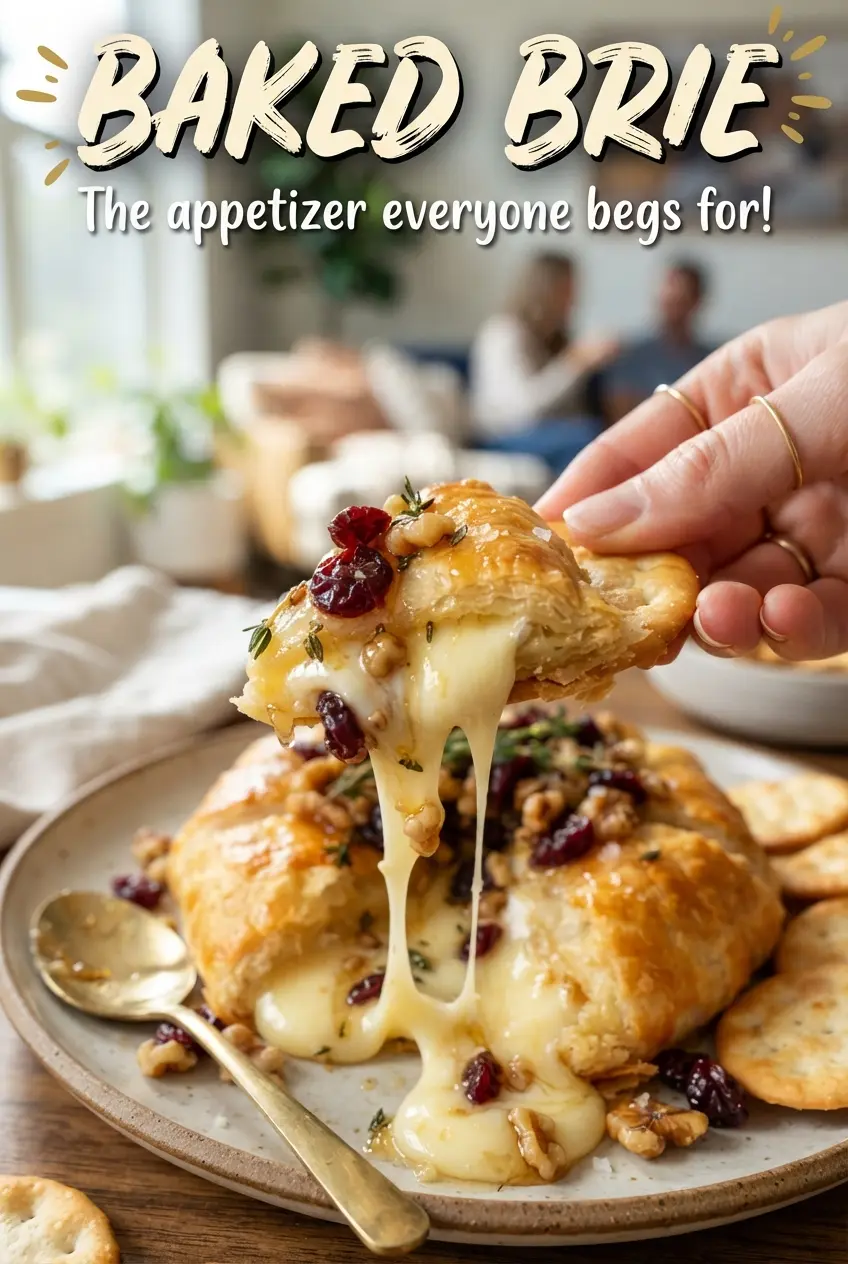
Baked Brie
Ingredients
Equipment
Method
- Preheat oven to 400F and line a sheet pan with parchment.
- Roll the puff pastry slightly and place the brie in the center.
- Spread the raspberry or fig jam over the brie.
- Sprinkle with chopped pecans and brown sugar.
- Fold pastry up over the brie, trimming excess and pressing seams to seal.
- Flip seam-side down onto the baking sheet, then brush with egg wash (beaten egg mixed with water).
- Bake 22-25 minutes, until deep golden brown.
- Rest 10 minutes so the cheese sets slightly, then garnish with fresh rosemary.
- Serve with crackers and apple slices.