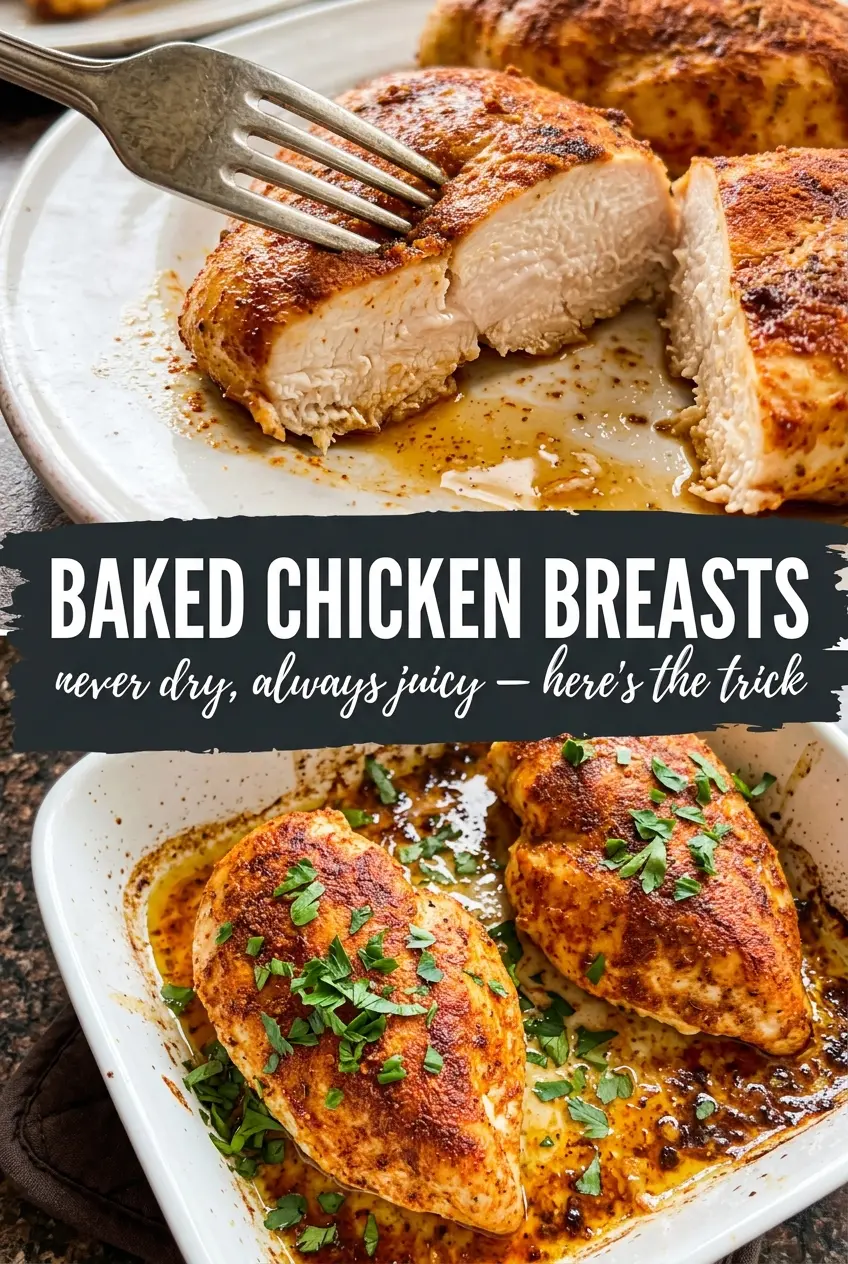
Juicy baked chicken breasts need a little more care than most weeknight chicken recipes get credit for. The difference between dry, bland chicken and a pan of tender, golden chicken comes down to thickness, seasoning, and pulling it from the oven at the right moment. When those three things line up, the outside takes on a fragrant herb crust and the inside stays moist enough to slice cleanly without shedding all its juices onto the cutting board.
Pounding the breasts to an even thickness does most of the heavy lifting here. It keeps the thinner ends from drying out while the center catches up, and it gives the seasoning a chance to brown instead of steaming in uneven spots. The olive oil helps the spices cling and encourages that deep golden finish, while smoked paprika and Italian seasoning give the chicken a little warmth and savor without burying the clean chicken flavor.
Below, I’ve included the small details that matter most — the temperature to aim for, why a short rest makes the slices juicier, and a couple of smart ways to adapt the seasoning if you want to lean in a different direction.
The chicken came out juicy all the way through, and the herb crust actually stayed on the meat instead of falling off when I sliced it. I used a thermometer and pulled it right at 165, which made a huge difference.
Save these juicy baked chicken breasts for the nights when you want golden herb-crusted chicken without guessing at the bake time.
The Reason Chicken Breasts Dry Out Before They Brown
Chicken breasts usually fail in the same place: the outside is still pale when the inside is finally done, or the outside looks perfect and the inside has gone chalky. The fix is a hot oven, even thickness, and a coating that helps the surface brown fast. At 425°F, the chicken gets enough heat to form color before the meat has time to lose all its moisture.
The other mistake is baking straight from wildly uneven pieces. A thick thick-end and a thin tapered end will never finish at the same time, which is why pounding matters here more than fussy seasoning. Once the breasts are even, the oven can do its job and the rest is just watching for the right temperature instead of relying on the clock alone.
What Each Ingredient Is Actually Doing in This Chicken
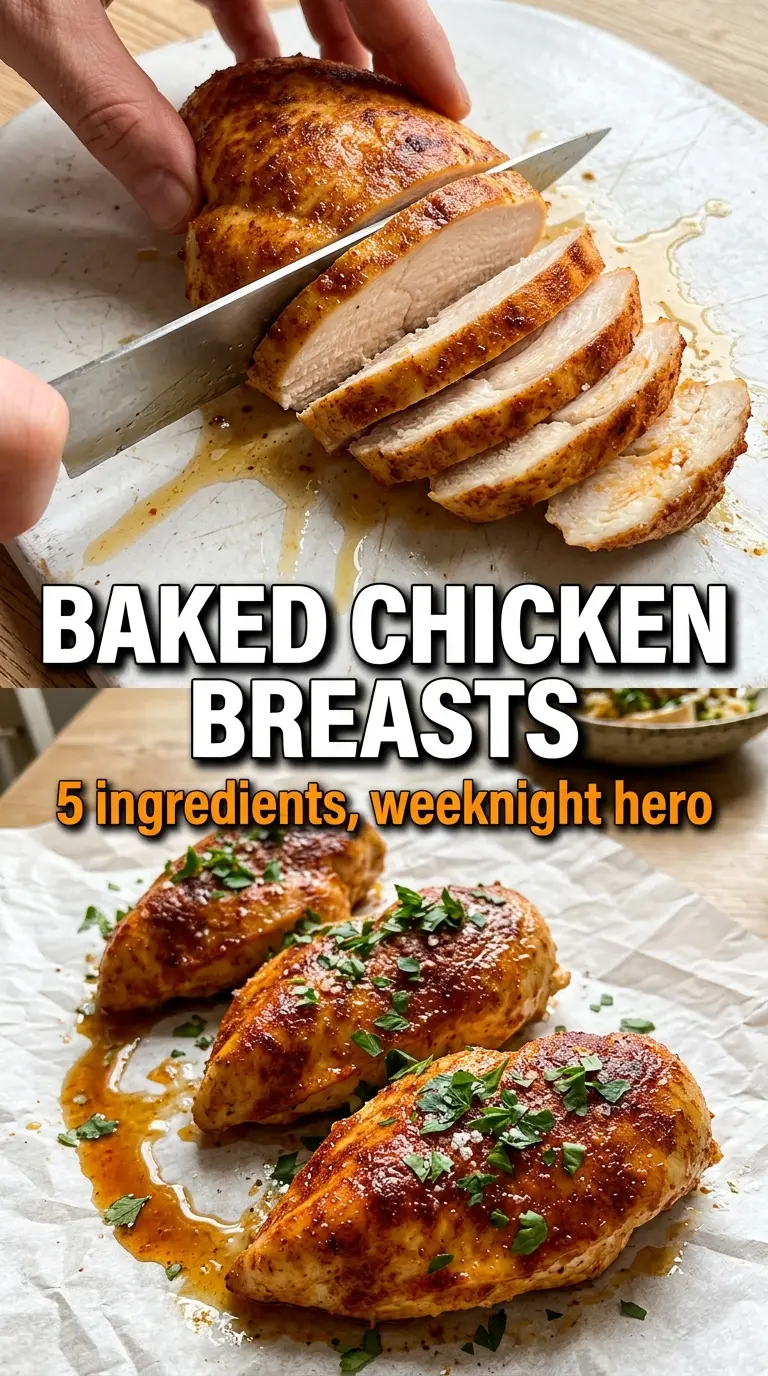
- Chicken breasts — Boneless, skinless breasts cook quickly and take on the seasoning well, but they dry out fast if they’re left uneven. If yours are very large, split them horizontally after pounding or buy smaller pieces so the timing stays tight.
- Olive oil — This is what helps the spice mix stick and gives the top enough fat to brown. A neutral oil works in a pinch, but olive oil adds a little more flavor and a better crust.
- Garlic powder, onion powder, smoked paprika, and Italian seasoning — These dry seasonings build a crust that tastes seasoned all the way through, not just salty on the surface. Don’t swap in fresh garlic here; it burns before the chicken finishes. If you want a cleaner herb flavor, use extra Italian seasoning and back off the paprika slightly.
- Salt and cracked black pepper — Salt matters for flavor and for keeping the meat from tasting flat. Use cracked pepper if you want little bursts of heat on the crust instead of a dusty coating.
- Parsley and lemon wedges — These finish the dish with freshness. The lemon is more than garnish; a squeeze right before serving wakes up the paprika and herbs.
Getting the Seasoned Crust Right Without Overbaking the Meat
Pounding to a Even Thickness
Lay the chicken between sheets of parchment or in a zip-top bag and pound it to about 3/4-inch thick where it’s thickest. You’re not trying to flatten it into cutlets; you’re just removing the mountain-and-valley shape that causes dry edges. If the breasts are already even, skip this step and move on.
Coating the Chicken So the Spices Stick
Brush both sides with olive oil first, then rub the seasoning on evenly. The oil creates a tacky surface, which helps the spices stay put and brown instead of falling into the pan. If the chicken looks patchy, add a light second pass of oil rather than piling on more dry seasoning.
Watching the Oven Instead of the Clock
Bake at 425°F for 18 to 22 minutes, but start checking early if your chicken breasts are on the smaller side. The tops should be golden and fragrant, and the thickest part should read 165°F in the center. If you wait for a deep, dark crust, the meat will overcook before you get there.
Resting Before the First Slice
Let the chicken sit for 5 minutes after it comes out of the oven. That pause keeps the juices from running out the second your knife hits the meat. Slice against the grain and you’ll get neat, juicy pieces instead of dry shreds.
How to Adapt This for Different Diets and Dinner Plans
Dairy-Free and Gluten-Free as Written
This recipe already skips dairy and gluten, which is one reason it’s such a dependable dinner staple. Just check that your Italian seasoning blend doesn’t include hidden fillers if you’re cooking for someone with a sensitivity.
Lemon-Herb Version
Add a little extra Italian seasoning and finish with more lemon juice after baking. This leans brighter and fresher, which works well if you’re serving the chicken with rice, potatoes, or a simple salad.
Spicier Paprika Cut
Swap half the smoked paprika for a pinch of cayenne if you want a little heat. That adds a stronger finish without changing the juicy texture, but it does push the seasoning away from mild and family-style.
Make-Ahead for Busy Nights
You can season the chicken a few hours ahead and keep it covered in the refrigerator. That gives the salt time to work a little deeper into the meat, and it makes dinner faster without changing the bake time.
Storage and Reheating
- Refrigerator: Store in an airtight container for up to 4 days. The coating softens a bit, but the chicken stays good for lunches and quick dinners.
- Freezer: Freeze cooked chicken breasts for up to 2 months. Wrap them tightly and thaw in the refrigerator so they reheat more evenly.
- Reheating: Warm covered in a 300°F oven with a splash of broth or water until just heated through. The common mistake is blasting them in the microwave until the edges turn rubbery.
Questions I Get Asked About This Recipe
Baked Chicken Breasts
Ingredients
Equipment
Method
- Preheat oven to 425°F and lightly grease a baking dish.
- Pound chicken breasts to an even 3/4-inch thickness if they vary in size.
- Brush both sides of each chicken breast with olive oil.
- Mix together garlic powder, onion powder, smoked paprika, Italian seasoning, salt, and pepper; rub evenly over both sides of the chicken.
- Bake for 18-22 minutes until internal temperature reaches 165°F and the tops are golden; do not overbake.
- Rest for 5 minutes before slicing; garnish with fresh parsley and lemon wedges.