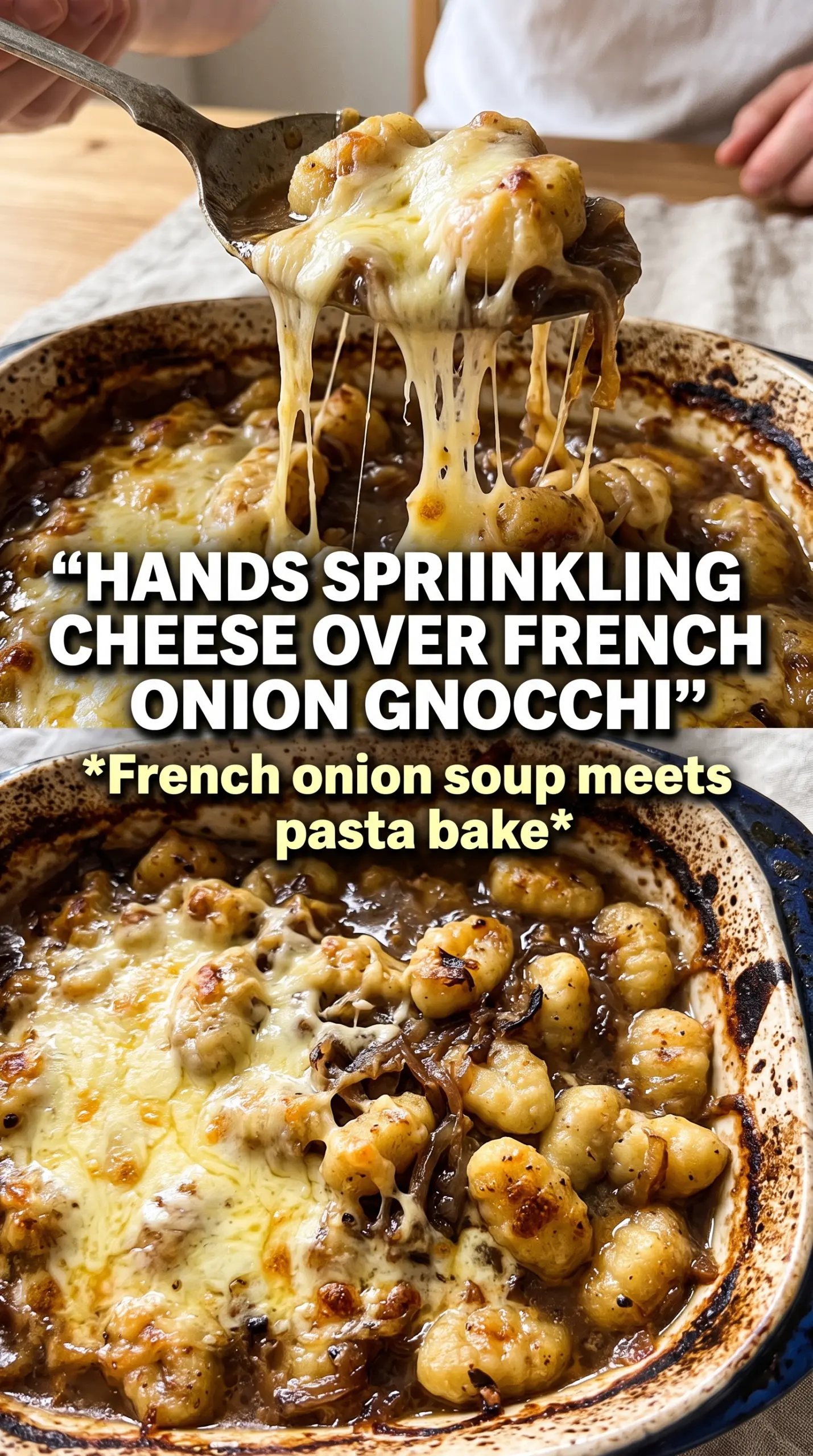
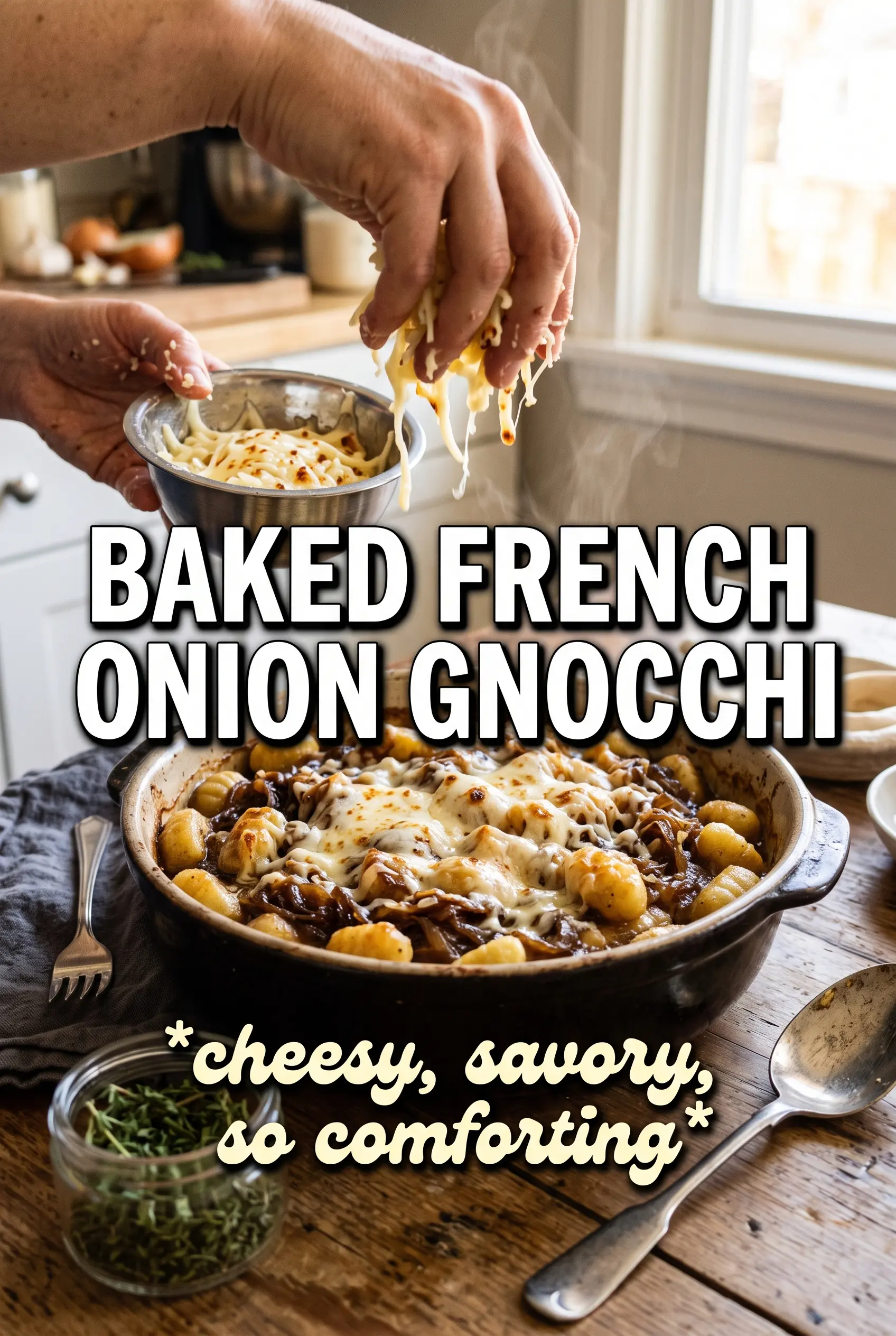
Baked French onion gnocchi lands in the bowl with the kind of comfort that keeps people hovering near the stove for “just one more spoonful.” The onions turn sweet and deep, the broth gets savory and rich, and the gnocchi bake right in the sauce until they’re tender inside with a little bite at the edges. Then the Gruyere goes on top and melts into a browned, bubbly lid that cracks under the spoon.
What makes this version work is patience at the beginning and restraint at the end. The onions need time to soften and caramelize fully, and that long cook is what gives the dish its French onion character instead of a sharp onion broth. The gnocchi go in uncooked so they can absorb the sauce as they bake, which keeps them from turning heavy or mushy.
Below you’ll find the small details that matter most: how dark the onions should get, why the wine goes in before the garlic, and what to watch for when the cheese starts browning on top.
The onions cooked down exactly like you said, and the sauce turned glossy and rich instead of watery. I baked it until the Gruyere was deeply golden, and the gnocchi came out tender without falling apart.
Love the deeply caramelized onions and golden Gruyere crust? Save this baked French onion gnocchi for the night you want cozy comfort with a spoonable sauce.
The Secret Is Caramelizing the Onions Until They Turn Jammy
This dish only tastes like French onion soup if the onions go far beyond soft. They need to cook down until they’re glossy, brown, and almost spreadable, because that sweetness is what balances the broth and keeps the finished bake from tasting flat. If you rush this stage, the whole dish tastes like onion sauce with cheese on top instead of the deep, savory bake it’s supposed to be.
The other trap is heat. Medium-low is the right place to be because onions need time to release moisture before they can brown. If the pan gets too hot, they’ll scorch at the edges before the center turns sweet, and the flavor turns harsh instead of rich.
- Butter and olive oil — The butter brings flavor, and the oil keeps the butter from burning during the long onion cook. Use both.
- Dry white wine or dry sherry — This lifts the browned bits off the pan and adds a sharp note that keeps the sauce from tasting heavy. If you skip it, the dish still works, but it loses some of that classic French onion depth.
- Gruyere — Gruyere melts smoothly and browns beautifully. It’s worth buying for this recipe; a sharper, grainier cheese won’t give you the same stretch or crust.
- Uncooked potato gnocchi — They absorb flavor as they bake instead of turning bland in a separate boil. Shelf-stable gnocchi work well here and are the easiest choice.
What Each Ingredient Is Actually Doing in This Bake
- Onions — These are the backbone of the dish, and thin slices matter because they soften and brown more evenly. Yellow onions are the best choice for sweetness and balance.
- Beef broth — This gives the sauce a deeper, more soup-like base that tastes unmistakably French onion. A good boxed broth is fine here as long as it tastes savory, not salty and thin.
- Worcestershire sauce — It adds a little anchovy-rich umami that makes the sauce taste fuller. There isn’t a perfect stand-in, so if you leave it out, the dish will be a little less complex.
- Heavy cream — This softens the broth just enough to make the sauce coat the gnocchi instead of pooling around them. Half-and-half can work in a pinch, but the final sauce will be thinner.
- Fresh thyme — Use fresh if you can. It gives the dish that classic French onion aroma without turning the sauce muddy the way a heavy hand with dried thyme can.
Building the Sauce So the Gnocchi Bake Up Tender, Not Gummy
Cook the onions until they lose all their sharpness
Start the onions in butter and olive oil over medium-low heat and let them go for the full 35 to 40 minutes. Stir often, but don’t chase every color change; the goal is deep golden brown with some darker edges, not a quick softening. If they start sticking hard, add a splash of water and scrape the pan, because those browned bits are flavor, not a problem.
Deglaze before the garlic goes in
Pour in the wine or sherry once the onions are caramelized and let it bubble for a couple of minutes. This loosens the browned fond on the bottom and cooks off the raw alcohol taste. Add the garlic after that, because garlic burns fast and can turn bitter if it goes into the pan before the deglazing step.
Simmer the sauce before the gnocchi hit the pan
Stir in the broth, Worcestershire, and cream, then bring the mixture to a gentle simmer. You want it hot enough to start thickening and seasoning itself, but not boiling hard. If the sauce looks too thin at this point, resist the urge to reduce it aggressively; it will tighten more once the gnocchi bake and release a little starch.
Bake until the top is bubbling and the center is set
Add the uncooked gnocchi and stir so every piece gets coated, then scatter the Gruyere over the top. Bake or broil until the cheese is browned and the sauce is bubbling around the edges, and test one gnocchi for tenderness before you pull it out. If the top browns before the gnocchi finish, tent it loosely with foil and give it a few more minutes in the oven.
How to Adapt This for a Bigger Crowd, a Lighter Plate, or No Dairy
Make it vegetarian without losing the French onion feel
Swap the beef broth for a rich vegetable broth and add an extra teaspoon of Worcestershire only if you use a vegetarian version. The flavor will be a little lighter, but the caramelized onions and Gruyere still carry the dish.
Use dairy-free ingredients without making the sauce flat
Use a good plant-based butter and unsweetened oat or cashew cream, then finish with a dairy-free melting cheese that browns well. The sauce won’t be quite as plush as the original, but you’ll still get the savory onion base and a properly baked top.
Turn it into a baked gnocchi side dish
Cut the gnocchi to 12 ounces and serve it alongside roast chicken or steak. The sauce-to-gnocchi ratio stays rich, but the dish feels less heavy on the plate.
Store and reheat it without losing the creamy texture
- Refrigerator: Keep leftovers covered for up to 3 days. The gnocchi will continue to absorb sauce, so expect a thicker, less brothy bake the next day.
- Freezer: This is not a great freezer recipe. The cream sauce can separate and the gnocchi can turn mealy after thawing.
- Reheating: Warm in a 350°F oven covered with foil until hot, then uncover for a few minutes if you want the cheese to re-soften. A splash of broth helps revive the sauce; microwave reheating can make the gnocchi tough around the edges.
Answers to the Questions Worth Asking
Baked French Onion Gnocchi
Ingredients
Equipment
Method
- Melt the butter with the olive oil in a large oven-safe skillet, then add the thinly sliced onions. Cook over medium-low heat for 35-40 minutes, stirring occasionally, until deeply caramelized and amber in color.
- Pour in the wine or dry sherry and deglaze, scraping up browned bits from the pan. Cook for 2 minutes.
- Stir in the minced garlic and fresh thyme, and cook until fragrant. Cook for 1 minute.
- Add the beef broth, Worcestershire sauce, and heavy cream, then bring the mixture to a simmer. Reduce heat as needed to maintain a gentle simmer.
- Add the uncooked potato gnocchi and stir to coat them in the onion cream sauce. Make sure the gnocchi are evenly distributed in the skillet.
- Scatter the shredded Gruyère over the top in an even layer. Keep the dish as level as possible so the cheese melts uniformly.
- Bake or broil at 425F for 15-18 minutes until the gnocchi are cooked through, the sauce is bubbling, and the cheese is golden. Watch closely in the final minutes to avoid over-browning the cheese.