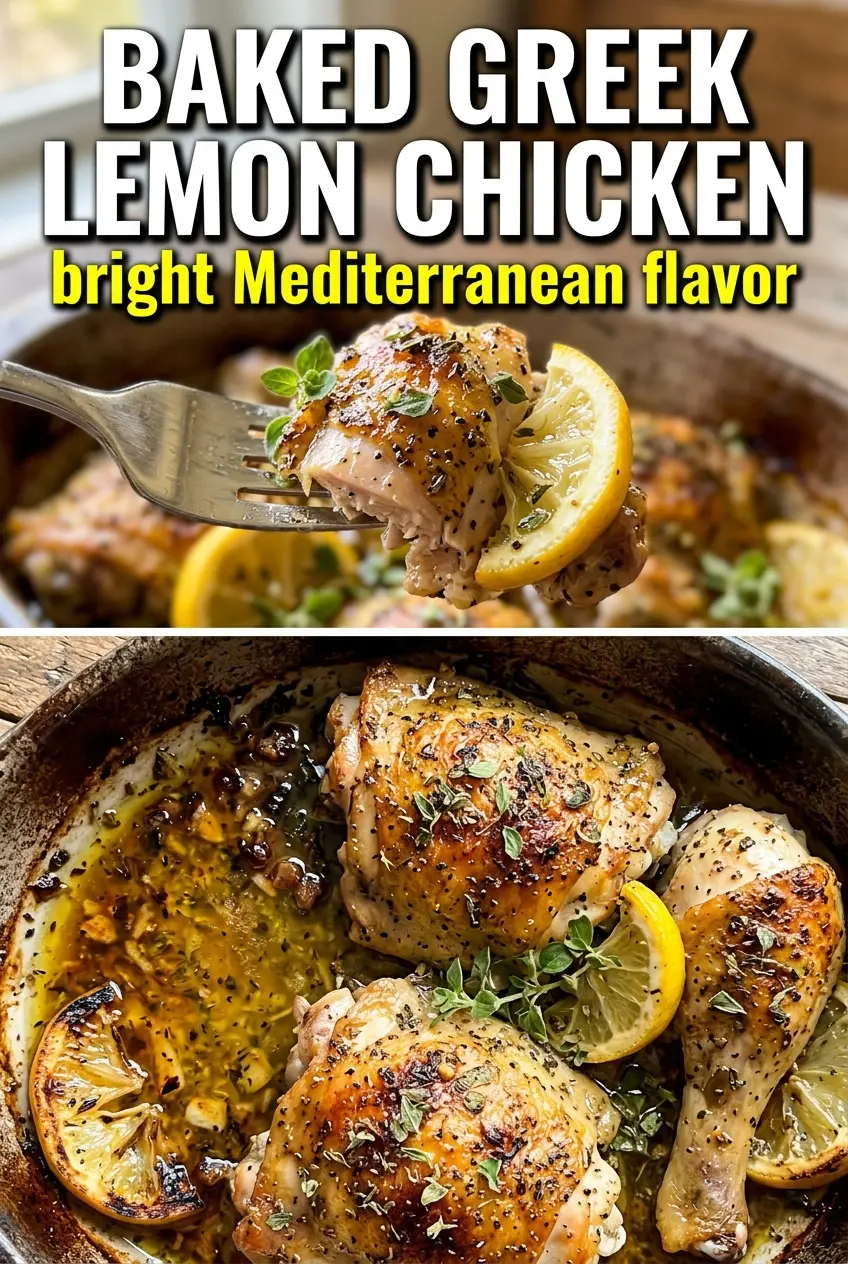
Golden baked Greek lemon chicken earns its place in the regular rotation because the skin turns deeply bronzed while the pan drippings reduce into a sharp, garlicky sauce that tastes like far more work than it is. The lemon slices soften and caramelize in the oven, so you get bright citrus, roasted sweetness, and savory chicken in the same bite.
The difference here is in the balance. A short marinade gives the chicken enough time to pick up lemon, oregano, garlic, and thyme without the acid tightening the meat. Roasting at a high temperature does the rest: the skin renders and crisps, the broth keeps the pan juices from burning, and the chicken finishes in its own glossy sauce instead of drying out on a sheet pan.
Below, I’ve included the small details that matter most, including what to do if your lemons are extra tart, how to keep the chicken browned instead of steamed, and a few ways to adapt the dish for different cuts and diets.
The lemon-garlic sauce turned out glossy instead of watery, and the chicken skin stayed crisp even after spooning the pan juices over it. My husband kept going back for the roasted lemon slices.
Save this Baked Greek Lemon Chicken for the nights when you want crisp chicken, caramelized lemons, and a pan sauce that tastes bright and savory.
The Part Most Baked Chicken Gets Wrong: Too Much Moisture, Not Enough Heat
The biggest mistake with lemon chicken in the oven is crowding it into a pan that’s too small or roasting it at a temperature that’s too polite. Chicken pieces need space so the skin can render and brown instead of sitting in pooled juices. The broth belongs around the chicken, not over the top of it, because too much liquid on the skin kills the crackly edges you’re after.
High heat also matters because lemon juice and garlic both want to sing, not simmer forever. At 425°F, the chicken finishes before the garlic turns bitter and the lemon slices collapse into something soft, sweet, and just a little charred at the edges. If your skin is pale at the end, the pan was crowded or the oven wasn’t fully preheated.
- Bone-in chicken pieces — These stay juicier than boneless meat and give you enough time for the skin to brown properly. A whole cut-up chicken is ideal, but thighs and drumsticks work especially well if that’s what you buy most often.
- Fresh lemon juice and zest — Bottled juice won’t give you the same brightness, and the zest matters because it carries the fragrant oils that survive the oven. If your lemons are large and especially tart, use the full zest but start with a touch less juice and taste the marinade before adding the chicken.
- Olive oil — This carries the herbs and helps the skin roast instead of drying out. Use a decent everyday olive oil; you don’t need your fanciest bottle here.
- Chicken broth — This is the insurance policy that keeps the pan drippings from scorching before the chicken is done. Water works in a pinch, but broth gives the sauce more body and better savory depth.
What Each Ingredient Is Doing Once the Pan Goes Into the Oven

- Chicken — The skin-on, bone-in pieces hold up best in the oven and give you the deepest flavor. If you use boneless chicken, shorten the cook time and expect less pan sauce because the meat won’t release the same richness.
- Lemon slices — These aren’t just garnish. They roast in the pan drippings, turning soft, browned, and sweet enough to eat with the chicken.
- Garlic, oregano, thyme, and smoked paprika — Garlic and oregano do the classic Greek work, thyme adds a quieter herbal note, and smoked paprika gives the marinade a little color and warmth without making it taste smoky. Fresh oregano can finish the dish, but dried oregano is the one that survives the heat best in the marinade.
- Chicken broth — Pour it into the pan, not the marinade. It loosens the juices as they cook so you end up with spoonable drippings instead of a dry, sticky bottom.
Roasting the Chicken So the Skin Browns Before the Sauce Tightens
Building the Marinade
Whisk the olive oil, lemon juice, zest, garlic, oregano, thyme, smoked paprika, salt, and pepper until the mixture looks emulsified and a little cloudy. That tells you the oil and lemon have come together enough to coat the chicken evenly. Thirty minutes of marinating is enough for flavor to settle in without the acid starting to toughen the outside of the meat. If you go much longer, keep it refrigerated and don’t let the chicken sit in a very acidic marinade all afternoon.
Setting Up the Pan
Arrange the chicken skin-side up in a roasting pan or baking dish with room around each piece. If the pieces are wedged together, they’ll steam instead of roast, and that’s the difference between bronzed skin and rubbery skin. Pour the broth around the chicken, then tuck the lemon slices underneath and between the pieces so they can caramelize in the hot fat and juices. Don’t pour the broth over the top or you’ll wash the marinade off the skin.
Roasting and Basting
Roast at 425°F until the chicken is deeply golden and the internal temperature reaches 165°F at the thickest part. Halfway through, spoon the pan juices over the meat just once; more than that cools the surface and slows browning. If the top looks pale near the end, leave it in a few extra minutes rather than pulling it early, because the juices should be reduced and glossy, not thin and watery.
The Final Spoon-Over
Let the chicken sit for a few minutes after it comes out of the oven, then spoon the caramelized drippings over the top. That short rest keeps the juices in the meat instead of running all over the cutting board. Finish with fresh oregano for a clean herbal hit. The herbs should look bright and the sauce should cling lightly to the chicken, not puddle like soup.
How to Adapt This for a Smaller Pan, a Different Cut, or No Dairy at All
Use bone-in thighs instead of a whole cut-up chicken
Thighs give you the juiciest result and are the easiest cut to cook evenly. Keep the same oven temperature, but start checking earlier because smaller pieces can finish before the full 45 minutes. The skin still browns well, and the meat stays forgiving even if the pan runs a little hot.
Make it dairy-free without changing the method
This recipe is already naturally dairy-free, which is one reason it tastes so clean and bright. Keep the olive oil and broth as written, and don’t replace them with butter or cream unless you’re intentionally moving away from the classic Greek-style profile. The sauce stays glossy from the pan juices alone.
Turn it into a gluten-free main with confidence
The base recipe is naturally gluten-free as long as your chicken broth is certified gluten-free. That matters more than people think, because some broths sneak in wheat-based flavorings. Serve it with potatoes, rice, or roasted vegetables and the rest of the meal stays just as straightforward.
Storage and Reheating
- Refrigerator: Store leftovers in an airtight container for up to 4 days. The skin softens, but the flavor gets even better after a night in the fridge.
- Freezer: It freezes well for up to 2 months, though the skin won’t stay crisp. Freeze the chicken with a little of the pan juices so it reheats moist.
- Reheating: Reheat covered in a 325°F oven until warmed through, then uncover for the last few minutes if you want the edges to dry out a bit. Microwaving works for speed, but it softens the skin and mutes the roasted lemon flavor.
Answers to the Questions Worth Asking
Baked Greek Lemon Chicken
Ingredients
Equipment
Method
- Whisk together olive oil, fresh lemon juice, lemon zest, minced garlic, dried oregano, dried thyme, smoked paprika, salt, and cracked black pepper until evenly combined. The mixture should look like a thin, fragrant herb-lemon marinade.
- Add the chicken pieces and toss to coat, then marinate for at least 30 minutes. Cover and rest until the surface looks slick and lightly thickened with the marinade.
- Preheat the oven to 425°F. Let the oven fully come up to temperature so the skin roasts quickly and browns.
- Arrange the marinated chicken skin-side up in a large roasting pan or baking dish. Space the pieces so steam can circulate and crisping can happen evenly.
- Pour the chicken broth around the chicken and tuck the thinly sliced lemon slices around and under the pieces. You should see lemon slices nestling into the drippings for caramelization.
- Roast for 40-45 minutes, basting with the pan juices once halfway through. Roast until the skin is deeply golden and the internal temperature reaches 165°F, with glossy, browned drippings in the pan.
- Spoon the caramelized pan drippings over the chicken before serving. This coats the surface and intensifies the lemon-oregano glaze.
- Garnish with fresh oregano. Scatter it over the hot chicken so the leaves look vivid and fragrant.