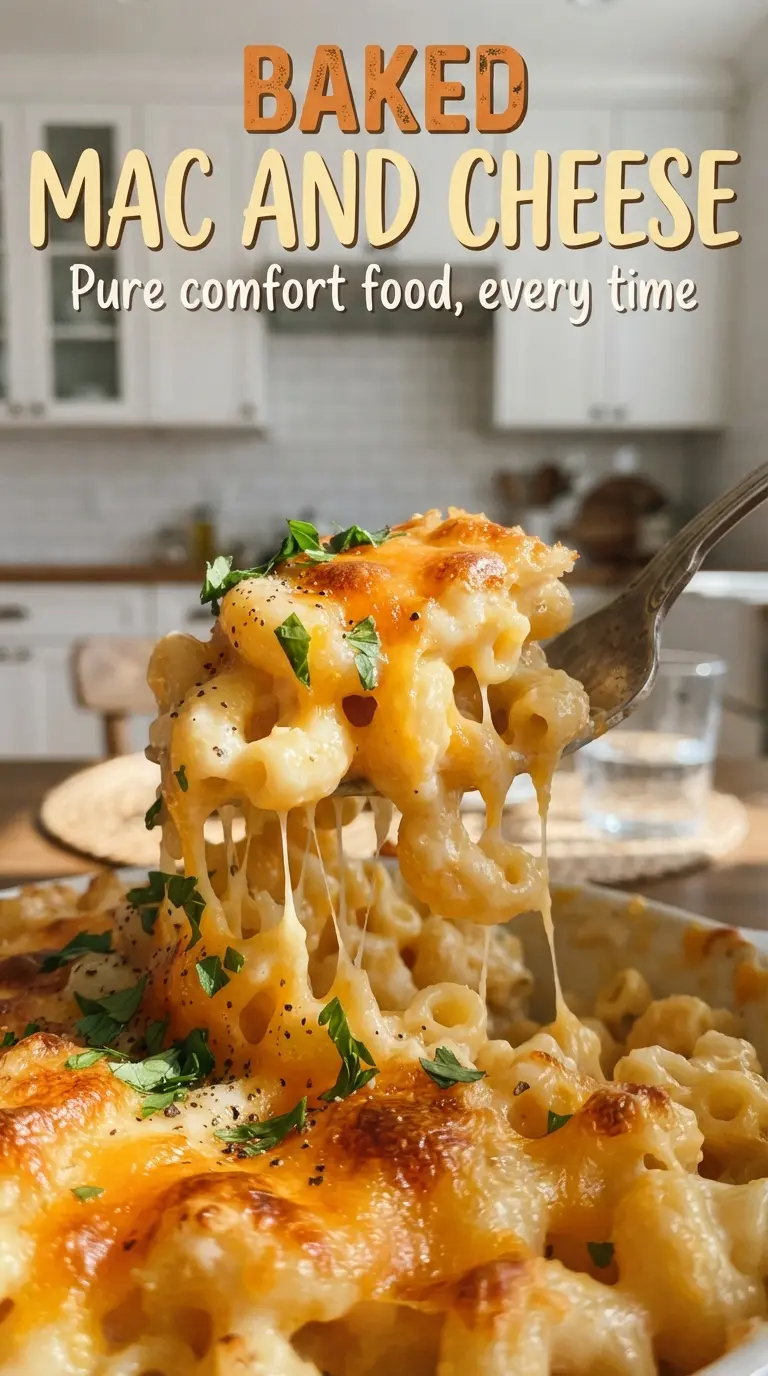
Baked mac and cheese earns its place on the table when it comes out with a creamy center, a browned cheese crust, and noodles that still hold their shape instead of disappearing into the sauce. The best versions don’t lean on one-note cheese flavor or a gluey white sauce. They taste layered, with enough body to cling to every elbow and enough richness to stay silky after baking.
This version gets there by using both whole milk and evaporated milk, which gives the sauce a fuller texture without making it heavy in a greasy way. The roux cooks just long enough to take away the raw flour taste, and the pasta is pulled early so it finishes tender in the oven instead of turning soft. Sharp cheddar brings the bite, while Gruyere or Colby jack smooths out the melt and keeps the sauce from tasting flat.
Keep reading for the timing that keeps the sauce creamy after baking, plus a few smart swaps if you need to adjust the cheese or make the dish ahead.
The sauce stayed creamy after baking and the top got that crackly, browned cheese layer I was hoping for. I followed the rest time too, and it sliced instead of turning soupy.
Love that browned, stretchy cheese top? Save this baked mac and cheese for the next time you need a creamy side dish that bakes up with a golden crust.
The Trick to Keeping the Sauce Creamy After Baking
The biggest mistake with baked mac and cheese is treating the oven like it’s the place where the sauce gets finished. It isn’t. The sauce needs to be fully thickened on the stove first, because the pasta keeps absorbing liquid in the oven and the cheese layer on top adds even more structure. If the sauce looks loose before it goes into the dish, it usually bakes up dry and heavy instead of creamy.
The other thing that matters here is the pasta timing. Cooking the macaroni two minutes shy of the package directions keeps it from turning mushy under the heat of the oven. You want it tender enough to eat now, but still firm at the center so it can finish absorbing sauce without collapsing.
- Roux: Butter and flour cook together for a minute to take the raw edge off the flour. That short cook time keeps the sauce smooth without adding any toasted flavor that would fight the cheese.
- Evaporated milk: This gives the sauce a richer body than regular milk alone. Whole milk matters too, since lower-fat milk makes the finished dish thinner and less stable.
- Sharp cheddar: Use a block and shred it yourself if you can. Pre-shredded cheese is coated to keep it from clumping, and that coating can make the sauce grainy.
- Gruyere or Colby jack: Gruyere adds depth and a clean melt; Colby jack gives a softer, milder finish. Either one helps balance the sharpness of the cheddar.
What Each Cheese Is Doing in the Dish
Sharp cheddar brings the flavor you expect from baked mac and cheese. It should taste like something on its own, not just melt for the sake of melting. If all you have is mild cheddar, the dish will still work, but it will taste flatter and need a little more salt to wake it up.
Gruyere melts smoothly and adds a nutty edge that keeps the sauce from tasting one-dimensional. Colby jack is the easier swap if Gruyere is pricey or hard to find; it gives a softer, creamier melt, though the final flavor is milder. The evaporated milk helps both cheeses melt into a sauce that stays cohesive after baking instead of breaking into grease.
Dry mustard and smoked paprika don’t make the dish taste like mustard or paprika. They sharpen the cheese flavor and keep it from going dull. That little bit of background seasoning is what makes the sauce taste like more than just melted dairy.
Building the Sauce So It Stays Smooth in the Oven
Cooking the Pasta Early
Boil the macaroni just until it’s shy of done, then drain it right away. The pasta will finish in the oven, and if you cook it all the way on the stovetop it won’t have enough structure left once it sits in hot sauce. You want the noodles flexible, not soft at the edges. If they stick together a little after draining, that’s fine, since the sauce will loosen them up.
Whisking the Milk Into the Roux
Add the milk slowly and whisk steadily so the flour mixture stays smooth. The sauce should look thin at first, then gradually turn glossy and thick enough to coat a spoon. If you dump the milk in too fast, you’ll get lumps that don’t fully dissolve. Keep the heat at a medium simmer, not a hard boil, or the bottom can catch before the sauce thickens.
Melting the Cheese Off the Heat
Once the sauce thickens, pull the pan down to low or off the burner before adding the cheese. High heat is the fastest way to get a grainy sauce, especially with cheddar. Stir until the cheese disappears into the sauce and it looks smooth and elastic. Then fold in the pasta while the sauce is still hot enough to coat every piece.
Baking Until Bubbling at the Edges
Pour everything into the buttered dish and top it with the remaining cheese. Bake until the top is golden in spots and the edges are bubbling, not until it looks dry. A 10-minute rest matters here because it lets the sauce settle back around the pasta. Skip that rest and the first scoop will run loose.
How to Adjust This Mac and Cheese Without Losing the Texture
Make It Gluten-Free
Use a sturdy gluten-free elbow macaroni and cook it just to al dente. For the sauce, swap in a 1:1 gluten-free flour blend that contains starches and gums, since plain rice flour won’t thicken the same way. The texture will still be creamy, but the pasta may soften a little faster after baking, so don’t overbake it.
Swap the Cheese for a Milder Version
If sharp cheddar feels too bold, use half mild cheddar and half Colby jack. The sauce will still melt well, but the flavor will be softer and a little less tangy. Keep the dry mustard in place so the dish doesn’t taste flat.
Add a Little Heat
A pinch of cayenne or a few dashes of hot sauce can go into the cheese sauce with the seasonings. Keep it light; you want warmth underneath the cheese, not heat that takes over. This works best if you’re serving it with smoked meats or rich Southern mains.
Storage and Reheating
- Refrigerator: Store covered for up to 4 days. The sauce will thicken as it chills, so the pasta may look a little firmer the next day.
- Freezer: It freezes, but the texture softens after thawing. Freeze in airtight portions for up to 2 months, then thaw overnight in the fridge before reheating.
- Reheating: Warm covered in a 325F oven with a splash of milk stirred in first, or reheat smaller portions in the microwave in short bursts. The common mistake is blasting it too hot, which dries out the sauce before the center heats through.
Answers to the Questions Worth Asking

Baked Mac and Cheese
Ingredients
Equipment
Method
- Preheat oven to 350°F and butter a 9x13-inch baking dish for easy release.
- Cook elbow macaroni 2 minutes less than package directions, then drain.
- Melt butter, whisk in all-purpose flour, and cook for 1 minute until smooth.
- Slowly whisk in whole milk and evaporated milk to combine fully and keep the sauce silky.
- Simmer for 5-6 minutes, whisking often, until thickened and coating the back of a spoon.
- Season the sauce with salt, black pepper, dry mustard, and smoked paprika.
- Stir in 3 cups shredded sharp cheddar and 1 1/2 cups Gruyere or Colby jack until melted.
- Fold the cooked macaroni into the sauce until every piece is glossy.
- Pour the mixture into the buttered 9x13-inch baking dish and spread evenly.
- Top with the remaining sharp cheddar and Gruyere or Colby jack for a browned crust.
- Bake at 350°F for 25-30 minutes, until bubbly and golden across the top.
- Rest for 10 minutes before serving so the sauce sets and slices cleanly.