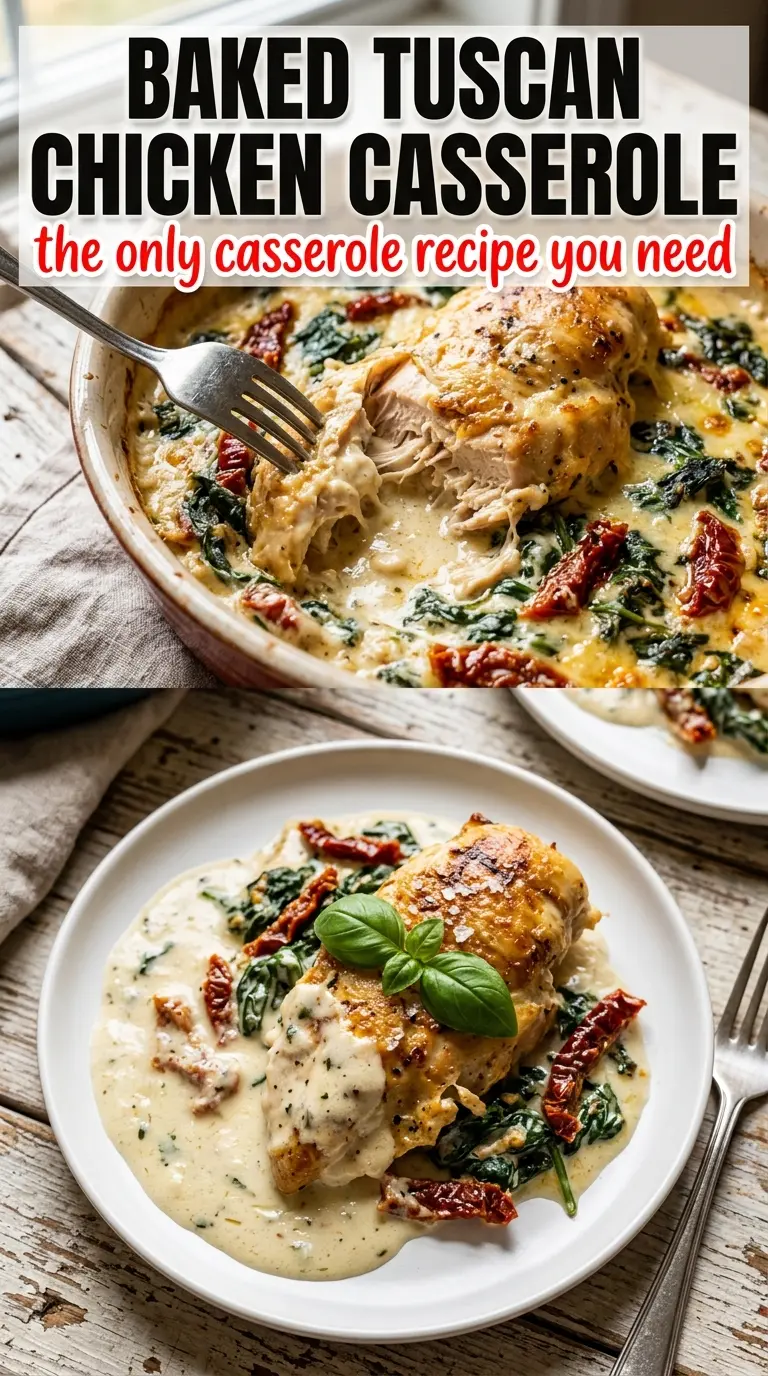
Baked Tuscan chicken casserole lands on the table with crisp, golden chicken thighs and a creamy sauce that clings to every bite instead of sliding off into a thin puddle. The sun-dried tomatoes bring a little sweetness and tang, the spinach softens into the sauce, and the Parmesan gives the whole dish that savory finish people keep going back for with bread or rice.
What makes this version work is the sear. Browning the chicken skin first builds flavor in the pan and keeps the top from turning soft in the oven, while the sauce gets layered in the same skillet so every bit of fond ends up where it belongs. Bone-in, skin-on thighs stay juicy here, which matters because the casserole bakes uncovered long enough to thicken the sauce without drying out the meat.
Below, you’ll find the small details that keep the sauce silky, the chicken crisp, and the spinach from going dull and overcooked. There’s also a useful shortcut for swapping cuts if thighs aren’t what you have on hand.
The sauce thickened up beautifully in the oven, and the chicken skin stayed crisp even with all that cream and Parmesan. I served it over mashed potatoes, and my husband asked if we could keep this in the rotation.
Save this Baked Tuscan Chicken Casserole for nights when you want golden chicken and a silky sun-dried tomato cream sauce in one pan.
The sear is what keeps the casserole from turning soft
A lot of chicken casseroles fail because the meat goes straight into the oven without any real browning, so the top steams while the sauce gets heavy. Here, the skin-side sear does two jobs at once: it pulls flavor into the pan and builds a crisp surface that holds up under the cream sauce. If the chicken doesn’t release easily from the skillet, it isn’t ready to turn yet.
The other place people get into trouble is rushing the sauce. Once the garlic and tomatoes hit the pan, the broth should loosen every brown bit on the bottom before the cream goes in. That fond is the backbone of the sauce, and if you skip the deglaze, the finished dish tastes flatter and the sauce can seem greasy instead of silky.
What each ingredient is doing in the skillet
- Bone-in, skin-on chicken thighs — These stay juicy during the oven time and give you the best chance at crisp skin. Boneless thighs work, but they cook faster and won’t give the same rich texture on top.
- Sun-dried tomatoes in oil — The oil-packed kind have a softer bite and deeper flavor than dry-packed tomatoes. Drain them before slicing, but don’t rinse them; a little oil clinging to them helps bloom their flavor in the pan.
- Heavy cream — This is what gives the sauce body without breaking under the oven heat. Half-and-half can work in a pinch, but the sauce will be thinner and won’t cling as well to the chicken.
- Parmesan — Grated Parmesan melts into the sauce and adds salt, nuttiness, and thickness. Finely grated works best because it disappears into the cream instead of clumping.
- Baby spinach — It wilts fast and folds into the sauce without turning stringy. Add it at the end so it stays bright instead of sinking into a dull green tangle.
Getting the sauce smooth, the chicken juicy, and the spinach just wilted
Season and sear the thighs
Pat the chicken dry before seasoning it, or the skin will steam instead of browning. Lay the thighs skin-side down in hot olive oil and leave them alone for 6 to 7 minutes until the skin is deep golden and releases from the pan with almost no effort. If the heat is too high, the skin can burn before the fat renders; if it’s too low, you’ll miss the crisp finish that makes this casserole stand out. Flip and sear the other side just long enough to pick up some color, then move the chicken to a plate.
Build the sauce in the same pan
Add the garlic and sun-dried tomatoes to the drippings and stir for about a minute, just until the garlic smells sweet and the tomatoes soften at the edges. Pour in the broth and scrape the bottom of the pan until the browned bits dissolve into the liquid. That step matters because it keeps the sauce from tasting one-note. Stir in the cream, Parmesan, Italian seasoning, and red pepper flakes over moderate heat until the sauce looks smooth and slightly thickened, not boiling hard.
Bake until the chicken is done through
Set the chicken back into the pan skin-side up so the crispy top stays above the sauce. Bake uncovered until the thighs reach 165°F in the thickest part and the sauce is bubbling around the edges, about 20 to 22 minutes. If the sauce looks thin when it comes out, let it sit for 5 minutes; it tightens as it cools a little. Stir the spinach in only after the baking is finished so it wilts in the residual heat without collapsing.
How to change this casserole without losing the texture
Make it dairy-free with a richer coconut finish
Use full-fat canned coconut milk instead of heavy cream and a dairy-free Parmesan substitute if you have one that melts well. The sauce will taste a little less sharp and more rounded, but it still thickens nicely if you let it simmer before baking.
Use boneless thighs when you need a faster dinner
Boneless, skinless thighs cut the cook time and skip the searing step on the skin, but the sauce still carries the dish. Pull them from the oven earlier and watch closely, because they dry out faster than bone-in thighs once the heat starts to climb.
Turn it into a gluten-free casserole with no extra effort
This recipe is naturally gluten-free as written, as long as your chicken broth is certified gluten-free. The texture doesn’t change, which is one of the reasons this dish is such an easy fit for mixed diets.
Add mushrooms or artichokes for a fuller pan dinner
Sauté sliced mushrooms with the garlic, or stir in drained artichoke hearts with the sun-dried tomatoes. Both additions absorb the cream sauce well and give you more vegetables without changing the structure of the dish.
Storage and Reheating
- Refrigerator: Store leftovers in an airtight container for up to 3 days. The sauce thickens in the fridge, and the chicken skin softens, but the flavor holds up well.
- Freezer: This freezes better than a lot of cream casseroles, though the sauce may separate a little after thawing. Freeze in portions, then thaw overnight in the refrigerator.
- Reheating: Reheat covered in a 325°F oven until hot, or warm gently on the stove with a splash of broth or cream. Avoid blasting it in the microwave, which can make the sauce greasy and the chicken tough.
Questions I Get Asked About This Recipe

Baked Tuscan Chicken Casserole
Ingredients
Equipment
Method
- Preheat oven to 400°F, then set a large oven-safe skillet aside for searing and baking.
- Season chicken thighs with salt, pepper, garlic powder, Italian seasoning, and smoked paprika, coating all sides.
- Heat olive oil in the oven-safe skillet over medium-high heat, then place chicken skin-side down and sear 6-7 minutes until deeply golden.
- Flip the chicken and sear 3 more minutes, then remove to a plate.
- In the same pan, cook garlic and sun-dried tomatoes for 1 minute, stirring until fragrant.
- Pour in chicken broth and deglaze, scraping up browned bits from the bottom of the pan.
- Stir in heavy cream, Parmesan, Italian seasoning, and red pepper flakes until the mixture looks smooth and glossy.
- Return the chicken to the pan skin-side up and bake uncovered for 20-22 minutes at 400°F until the chicken reaches 165°F and the casserole is bubbling.
- Stir baby spinach into the sauce until wilted, leaving spinach streaks throughout the creamy base.
- Garnish with fresh basil and serve hot, with the golden chicken and thickened sauce pooled around it.