Golden, crisp-skinned chicken thighs nestled into a Parmesan cream sauce are the kind of dinner that disappears fast, mostly because the skillet does two jobs at once: it builds a deep savory base on the stove, then finishes everything in the oven without drying out the chicken. The sun-dried tomatoes bring a concentrated sweetness and tang that cuts through the cream, and the spinach gives the sauce enough color and freshness to keep every bite from feeling heavy.
What makes this version work is the sequence. The chicken gets a hard sear first, which gives you flavor and helps the skin stay intact under the sauce. Then the garlic and tomatoes cook briefly in the same pan so the browned bits stay in the dish where they belong. The cream goes in after the broth loosens the pan, and the Parmesan melts into a sauce that clings instead of breaking.
Below, I’ve included the small details that matter most: how to keep the skin crisp, when to pull the sauce from the heat, and a few swaps that still give you that baked Tuscan chicken feel when you need to work with what’s in the fridge.
The chicken skin stayed crisp even after baking, and the sauce thickened up beautifully around the sun-dried tomatoes. I served it over pasta and my husband asked if we could have it again the next night.
Save this baked Tuscan chicken for the nights when you want crisp chicken thighs and a bubbling sun-dried tomato Parmesan sauce in one pan.
The Seared Skin Is What Keeps This Chicken Worth Baking
If you skip the stovetop sear, the thighs still cook, but they lose the contrast that makes this dish stand out. The skin needs direct heat first so it can render, tighten, and pick up real color before the sauce goes in. That early browning also gives the final sauce more depth, because the browned bits left in the pan dissolve into the broth and cream.
The other mistake is crowding the pan or rushing the sear. If the chicken starts to steam, the skin turns pale and rubbery instead of crisp. Give each thigh space and leave it alone until it releases easily; that tells you the pan has done its job.
What Each Ingredient Is Actually Doing In This Sauce
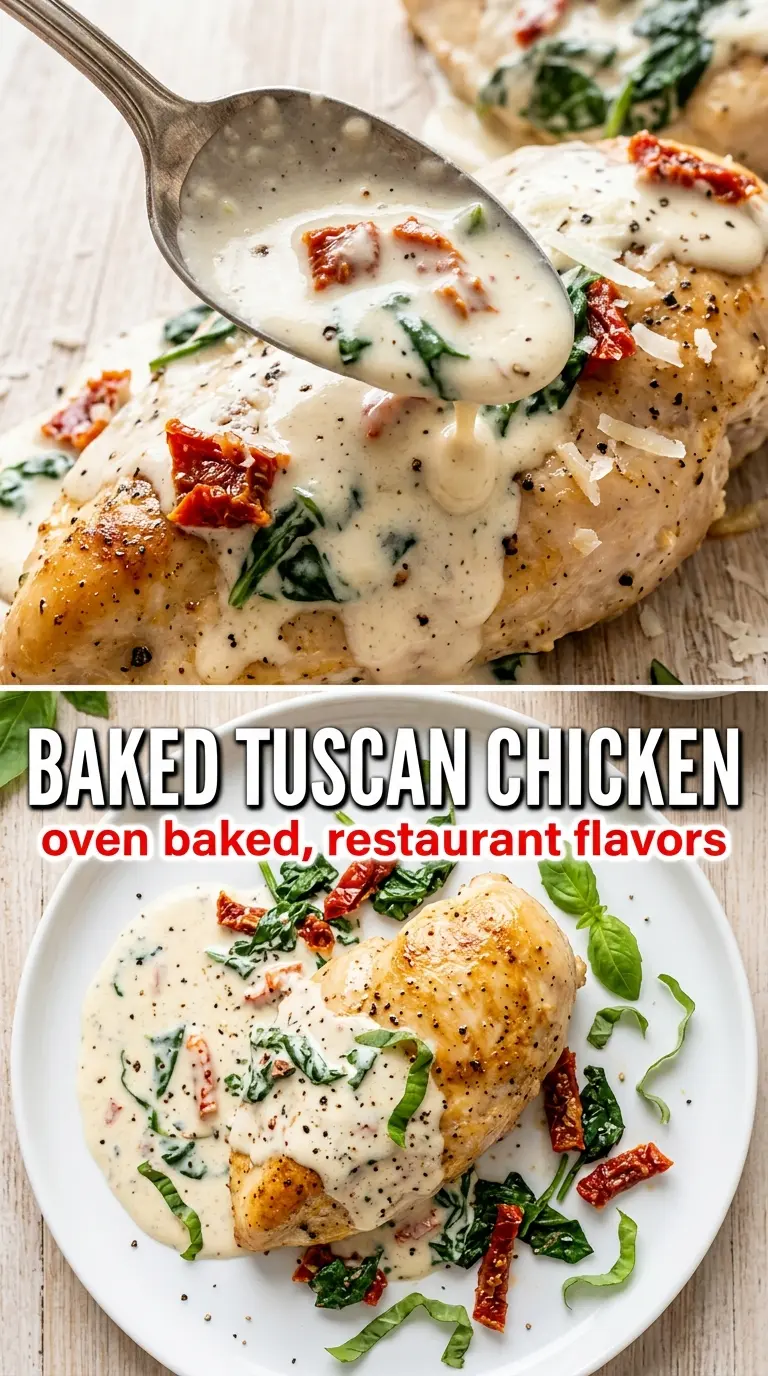
- Bone-in, skin-on chicken thighs — These stay juicier than breasts and give you a much better payoff after baking. The bone helps protect the meat from overcooking while the skin crisps in the skillet and browns again in the oven.
- Sun-dried tomatoes in oil — These bring concentrated tomato flavor without watering down the sauce. Drain them before slicing, but don’t rinse away all the oil if a little clings to them; that oil carries flavor into the pan.
- Heavy cream — This is what gives the sauce its body and smooth finish. Half-and-half can work in a pinch, but it won’t thicken the same way and it’s more likely to look thin after baking.
- Parmesan — Grate it finely so it melts into the sauce instead of turning grainy. The pre-shredded kind often has anti-caking agents that make the sauce less silky.
- Fresh baby spinach — It wilts quickly and adds enough green freshness to balance the cream. Use fresh here; frozen spinach releases too much water and can make the sauce loose.
- Chicken broth — This loosens the browned bits from the skillet and gives the cream something savory to cling to. Water will work in an emergency, but the sauce won’t taste as layered.
Building the Sauce Before the Oven Takes Over
Seasoning and Searing the Chicken
Pat the chicken thighs dry first, then season them generously so the skin starts out dry and well seasoned. Heat the oil until it shimmers, then place the thighs skin-side down and leave them alone for 6 to 7 minutes. The skin should be a deep golden color and release on its own when it’s ready; if you force it early, it tears and leaves the best part stuck to the pan.
Cooking the Garlic and Tomatoes
After the chicken comes out, lower the heat slightly and add the garlic. Thirty seconds is enough; once it smells sweet and fragrant, the next step needs to happen fast so it doesn’t burn. Stir in the sun-dried tomatoes and let them warm through for about a minute so their flavor loosens into the oil.
Pulling the Pan Sauce Together
Pour in the chicken broth and scrape up every browned bit from the bottom of the skillet. Those browned spots are what give the sauce its roasted, savory edge, so don’t leave them behind. Add the cream, Parmesan, Italian seasoning, and red pepper flakes, then let the sauce simmer just long enough to thicken slightly before the spinach goes in.
Finishing in the Oven
Stir in the spinach until it just wilts, then nestle the chicken back into the sauce with the skin facing up. The skin should stay exposed so it can keep its texture while the meat finishes cooking. Bake uncovered until the thighs hit 165°F at the thickest part; if the sauce seems thin at this point, give it a minute or two to settle after baking instead of chasing it with more heat.
How to Adapt This for Different Kitchens and Different Eaters
Make It Dairy-Free Without Losing the Creamy Feel
Use full-fat coconut cream in place of the heavy cream and swap the Parmesan for a dairy-free Parmesan-style alternative. The sauce will be a little softer and less sharp, but the sun-dried tomatoes and garlic still carry the dish. Keep the heat low once the coconut cream goes in so it doesn’t separate.
Turn It Into a Gluten-Free Dinner Without Any Fuss
This recipe is naturally gluten-free as written, as long as your chicken broth and Parmesan are certified gluten-free. That makes it an easy one to serve with rice, mashed potatoes, or roasted vegetables without changing the method at all.
Use Chicken Breasts, But Adjust the Timing
Boneless chicken breasts work, but they need less oven time and they dry out faster than thighs. Sear them briefly, then bake until just cooked through, checking early so the sauce doesn’t reduce too much while you wait. The result will be lighter, but you’ll lose some of the rich, self-basting texture that thighs give you.
Storage and Reheating
- Refrigerator: Store for up to 4 days in an airtight container. The sauce will thicken as it chills and the skin will soften.
- Freezer: Freeze the chicken and sauce together for up to 2 months, but expect the cream sauce to lose some silkiness after thawing. Reheat gently and stir well to bring it back together.
- Reheating: Warm covered in a 325°F oven or over low heat on the stove with a splash of broth. High heat is what breaks the sauce and toughens the chicken, so go slow and stop as soon as it’s heated through.
Answers to the Questions Worth Asking
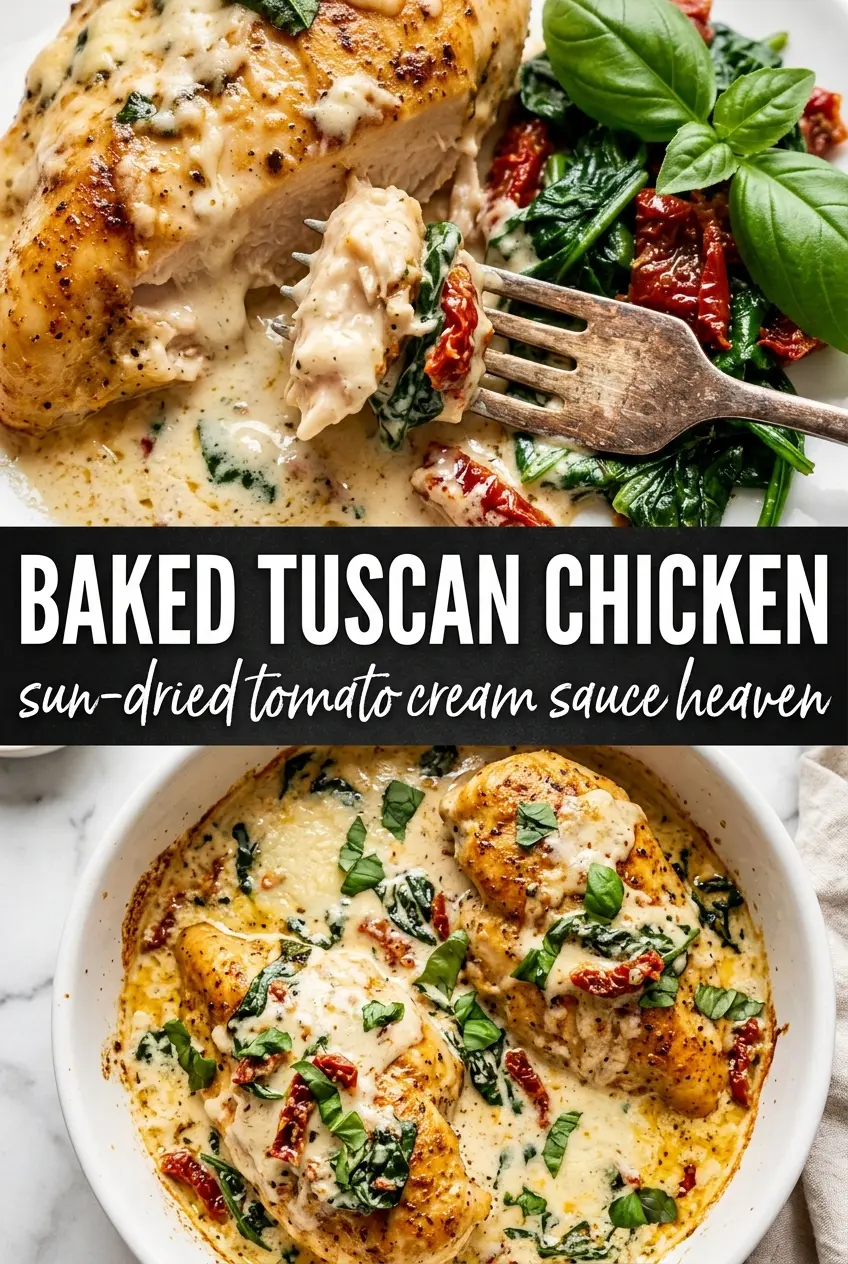
Baked Tuscan Chicken
Ingredients
Equipment
Method
- Preheat oven to 400°F, then season chicken thighs generously with salt, pepper, garlic powder, Italian seasoning, and smoked paprika. Place the seasoned chicken aside while you heat the skillet.
- Heat olive oil in an oven-safe skillet over medium-high heat, then place chicken in skin-side down and sear for 6-7 minutes until deeply golden. Flip and sear 3 more minutes, then remove the chicken to a plate.
- Cook minced garlic for 30 seconds in the skillet, then add sun-dried tomatoes and cook for 1 minute. Pour in chicken broth and deglaze the browned bits, scraping up stuck flavor.
- Stir in heavy cream, grated Parmesan, Italian seasoning, and red pepper flakes, then simmer briefly until the sauce looks smooth and slightly thickened. Keep the sauce at a gentle simmer so it doesn’t break.
- Stir in fresh baby spinach until wilted and dark green, about 1-2 minutes. Nestle the chicken skin-side up into the sauce so the crispiest surface stays visible.
- Bake uncovered at 400°F for 18-20 minutes until the chicken reaches 165°F internal temperature. Garnish with fresh basil over the top before serving.