Balsamic baked chicken breast with mozzarella lands on the table juicy, glossy, and finished with the kind of melted cheese pull that makes the whole pan disappear fast. The balsamic glaze turns sticky and savory-sweet in the oven, while the fresh mozzarella softens into a creamy cap instead of drying out into rubbery patches. Cherry tomatoes burst just enough to bring brightness, and basil keeps the whole dish tasting fresh instead of heavy.
The trick here is balance. A short marinade seasons the chicken without overpowering it, and a quick sear gives the breasts color before they finish in the oven. That matters because chicken breasts can go from tender to dry in a hurry, and the sear plus covered-in-glaze approach helps protect them while building flavor. Fresh mozzarella is the right choice here because it melts softly without pooling grease the way low-moisture cheese can.
Below, I’ll show you how to keep the chicken juicy, when to add the cheese so it melts without overcooking the meat, and what to swap if you need a dairy-free or lower-sugar version.
The balsamic glaze got sticky and rich in the oven, and the chicken stayed juicy even after I added the mozzarella. My husband kept picking at the tomatoes right out of the pan.
Save this balsamic baked chicken with mozzarella for the nights when you want a glossy, caprese-style chicken dinner with almost no cleanup.
The Part That Keeps the Chicken Juicy Instead of Drying Out
Chicken breasts need two things here: fast surface heat and a short oven finish. The sear builds color and flavor, but it also helps the glaze cling instead of sliding off into the pan. Once the chicken goes into the oven, stop chasing extra time. The biggest mistake is waiting for the juices to look completely gone before pulling the pan, because that usually means the meat has already overcooked.
The balsamic mixture does more than season the chicken. Honey helps it reduce into a lacquer, Dijon keeps the glaze from tasting flat, and garlic brings enough bite to stand up to the mozzarella. If your pan seems crowded, use a larger skillet or move the chicken to a baking dish after searing. Steam is the enemy of browning, and crowded chicken will taste steamed instead of baked.
What Each Ingredient Is Doing in the Pan
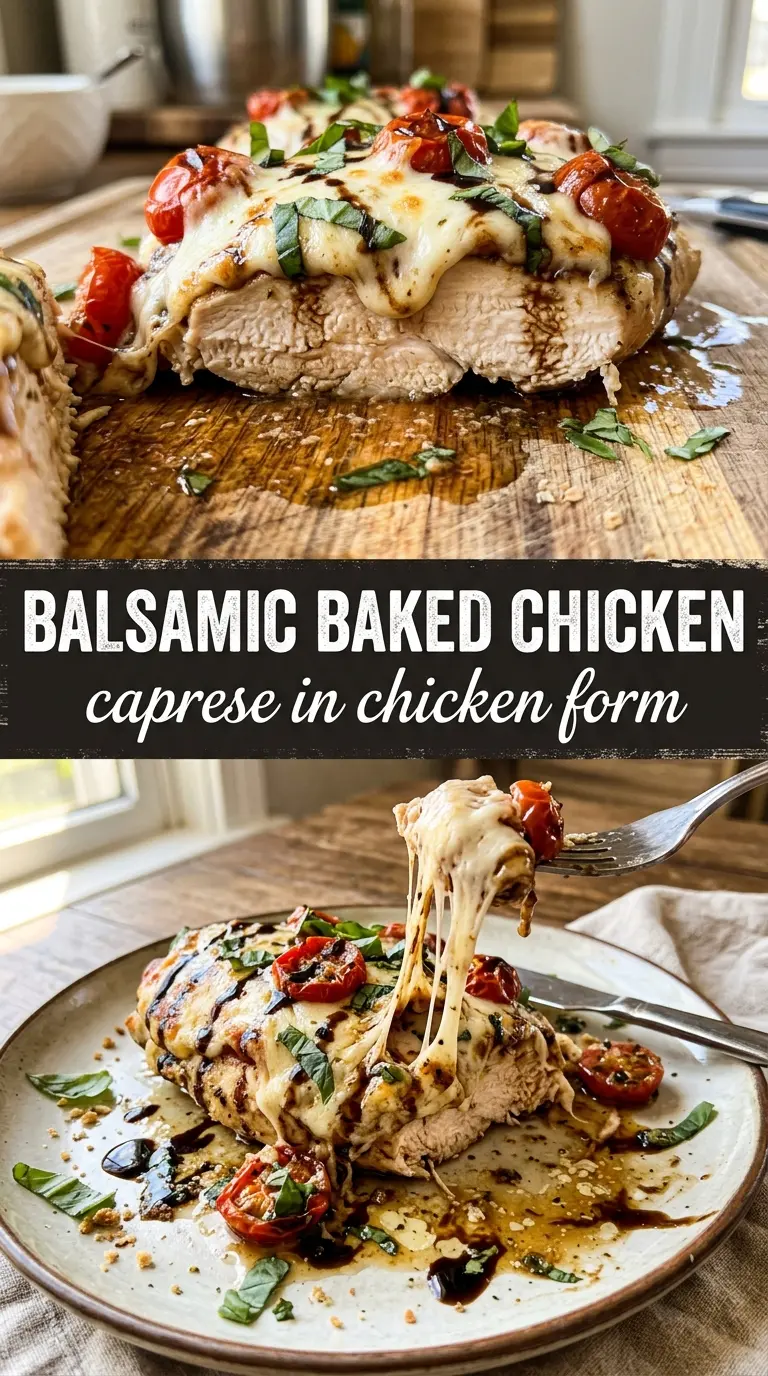
- Chicken breasts — Boneless, skinless breasts are the right canvas here because they cook quickly and hold the balsamic glaze well. If yours are thick on one end and thin on the other, pound them to an even thickness so the thinner side doesn’t dry out before the center cooks through.
- Balsamic vinegar, honey, Dijon, and garlic — This is the backbone of the dish. The vinegar brings sharpness, the honey helps it caramelize, Dijon rounds out the sweetness, and garlic keeps the sauce savory.
- Fresh mozzarella — Fresh mozzarella melts into soft, creamy layers instead of forming a stiff blanket. Low-moisture mozzarella will work in a pinch, but it changes the dish from caprese-like and tender to more pizza-style and heavy.
- Cherry tomatoes — These add juiciness and a little acidity after the chicken comes out of the oven. Halve them so they soften quickly and release some juice into the cheese instead of rolling around the dish whole.
- Fresh basil — Add it at the end so it stays fragrant and bright. If you cook basil for long, it turns dark and loses the fresh finish that makes this dish taste like more than just baked chicken with cheese.
How to Sear, Bake, and Melt Everything Without Overcooking the Chicken
Building the Marinade
Whisk the balsamic vinegar, olive oil, honey, garlic, and Dijon until the honey disappears into the liquid. The mixture should look smooth and glossy, not separated. Season the chicken directly before it goes into the marinade so the surface picks up salt and herbs evenly. If you skip that seasoning step, the glaze tastes good on the outside but the chicken itself can end up bland.
Getting the Sear Right
Heat the skillet until the oil shimmers, then add the chicken and leave it alone long enough to develop a golden crust. If the pan is too cool, the chicken leaks moisture and steams; if it is screaming hot, the sugars in the marinade burn before the meat gets color. Three minutes per side is the target, but use the color of the chicken as your guide. You want browned edges and a surface that releases easily when it is ready to turn.
Finishing in the Oven
Pour the reserved marinade around the chicken and bake until the thickest part reaches 165°F. The sauce will thin at first, then start to tighten and darken as it heats. If the glaze looks too thin near the end, it will finish thickening once it comes out of the oven and rests for a few minutes. Don’t overbake trying to reduce it; that’s how chicken breasts turn stringy.
Melting the Cheese and Adding the Topper
Add the mozzarella and tomatoes only after the chicken is cooked through. That short return to the oven is just long enough to melt the cheese without drying the meat underneath. Once the mozzarella softens and starts to sag at the edges, pull the pan. Finish with basil and balsamic glaze while the cheese is still warm so the garnish settles into the top instead of wilting into it.
Three Ways to Bend This Recipe Without Losing What Makes It Good
Dairy-Free Version
Skip the mozzarella and finish with extra tomatoes and basil, or add a few slices of dairy-free mozzarella if you know one that melts well. You lose the creamy caprese finish, but the balsamic chicken itself still carries the dish.
Lower-Sugar Swap
Cut the honey in half and let the balsamic reduce a little more in the oven. The glaze will taste sharper and less sticky-sweet, which works well if you want a cleaner, more savory finish.
Using Chicken Thighs Instead
Boneless thighs bring more forgiveness and stay juicy longer, but they need a few extra minutes in the oven. You’ll get a richer, slightly less elegant result with more built-in fat and a softer texture.
Storage and Reheating
- Refrigerator: Store leftovers in an airtight container for up to 3 days. The tomatoes soften more as they sit, but the flavor stays good.
- Freezer: The chicken freezes well, though the mozzarella texture changes after thawing. Freeze without the fresh basil, and add new basil after reheating if possible.
- Reheating: Warm covered in a 325°F oven until heated through, or use short bursts in the microwave at reduced power. High heat dries the chicken fast and turns the cheese leathery, so go low and slow.
Answers to the Questions Worth Asking
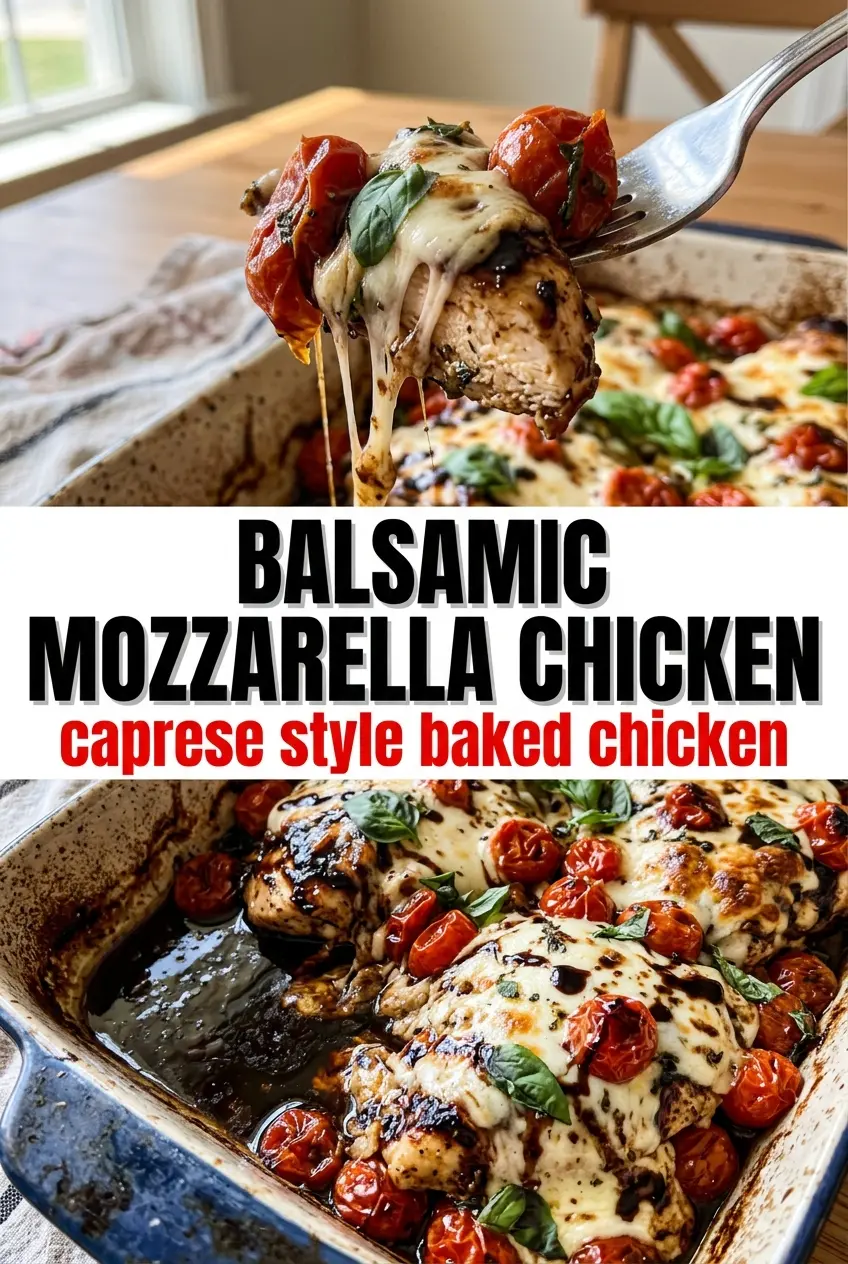
Balsamic Baked Chicken Breast with Mozzarella
Ingredients
Equipment
Method
- Whisk together balsamic vinegar, olive oil, honey, minced garlic, and Dijon mustard, then season the mixture with salt, pepper, garlic powder, and Italian seasoning to taste. Marinate the chicken breasts in the mixture for 20 minutes, and reserve some marinade.
- Preheat the oven to 400°F and place an oven-safe skillet over medium-high heat. Sear the marinated chicken in the skillet for 3 minutes per side until golden.
- Transfer the skillet to the oven with the remaining reserved marinade and bake for 18-20 minutes. Bake until the internal temperature reaches 165°F (no longer pink in the center).
- Remove the chicken from the oven and top each breast with sliced fresh mozzarella and halved cherry tomatoes. Return to the oven for 4-5 minutes until the cheese is fully melted and lightly bubbling.
- Drizzle with balsamic glaze and garnish with fresh basil leaves right before serving. Serve while the glaze is glossy and the cheese is still warm.