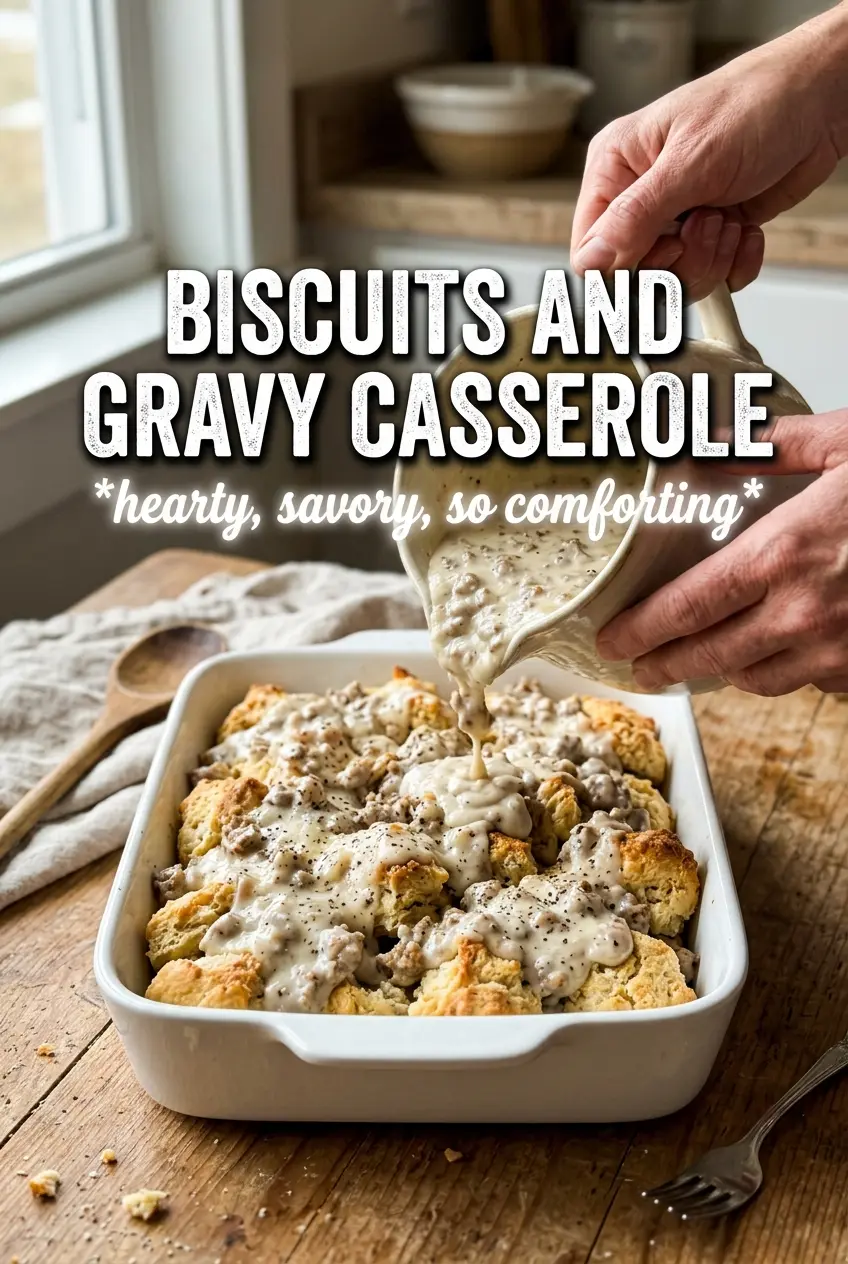
Biscuits and gravy casserole bakes up with all the comfort of a diner breakfast, but in a dish you can actually serve to a crowd without standing over the stove. The gravy stays thick and peppery underneath a golden biscuit top, and every scoop gets both: soft, rich filling below and biscuit edges that catch just enough color in the oven.
The key is building the gravy a little thicker than you would for biscuits on a plate. It needs to hold up under the biscuits and eggs without turning soupy. I also like to cut the biscuits into quarters so they bake through faster and give you more crisp edges instead of one dense layer on top.
Below, I’m walking through the parts that matter most: how to keep the gravy creamy, how to keep the biscuits from going gummy, and the small changes that make this work for breakfast, brunch, or a make-ahead morning meal.
The gravy thickened up exactly right and the biscuit tops baked through without getting doughy underneath. I added the cheddar on the last few minutes and it came out bubbly and perfect.
Save this biscuits and gravy casserole for a hands-off breakfast with thick sausage gravy and golden biscuit topping.
The Trick to Keeping the Gravy Thick Under the Biscuits
A good biscuits and gravy casserole fails for one reason: the gravy starts thin and never sets properly once the biscuits go on top. The milk needs to cook down until it coats a spoon and clings instead of pouring like soup. If you stop too early, the biscuit dough steams the gravy even more and you end up with a loose bottom layer instead of a sturdy casserole.
Leave some fat in the pan after browning the sausage. That fat carries the flour and gives the gravy its body. Whisking the flour straight into the drippings for a full minute gets rid of the raw taste and keeps the sauce from tasting pasty later.
- Breakfast sausage — Use a sausage with enough fat to flavor the gravy, but drain off the excess after browning so the finished dish doesn’t turn greasy.
- Whole milk — This matters. Lower-fat milk makes a thinner gravy and doesn’t give the same rich texture. Half-and-half works, but you’ll want to simmer gently so it doesn’t tighten too fast.
- Biscuits — Refrigerated biscuits are the easy route, and they work well here because you cut them into quarters. Homemade biscuits are great too, as long as they start cold and don’t overbake before the center is done.
- Black pepper — Don’t be shy. This is the backbone of the gravy’s flavor, and it needs to show up through the biscuits.
- Cheddar — Optional, but it adds a salty top note. Shred it yourself if you can; pre-shredded cheese melts less smoothly.
What Each Ingredient Is Actually Doing in This Recipe

- Primary ingredient (the star) — Quality matters most. Choose the best you can find.
- Cooking medium (oil, butter, or broth) — This carries flavors and prevents dryness.
- Seasonings (salt, pepper, spices, herbs) — Layer flavors so nothing overpowers. Build depth gradually.
- Aromatics (garlic, onion, herbs) — Cook with fat to bloom flavors. Become the foundation.
- Supporting ingredients — Complement the main ingredient without overpowering it.
- Sauce or liquid (if applicable) — Brings flavors together. Balance richness with acid.
- Acid (lemon, vinegar, wine, or other) — Brightens and prevents flat-tasting results.
- Final finish (garnish, glaze, or sauce) — Prevents one-dimensional taste and adds visual appeal.
Building the Casserole So the Biscuits Bake Through
Cooking the Sausage Base
Brown the sausage in a skillet over medium heat until it’s fully cooked and you see browned bits stuck to the bottom of the pan. Those bits are part of the flavor, so don’t wipe the skillet clean. Drain off the excess fat, but leave about 2 tablespoons behind so the flour has enough richness to cook in.
Turning Drippings Into Gravy
Stir the flour into the hot sausage drippings and cook it for about a minute. The mixture should look sandy and smell a little nutty, not raw. Add the milk gradually while whisking so the gravy stays smooth; if you dump it in all at once, the flour can clump before it has a chance to dissolve.
Thickening Before the Bake
Let the gravy simmer until it turns creamy and coats the back of a spoon. This is the point most people rush, and it’s the difference between a casserole that slices and one that spreads across the plate. Season it well with pepper, garlic powder, onion powder, cayenne, and salt, because the biscuits will soften the seasoning a little once they bake on top.
Assembling and Baking
Pour the gravy into a greased 9×13 dish, then scatter the biscuit quarters across the top in a single layer. Leave a little space between them so the heat can reach the sides and tops. Bake until the biscuits are deep golden and cooked through; if they still look pale and doughy in the middle, give them a few more minutes before adding the cheese.
Finishing With the Cheese
If you’re using cheddar, add it near the end so it melts without overbrowning. A quick five minutes is enough to make it bubbly and set. Pull the casserole when the biscuits feel firm on top and the gravy is still thick around the edges.
How to Adapt This for the Way You Cook
Make It Gluten-Free
Use a gluten-free all-purpose flour blend in the gravy and gluten-free biscuits on top. The gravy may need an extra minute or two to thicken, but the method stays the same. Don’t use cornstarch here unless you’re ready for a different texture; flour gives the gravy the right breakfast-casserole body.
Swap in Turkey Sausage
Turkey sausage works if you want a lighter casserole, but it doesn’t leave as much fat behind for the gravy base. Add a small spoonful of butter after draining the pan so the flour still has enough richness to cook properly. The finished dish will be a little leaner and less savory, so lean harder on black pepper.
Make It Without the Cheese
Skip the cheddar and bake it plain if you want the classic sausage-and-biscuit version. The casserole still finishes rich and satisfying because the gravy carries the whole dish. This is the cleanest version if you’re serving a group with mixed preferences.
Storage and Reheating
- Refrigerator: Store leftovers in an airtight container for up to 4 days. The biscuits soften as they sit, but the flavor holds up well.
- Freezer: It freezes reasonably well in portions, though the biscuit texture gets a little softer after thawing. Wrap tightly and freeze for up to 2 months for the best result.
- Reheating: Warm in a 325F oven, covered with foil, until hot through. The microwave works for single portions, but use short bursts so the gravy doesn’t separate and the biscuits don’t turn rubbery.
Questions I Get Asked About This Recipe
Biscuits And Gravy Casserole
Ingredients
Equipment
Method
- Preheat the oven to 375F and grease a 9x13 baking dish.
- Set up the baking dish near the stove so you can pour in the gravy right after it thickens.
- Brown the breakfast sausage in a Dutch oven, then drain excess fat but leave 2 tablespoons in the pan.
- Whisk the all-purpose flour into the sausage drippings and cook for 1 minute to remove the raw flour taste.
- Gradually add the whole milk, then simmer until thick and creamy, stirring as it thickens.
- Season the gravy with black pepper, garlic powder, onion powder, cayenne, and salt to taste.
- Pour the thick sausage gravy into the prepared 9x13 dish.
- Cut the refrigerated biscuits into quarters and arrange them over the gravy.
- Bake at 375F for 30-35 minutes until the biscuit topping is golden.
- Scatter the shredded cheddar over the casserole, then bake 5 more minutes until melty and set.
- Let the casserole rest briefly so the gravy and biscuits firm up before serving.