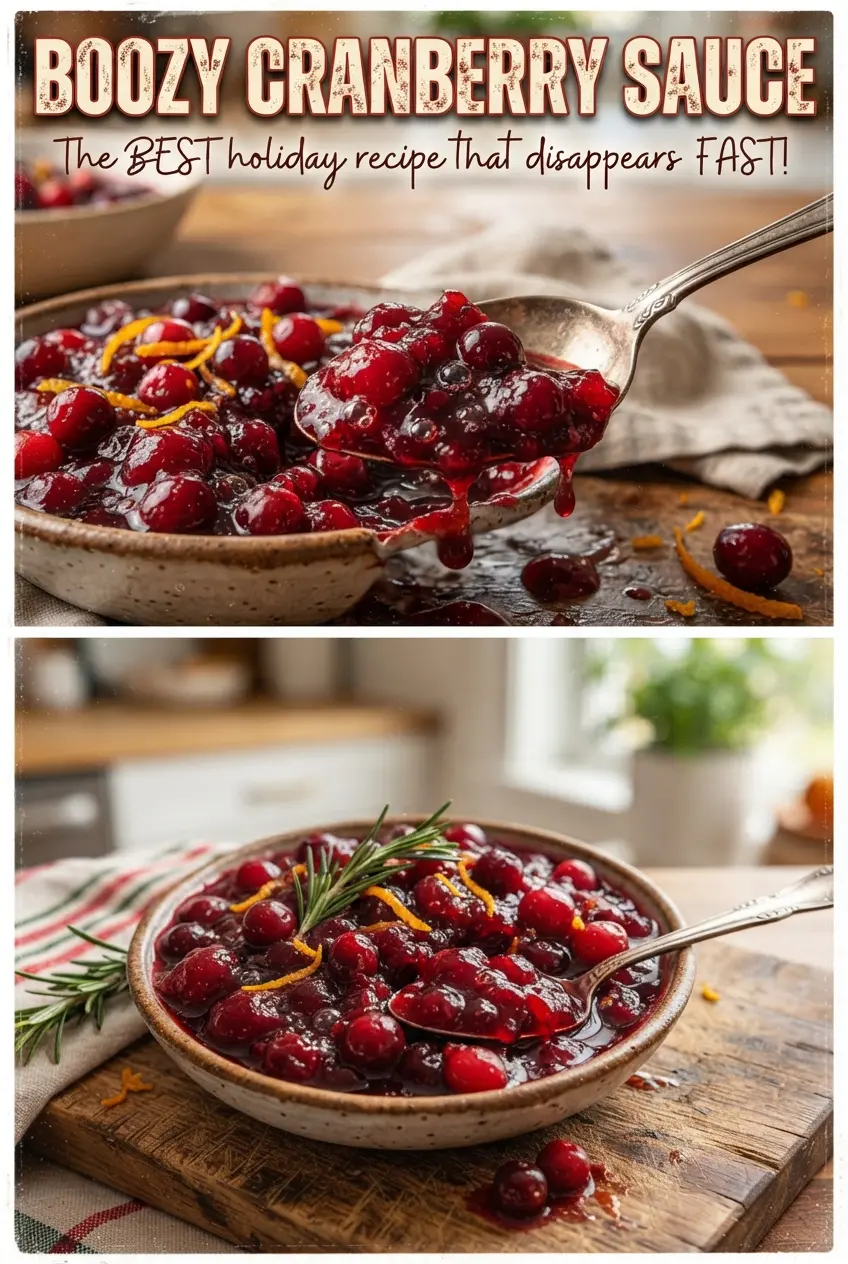
Ruby-red cranberry sauce gets a lot more interesting when you let port and orange liqueur take the lead. The berries soften into a glossy, spoonable sauce with enough body to mound on a plate, and the wine adds a deep, grown-up note that keeps the sweetness in check. It’s the kind of side that makes turkey, ham, and even leftovers feel a little more special without asking for much effort.
This version works because the fruit is simmered in the sugar and liquid from the start, which helps the cranberries burst evenly instead of turning watery at the end. The Grand Marnier goes in off the heat, where it keeps its bright orange edge instead of boiling away. A cinnamon stick and fresh orange zest round everything out so the sauce tastes layered, not just sweet.
Below, you’ll find the timing that gives you a thick sauce instead of cranberry syrup, plus a few simple swaps if you want to use red wine instead of port or keep the citrus note a little lighter.
The cranberries burst right on cue and the port gave it this deep, glossy finish. I served it chilled the next day and it was even better on toast.
Save this boozy cranberry sauce for the holiday table when you want a glossy, port-kissed side with a bright orange finish.
The Part That Keeps Cranberry Sauce from Turning Thin and Flat
The biggest mistake with cranberry sauce is rushing the fruit before the liquid has a chance to concentrate. If you add the cranberries to a weak base, they give off their juice fast and you end up with a loose, one-note sauce that never thickens properly. Here, the sugar, port, orange juice, cinnamon, and salt simmer first, so the base already has some depth before the berries go in.
That matters because cranberries need a short, active simmer to burst and release their pectin. Once they pop, the sauce should look slightly loose in the pan; it firms as it cools. If it seems perfect while bubbling, it usually ends up too stiff after chilling.
What Each Ingredient Is Actually Doing in This Sauce
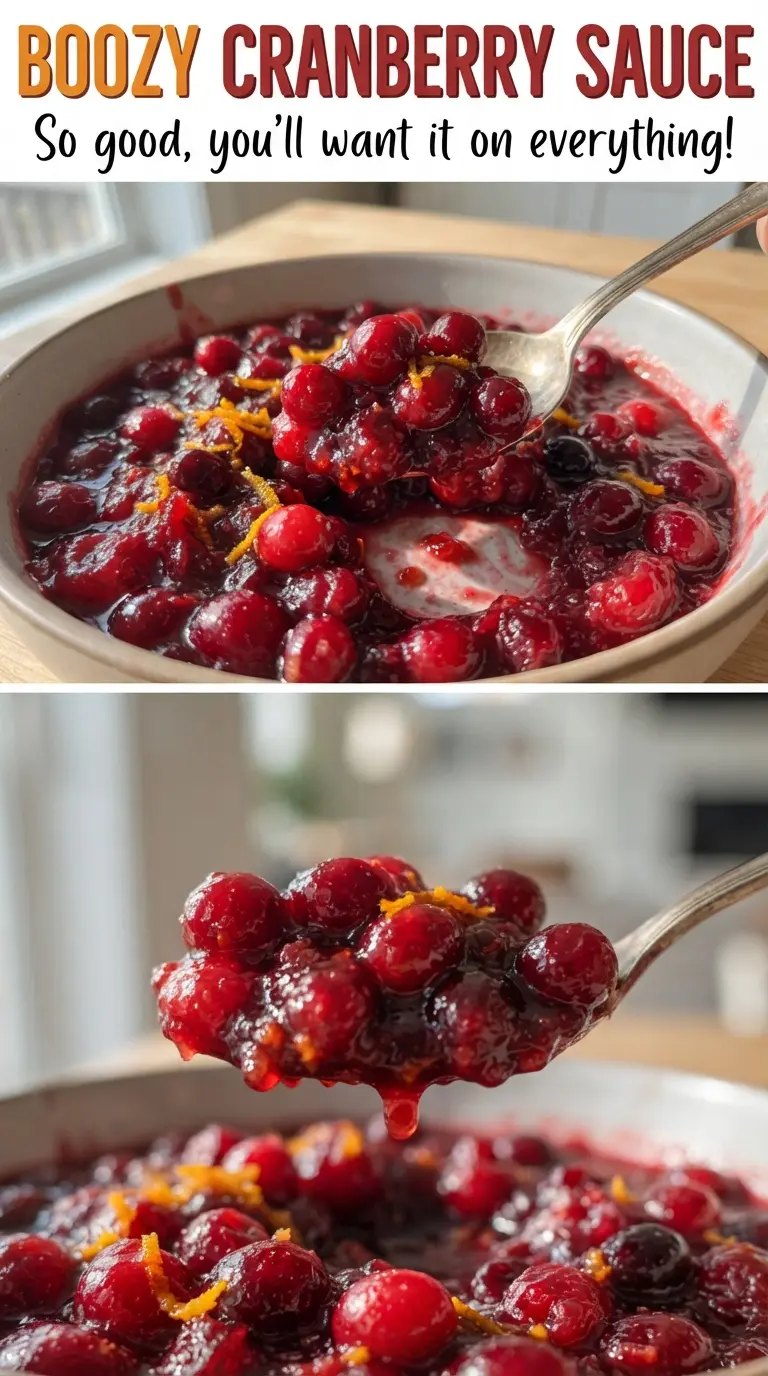
- Fresh cranberries — These are the structure of the sauce. Frozen cranberries also work straight from the freezer, and you don’t need to thaw them first.
- Ruby port or red wine — Port gives the deepest, roundest flavor. Red wine makes the sauce a little brighter and drier; if you use it, choose something you’d actually drink, since harsh wine can show up after reduction.
- Orange juice and orange zest — The juice softens the wine’s edge, while the zest adds fresh citrus aroma at the end. Don’t cook the zest for the full simmer or it can turn bitter.
- Grand Marnier or orange liqueur — Stirring it in off the heat keeps the orange note lively. If you swap in extra orange juice, the sauce still works, but it loses that subtle liqueur warmth.
- Cinnamon stick — A whole stick gives a cleaner spice note than ground cinnamon, which can make the sauce cloudy and heavy.
Building the Sauce So It Sets, Glows, and Tastes Balanced
Start with the wine, sugar, and citrus
Combine the sugar, port, orange juice, cinnamon stick, and salt in a saucepan and bring it to a boil over medium-high heat. You want the sugar fully dissolved before the cranberries go in, and the liquid should smell warm and winey, not sharp. If the heat is too low here, the sugar can linger in the bottom of the pan and the sauce cooks unevenly.
Let the berries burst at a steady simmer
Add the cranberries and keep the sauce at a lively simmer for 10 to 12 minutes. The berries will start to split open, then collapse, and the liquid will turn from thin and foamy to glossy and slightly thickened. Stir now and then so nothing catches, but don’t mash the berries hard or you’ll lose that nice mix of broken fruit and whole skins.
Finish off the heat
Take the pan off the burner before stirring in the Grand Marnier and orange zest. That keeps the liqueur aromatic and prevents the zest from tasting cooked down. Discard the cinnamon stick, then let the sauce cool in the pan before chilling; it thickens as it sits, and that final rest is what gives you the spoonable texture.
How to Adapt This for a Bigger Crowd or a Different Table
Use red wine instead of port
Red wine makes the sauce a little sharper and less rich, which is a good fit if you want something brighter beside fatty meats. Choose a dry, fruity wine and keep the sugar as written; cheaper cooking wine can leave a rough finish once it reduces.
Make it alcohol-free
Replace the port with extra orange juice plus a splash of cranberry juice, and swap the Grand Marnier for more orange zest. The sauce will be a little lighter and less deep, but it still tastes bright and festive.
Make it less sweet
Drop the sugar by 2 to 3 tablespoons if your cranberries are especially tart or if you’re serving the sauce with a salty main dish. Don’t cut it too far, or the fruit ends up aggressively sharp instead of balanced.
Storage and Reheating
- Refrigerator: Store in a covered container for up to 1 week. The sauce thickens as it chills, so expect a firmer texture straight from the fridge.
- Freezer: It freezes well for up to 2 months. Portion it into a freezer-safe container and leave a little headspace for expansion.
- Reheating: Warm gently over low heat or let it sit at room temperature until loosened. High heat can make the fruit break down too far and turn the sauce jammy instead of glossy.
Answers to the Questions Worth Asking
Boozy Cranberry Sauce
Ingredients
Equipment
Method
- In a saucepan, combine sugar, ruby port or red wine, orange juice, cinnamon stick, and salt, then bring to a boil. Once boiling, stir so sugar dissolves and the liquid looks clear and syrupy around the edges.
- Add the fresh cranberries and reduce to a simmer, cooking for 10-12 minutes until the berries burst and the sauce thickens. Look for a glossy, ruby-red sauce that coats the back of a spoon.
- Remove from heat and stir in Grand Marnier or orange liqueur and orange zest. The mixture should turn brighter ruby with a fragrant orange aroma.
- Discard the cinnamon stick after the sauce is finished. Keep stirring briefly to ensure the orange zest is evenly distributed.
- Cool the cranberry sauce, then chill before serving. Serve cold for the thickest, spoonable texture.