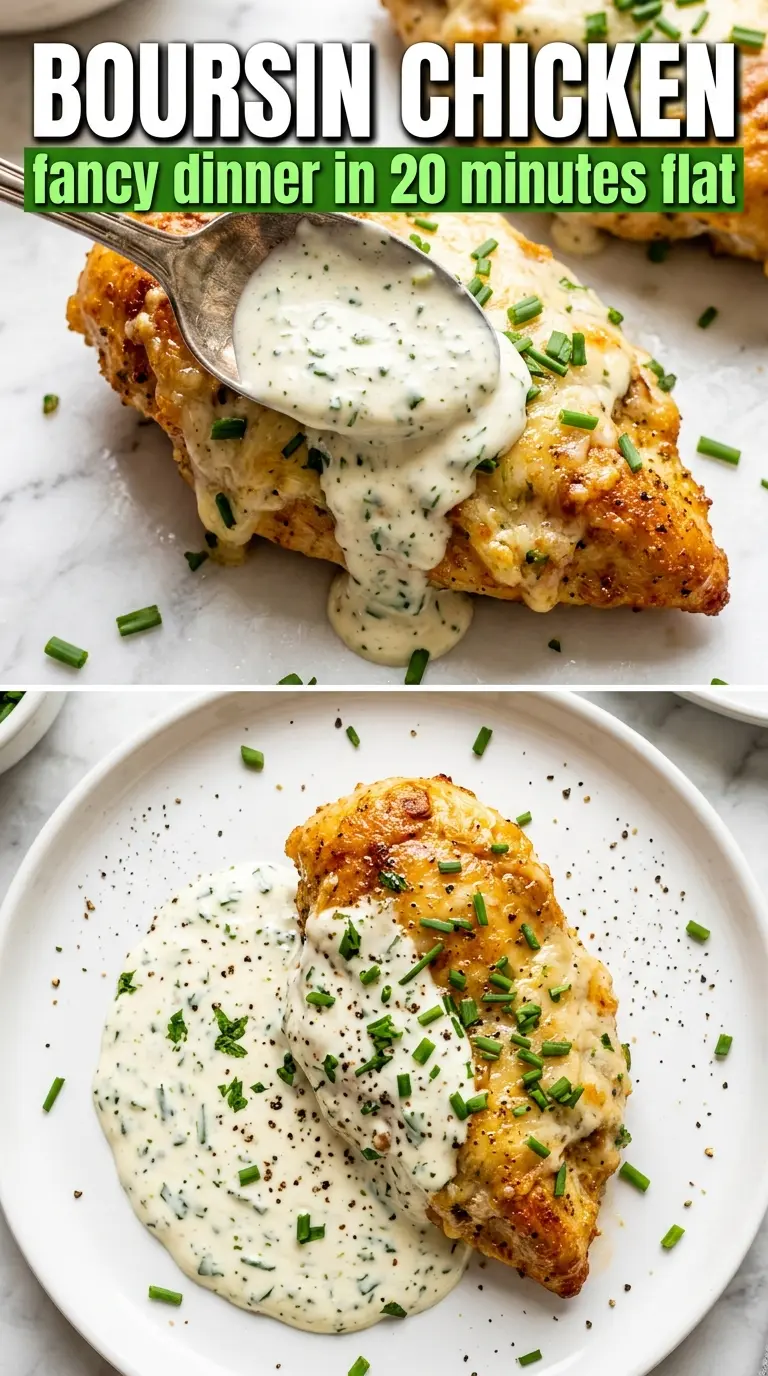
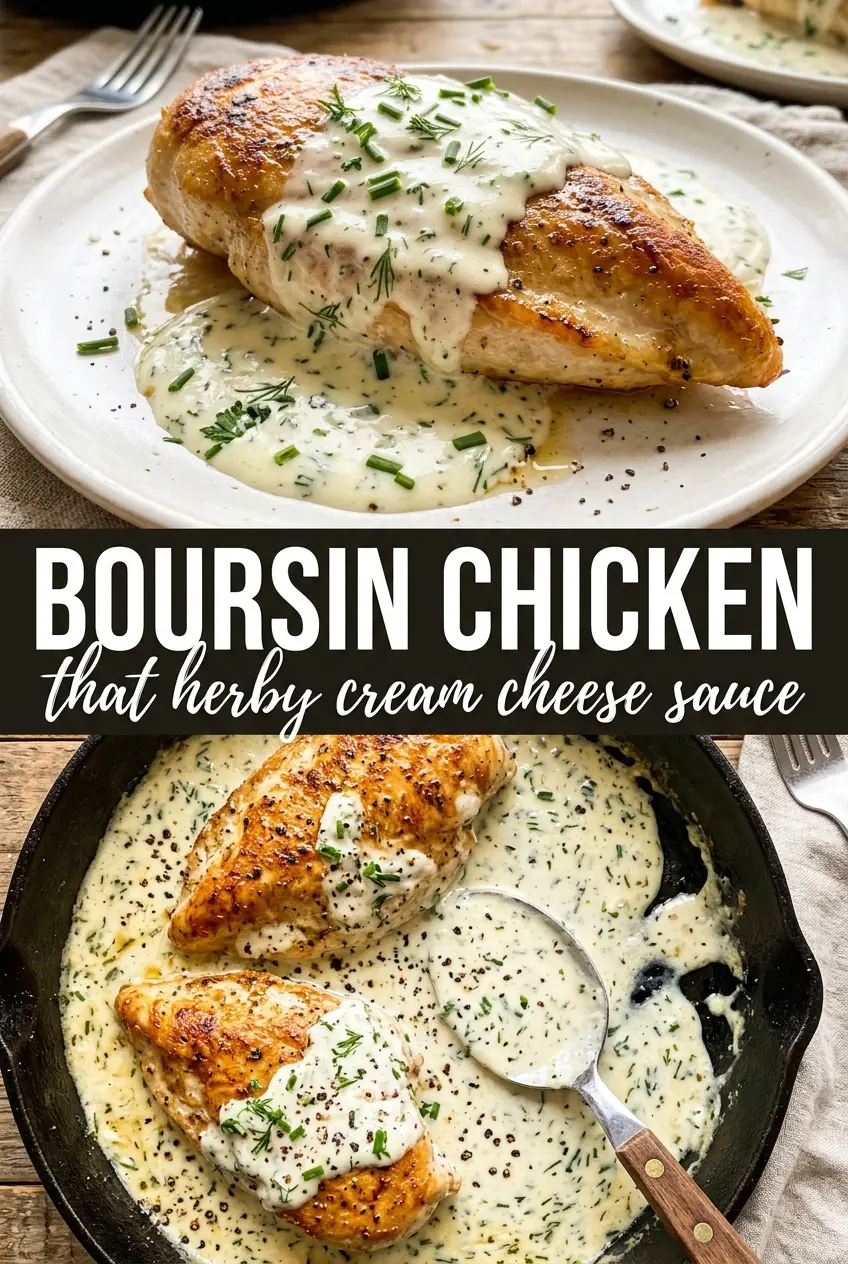
Golden seared chicken breasts in a glossy Boursin sauce have a way of making an ordinary dinner feel like it took a lot more effort than it did. The chicken stays juicy because it’s cooked first, then finished in the sauce instead of simmered from the start, and the sauce turns silky without getting heavy or gluey. It’s the kind of skillet dinner that lands on the table looking elegant, but the actual cooking is straightforward and fast.
What makes this version work is the balance between the seared fond in the pan, the splash of wine or broth for deglazing, and the Boursin cheese melting into warm broth before the cream goes in. That order matters. If you add the cream too early or let the sauce boil hard after the cheese melts, it can go dull or split. Kept at a gentle simmer, it stays smooth, fragrant, and clingy enough to coat every bite.
Below, I’ve included the small decisions that matter most: how to keep the chicken from drying out, why the sauce thickens the way it does, and a few smart variations if you want to change the dairy, the protein, or the way you serve it.
The sauce turned out silky instead of greasy, and the chicken stayed juicy all the way through. I served it with mashed potatoes and my husband kept going back for more sauce.
Save this Boursin chicken for a skillet dinner with a velvety garlic herb sauce and beautifully seared chicken breasts.
The Sauce Fails When the Heat Gets Too Aggressive
The part that usually goes wrong in a creamy skillet chicken like this isn’t the chicken. It’s the sauce. Boursin melts beautifully, but only if the heat stays gentle once it hits the broth. A hard boil can make the dairy separate and turn the sauce grainy instead of glossy, and once that happens it’s hard to pull it back.
There’s another important detail here: the pan drippings after searing the chicken are doing real work. Those browned bits give the sauce depth, which is why you don’t want to scrub the skillet clean before the garlic and liquid go in. Let the wine or broth loosen everything from the bottom, then add the cheese and stir until the sauce looks smooth before the cream goes in.
- Chicken breasts — These stay elegant and lean, but they dry out fast if you overcook them. Pound them to an even thickness if one side is much thicker than the other; that gives you a better sear and keeps the thinner end from overcooking before the center is done.
- Dry white wine or chicken broth — Wine adds a sharper edge that cuts through the richness. Broth works just fine if you want to skip the alcohol, but use a good-tasting one because this liquid carries the flavor base of the whole sauce.
- Boursin garlic and herb cheese — This is the ingredient that gives the sauce its signature texture and seasoning in one move. A soft herb cheese substitute can work in a pinch, but you’ll lose some of the garlic-herb punch and the sauce won’t taste as layered.
- Heavy cream — This smooths the sauce and helps it stay silky at the table. Half-and-half can work, but it won’t thicken as luxuriously and it’s more likely to look thin if you simmer too long.
What Each Ingredient Is Actually Doing in This Recipe
- Primary ingredient (the star) — Quality matters most. Choose the best you can find.
- Cooking medium (oil, butter, or broth) — This carries flavors and prevents dryness.
- Seasonings (salt, pepper, spices, herbs) — Layer flavors so nothing overpowers. Build depth gradually.
- Aromatics (garlic, onion, herbs) — Cook with fat to bloom flavors. Become the foundation.
- Supporting ingredients — Complement the main ingredient without overpowering it.
- Sauce or liquid (if applicable) — Brings flavors together. Balance richness with acid.
- Acid (lemon, vinegar, wine, or other) — Brightens and prevents flat-tasting results.
- Final finish (garnish, glaze, or sauce) — Prevents one-dimensional taste and adds visual appeal.
Building the Sear Before the Sauce Ever Starts
Seasoning for a Clean, Deep Crust
Pat the chicken dry before seasoning it. Moisture on the surface makes the pan steam instead of sear, and that’s the difference between pale chicken and a golden crust that tastes like it belongs in a restaurant. Salt, pepper, and garlic powder are enough here because the sauce brings the bigger flavor. The pan should be hot enough that the chicken sizzles the moment it touches the oil, but not so hot that the exterior burns before the center cooks.
Letting the First Side Develop Color
Set the chicken in the skillet and leave it alone for the first few minutes. If it sticks when you try to move it, it usually just needs another minute to release naturally. When it’s ready to turn, the bottom will be a deep golden brown and the chicken will lift cleanly. Cook the second side until the center reaches 165°F; if the breasts are thick, lower the heat a bit after the initial sear so the outside doesn’t outrun the inside.
Turning Pan Fond Into Sauce Base
After the chicken comes out, use the same pan for the garlic and liquid. The garlic only needs about 30 seconds, just until it smells sweet and sharp without browning. Add the wine or broth and scrape the bottom of the pan with a wooden spoon, because those browned bits dissolve into the sauce and give it much more depth than a clean pan ever could.
Melting the Boursin Without Breaking It
Once the broth is simmering, add the Boursin and stir patiently until it disappears into the liquid. It should look smooth before the cream goes in. Keep the heat low enough that the sauce gently bubbles at the edges, not a rolling boil. That gentler heat keeps the dairy stable and gives you the glossy, spoon-coating finish this dish is known for.
Make It Without Wine
Use chicken broth instead of wine and add a small squeeze of lemon at the end if the sauce tastes flat. You’ll lose the subtle sharpness that wine adds, but the finished dish will still taste rich and balanced.
Dairy-Light Version
You can swap the heavy cream for half-and-half, but keep the sauce at a very gentle simmer so it doesn’t thin out too much. The texture won’t be quite as plush, yet it still gives you a creamy skillet sauce without the full richness.
Make It With Chicken Thighs
Boneless skinless thighs work well if you want a more forgiving cut. They need a little longer in the pan, but they stay juicy and give the sauce a deeper, richer chicken flavor.
Storage and Reheating
- Refrigerator: Store leftovers in an airtight container for up to 3 days. The sauce will thicken as it chills.
- Freezer: The sauce can separate after freezing, so I don’t recommend freezing the finished dish. The chicken itself freezes better than the cream sauce.
- Reheating: Warm gently over low heat on the stove with a splash of broth to loosen the sauce. High heat is the mistake here; it can make the dairy look broken before the chicken is hot through.
Questions I Get Asked About This Dish
Boursin Chicken
Ingredients
Equipment
Method
- Season boneless skinless chicken breasts with salt, pepper, and garlic powder to taste. Heat olive oil in a large skillet over medium-high heat until shimmering.
- Add chicken breasts to the skillet and sear for 5-6 minutes per side, until golden and the internal temperature reaches 165°F. Transfer chicken to a plate and keep any rendered pan juices in the skillet.
- Add minced garlic to the same pan and cook for 30 seconds, stirring constantly until fragrant. Immediately deglaze with dry white wine or chicken broth and cook for 2 minutes.
- Pour in chicken broth and bring to a simmer. Add Boursin garlic and herb cheese and stir until completely melted and smooth.
- Stir in heavy cream and fresh thyme leaves. Simmer for 3-4 minutes until the sauce thickens slightly.
- Return the chicken to the pan and spoon the Boursin sauce over each breast. Garnish with fresh thyme and serve over mashed potatoes or pasta.