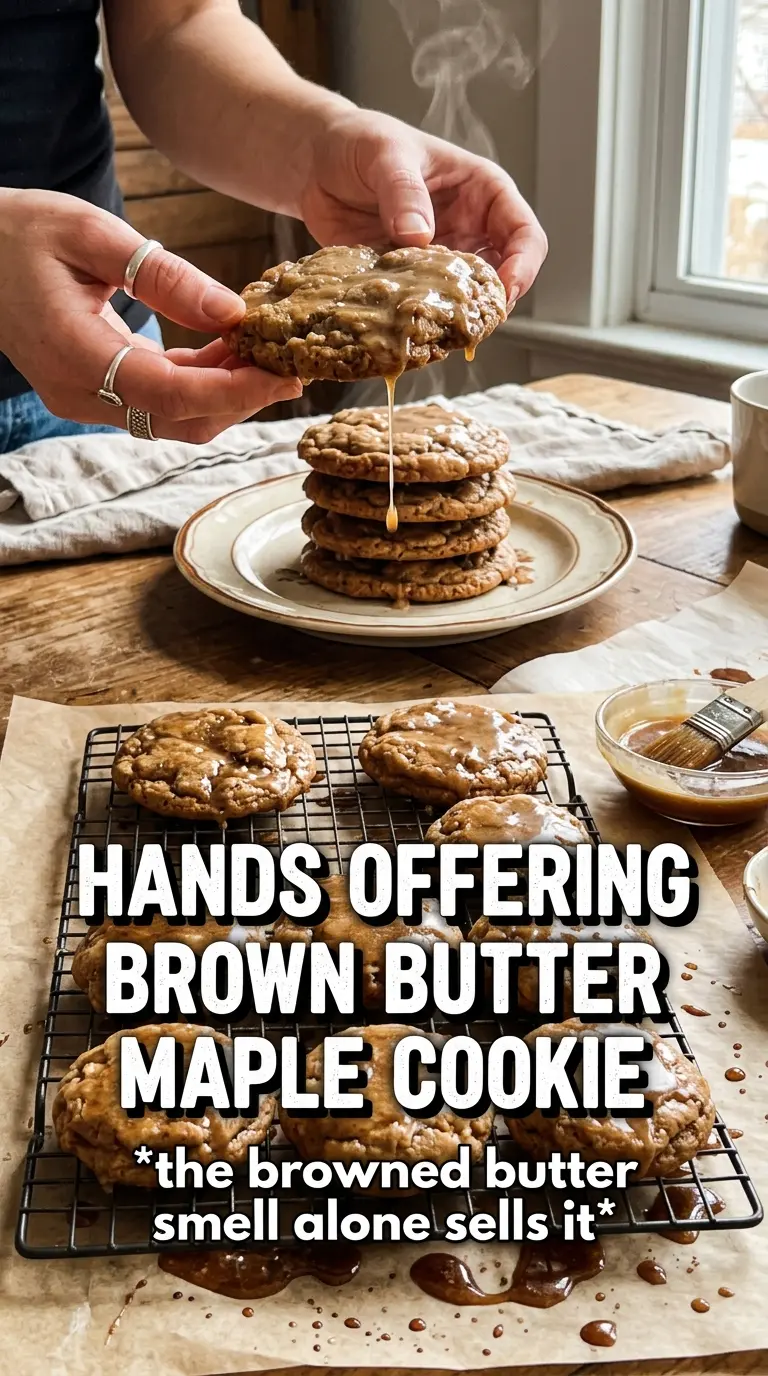
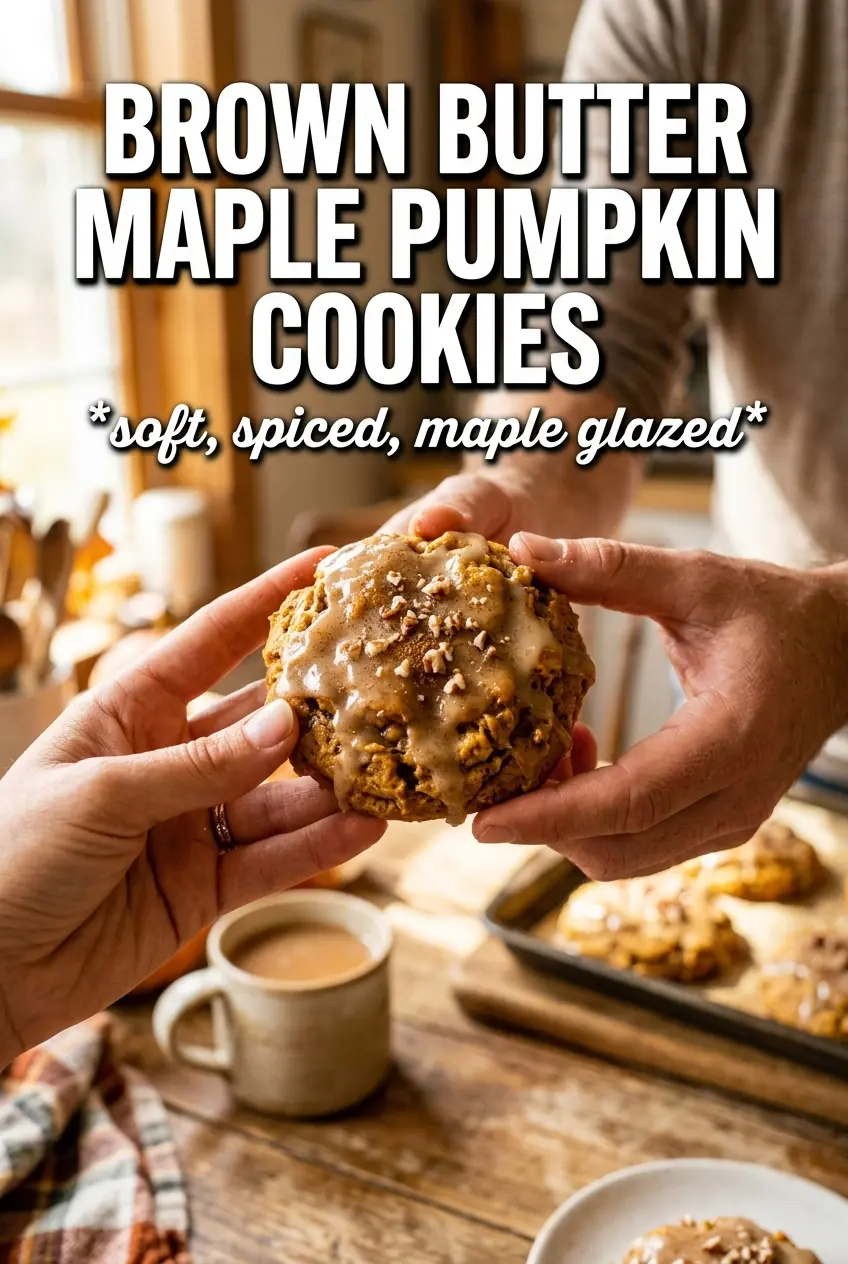
Brown butter maple pumpkin cookies bake up soft in the middle with just enough edge to give each bite structure, and that little drizzle of maple glaze pushes them straight into bake-again territory. The brown butter brings a nutty depth that plain softened butter just can’t match, while the pumpkin keeps the crumb tender without making the cookies cakey or heavy.
The trick is treating the pumpkin like a wet ingredient that needs managing, not just stirring it in and hoping for the best. Blotting it dry before mixing keeps the dough from spreading too much and helps the cookies hold onto their chewy centers. Browning the butter first matters for flavor, but chilling it back to solid form matters just as much for texture. That step keeps the dough from turning greasy and flat.
Below you’ll find the little details that make these cookies behave: how dry the pumpkin should be, why the glaze goes on after the cookies cool, and what to change if you want a stronger maple finish or a dairy-free version.
The pumpkin flavor came through without making the cookies cakey, and the maple glaze set up just enough that they stacked neatly for a bake sale.
Like these brown butter maple pumpkin cookies? Save them to Pinterest for the days when you want soft centers, caramelized flavor, and a maple glaze that sets beautifully.
The Reason These Cookies Stay Soft Without Turning Puffy
Most pumpkin cookies lean one of two ways: dry and bland, or soft in a way that feels more like cake than a cookie. These avoid both problems because the moisture is controlled at two points. First, the pumpkin puree is blotted dry. Second, the dough uses brown butter that has been chilled back to solid form, which gives you flavor without a greasy spread.
The other thing that matters here is balance. Maple syrup adds depth, but it also adds liquid, so the recipe keeps the amount modest and uses brown sugar to carry the sweetness. That keeps the dough scoopable and helps the edges bake into a delicate golden ring while the centers stay tender.
- Brown butter — This is the flavor engine. Browning it gives you caramel and toasted nut notes that make the cookies taste layered instead of flat. Don’t use melted butter straight from the pan; it needs to cool and solidify or the dough will spread too much.
- Pumpkin puree — Use plain puree, not pumpkin pie filling. The puree needs to be blotted until it looks thick and almost paste-like on the surface. If it still looks wet, it will soften the dough and make the cookies bake up more cakey.
- Pure maple syrup — This brings a clean maple note that artificial syrup won’t copy. It also helps keep the cookies moist. Darker maple syrup gives a deeper flavor, but even grade A syrup works well here.
- Powdered sugar for the glaze — Powdered sugar gives the glaze body without cooking it on the stove. If you want a thicker drizzle, use less milk. If you want a glaze that runs a little more, add the milk a teaspoon at a time.
What Each Ingredient Is Actually Doing in This Recipe
- Primary ingredient (the star) — Quality matters most. Choose the best you can find.
- Cooking medium (oil, butter, or broth) — This carries flavors and prevents dryness.
- Seasonings (salt, pepper, spices, herbs) — Layer flavors so nothing overpowers. Build depth gradually.
- Aromatics (garlic, onion, herbs) — Cook with fat to bloom flavors. Become the foundation.
- Supporting ingredients — Complement the main ingredient without overpowering it.
- Sauce or liquid (if applicable) — Brings flavors together. Balance richness with acid.
- Acid (lemon, vinegar, wine, or other) — Brightens and prevents flat-tasting results.
- Final finish (garnish, glaze, or sauce) — Prevents one-dimensional taste and adds visual appeal.
Keeping the Brown Butter Cold Enough to Behave
Brown butter is worth the extra step, but it changes the dough if you treat it like regular softened butter. Once it has browned, it should be chilled until solid again, then beaten with the brown sugar and maple syrup until creamy. That gives the cookies structure and helps them bake as soft rounds instead of oily puddles.
The dough is at its best when it looks thick but still scoops cleanly. If it feels sticky, the pumpkin probably held too much moisture or the brown butter was still too warm. In either case, the cookies will spread before they set. A short rest in the fridge can rescue the texture, but starting with properly solidified butter is the real fix.
What to Do from the First Mix to the Maple Drizzle
Mixing the Dry Base
Whisk the flour, baking soda, pumpkin pie spice, cinnamon, and salt until the spices disappear evenly through the flour. That first mix keeps you from biting into one cookie that tastes heavy on cinnamon and another that tastes like plain dough. If you skip the whisking, the spices can clump, especially the pumpkin pie spice.
Building the Cookie Dough
Beat the solidified brown butter with the brown sugar and maple syrup until the mixture looks creamy and lighter in color. Add the blotted pumpkin, eggs, and vanilla next, and stop mixing as soon as everything looks combined. The dough should look smooth but not whipped. Overbeating at this stage traps too much air and can make the cookies puff, then collapse.
Folding and Scooping
Fold in the flour mixture just until the last streaks disappear. The dough will be soft, but it shouldn’t be slack. Scoop it into even 2-tablespoon portions so the cookies bake at the same rate. If your scoops are too large, the edges set before the centers finish and the middles can look underbaked even when the cookies are done.
Baking Until the Edges Set
Bake at 375°F until the edges are golden and the centers look slightly underdone in the middle. That small underbaked center finishes on the hot pan after you pull them out. If you wait until the tops look fully firm in the oven, the cookies will cool drier than you want.
Cooling and Finishing
Let the cookies cool completely before you glaze them. Warm cookies melt the glaze into a thin wash instead of a clean drizzle. Stir the glaze until it falls off the spoon in a slow ribbon, then finish with flaky salt so each cookie gets a sweet-salty edge that cuts through the maple.
How to Change These Cookies Without Losing the Texture
Make them dairy-free
Use a dairy-free butter alternative that browns well, or use a high-quality plant butter with a lower water content. The flavor will be a little less nutty if the substitute doesn’t brown deeply, but the cookies will still hold their soft centers as long as the dough stays chilled.
Skip the glaze for a less sweet cookie
Leave off the maple glaze and finish with flaky salt only. The cookies will read more like a brown butter spice cookie and less like a frosted dessert, which works well if you want the maple flavor in the dough to stay in front.
Make the maple flavor stronger
Use the full glaze and add the milk slowly so it stays thick enough to cling. You can also use dark maple syrup in both the dough and glaze for a deeper, more caramel-like finish. Don’t add extra syrup to the cookie dough itself unless you’re willing to accept a softer, more delicate cookie.
Storage and Reheating
- Refrigerator: Store in an airtight container for up to 5 days. The glaze will stay set, but the cookies soften a little as they sit.
- Freezer: Freeze the unglazed cookies for up to 2 months. Thaw at room temperature, then glaze after they come back to room temperature.
- Reheating: Warm unglazed cookies for 5 to 8 seconds in the microwave if you want them soft again. Don’t microwave glazed cookies for long or the icing will melt and disappear.
Answers to the Questions Worth Asking
Brown Butter Maple Pumpkin Cookies
Ingredients
Equipment
Method
- Brown the butter until deeply golden, then pour it out and refrigerate until solid, about 1 hour.
- Once firm, remove the butter and let it sit briefly so it can be beaten until creamy.
- Preheat the oven to 375F and line baking sheets with parchment.
- Whisk all-purpose flour, baking soda, pumpkin pie spice, cinnamon, and salt until evenly combined.
- Beat the solidified brown butter, brown sugar, and pure maple syrup until creamy.
- Add the blotted pumpkin puree, then mix until incorporated.
- Beat in the eggs one at a time, then mix until smooth.
- Mix in the vanilla extract.
- Fold the flour mixture into the batter until no dry streaks remain.
- Scoop the dough into 2-tablespoon rounds and place them on the prepared baking sheets.
- Bake for 10–12 minutes, until the edges are golden.
- Cool completely before glazing.
- Stir together powdered sugar and pure maple syrup, thinning with milk until drizzly, then drizzle over the cookies.
- Finish by sprinkling flaky salt over the glazed cookies.