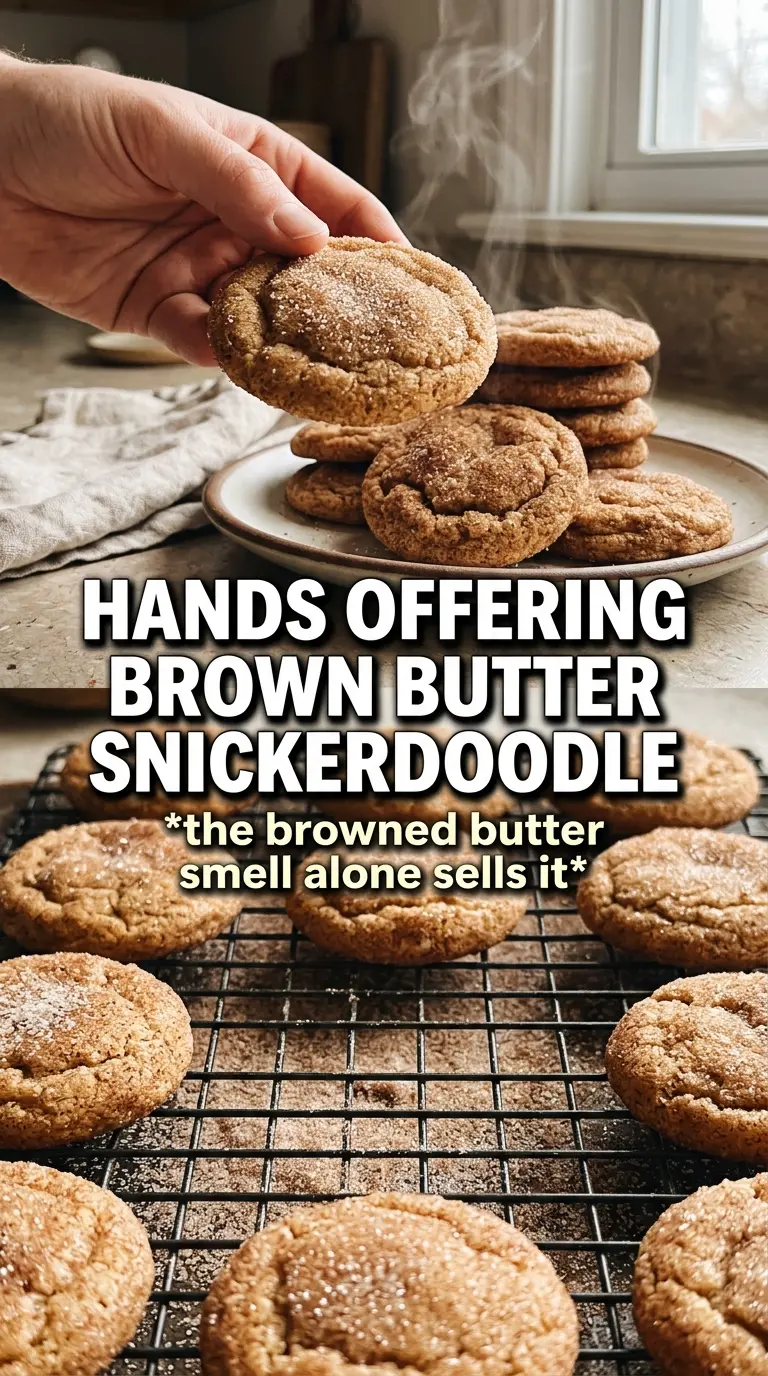
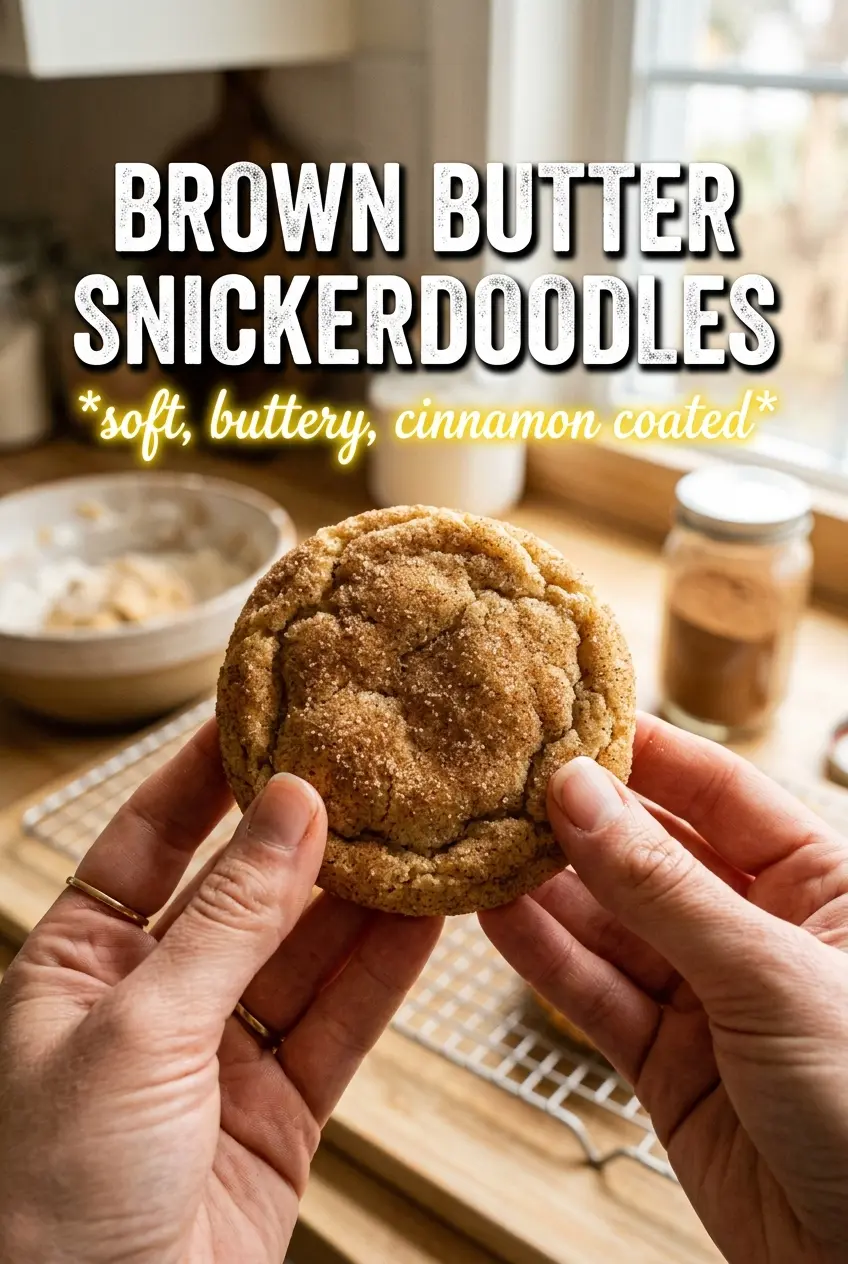
Brown butter snickerdoodles bake up with crisp, cinnamon-sugared edges, soft centers, and a deeper caramel note that makes the whole cookie taste a little more grown-up without losing the cozy crackly top everyone expects. The brown butter changes everything here. It doesn’t just add nuttiness; it gives the cookies a toasted, almost toffee-like backbone that regular snickerdoodles can’t match.
The key is letting the browned butter cool and solidify before you cream it with the sugar. If it goes in warm, the dough spreads too fast and the cookies lose that thick, crinkled look. Cream of tartar keeps the classic snickerdoodle tang, while a pinch of nutmeg in the coating quietly boosts the cinnamon without making the cookies taste spiced from the inside out.
Below you’ll find the small details that matter most: how brown the butter should look, what the dough should feel like, and how to keep the cinnamon sugar coating thick enough to bake into that signature crackly shell.
The brown butter made these taste like a bakery cookie, and the centers stayed soft while the edges got that perfect crackly sugar coating.
Save these brown butter snickerdoodles for the days when you want a soft center, crackly cinnamon sugar shell, and that deep toasted butter flavor.
The Secret to Keeping Brown Butter Snickerdoodles Thick, Not Flat
Brown butter changes the structure of the dough, not just the flavor. Once the water cooks off and the milk solids toast, you’re left with butter that tastes deeper and smells nutty, but that butter also needs to resolidify before it can trap air properly when you cream it with sugar. Skip that step and the cookies spread before the centers can set, which is how you end up with thin rounds instead of the plush, crinkled cookies you wanted.
The other thing that matters here is the balance between cream of tartar and baking soda. Cream of tartar gives snickerdoodles their classic tang and helps create that tender bite, while baking soda pushes the cookies upward and encourages the wrinkles on top. If the dough ever seems oily or loose, it usually means the butter wasn’t cooled enough or the flour was measured too lightly.
- Browned butter — This is the whole reason the cookies taste toasted and caramel-like. Let it cool until solid, not just lukewarm, before mixing the dough.
- Cream of tartar — You need it for the classic snickerdoodle texture and flavor. There isn’t a good substitute that gives the same tang and chew.
- Flour — Measure it carefully. Too little flour makes the dough spread, and these cookies need enough structure to hold their crinkles.
- Cinnamon in the dough and coating — The dough gets a little cinnamon, but the real punch comes from the outside coating, which bakes into a crackly shell.
What Each Ingredient Is Actually Doing in the Dough
- Unsalted butter — Browning it pulls out a deeper, nutty flavor that makes these taste like a bakery version of the classic. If you only have salted butter, reduce the added salt a touch, but unsalted gives you better control.
- Granulated sugar — It sweetens the dough and helps create the crackly surface when it creams with the solidified butter. Brown sugar won’t give the same texture here.
- Eggs — They bind the dough and add enough moisture to keep the centers soft. Add them one at a time if the mixture looks a little curdled at first; it comes together once the flour goes in.
- Vanilla — It rounds out the browned butter and cinnamon without pushing the cookies toward a butter-cookie flavor.
- Cinnamon sugar coating — Rolling generously matters. A thin coat bakes into the cookie; a heavy coat gives you that classic snickerdoodle shell.
- Nutmeg in the coating — Just a pinch makes the cinnamon taste fuller without making the cookies taste like spice cake.
Building the Dough So the Cookies Bake Up Crinkled
Brown and cool the butter fully
Cook the butter until the milk solids turn golden brown and smell nutty, then pour it into a bowl and chill it until solid again. It should be opaque and firm, not liquid or slushy, before you beat it with the sugar. If you rush this part, the dough will be too soft and the cookies will spread instead of holding their shape.
Mix the dry ingredients first
Whisk the flour, cream of tartar, baking soda, cinnamon, and salt together before they ever touch the butter. That keeps the leavening even, which matters because a pocket of baking soda can leave a bitter bite or a strange uneven rise. The mixture should look uniform and lightly speckled with cinnamon.
Cream until the dough looks fluffy, not greasy
Beat the solidified brown butter with the sugar until the mixture lightens in color and looks creamy around the edges. Add the eggs and vanilla next, and stop as soon as the batter looks smooth. If it starts to look slick or separated, the butter is still too warm; let it sit a few more minutes before going on.
Roll thick and bake just until set
Scoop the dough into 1-1/2 tablespoon balls and coat them generously in the cinnamon sugar mixture. Bake until the edges are set and the tops are crinkled but the centers still look a little soft. Pulling them at that stage keeps the middle tender after the carryover heat finishes the job on the pan.
Make Them Extra Nutty
Brown the butter a shade darker for a more toasted, almost hazelnut-like flavor. Watch it closely at the end, though, because the line between deep golden and burnt is short, and burnt milk solids will make the whole batch taste sharp.
Gluten-Free Version
Use a 1:1 gluten-free baking blend that includes xanthan gum. The cookies will still be chewy and crinkled, though they may spread a touch more, so chill the shaped dough for 20 to 30 minutes before baking if the dough feels soft.
Dairy-Free Adaptation
Use a plant-based butter that browns well, or a vegan butter with a similar fat content if you need to avoid dairy. You’ll lose some of the classic brown butter aroma, but the cinnamon sugar shell and snickerdoodle tang still come through nicely.
Storage and Reheating
- Refrigerator: Store in an airtight container for up to 5 days. The cinnamon sugar coating softens a bit, but the cookies stay chewy.
- Freezer: Freeze baked cookies for up to 2 months, or freeze dough balls after rolling in cinnamon sugar. Bake from frozen, adding 1 to 2 minutes.
- Reheating: Warm baked cookies in a 300F oven for 3 to 4 minutes. Don’t microwave them too long or the centers turn rubbery and the coating gets sticky.
Questions I Get Asked About This Recipe
Brown Butter Snickerdoodles
Ingredients
Equipment
Method
- Brown the butter until golden and nutty in color, then pour it out to solidify in the container you’ll chill it in. Refrigerate until solid, about 1 hour, until it can be scooped and mixed.
- Preheat the oven to 375°F and line baking sheets with parchment. Keep the parchment on the sheet so the cookies can bake without sticking.
- Whisk the all-purpose flour, cream of tartar, baking soda, cinnamon, and salt until evenly combined. Break up any clumps so the dough bakes with consistent texture.
- Beat the solidified brown butter and granulated sugar until creamy, then add the eggs and vanilla extract. Mix until smooth and the mixture looks cohesive.
- Fold the flour mixture into the butter mixture until no dry streaks remain. Stop mixing as soon as the flour disappears to avoid tough cookies.
- Mix the granulated sugar, cinnamon, and nutmeg in a shallow bowl for rolling. Toss to distribute the spices evenly.
- Scoop the dough into 1-1/2 tablespoon balls and roll generously in the cinnamon-sugar mixture. Press lightly so the coating sticks and gives a thick, crackly layer.
- Bake for 10–12 minutes at 375°F until the cookies are crinkled and the edges are set. Look for browned edges while the centers still look slightly soft.
- Cool the cookies on the pan for 5 minutes before transferring them to cool completely. This short rest helps them set without losing their crinkled surface.