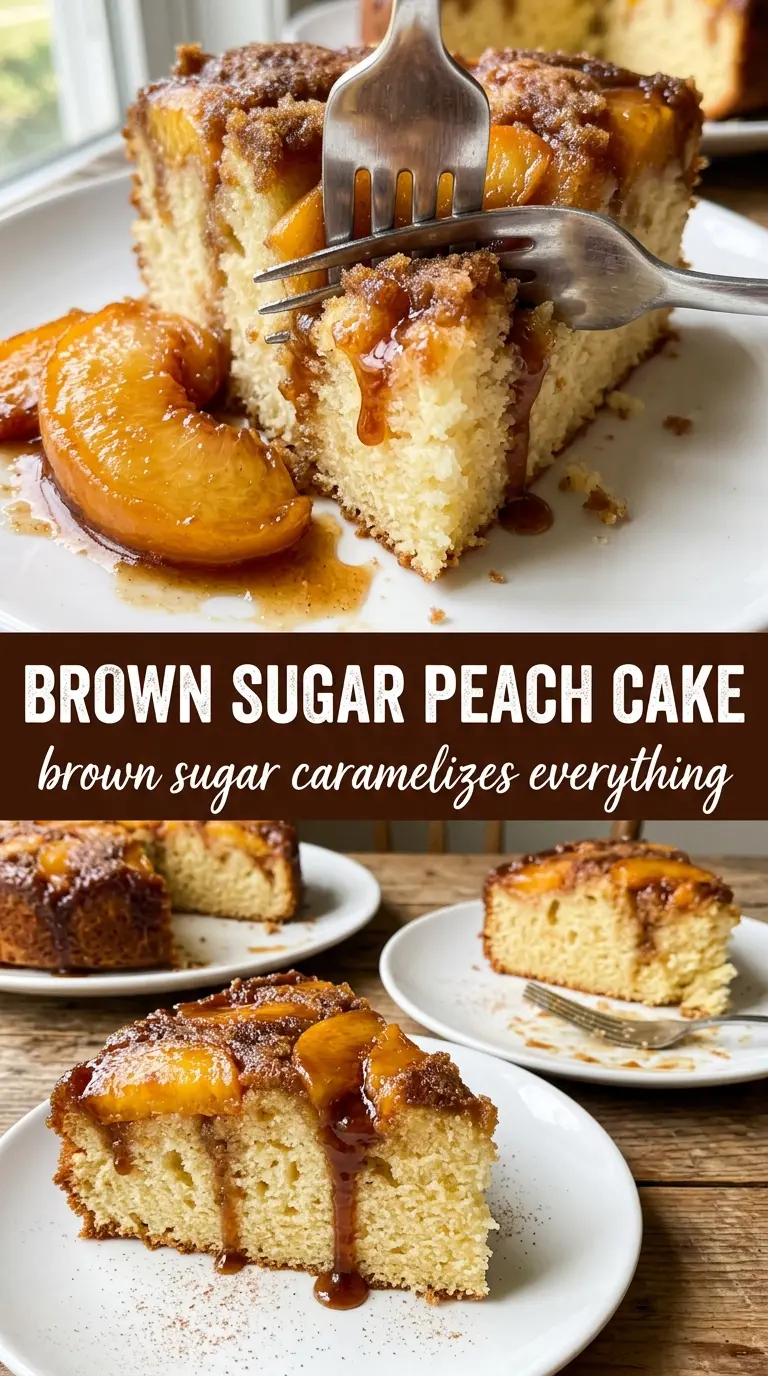
Brown sugar gives this peach cake a deeper, almost toffee-like crumb that plain white cake just can’t match. The peaches bake right into the layers, softening as they cook and leaving little pockets of fruit that keep every slice moist instead of dense. Finished with caramel cream cheese frosting, it lands in that sweet spot between homey and special enough for guests.
The trick here is balance. Brown sugar adds richness, but sour cream keeps the cake tender and stops the crumb from turning heavy. Fresh peaches need to be diced small and folded in gently so they stay suspended in the batter instead of sinking to the bottom. That little bit of cinnamon in the cake batter also matters more than you’d think; it rounds out the fruit and makes the whole cake taste warmer and fuller.
Below, I’m walking through the part that matters most: how to keep the cake layers light even with juicy fruit inside, plus the small frosting detail that makes the caramel finish taste homemade instead of flat.
The cake stayed incredibly moist for two days, and the peaches didn’t sink like they usually do in fruit cakes. The caramel cream cheese frosting made it taste bakery-worthy.
Save this brown sugar peach cake for the peach season bake you’ll want again and again — especially when you want moist layers and caramel cream cheese frosting on the same plate.
The Part That Keeps Peach Cake From Turning Heavy
The most common problem with fruit cakes is that the batter gets weighed down before it has a chance to rise. Peaches release juice as they bake, and if the batter is too loose or the fruit is cut too large, the layers can slide into a gummy middle. This cake avoids that by using a sturdy but tender batter built on butter, eggs, and sour cream, which holds its shape without tasting dry.
Room-temperature butter and eggs matter here. Cold ingredients don’t whip together cleanly, and that means less air trapped in the batter before the cake goes into the oven. The peaches also need to be patted dry after peeling and dicing. That one small step keeps the crumb from getting wet spots and helps the fruit distribute evenly instead of sinking.
- Brown sugar — This is what gives the cake its deeper color and that soft caramel note in the crumb. It also holds more moisture than white sugar, which helps the cake stay tender for days.
- Sour cream — It adds richness and keeps the batter thick enough to support the fruit. Plain Greek yogurt works in a pinch, but the cake will taste a little tangier and the crumb can be slightly tighter.
- Fresh peaches — Use ripe peaches that still hold their shape when diced. Overripe fruit turns mushy in the oven and can streak the batter with too much juice.
- Caramel sauce — A thick sauce blends into the frosting better than a thin one. If yours is loose, chill it briefly before mixing so the frosting doesn’t turn runny.
What Each Ingredient Is Actually Doing in This Recipe
- Primary ingredient (the star) — Quality matters most. Choose the best you can find.
- Cooking medium (oil, butter, or broth) — This carries flavors and prevents dryness.
- Seasonings (salt, pepper, spices, herbs) — Layer flavors so nothing overpowers. Build depth gradually.
- Aromatics (garlic, onion, herbs) — Cook with fat to bloom flavors. Become the foundation.
- Supporting ingredients — Complement the main ingredient without overpowering it.
- Sauce or liquid (if applicable) — Brings flavors together. Balance richness with acid.
- Acid (lemon, vinegar, wine, or other) — Brightens and prevents flat-tasting results.
- Final finish (garnish, glaze, or sauce) — Prevents one-dimensional taste and adds visual appeal.
How to Layer the Batter and Fruit Without Losing the Rise
Building the Base
Beat the butter and sugars until the mixture looks pale and fluffy, not just blended. That step builds the structure the cake needs to stay light even after the peaches go in. Add the eggs one at a time so the batter stays smooth; if it starts looking curdled, keep mixing and it will come together. Stir in the vanilla next so it’s evenly dispersed before the dry ingredients go in.
Adding the Dry Ingredients and Sour Cream
Alternate the flour mixture with the sour cream, starting and ending with the dry ingredients. That keeps the batter from getting overmixed and helps it stay thick enough to support the fruit. Stop as soon as the flour disappears; if you keep beating at this stage, the cake can bake up tough instead of tender. The batter should look plush and heavy, not pourable like pancake batter.
Folding in the Peaches
Add the diced peaches last and fold them in by hand with a spatula. You want them coated in batter without breaking down, because broken fruit makes the layers soggy. Divide the batter evenly between the pans and smooth the tops lightly. If you see large pockets of peach juice in the bowl, don’t pour that in; leave it behind so the cake bakes up cleanly.
Baking and Cooling Cleanly
Bake until the tops spring back when touched lightly and a toothpick comes out clean or with just a few moist crumbs. If the center still looks wet, give it a few more minutes instead of pulling it early — underbaked fruit cake sinks as it cools. Let the layers cool completely before frosting or the caramel cream cheese frosting will slide right off. Warm cake and cream cheese frosting are not friends.
How to Adapt This for Different Kitchens and Cravings
Make It Gluten-Free
Use a good 1:1 gluten-free baking flour that includes xanthan gum. The cake will still be moist and peachy, but the crumb will be a little more delicate, so let the layers cool fully before moving them.
Swap in Nectarines or Plums
Nectarines work one-for-one and give you a slightly firmer bite because you don’t have to peel them. Plums add a sharper, deeper fruit note, but they’re juicier, so dice them a little smaller and expect a softer crumb.
Turn It Into a Sheet Cake
Bake the batter in a greased 9×13-inch pan and start checking a few minutes earlier than the layer cakes. You’ll get a slightly thinner crumb, which makes it easier to serve for a crowd and skips the stacking and frosting step.
Storage and Reheating
- Refrigerator: Store covered for up to 4 days. The frosting will firm up, but the cake stays moist.
- Freezer: Freeze unfrosted layers tightly wrapped for up to 2 months. Thaw in the refrigerator overnight before frosting; frosted cake can be frozen, but the texture of the cream cheese frosting softens a bit after thawing.
- Reheating: For slices, let them sit at room temperature for 20 to 30 minutes. If you warm them, use short bursts in the microwave; too much heat makes the frosting split and the cake turn greasy.
Answers to the Questions Worth Asking
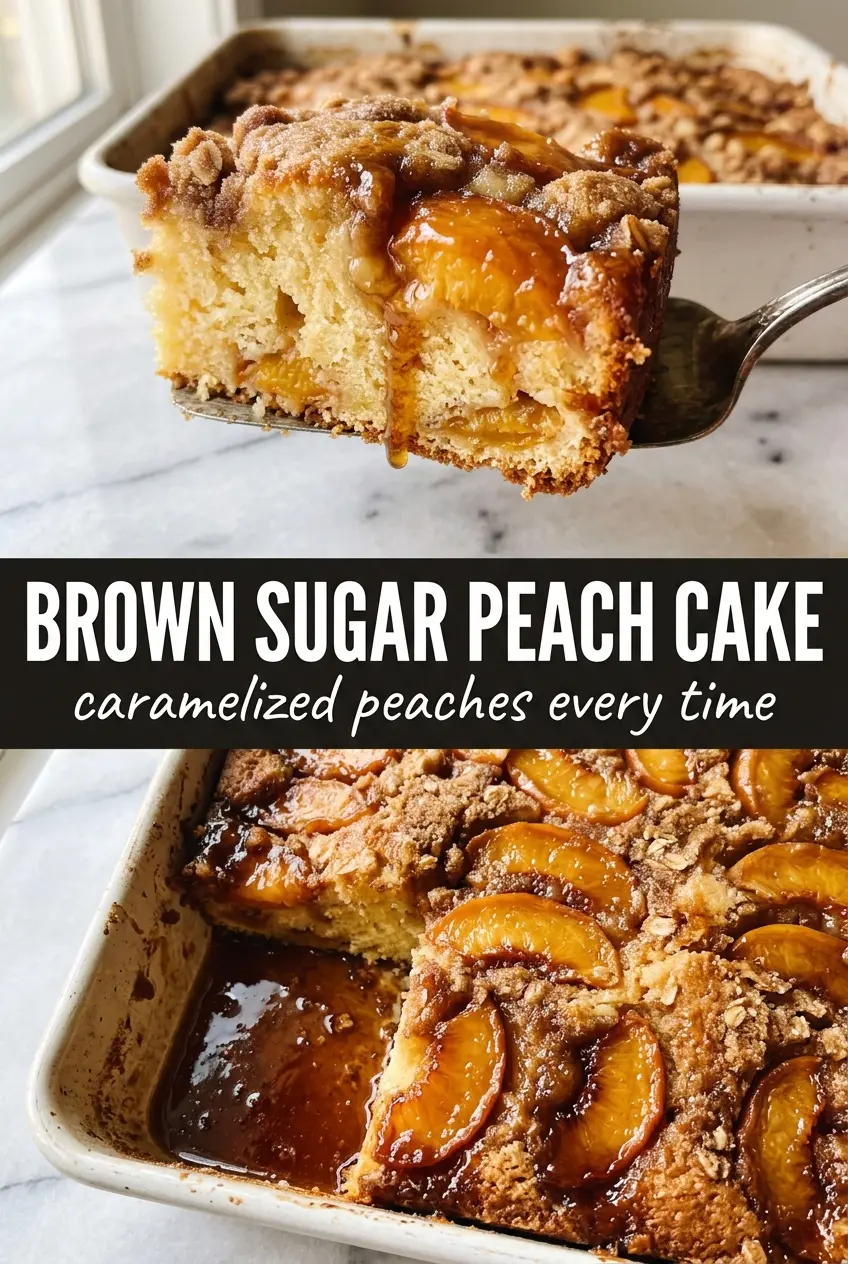
Brown Sugar Peach Cake
Ingredients
Equipment
Method
- Preheat the oven to 350°F and grease two 9-inch round cake pans, then line each with parchment for easy release.
- Beat the softened butter, packed brown sugar, and granulated sugar until light and fluffy, scraping the bowl as needed for a smooth, aerated mixture.
- Add the eggs one at a time, then beat in the vanilla extract until the batter looks glossy and fully combined.
- In a separate mixing step, alternately mix in the flour mixture (all-purpose flour, baking powder, baking soda, salt, cinnamon) and the sour cream just until no dry streaks remain.
- Gently fold in the diced peaches so the chunks stay visible in the batter without breaking down.
- Divide the batter between the two prepared pans and bake for 35-40 minutes at 350°F, until a toothpick inserted in the center comes out clean.
- Cool the cakes completely in the pans, about 30 minutes, until they are cool enough to frost without melting the filling.
- Beat the softened cream cheese and butter until smooth, using steady mixing to remove any lumps.
- Add powdered sugar, caramel sauce, and vanilla extract, then beat until fluffy and thick enough to spread.
- Fill and frost the cooled cake with the caramel cream cheese frosting, covering the layers evenly.
- Arrange fresh peach slices on top and drizzle with extra caramel so the topping looks caramelized and juicy before serving.