Brown sugar pineapple chicken lands on the table with sticky edges, juicy chicken, and a glaze that clings instead of sliding off. The sweet-tart sauce reduces into something glossy and spoonable, with pineapple chunks that soften just enough to catch on the seared chicken and keep every bite bright. It’s the kind of skillet dinner that tastes like you spent a lot longer on it than you did.
The trick is letting the chicken take on real color before the glaze goes in. That first sear builds the savory base, and the sauce gets depth from soy sauce, garlic, and a little ketchup along with the pineapple juice. Cornstarch is what turns the liquid into a true glaze, but it only works well if the sauce has time to simmer after it’s added. Rush that part and you’ll get thin, sweet sauce instead of the sticky finish this dish needs.
Below, I’ve included the small details that matter most: how to keep the chicken juicy, what to look for when the glaze is ready, and a few smart swaps if you need to work with what’s in the pantry.
The glaze thickened right up in the skillet and coated the chicken instead of pooling at the bottom. I used the pineapple chunks from the can and the whole pan tasted balanced, not too sweet.
Save this brown sugar pineapple chicken for the nights when you want a sticky skillet glaze and dinner on the table fast.
The Reason the Glaze Clings Instead of Turning Watery
Brown sugar pineapple chicken can go wrong in one of two ways: the chicken steams instead of browning, or the sauce tastes thin and candy-sweet because it never reduces enough. Both problems start with heat control. The chicken needs enough space in the skillet to sear, and the glaze needs a steady simmer so the pineapple juice cooks down before the cornstarch finishes the job.
The sauce also works because it balances three directions at once. Brown sugar brings body, pineapple juice brings acidity, and soy sauce keeps the glaze from tasting flat. If the glaze looks loose after you add the slurry, keep it bubbling for another minute or two. It should coat the back of a spoon and leave a clean trail when you drag a spatula through the pan.
What Each Ingredient Is Doing in the Skillet
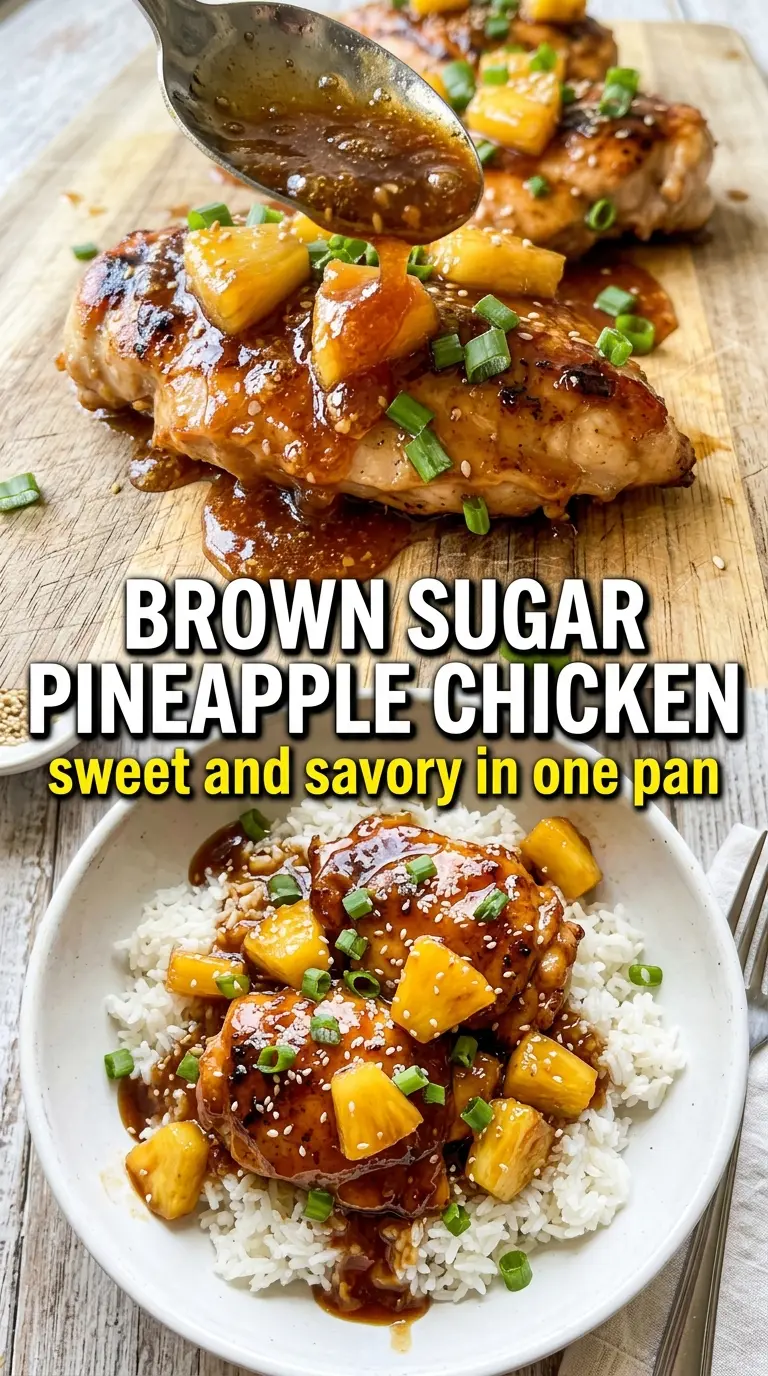
- Chicken breasts — Boneless, skinless breasts keep this fast and lean, but they need to be cooked just to 165°F and then pulled from the heat. Overcooking is the main reason they turn dry in a glaze like this. If you prefer darker meat, boneless thighs work too and stay juicier under a sticky sauce.
- Pineapple juice — This is the backbone of the glaze. Fresh or canned both work, but canned juice is often more reliable here because the flavor is consistent and usually a little sweeter. Don’t swap in pineapple syrup; it makes the sauce cloying before it ever reduces.
- Brown sugar — It helps the sauce turn glossy and sticky as it simmers. Packed brown sugar matters because the extra molasses gives the glaze a deeper color and a rounder flavor. Light or dark brown sugar both work; dark will taste a touch more caramel-like.
- Soy sauce and ketchup — These are doing the quiet work. Soy sauce adds salt and depth, while ketchup brings a little tang and body that helps the glaze feel cooked, not just sweetened juice. If you need a gluten-free version, use tamari in place of soy sauce.
- Cornstarch slurry — This is what turns the sauce from thin and pourable into a proper glaze. Mix it with cold water first, then stir it into the simmering sauce. If you dump cornstarch straight into the pan, it clumps and leaves little starchy spots behind.
- Pineapple chunks — They add texture and a burst of fruit that keeps the sauce from tasting one-note. Add them after the glaze has thickened so they warm through without breaking apart. Canned chunks work well, but drain them first if they’re packed in heavy syrup.
Getting the Chicken and Glaze to Meet at the Right Moment
Seasoning and Searing the Chicken
Pat the chicken dry before it hits the skillet, then season it well on both sides. Moisture on the surface is what blocks browning, and browning is what gives this dish its savory edge. Cook the chicken in hot olive oil until it’s deeply golden on the outside and the center reads 165°F. If the pan is crowded, the chicken will steam and the glaze won’t have the same depth later.
Reducing the Pineapple Base
Use the same skillet after the chicken comes out. Those browned bits stuck to the bottom are flavor, not mess. Whisk in the pineapple juice, brown sugar, soy sauce, ketchup, garlic, and ginger, then let it simmer until it smells less sharp and more rounded. If the sauce still tastes thin at this stage, it hasn’t reduced enough yet.
Turning It Into a True Glaze
Stir in the cornstarch slurry and keep the sauce moving as it thickens. You’re looking for a glossy sheen and a texture that coats a spoon instead of running off immediately. Add the pineapple chunks once the glaze has some body, then return the chicken to the pan and turn it in the sauce until every side is lacquered. The final two minutes in the skillet are what let the glaze settle onto the chicken instead of just sitting on top of it.
Use chicken thighs for a juicier finish
Boneless, skinless thighs hold up even better under a sticky sauce and stay tender if they go a minute long. They take about the same time to cook, but they’re more forgiving if your skillet runs hot.
Make it gluten-free without changing the texture
Swap the soy sauce for tamari or coconut aminos. Tamari gives the closest savory balance, while coconut aminos taste a little sweeter, so you may want to reduce the brown sugar by a teaspoon or two.
Cut the sweetness with extra ginger and chili
A little more fresh ginger and a pinch of red pepper flakes shift the sauce toward sweet-heat instead of straight sweet glaze. That works especially well if you’re serving it over rice and want the sauce to feel a little sharper.
Stretch it into a veggie-heavy skillet dinner
Add quick-cooking vegetables like bell peppers, snap peas, or broccoli florets after the sauce starts to thicken. They soak up the glaze without getting mushy, and the pan turns into a full dinner with one extra handful of ingredients.
Storage and Reheating
- Refrigerator: Store leftovers in an airtight container for up to 4 days. The sauce thickens as it chills, and the chicken stays best if it’s not sliced until reheating.
- Freezer: It freezes well for up to 2 months, though the pineapple pieces soften a bit after thawing. Freeze in portions with some sauce so the chicken doesn’t dry out.
- Reheating: Rewarm gently in a skillet over medium-low heat with a splash of water or pineapple juice. High heat can make the glaze tighten too fast and leave the chicken stringy.
Questions I Get Asked About This Recipe
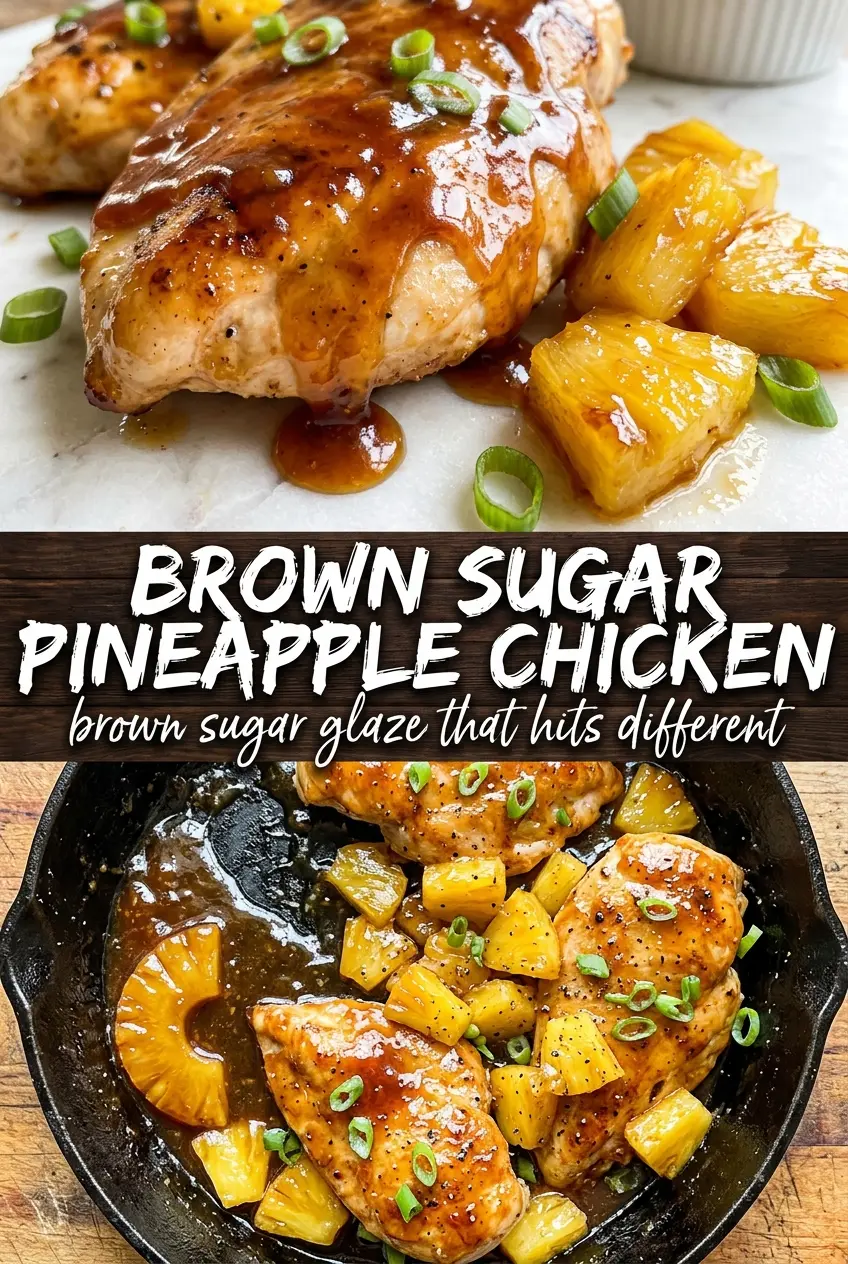
Brown Sugar Pineapple Chicken
Ingredients
Equipment
Method
- Season the chicken breasts with salt, pepper, garlic powder, and smoked paprika to taste, then sear in olive oil in a large cast iron skillet over medium-high heat for 5-6 minutes per side until golden and cooked through to 165°F; remove to a plate (leave any fond in the pan).
- Let the chicken rest off heat for 20 minutes so the seasoning can mellow and the surface dries slightly for better glaze cling.
- Whisk pineapple juice, packed brown sugar, soy sauce, ketchup, minced garlic, and grated ginger in the same skillet; bring to a simmer over medium heat, stirring until the sugar dissolves and the mixture looks amber.
- Stir in the cornstarch slurry (cornstarch mixed with water) and cook 2-3 minutes, until the sauce thickens to a glossy glaze and coats the back of a spoon.
- Add the pineapple chunks and simmer briefly so they look slightly caramelized and stay visible in the sauce.
- Return the chicken to the skillet and turn to coat in the glaze; cook 2 minutes so the edges darken and the glaze clings to the breasts.
- Garnish with sesame seeds and sliced green onions, then serve over steamed rice.