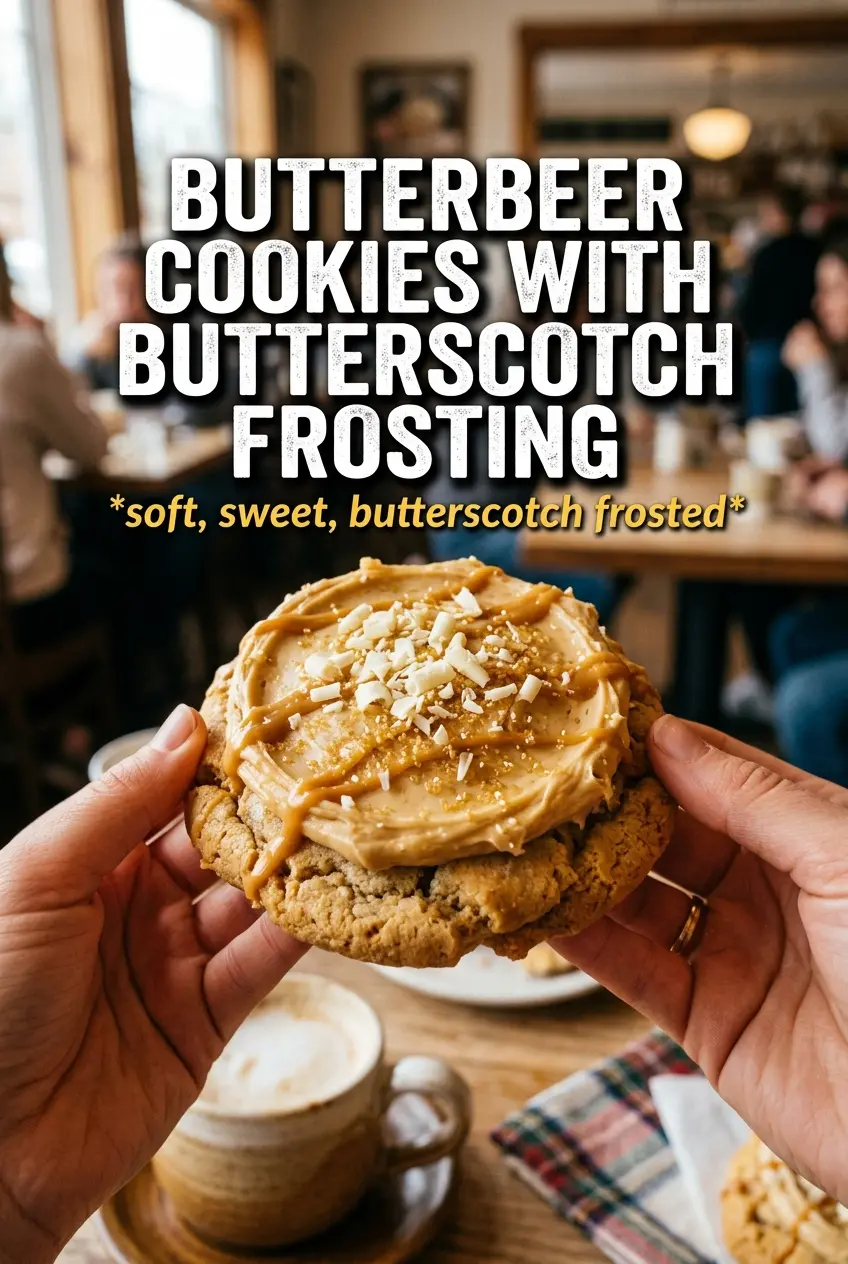
Butterbeer Cookies With Butterscotch Frosting bake up soft in the center with lightly crisp edges and that unmistakable butterscotch-caramel smell that fills the kitchen before they even come out of the oven. The cookie itself tastes like a cross between a brown sugar cookie and a classic bakery-style drop cookie, then the frosting takes it straight into over-the-top dessert territory with a creamy, sweet finish and a glossy caramel drizzle.
What makes these work is balance. The butter extract gives the dough that warm, nostalgic note without needing an actual butterbeer ingredient list, while the butterscotch chips melt into little pockets that stay distinct instead of disappearing completely. The cookies are baked just until the edges set so the centers stay soft enough to hold up under a thick layer of frosting. That slight underbake is the difference between a cookie that tastes fresh and one that dries out once it cools.
Below, I’m walking through the few details that matter most: how to keep the cookies thick, how to get the frosting smooth enough to pipe, and what to change if you want a slightly different finish.
The cookies stayed soft for days and the frosting set up enough to stack them after an hour. The butterscotch flavor came through without tasting cloying, and the caramel drizzle made them look bakery-fancy.
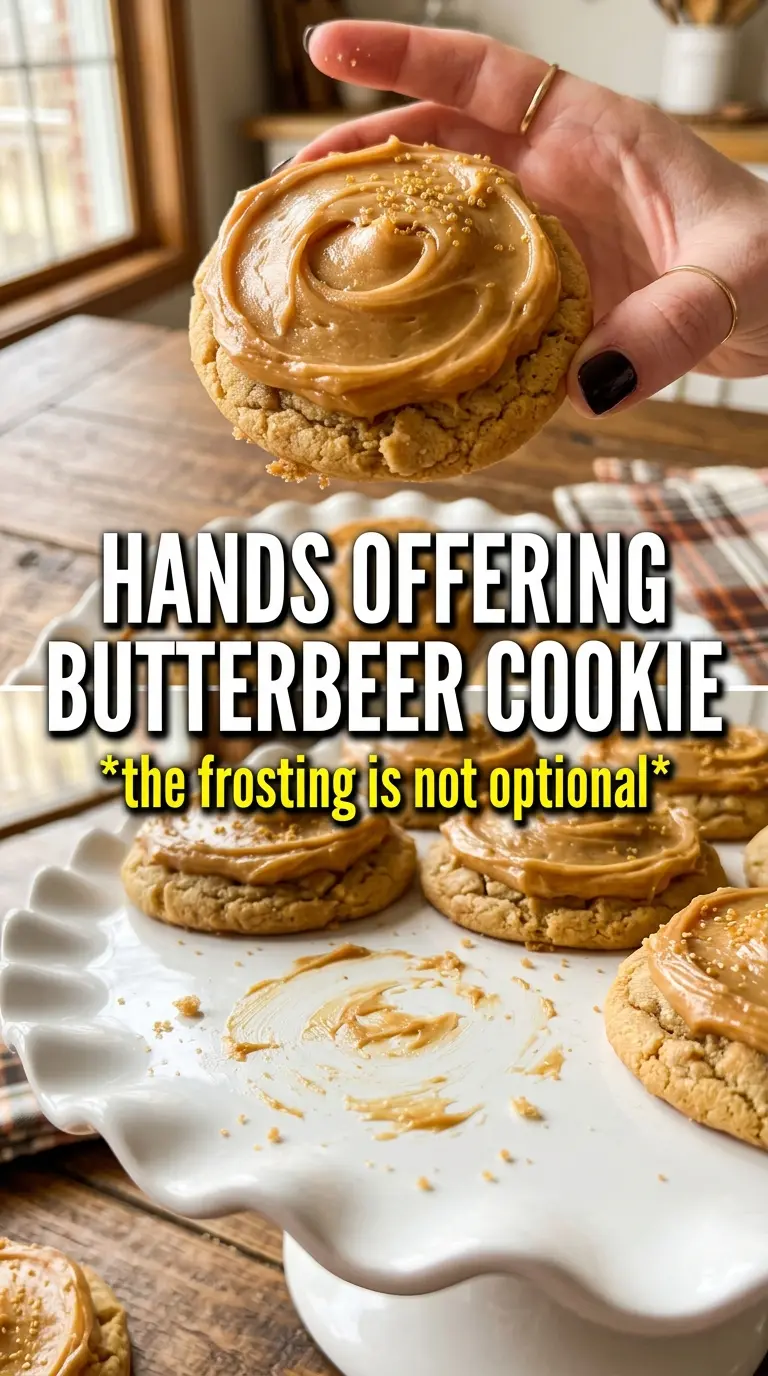
These frosted Butterbeer Cookies are the ones to pin for soft centers, butterscotch chips, and that thick caramel drizzle on top.
The Trick to Keeping the Centers Soft Under All That Frosting
The biggest mistake with a cookie like this is baking it until it looks fully set in the oven. By the time the top loses its shine and the edges turn deeply golden, it has already gone too far for a frosting-heavy cookie. Pull them when the centers still look a little puffy and underdone in the middle; they finish setting on the pan and stay tender after cooling.
Chilling the dough isn’t mandatory here, but if your kitchen is warm or your butter was extra soft, a short chill helps the cookies hold their shape. Without it, the dough can spread before the structure sets and you lose that thick, bakery-style round. Parchment also matters because it keeps the bottoms from browning too fast while the centers catch up.
- Brown sugar — This is what keeps the cookies chewy and gives them that deep caramel note. Packed brown sugar is worth measuring properly here because it builds both moisture and flavor.
- Butter extract — This is the shortcut to a butterbeer-style flavor without needing a complicated ingredient list. If you only have vanilla, the cookies still work, but they’ll taste more like a butterscotch sugar cookie than a true butterbeer version.
- Butterscotch chips — Chips give you little concentrated pockets of flavor and help the cookies feel special. Stir them in at the end so they don’t break apart and streak through the dough.
- Cream cheese — The tang is what keeps the frosting from turning into straight sugar. Don’t use cream cheese from a tub; the softer, spreadable kind makes frosting loose and harder to pipe.
What Each Part Is Doing in the Dough and Frosting
- All-purpose flour — This gives the cookie enough structure to support the frosting. Spoon and level it if you can; packed flour makes these dry and dulls the butterscotch flavor.
- Granulated sugar — A smaller amount than the brown sugar keeps the cookie from getting too dense. It also helps the edges bake with a slight crispness.
- Butterscotch sauce — This adds a smoother, silkier butterscotch flavor to the frosting than chips would. If your sauce is very thin, reduce it a little before adding it so the frosting doesn’t slide off the cookies.
- Powdered sugar — This gives the frosting its pipeable body. Add it gradually; dumping it all in at once can leave you with a cloud of sugar and a gritty texture before it’s fully mixed.
- Caramel drizzle — This is the finishing touch, not just decoration. A thin ribbon over the frosting makes the whole cookie taste more balanced and less one-note sweet.
Building the Dough, Then Stopping Before It Overbakes
Whipping the Butter and Sugars
Beat the softened butter with both sugars until the mixture looks pale and fluffy, not greasy and loose. That extra air gives the cookies a lighter bite and helps them bake up thicker. If the butter is melting around the edges of the bowl, it’s too warm and the dough will spread more than you want.
Adding the Eggs and Extracts
Mix in the eggs one at a time, then add the butter extract and butterscotch extract. The dough should look smooth and glossy at this point. If it looks curdled, keep mixing for another few seconds before adding the flour; it usually comes together.
Folding and Scooping
Stir in the flour mixture just until the last streaks disappear, then fold in the butterscotch chips. Overmixing here tightens the dough and makes the cookies less tender. Scoop 2-tablespoon portions and keep them evenly sized so they bake at the same rate, then stop the bake when the edges are golden and the centers still look slightly soft.
Cooling and Frosting
Let the cookies cool completely before frosting them or the cream cheese topping will slide right off. Beat the frosting until it’s smooth and pipe it in a generous swirl so each cookie gets enough of that tangy-sweet layer. Add the caramel drizzle last, after the frosting has a little body, or it will sink into the surface and disappear.
How to Adapt These Without Losing the Butterscotch Character
Dairy-Free Version
Use a plant-based butter that’s meant for baking in both the cookies and frosting, then swap in a dairy-free cream cheese. The texture will still be soft and pipeable, but the frosting usually tastes a little less tangy, so the butterscotch sauce matters even more for flavor.
If You Only Have Vanilla Extract
The cookies will still be good, but the flavor shifts from true butterbeer territory into a softer butterscotch-vanilla cookie. In that case, lean a little harder on the butterscotch chips and drizzle so the finished cookies don’t taste flat.
For a Thicker, More Bakery-Style Frosting
Add the powdered sugar a few tablespoons at a time until the frosting holds a pipe without slumping. If it gets too stiff, beat in a tiny splash of milk or an extra teaspoon of butterscotch sauce. The goal is a frosting that sits tall on the cookie instead of melting into the top.
Storage and Reheating
- Refrigerator: Store frosted cookies in an airtight container for up to 4 days. The frosting firms up in the fridge, but the cookies stay soft if they were baked just until set.
- Freezer: Freeze the unfrosted cookies for up to 2 months. Layer them with parchment and thaw at room temperature before frosting so the topping doesn’t weep.
- Reheating: These are best served at room temperature, not warmed. If you want to refresh unfrosted cookies, give them 5 to 8 minutes at room temp; heating frosted ones will soften the frosting and make the caramel drizzle run.
Questions I Get Asked About This Recipe
Butterbeer Cookies With Butterscotch Frosting
Ingredients
Equipment
Method
- Preheat the oven to 375F, and line baking sheets with parchment for easy release and clean edges.
- Whisk together the all-purpose flour, baking soda, and salt in a bowl until evenly combined.
- Beat the unsalted butter, brown sugar, and granulated sugar until fluffy, then beat in the eggs, butter extract or vanilla extract, and butterscotch extract.
- Fold in the flour mixture until the dough is just combined, then fold in the butterscotch chips.
- Scoop the dough into 2-tablespoon rounds and place them on the prepared baking sheets, leaving space between cookies.
- Bake at 375F for 10-12 minutes, until the edges look set and the tops turn golden.
- Cool the cookies completely so the frosting doesn’t melt.
- Beat the cream cheese, unsalted butter, butterscotch sauce, powdered sugar, and vanilla until smooth.
- Pipe a generous swirl of butterscotch frosting onto each cooled cookie.
- Drizzle caramel sauce over the cookies and top each with a butterscotch chip.