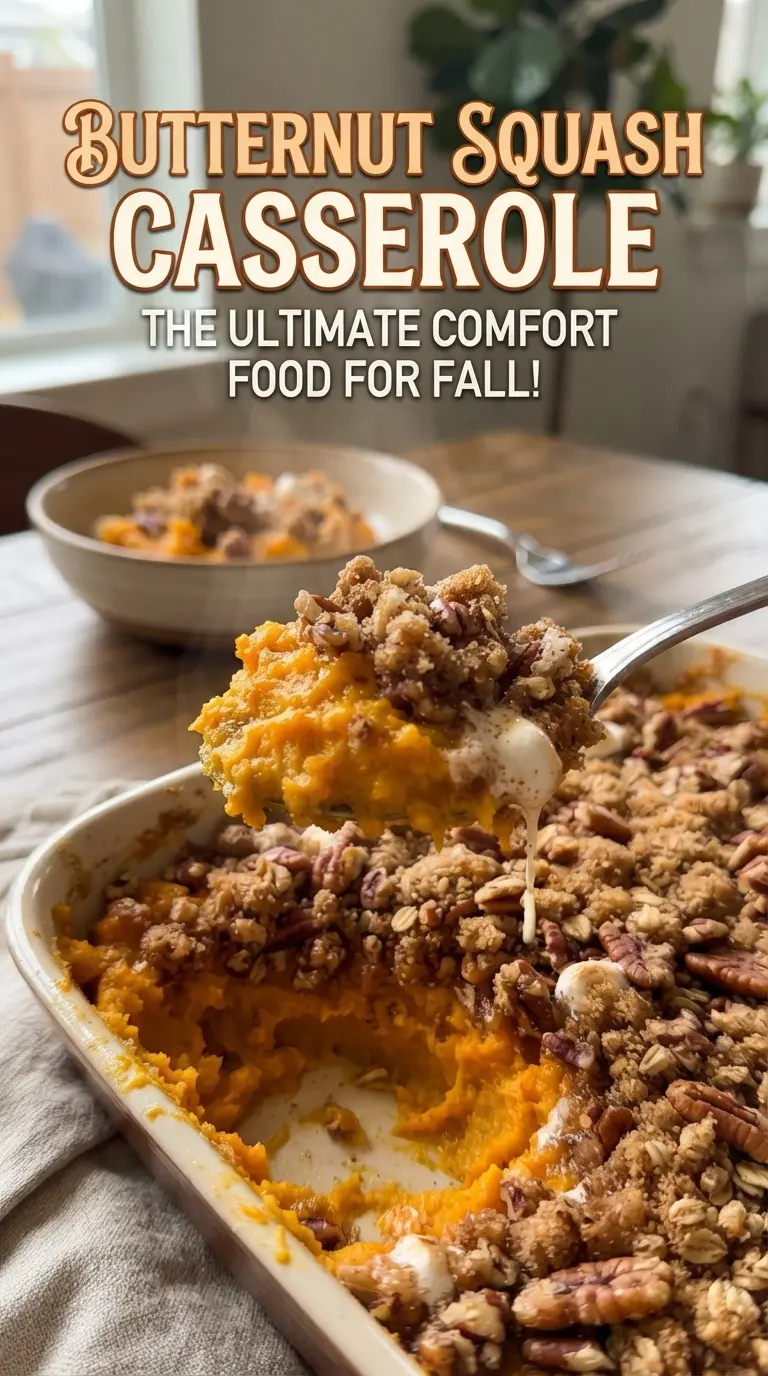
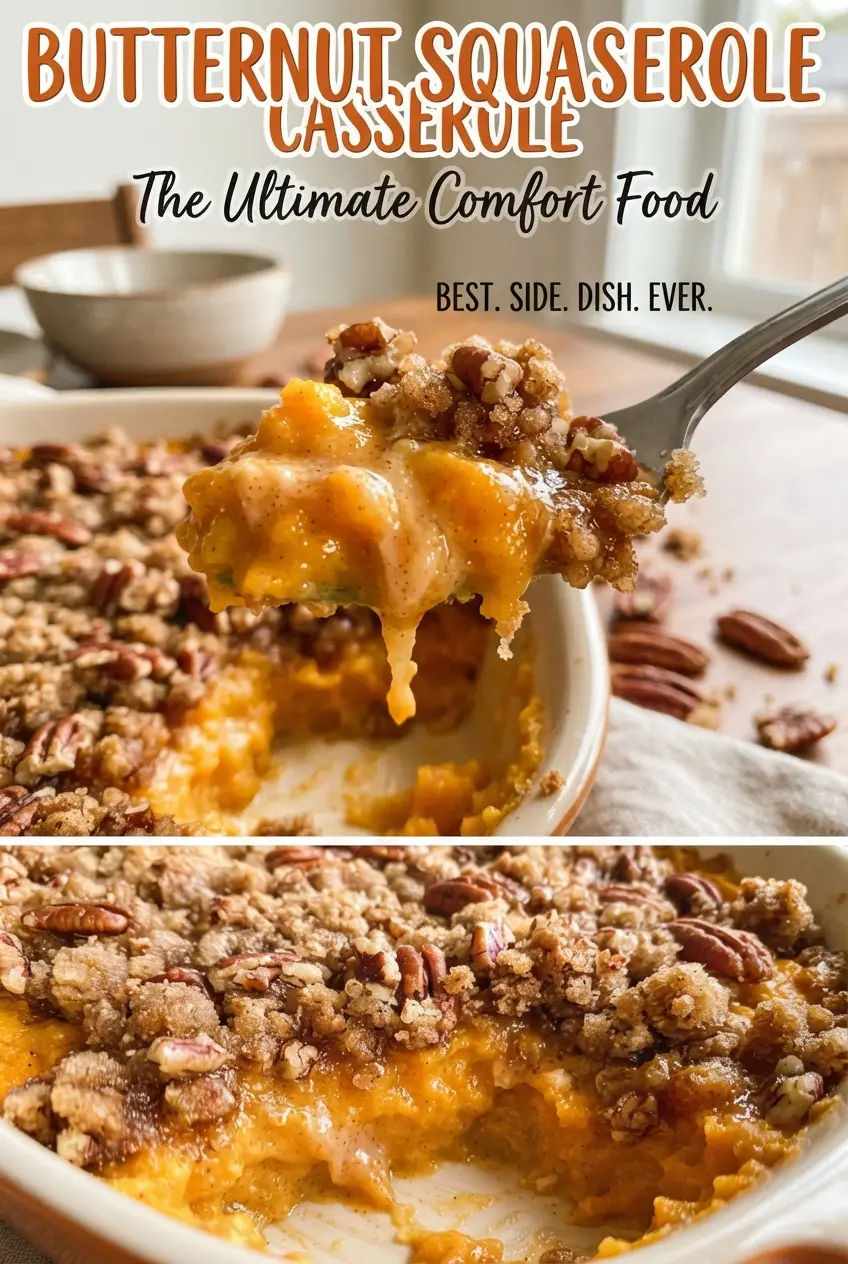
Butternut squash casserole lands on the table with the kind of contrast that keeps people going back for one more spoonful: silky, lightly sweet squash underneath and a crisp pecan topping that cracks when you dig in. It eats like a side dish, but it has the comfort and warmth of a dessert, which is exactly why it earns a spot next to roasted meats, holiday ham, or a simple weeknight chicken dinner.
The trick is in treating the squash like the star instead of a filler. Boiling it until it’s fully tender gives you a smooth base that mashes without lumps, and draining it well keeps the casserole from turning watery in the oven. The butter, brown sugar, and vanilla build a sweet-savory backbone, while the pecan streusel stays in the oven long enough to brown without drying out the squash underneath.
Below, I’ll walk through the part that matters most: how to keep the filling creamy and the topping crisp at the same time. There’s also a shortcut-style note on what to do if your squash holds more water than expected, because that’s the one thing that can throw this dish off.
The squash baked up creamy and smooth, and that pecan topping stayed crunchy even after dinner sat on the table for a bit. I’d make this again just for that texture contrast alone.
Save this butternut squash casserole for the golden pecan topping and creamy, sweet squash filling.
The Part That Keeps the Squash Creamy Instead of Watery
Butternut squash holds more moisture than people expect, and that’s where casseroles like this can go sideways. If the squash is even a little wet after boiling, the filling loosens in the oven and the topping sinks instead of sitting on a firm, creamy base. Draining it well is not a throwaway step. It’s what gives you that smooth spoonful that holds its shape when served.
The other thing that matters is how far you mash it. A few small soft bits are fine, but if you leave chunks, the eggs and milk won’t distribute evenly and the casserole bakes up patchy. You want a thick, spoonable mixture before it goes into the dish, not something pourable.
- Drain the squash thoroughly — After boiling, let it sit in the colander for a minute or two so steam escapes. Extra water turns the filling loose and mutes the sweetness.
- Mash while the squash is hot — Warm squash breaks down more smoothly and blends with the butter and sugar before the eggs go in.
- Use eggs for structure — They help the casserole set into a soft custard-like base. Skip them and the texture turns loose and spoonably soft instead of sliceable.
What Each Ingredient Is Actually Doing in This Dish
- Butternut squash — This is the base, and its natural sweetness gives the casserole its signature flavor. Fresh squash tastes best here, but you can use pre-cut squash if that’s what gets the dish made; just cook it until it’s fully tender before mashing.
- Butter — Butter carries the sweetness and helps the filling taste rich instead of flat. Melted butter also works into the topping more evenly than softened butter would.
- Brown sugar — This gives the filling a deeper caramel note than white sugar would. It also helps the topping crisp and brown. If you want to cut the sweetness, reduce it slightly, but don’t remove it entirely or the casserole loses its Southern-style character.
- Eggs — These are the glue that sets the casserole. They keep the center creamy but stable. Add them after the squash is mashed so they blend in evenly.
- Pecans — Pecans bring the crunch that makes each bite interesting. Walnuts can work in a pinch, but they taste harsher and less buttery.
- Flour — Flour is what turns the topping into streusel instead of a greasy sprinkle of nuts and sugar. If you need a gluten-free version, a measure-for-measure gluten-free flour works better than skipping it entirely.
Building the Filling and Topping So They Bake Cleanly Together
Cooking the Squash Until It Breaks Down Easily
Boil the squash until it’s very tender and a fork slides through with no resistance. If it still feels even slightly firm in the center, the mash stays grainy and the casserole won’t bake evenly. Drain it well right after cooking so the steam can escape instead of settling back into the dish.
Mixing the Base Without Beating Air Into It
Mash the squash with the butter, brown sugar, eggs, milk, vanilla, cinnamon, and salt until smooth. Stop once the mixture looks uniform; you’re not whipping cake batter here, and too much agitation can make the texture gummy. The mixture should look thick and glossy, not loose.
Making the Pecan Streusel Stay Crisp
Combine the flour, pecans, remaining butter, and remaining brown sugar until the crumbs hold together when pinched. Scatter them evenly over the top instead of pressing them down, or they’ll bake into the filling and lose their crunch. The casserole is done when the edges bubble and the top is deep golden brown.
Ways to Adjust This Without Losing the Good Part
Make It Dairy-Free
Use a plant-based butter and an unsweetened milk like oat or almond milk. The filling will still bake up creamy, but the flavor will be a little less rich, so don’t skip the vanilla and cinnamon.
Make It Gluten-Free
Swap the all-purpose flour in the topping for a 1:1 gluten-free baking blend. The topping will still brown and crisp, but it may be a little more delicate when served, so let the casserole rest for a few minutes before scooping.
Use Sweet Potato Instead
Sweet potatoes work in the same method and give you a deeper, earthier sweetness. The texture is usually a little denser than butternut squash, so add the milk slowly and stop when the mash looks creamy rather than loose.
Cut the Sweetness Back
Reduce the brown sugar in the filling slightly and keep the full amount in the topping. That keeps the casserole balanced without losing the caramelized finish that makes the top worth eating first.
Storage and Reheating
- Refrigerator: Store covered for up to 4 days. The topping softens a little in the fridge, but the filling stays creamy.
- Freezer: It freezes well if you cool it completely and wrap it tightly. Freeze before or after baking, but expect the topping to lose some crunch after thawing.
- Reheating: Warm it uncovered in a 325°F oven until heated through. The common mistake is using the microwave, which softens the pecan topping and makes the filling unevenly hot.
Questions I Get Asked About This Recipe
Butternut Squash Casserole
Ingredients
Equipment
Method
- Boil the butternut squash for 15 minutes until very tender, then drain well.
- Mash the butternut squash with 1/4 cup butter, 1/4 cup brown sugar, eggs, milk, vanilla extract, ground cinnamon, and salt until smooth.
- Spread the squash mixture into a greased 9x13-inch baking dish.
- Mix the all-purpose flour, pecans, remaining 1/4 cup butter, and remaining 1/4 cup brown sugar until you have a crumbly topping, then sprinkle it over the squash.
- Bake at 350F for 35 to 40 minutes until the topping is golden and the edges bubble.