Butternut squash goat cheese and caramelized onion quiche lands with that rare mix of comfort and polish: a crisp crust, a silky custard, sweet onions, and little pockets of tangy goat cheese that cut through the richness. The squash stays distinct instead of dissolving into the filling, so every slice gives you color, texture, and a clean savory-sweet balance.
What makes this version work is restraint. The onions are cooked until deeply golden before they ever meet the custard, which keeps their flavor sweet instead of sharp, and the squash is roasted first so it doesn’t leak water into the filling. That matters more than it sounds like it does. A watery vegetable filling turns quiche from creamy to spongy fast.
Below, I’ve added the little things that matter most: how to keep the crust from going soft, what the wobble in the center should look like, and a few smart swaps if you need to work around what’s in your kitchen.
The crust stayed crisp even with the custard, and the sweet onions with the goat cheese were such a good combination. I baked mine the full 45 minutes and it sliced cleanly after the rest.
Save this butternut squash goat cheese and caramelized onion quiche for brunches, light dinners, and make-ahead slices that reheat without going soggy.
The Reason the Custard Stays Creamy Instead of Watery
This quiche only works when the filling ingredients are dry enough to let the custard set on its own. Roasting the butternut squash first pulls out surface moisture and gives the edges a little sweetness, while caramelizing the onions cooks off their raw bite and concentrates what’s left into something jammy. If either one goes in undercooked, the filling tastes flatter and the center can turn loose.
The other thing people miss is the egg-to-dairy balance. Four eggs with cream and whole milk gives you a custard that slices cleanly but still feels soft on the tongue. More dairy sounds richer, but it can actually make the quiche slide around after baking instead of holding its shape.
- Roasted butternut squash — Roast it until the edges are lightly browned and the cubes are tender all the way through. That extra dry heat keeps the quiche from turning wet.
- Caramelized onion — The full 30 minutes matters. You want deep gold, not just softened onions, or the flavor stays one-note.
- Goat cheese — Use the real tangy crumbles here. They break into creamy pockets as the quiche bakes, which is hard to replicate with a milder cheese.
- Fresh thyme and nutmeg — Thyme brings the savory edge; nutmeg quietly ties the custard together without making it taste spiced.
What Each Ingredient Is Actually Doing in the Filling
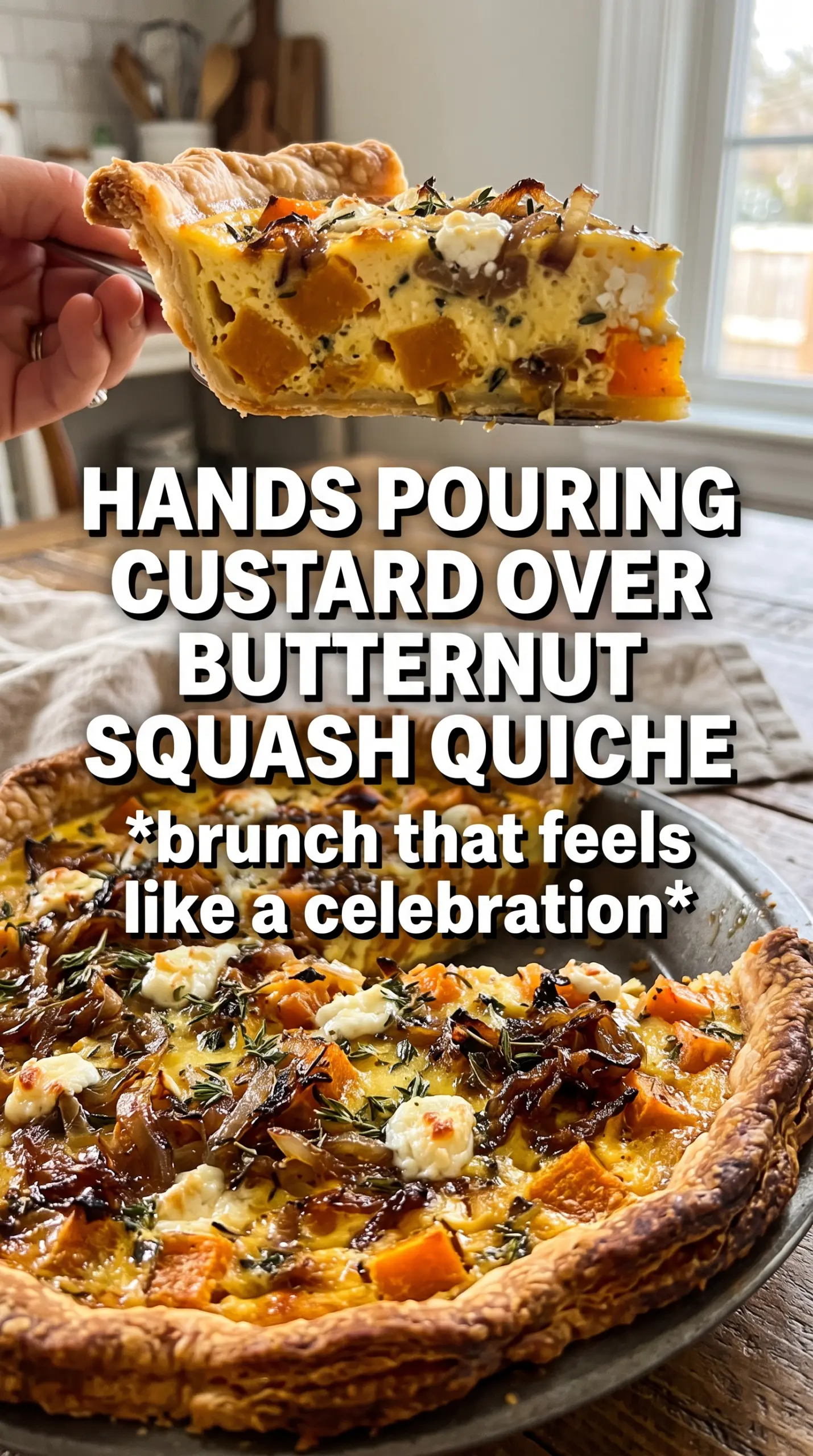
- Pie crust — A blind bake gives you a head start so the bottom stays crisp under the custard. Homemade crust works beautifully, but a good pre-made one is a solid shortcut here.
- Butternut squash — Fresh roasted squash gives the best texture. Frozen can work in a pinch, but thaw it completely and blot it dry or the filling can loosen.
- Onion — Yellow onions caramelize best because they turn sweet and mellow without falling apart too quickly. Red onion will work, but the flavor is sharper and the color can bleed into the custard.
- Goat cheese — Use a crumbly chèvre, not a spreadable log. The firmer texture keeps the cheese in distinct pockets instead of melting away completely.
- Cream and milk — Heavy cream brings body, and the milk keeps the custard from feeling heavy. Using all cream makes the texture denser; using all milk makes it less plush.
Building the Quiche So the Bottom Stays Crisp
Blind Bake the Crust First
Fit the crust into the tart or pie pan, press it gently into the corners, and blind bake until it looks dry and just barely set. You’re not trying to color it deeply at this stage; you’re building a barrier between the pastry and the custard. If the crust puffs up, prick it lightly or weigh it down with pie weights so the base stays flat.
Cook the Onion Until It Turns Sweet
Put the sliced onion in butter over medium-low heat and give it time. It should soften first, then slowly turn translucent, then golden brown with a sticky, jammy look. If the heat is too high, the outside burns before the inside sweetens, and that sharp edge carries straight into the quiche.
Assemble Without Packing the Filling
Scatter the squash and onions over the crust in an even layer, then crumble the goat cheese across the top. Don’t press the filling down. You want the custard to flow around the vegetables and cheese so every slice holds together without becoming dense.
Bake Until the Center Still Shivers
Pour in the custard and bake until the edges are set and the center has a small, soft wobble when you nudge the pan. If the whole middle looks firm in the oven, it’s already overbaked. The quiche keeps cooking as it rests, and that 10-minute pause is what turns a loose center into a clean slice.
Make It Gluten-Free Without Losing the Structure
Use a gluten-free pie crust that bakes up sturdy enough to hold custard. The filling itself is already gluten-free, so the only real job is choosing a crust that can stand up to a wet custard without getting sandy or fragile.
Swap the Goat Cheese for Something Milder
Feta gives a saltier, firmer bite, and ricotta gives a softer, less tangy finish. Both work, but neither has the same bright tang that makes goat cheese stand out against the sweet squash and onions.
Use Half-and-Half for a Lighter Custard
Half-and-half will bake into a softer filling and shave off some richness. It works, but the slices won’t feel quite as plush, and the quiche may need a few extra minutes in the oven to set.
Storage and Reheating
- Refrigerator: Store covered for up to 4 days. The crust softens a little, but the flavor stays excellent.
- Freezer: Freeze baked slices wrapped tightly, then thaw overnight in the fridge. The texture is best if you freeze individual slices instead of the whole quiche.
- Reheating: Warm slices in a 325F oven until heated through. Microwaving works in a pinch, but it softens the crust fast and can turn the custard rubbery.
Answers to the Questions Worth Asking
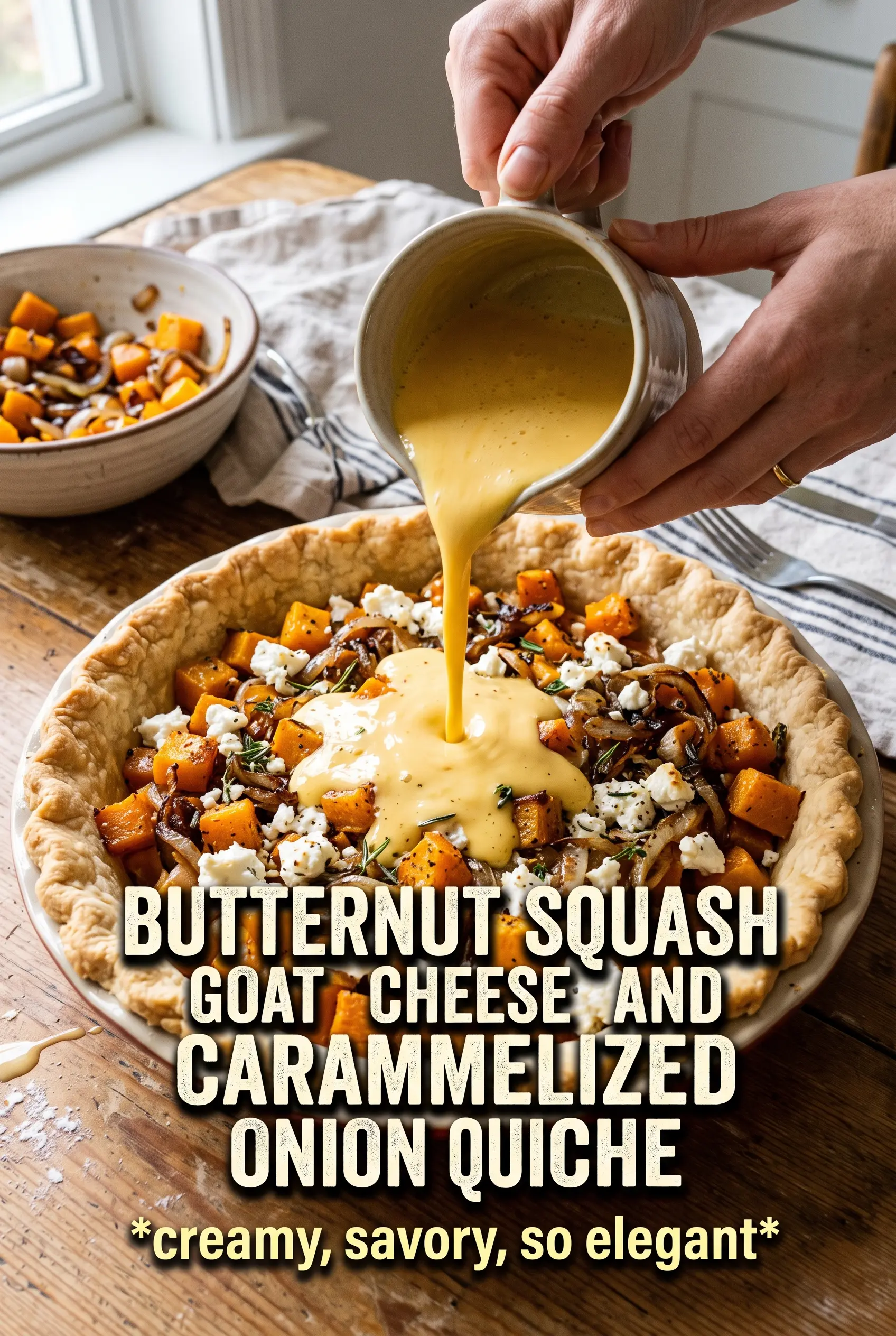
Butternut Squash Goat Cheese And Caramelized Onion Quiche
Ingredients
Equipment
Method
- Preheat the oven to 375°F, fit the crust into a 9-inch tart or pie pan, and blind bake for 12 minutes until the edges look set and lightly dry.
- Roast the cubed butternut squash at 425°F until tender, then set aside so it won’t steam the custard later.
- Caramelize the thinly sliced onion in 1 tablespoon unsalted butter over medium-low heat for 30 minutes, stirring until golden and sweet.
- Whisk the eggs, heavy cream, whole milk, fresh thyme, nutmeg, salt, and black pepper until smooth and evenly combined.
- Scatter the caramelized onions and roasted butternut squash over the blind-baked crust in an even layer.
- Crumble the goat cheese evenly over the filling so it disperses throughout each slice.
- Pour the custard over everything and bake at 375°F for 40–45 minutes until the center is just set with a slight wobble when the pan is gently moved.
- Rest the quiche for 10 minutes before slicing so the custard finishes setting and holds its shape.