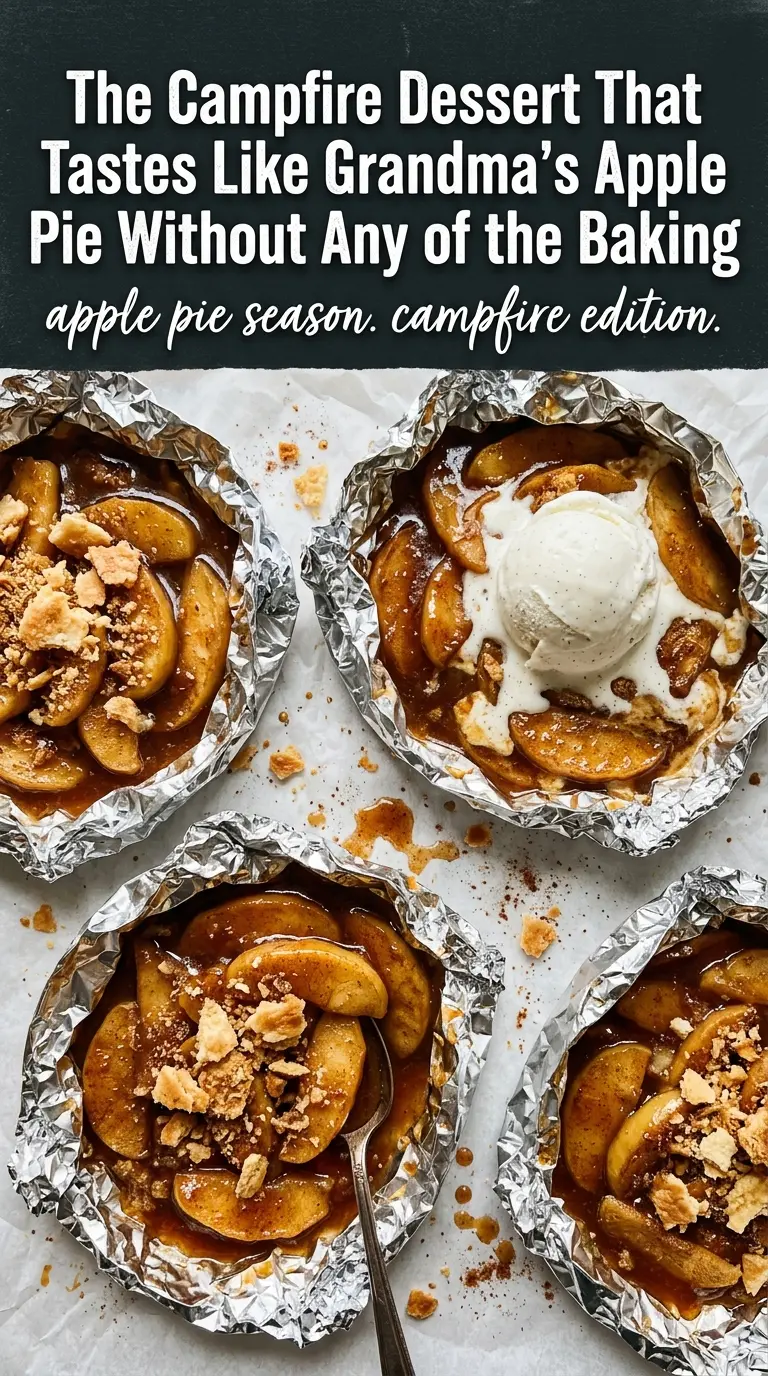
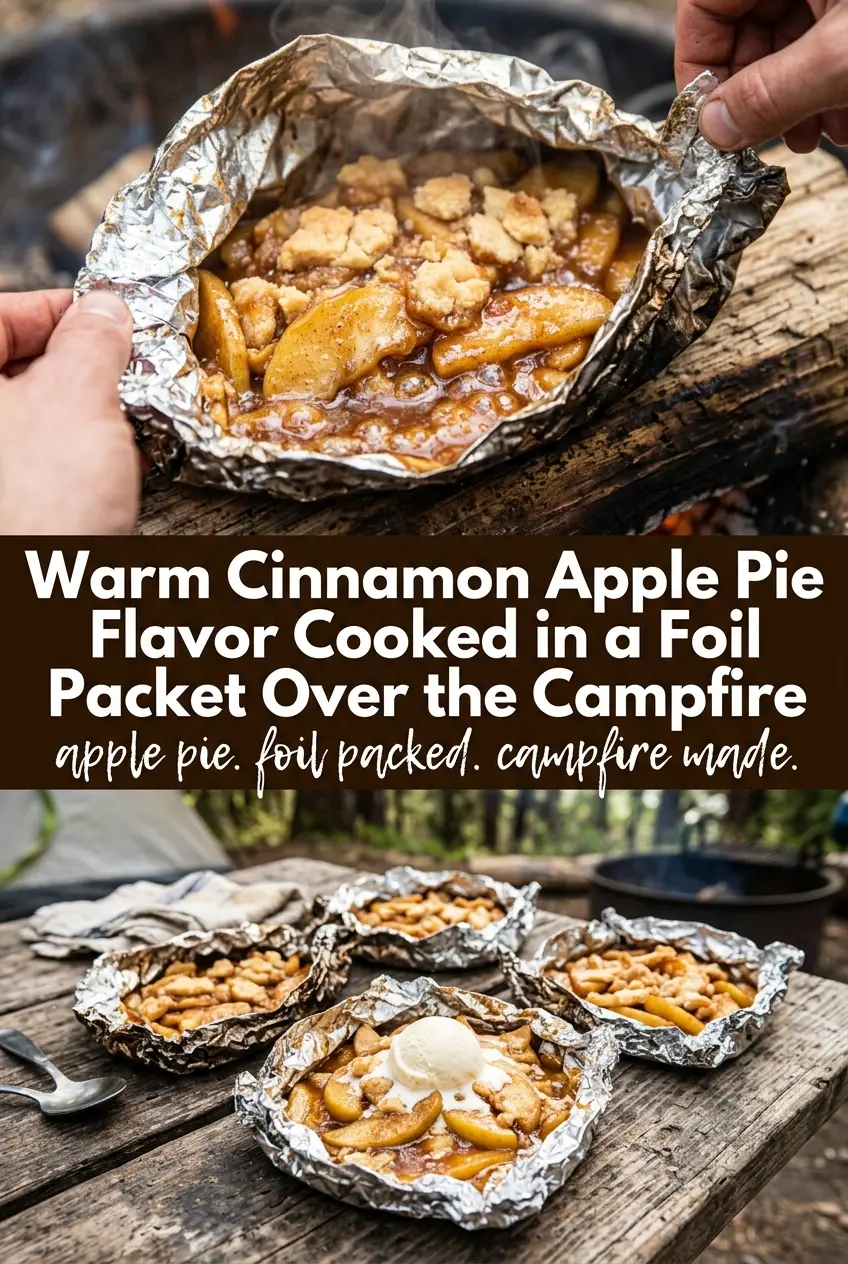
Campfire Apple Pie Packets hit the sweet spot between nostalgia and zero-fuss cooking. The apples steam inside the foil until they turn tender and syrupy, the cinnamon and nutmeg bloom into the juices, and the graham cracker topping softens just enough to taste like a quick pie crust without any rolling or chilling. Open one at the table or beside the fire and you get all the comfort of apple pie with a fraction of the cleanup.
This version works because the fruit is tucked into heavy-duty foil with butter and sugar, which traps heat and moisture while the apples cook evenly. Slicing the apples before they go on the foil keeps the packets reliable over a campfire grate, where heat is never perfectly even. The graham cracker crumbs go on top, so they absorb a little steam and turn into a buttery, crumbly topping instead of staying dry and sandy.
Below you’ll find the small details that keep the packets from leaking, the apple choices that hold their shape best, and a few easy swaps if you’re cooking at home instead of over a fire.
The apples came out tender but not mushy, and the graham cracker topping soaked up just enough juice to taste like a shortcut pie crust. We made these after dinner and everyone asked for a second packet.
Campfire Apple Pie Packets are the kind of foil dessert that disappears fast, especially with that warm cinnamon-apple filling and graham cracker topping.
The Part That Keeps the Apples Tender Instead of Watery
The biggest mistake with foil packet desserts is loading them with too much liquid or sealing them too loosely. Apples give off a lot of juice as they cook, and that juice needs to stay inside the packet long enough to soften the fruit and dissolve the sugar into a light syrup. If the foil is thin or the seam is loose, the juices leak out and the apples end up dry on top and half-steamed at the bottom.
Heavy-duty foil matters here because the packets sit directly over active heat, and ordinary foil tears too easily when you open and turn them. The other piece that matters is the cut on the apples. Thin, even slices cook through before the graham crumbs burn, while thick chunks can stay firm even after the topping is browned. You want the apples tender enough to yield with a spoon but still holding their shape.
- Heavy-duty aluminum foil — This is not the place to use the flimsy box foil. The thicker foil holds its seal better and gives you a little insurance against tearing when the packets are moved or opened.
- Apples — A firm, slightly tart apple like Granny Smith or Honeycrisp gives the best balance. Softer apples work, but they break down faster and can go mushy before the crumbs have had time to toast.
- Brown sugar — It melts into the apple juices and builds the syrupy filling. White sugar works in a pinch, but you lose that deeper caramel note.
- Graham cracker crumbs — These act like a shortcut crust. They won’t stay crisp the way a baked pie shell would, but they do add body, sweetness, and that pie-like finish once they absorb a little steam.
What Each Ingredient Is Actually Doing in Cooked Apples
- Apples (firm varieties, not mushy ones) — Granny Smith or Honeycrisp stay firm when cooked. Softer apples turn to mush.
- Sugar (moderate amount, not excess) — Sugar draws liquid from the apples. Too much sugar makes them watery; too little makes them taste bland.
- Spices (cinnamon, nutmeg, clove) — Warm spices complement apples and add depth. They should taste integrated, not overpowering.
- Acid (lemon juice prevents browning and adds brightness) — Lemon juice keeps the apples from oxidizing and turning brown. It also balances the sweetness.
- Butter (optional but adds richness) — A small amount of butter makes the apples taste richer without heaviness.
- Gentle heat (medium, not high) — High heat breaks down the apples too quickly. Medium heat cooks them through while maintaining structure.
- Covered cooking (traps steam, not water) — A lid or foil keeps moisture in without letting excess liquid accumulate. Uncover toward the end to evaporate excess liquid.
- Stirring occasionally (so they cook evenly) — Gentle stirring distributes heat evenly. Too much stirring breaks the apples apart.
Building the Packet So Nothing Leaks and Nothing Stays Crunchy
Dividing the Apples Evenly
Spread the sliced apples across four sheets of foil so each packet cooks at the same rate. If one packet is overloaded, the center stays firm while the edges collapse. Keep the slices in a loose mound rather than flattening them out; that little bit of height helps the steam circulate and cook the fruit evenly.
Layering the Butter and Spices
Sprinkle the sugar, cinnamon, and nutmeg directly over the apples, then tuck the butter on top in small pieces. The butter melts down through the fruit and helps the sugar turn into a glossy sauce. If you mix everything too aggressively before sealing, the sugar can collect in one spot and scorch where it touches the foil.
Sealing for Gentle Steam
Fold each packet tightly so the seams are secure but leave a little air space inside. That trapped steam is what softens the apples and carries the spice through the filling. If the packet is wrapped too tightly against the fruit, the apples can steam unevenly and the topping loses that soft, crumbly texture.
Cooking Over the Grate
Set the packets over medium campfire heat and let them cook for 12 to 15 minutes. You want the foil puffed and hot, with the apples tender when you open one and test it with a fork. If the fire is running hot, move the packets to the cooler edge; a roaring flame can burn the crumbs before the apples finish.
Opening and Serving
Let the packets rest for five minutes before opening them. The steam inside is intense, and that short rest keeps the filling from rushing out the moment you peel back the foil. Spoon the apples into bowls or serve them straight from the packet with vanilla ice cream, which melts into the sauce and turns the whole thing into instant apple pie sundae territory.
How to Adapt These Foil Apple Packets for Different Fires and Kitchens
Make Them Dairy-Free
Swap the butter for a plant-based butter that melts cleanly. Coconut oil also works, but it adds its own flavor and can make the filling feel a little richer and less pie-like. The foil packet method still works the same way because the heat is doing the real cooking.
Use a Different Apple Texture
For firmer slices, choose Granny Smith or Pink Lady. For a softer, sweeter filling, use Gala or Fuji, but shorten the cook time slightly so they don’t collapse into applesauce. The more tender the apple, the more important it is to check early.
Bake Them at Home Instead of Over a Fire
Set the sealed packets on a baking sheet and bake at 400°F for about 15 to 18 minutes. Oven heat is steadier than campfire heat, so the apples cook more evenly and the crumbs toast a little more gently. Open carefully because the steam will still be hot.
Make It a Little More Pie-Like
Add a pinch of salt and a tablespoon of chopped walnuts or pecans to the graham crumbs. The salt sharpens the apple flavor, and the nuts add a little crunch that survives the steam better than a true crust would.
Storage and Reheating
- Refrigerator: Store leftovers in an airtight container for up to 3 days. The crumbs soften more as they sit, but the flavor stays good.
- Freezer: I don’t recommend freezing these. The apples turn watery when thawed and the topping loses its texture.
- Reheating: Warm the filling in a skillet over low heat or in a 300°F oven until hot. Microwaving works, but it can make the apples limp and the topping gummy.
Questions I Get Asked About This Recipe
Campfire Apple Pie Packets
Ingredients
Equipment
Method
- Divide the peeled and sliced large apples among 4 heavy-duty aluminum foil sheets, spreading them into an even layer. The foil should be laid flat and ready to fold so the apples sit centered for even cooking.
- Sprinkle each packet with brown sugar, cinnamon, and nutmeg, distributing the spices evenly over the apple slices. You should see a dry, speckled coating across the fruit.
- Dot each packet with 1 tablespoon butter on top of the apples. Aim for small pieces so they melt and help form a glossy caramel as the fruit cooks.
- Sprinkle graham cracker crumbs over the apples in each packet. The crumbs should cover the surface so they turn into a lightly crisp topping in the steam.
- Fold the foil into sealed packets and crimp the edges tightly to prevent leaks. The packets should feel firm and fully enclosed with no gaps along the seams.
- Place the packets on the campfire grate over medium heat for 12-15 minutes until the apples are tender. Look for softened apples when you carefully peek by pulling back the foil slightly with heat-safe gloves.
- Let the packets cool for 5 minutes to set the topping and make opening safer. You’ll want the steam to subside so the foil can be opened without splashing.
- Open the packets carefully and serve the cinnamon apples immediately with vanilla ice cream. The opened packet should look steaming hot with caramelized juices and a crumb-topped surface.