Campfire baked beans land on the plate thick, smoky, and glossy, with sweet edges from the brown sugar and just enough tang to keep each bite from feeling heavy. The beans simmer down into a spoon-coating side dish that holds its own next to burgers, ribs, or anything else coming off the grill. Bacon gives the pot a salty backbone, but the real payoff is the sauce that clings instead of pooling at the bottom.
This version works because the flavor is built from pantry ingredients that know how to behave over open heat. BBQ sauce and ketchup bring sweetness and body, while mustard and Worcestershire keep the pot from tasting flat. The onions soften as the beans simmer, and the uncovered cook time matters here — that’s what lets the sauce tighten into something rich instead of watery.
Below you’ll find the one timing cue that keeps campfire beans from turning soupy, plus a few smart swaps for making them work over a fire, on a grill, or in the oven when the weather doesn’t cooperate.
The beans thickened up perfectly over the fire, and the bacon stayed crisp enough to hold its texture instead of disappearing into the sauce. We served them with hot dogs and everyone went back for seconds.
Save these smoky campfire baked beans for your next cookout when you want a thick, bacon-studded side that simmers down fast.
The Part That Keeps Campfire Beans Thick Instead of Watery
The mistake people make with campfire beans is treating the pot like a slow cooker. Open-fire cooking moves fast at the edges and slower in the middle, so if you cover the pot the whole time, the steam has nowhere to go and the sauce stays thin. Uncovered simmering lets the excess moisture cook off while the sugars and ketchup concentrate into a sticky glaze around the beans.
Stirring matters, but not too often. You want to move the beans enough to keep the bottom from scorching on the Dutch oven, especially once the sauce starts to tighten, but constant stirring breaks up the beans and cools the pot down. A steady bubble around the edges is the cue to watch for — not a hard boil, just enough heat to reduce the sauce evenly.
What Each Ingredient Is Actually Doing in the Pot
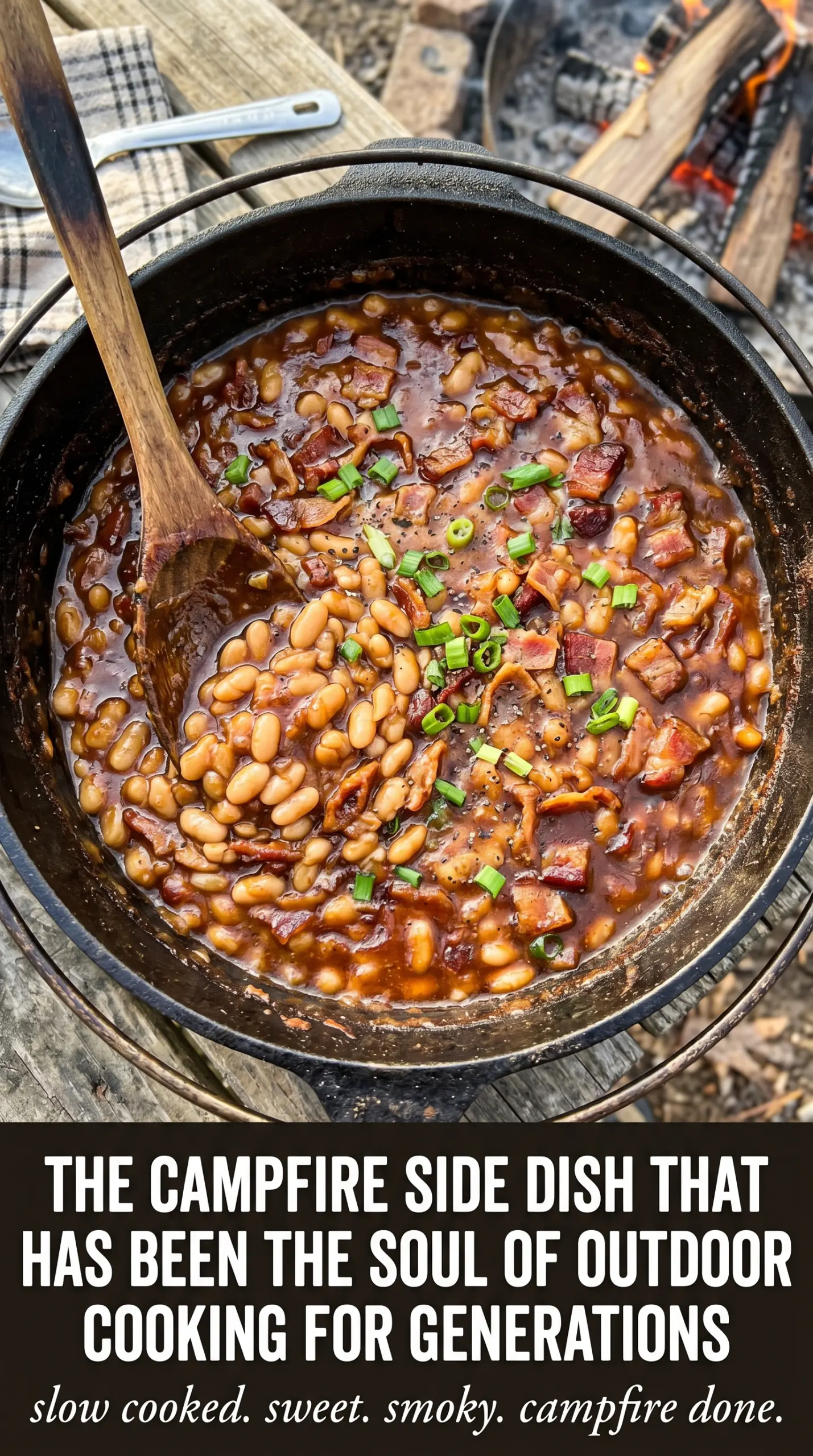
- Baked beans — Canned baked beans already come seasoned and sauced, which gives you a head start over plain beans. The best version here is a classic baked bean base, not a flavored one with maple or extra spice, because you’re building your own sauce on top.
- Bacon — Cook it first so it stays crisp enough to stand out in the finished dish. If you add raw bacon to the pot, it can render unevenly and leave the beans greasy before the sauce has a chance to thicken.
- BBQ sauce — This adds smoke, sweetness, and body all at once. Use one you like on its own, because a thin or overly sharp sauce will show up once the beans reduce.
- Brown sugar — This deepens the sweetness and helps the glaze get that glossy campfire look. If you skip it, the beans still work, but they taste flatter and less rounded.
- Ketchup — Ketchup brings tomato richness and helps the sauce cling. It also gives the pot a little acidity so the beans don’t end up tasting like straight brown sugar.
- Onion — Dice it small so it softens in time and blends into the sauce instead of staying crunchy. Yellow onion works best here because it turns mellow as it cooks.
- Mustard and Worcestershire sauce — These are the quiet ingredients that keep the dish from tasting one-note. Mustard sharpens the sweetness, and Worcestershire adds savory depth that tastes like it cooked longer than it did.
Building the Pot So the Beans Cook Down Evenly
Starting with the Full Pot
Combine everything in a Dutch oven or heavy pot before it hits the fire. That gives the sauce a chance to coat the beans evenly from the beginning, instead of leaving pockets of plain ketchup or dry sugar at the bottom. A heavy pot matters here because thin cookware scorches fast over live heat and leaves you with a burnt ring before the beans have thickened.
Finding the Right Simmer
Set the pot over the campfire and bring it to a gentle simmer, not a rolling boil. You want small bubbles breaking around the edges and the occasional bubble in the center. If the fire is too hot, pull the pot slightly off the direct heat or raise it on the grate; aggressive heat will dry out the sauce before the onions soften.
Letting the Sauce Tighten
Cook uncovered for 25 to 30 minutes, stirring every few minutes so the bottom doesn’t catch. The beans are done when the sauce looks glossy and coats a spoon, and the onion pieces have gone soft enough to disappear into the pot. If it still looks loose after 30 minutes, keep cooking for a few more minutes rather than cranking up the heat.
How to Change These Beans for the Fire You Have
Make Them on the Grill Instead of Over the Campfire
Set the Dutch oven over indirect heat on a grill and keep the lid partially on at first if the fire is running hot. You’ll get more even heat and less chance of scorching, with a finish that’s almost identical to campfire cooking.
Skip the Bacon for a Vegetarian Side
Leave out the bacon and add a teaspoon of smoked paprika or a splash of liquid smoke if you want that outdoor-cooked depth to stick around. The beans will be a little cleaner and less salty, so taste before serving and adjust with a pinch more mustard or Worcestershire-style seasoning if needed.
Use Turkey Bacon or Pancetta for a Different Finish
Turkey bacon gives you less rendered fat and a leaner result, while pancetta brings a saltier, more savory edge. Either swap works, but both will taste a little less smoky than regular bacon, so the BBQ sauce matters even more.
Storage and Reheating
- Refrigerator: Store leftovers in an airtight container for up to 4 days. The sauce thickens as it chills, so expect a firmer texture the next day.
- Freezer: These freeze well for up to 2 months. Cool completely first, then pack into freezer-safe containers and leave a little room for expansion.
- Reheating: Warm gently on the stovetop over low heat or in the microwave in short bursts, stirring between each one. Add a splash of water or extra BBQ sauce if the beans look too tight; blasting them with high heat is how the sugars scorch before the center warms through.
Answers to the Questions Worth Asking
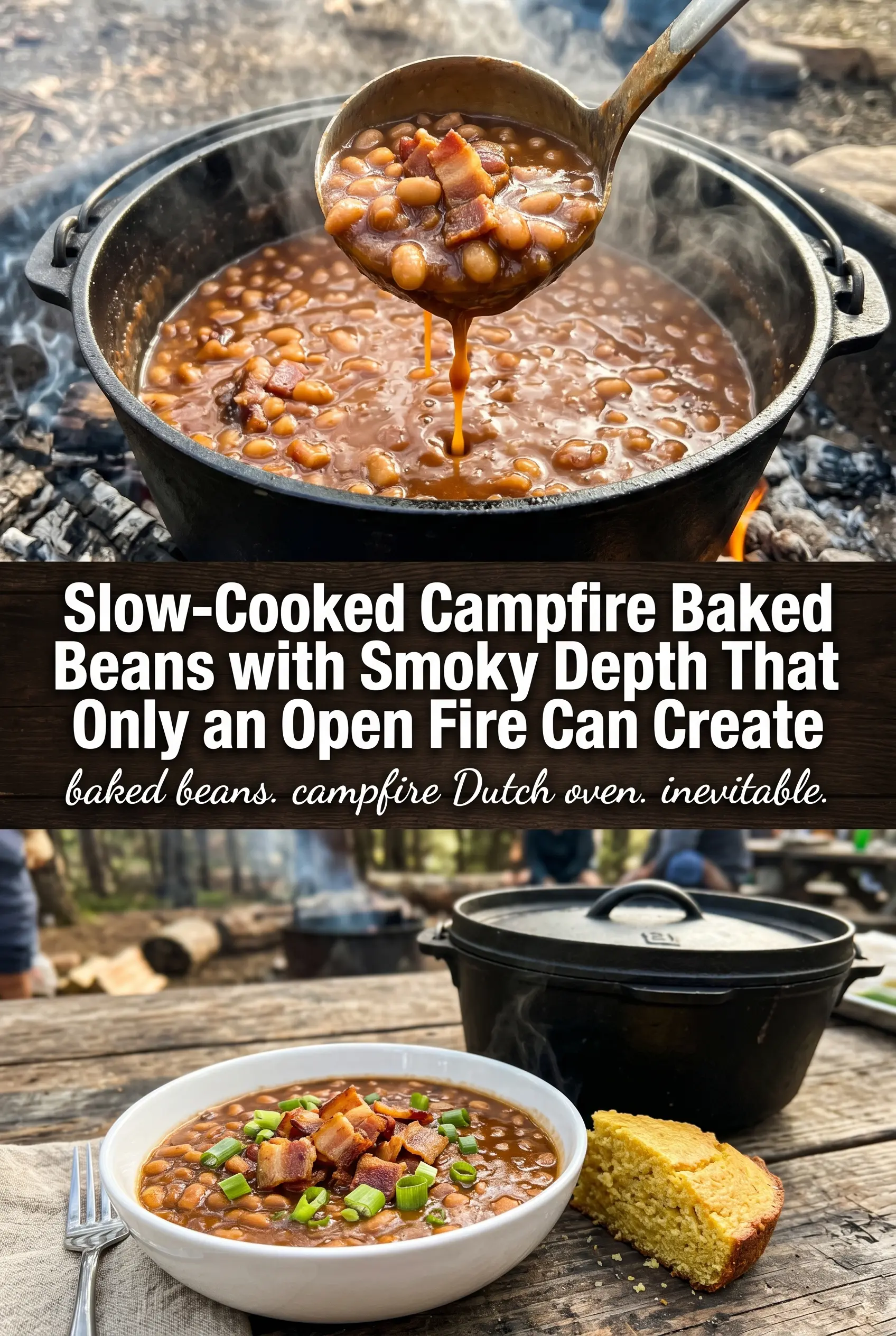
Campfire Baked Beans
Ingredients
Equipment
Method
- Add the baked beans, bacon, BBQ sauce, brown sugar, ketchup, onion, mustard, and Worcestershire sauce to a Dutch oven or large pot and stir to combine.
- Set the Dutch oven over the campfire and bring the mixture to a steady simmer with active bubbling around the edges.
- Cook uncovered for 25-30 minutes, stirring occasionally, until the beans are thickened and bubbly across the surface.
- Spoon the campfire baked beans into serving dishes and serve hot as a side dish with bubbling texture still visible.