Campfire cheeseburger hobo packets bring the best parts of a burger night into one tidy foil bundle: juicy beef, soft potatoes, sweet onion, melted cheddar, and just enough ketchup and mustard to make it taste like a cheeseburger without needing a grill spatula or a stack of dishes. When the packets come off the heat, the potatoes are tender, the beef stays moist, and the cheese melts right over the top instead of sliding off the side.
The trick here is building the packet in the right order. Potatoes go on the bottom because they need the most time and direct heat, and slicing them thin keeps everything cooking evenly. The patties are formed thin on purpose, which helps them finish at the same time as the vegetables instead of leaving you with crunchy potatoes and overcooked beef. Heavy-duty foil matters here too, because thin foil tears easily once the juices and steam start moving around.
Below, I’ve added the little details that make these packets work at the fire, plus a few smart ways to swap ingredients if you need to work with what’s on hand.
The potatoes came out tender, the burger stayed juicy, and the cheese melted perfectly after I opened the packets at the end. My kids ate theirs straight from the foil and asked for them again the next night.
Save these campfire cheeseburger hobo packets for a no-mess cookout dinner with tender potatoes and melted cheddar.
The Reason the Potatoes Go Under the Burger
This recipe works because the potatoes sit closest to the heat and catch every bit of steam and dripping fat as the packet cooks. If you put the beef on the bottom, the meat can overcook before the potatoes soften. The foil packet turns into a little steam chamber, and that’s what carries the potatoes from raw slices to tender without drying out the burger.
The other thing that matters is thickness. Thin potato slices cook fast enough to match a small, thin patty, and sliced onion adds moisture without making the packet soupy. If your potatoes are cut too thick, they’ll still feel firm when the beef is done. That’s the most common failure point with foil dinners, and it’s the easiest one to avoid.
- Thin-sliced potatoes — These need to be sliced evenly, or some pieces will soften while others stay crunchy. A mandoline works well if you have one, but a sharp knife is enough if you keep the slices close in size.
- Ground beef formed into thin patties — Thin patties help the beef finish at the same time as the vegetables. Thick burgers are better for a grill, not a foil packet.
- Heavy-duty foil — This is one place where the sturdier foil is worth it. Regular foil tears more easily when you flip the packets or open them for the cheese finish.
- Cheddar cheese — Sharp cheddar gives the most burger-like bite. Mild cheddar melts fine, but the flavor fades behind the ketchup and mustard.
What Each Layer Is Doing Inside the Packet
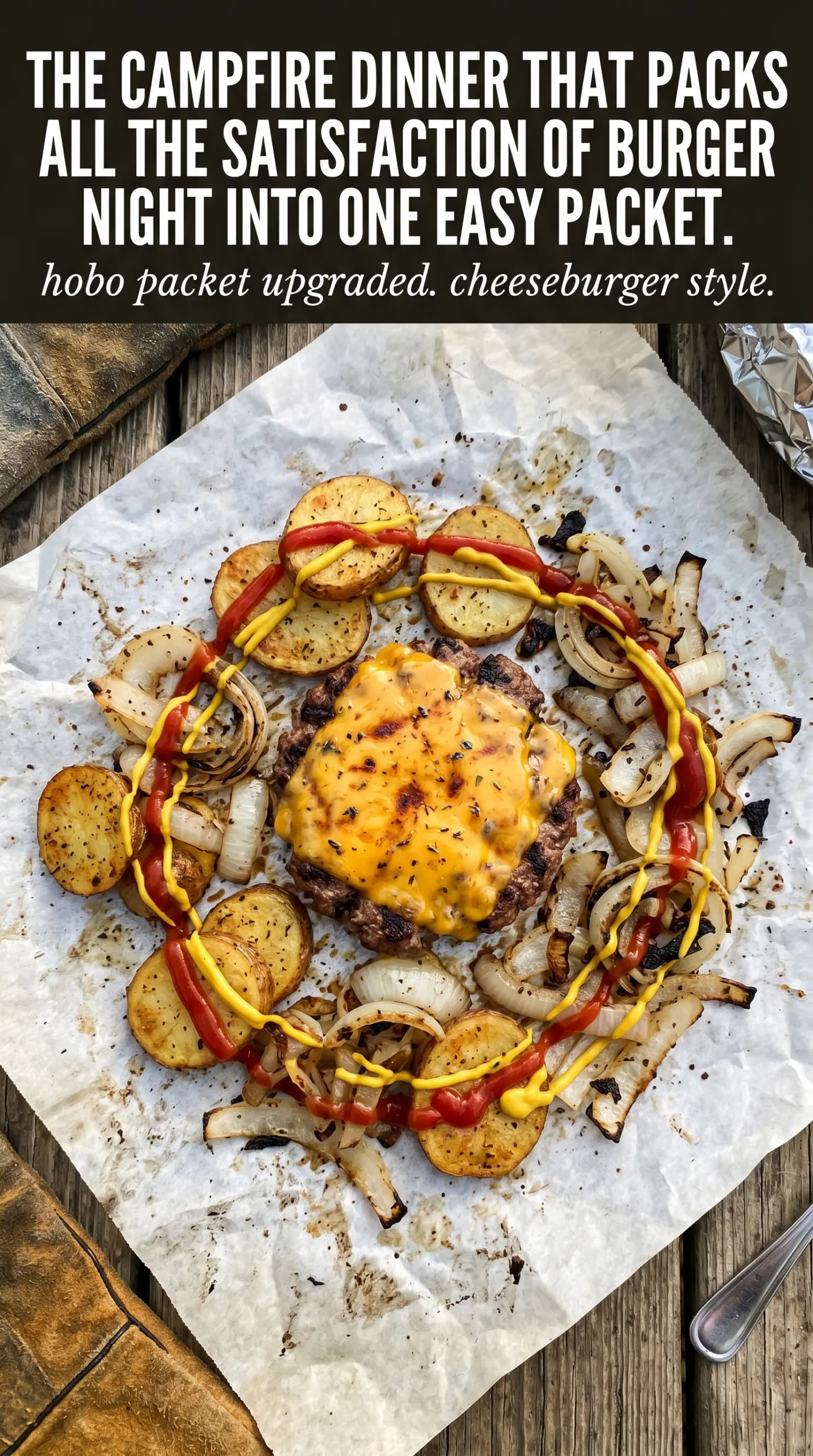
The ketchup and mustard aren’t just there for nostalgia. They season the beef, add a little tang, and keep the finished packet tasting like a cheeseburger instead of plain meat and potatoes. Tomato slices bring freshness, but they also release juice, so tuck them on top of the patty rather than burying them under the potatoes where they can water things down.
If you use lean beef, the packet can taste a little drier, so don’t skip the onions or the final cheese melt. The onions soften and give you a little built-in moisture, and the cheese helps bind everything together at the end. That last brief reseal after adding the cheese is worth the extra minute because the trapped heat melts the slice without overcooking the meat.
Building the Packet So Everything Finishes at the Same Time
Layer the vegetables first
Start with the potatoes and onions on each sheet of foil, keeping them in a single even layer as much as possible. That lets the heat reach the potatoes instead of trapping them under a dense pile. If the slices are stacked too thickly, the centers can stay firm while the edges go soft, so spread them out before anything else goes on top.
Shape the burgers thin
Form the ground beef into four thin patties and season them with salt and pepper. Pressing them thinner than a typical burger is the whole point here, because they need to cook through in the same window as the vegetables. If the patties are thick, they’ll be done on the outside before the potatoes are ready.
Seal the foil tightly
Once the patty, tomato, ketchup, and mustard are in place, fold the foil into a sealed packet with enough room for steam to circulate. Crimp the seams well so the juices don’t leak out over the fire. A loose packet can dry out on top and drip on the bottom, which leaves you with patchy cooking and a mess to clean up.
Finish with the cheese
When the packets are tender and the beef is cooked through, open them carefully so the steam escapes away from you. Add a slice of cheddar to each one, close the foil again, and let the residual heat melt the cheese for a couple of minutes. Don’t leave them sealed too long at this stage or the vegetables can go from tender to mushy fast.
How to Adapt These Packets for the Fire, the Oven, or a Different Diet
Swap in ground turkey for a lighter packet
Ground turkey works well, but it needs a little extra seasoning and a careful eye so it doesn’t dry out. Use the same thin-patty approach, and don’t overcook it waiting for the potatoes to finish; the cheese finish helps soften any leaner bite.
Leave out the bun for a lower-carb version
Skip the hamburger buns and serve the packet straight from the foil. You still get the burger flavor, but the potatoes become the main starch, so the dish feels hearty without needing bread.
Use sweet potatoes for a different kind of sweetness
Sweet potatoes bring a softer, sweeter base that works well with the ketchup and mustard. Cut them a little thinner than regular potatoes, since they can hold their shape while still turning tender, and expect a more savory-sweet finish.
Storage and Reheating
- Refrigerator: Store leftovers in an airtight container for up to 3 days. The potatoes soften a bit more after chilling, but the flavor holds up well.
- Freezer: These packets don’t freeze well once cooked because the potatoes turn grainy and watery after thawing. If you want to prep ahead, freeze the raw patties separately and assemble fresh.
- Reheating: Warm leftovers in a 350°F oven, covered with foil, until heated through. The microwave works in a pinch, but it can make the potatoes rubbery and the beef unevenly hot.
Questions I Get Asked About This Recipe
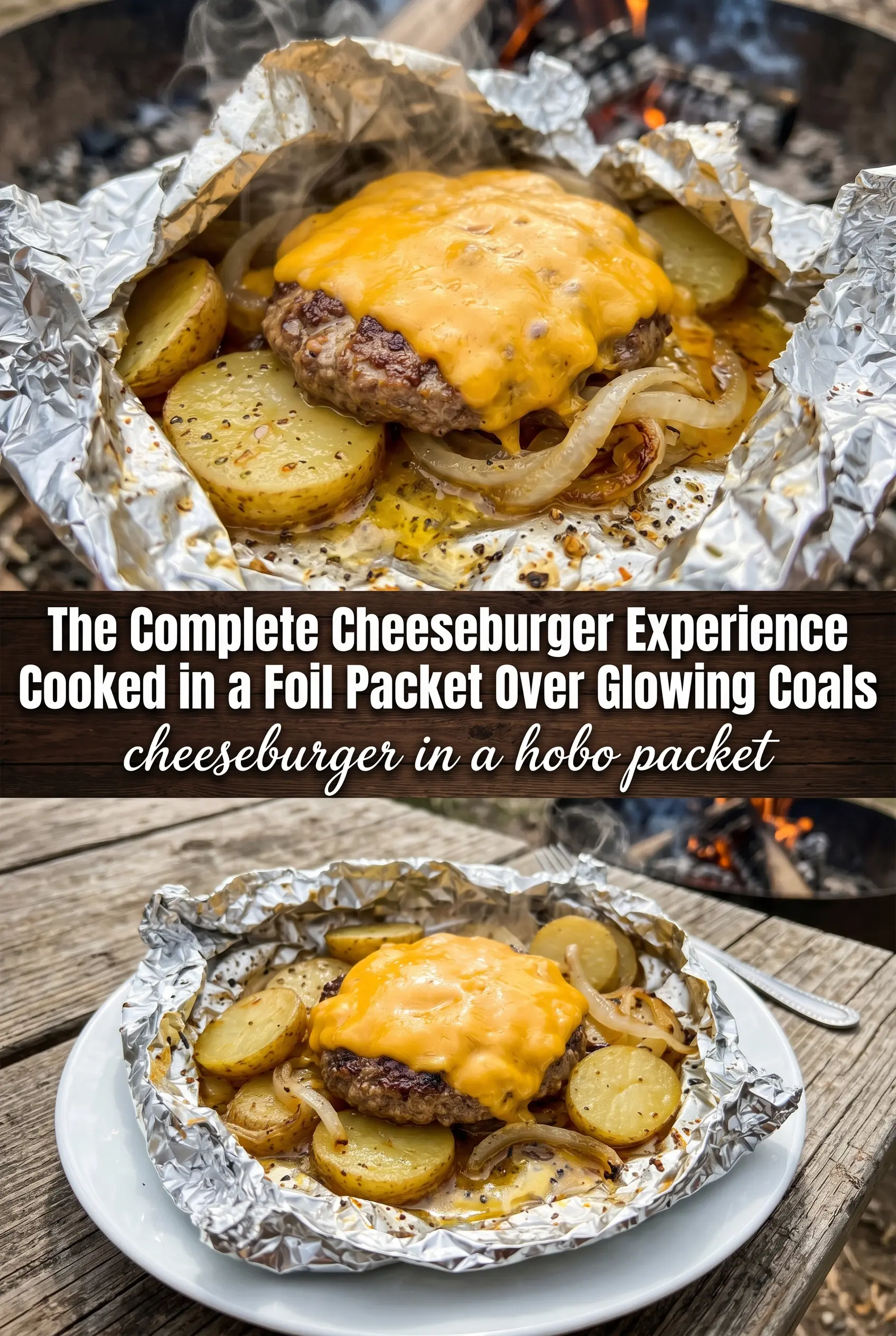
Campfire Cheeseburger Hobo Packets
Ingredients
Equipment
Method
- Form the ground beef into 4 thin patties and season with salt and pepper. Keep the patties thin so they finish cooking inside the foil packets.
- On each sheet of heavy-duty aluminum foil, layer the sliced potatoes and onions. Spread them in an even layer so steam cooks the potatoes through.
- Place a burger patty on top of the potato-onion layer, then add the sliced tomato over the patty. The tomato should sit near the center so it steams the meat.
- Drizzle ketchup and mustard over the packet filling. Use enough to coat the top lightly without soaking through the foil.
- Fold the foil into sealed packets and place them on a campfire grate over medium heat. Seal tightly to keep steam inside; you should see no gaps at the edges.
- Cook packets for 25-30 minutes over medium heat, flipping them halfway through. Look for the potatoes to be tender when you open one briefly.
- Open each packet and add 1 slice of cheddar cheese on top, then reseal briefly to melt. Stop when the cheese is fully melted and slightly stretchy.
- Let the packets cool for 5 minutes before serving. The filling should thicken slightly as it rests, making it easier to eat.
- Serve the cheeseburger packets in the foil, or on hamburger buns if desired. Use the opened foil as a guide for a hot, mess-free portion.