Golden, sticky Campfire Monkey Bread is the kind of dessert that disappears fast, because every pull-apart piece comes out wrapped in cinnamon sugar and a buttery caramel glaze. The edges bake up bronzed and crisp in the Dutch oven while the center stays soft enough to tear apart with your hands. It’s exactly the kind of campfire dessert that feels a little playful and a lot worth the extra minute of cleanup.
The trick is keeping the biscuit pieces evenly coated before they go into the Dutch oven, then letting the butter and brown sugar work their way down through the layers as it bakes. Quartering the biscuits instead of leaving them in big chunks helps them cook through before the outside gets too dark, and the short cooling time at the end keeps the caramel from running everywhere when you flip it out.
Below you’ll find the small details that make this work over coals, plus the swaps that help if you’re baking this at home instead of out at the fire pit.
The biscuit pieces baked through perfectly and the caramel soaked into every layer. I let it cool the full 5 minutes, and it flipped out in one piece with the prettiest golden crust.
Save this Campfire Monkey Bread for the next night you want a gooey Dutch oven dessert with crisp edges and a caramel pull-apart center.
The Dutch Oven Trick That Keeps the Center Soft
Monkey bread can go wrong two ways over coals: the bottom burns before the middle cooks, or the whole thing turns dry because it sits over heat too long. A Dutch oven with coals on the lid and under the pot gives you even heat from both directions, which is what lets the biscuit pieces cook through without scorching the sugar on the bottom. The other key is not crowding the lid with flames; steady coals beat a roaring fire every time.
The other detail that matters is the rest time. Five minutes is enough for the caramel to settle and the bread to hold together, but not so long that it welds itself to the pot. If you’ve ever had monkey bread break apart in the pan, it usually needed a little more time to set before the flip.
What Each Ingredient Is Doing in the Dutch Oven
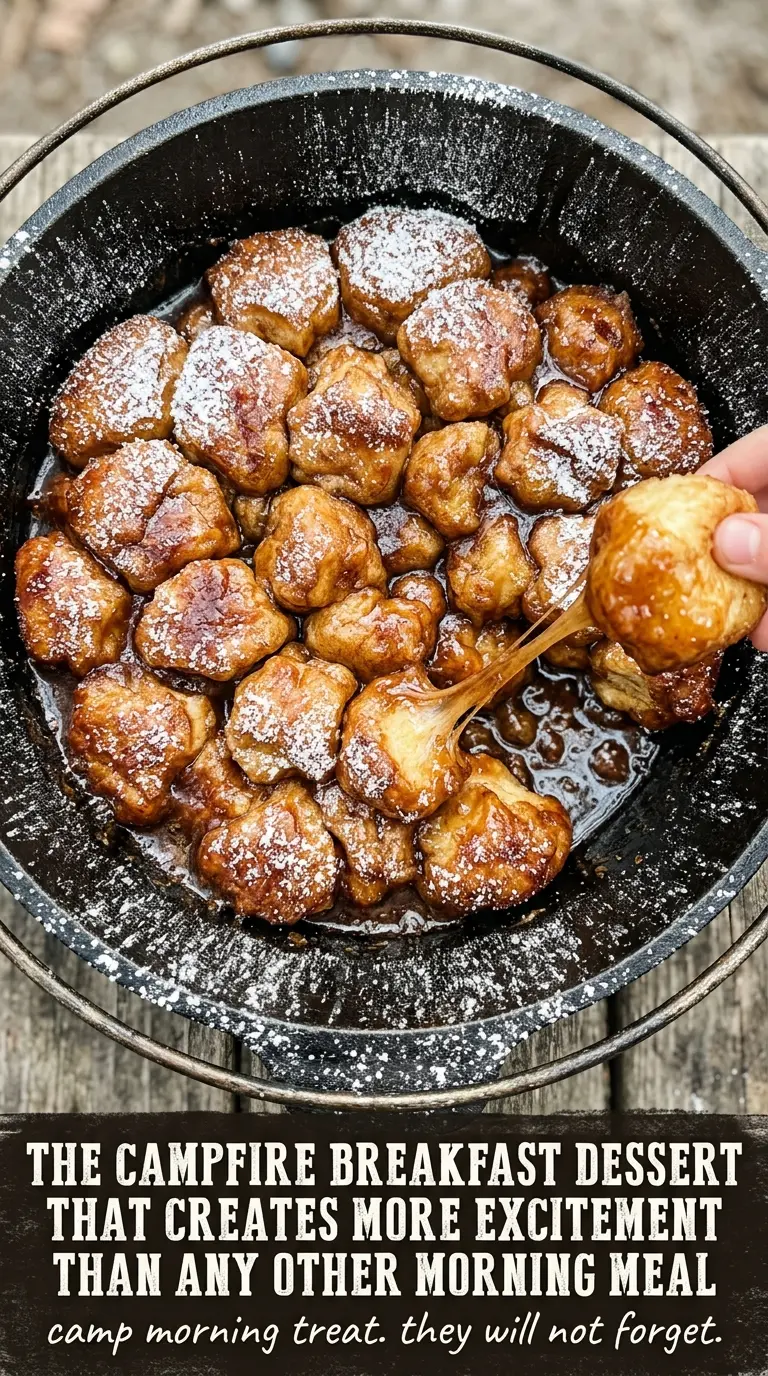
- Refrigerated biscuit dough — This is the shortcut that makes the recipe possible at camp. It puffs into soft, pull-apart layers and bakes through reliably in a Dutch oven, which is harder to guarantee with a from-scratch dough over coals. Cut it into quarters so the heat reaches the center of each piece.
- Sugar and cinnamon — The dry coating gives every bite that classic monkey bread crust. Granulated sugar works best here because it clings to the dough pieces and melts into a crisp shell as it bakes.
- Butter — Melted butter carries the brown sugar into the layers and helps create the glossy caramel coating. Don’t swap in a reduced-fat substitute; you need real butter for the sauce to coat and bake properly.
- Brown sugar — This is what gives the gooey center its deep caramel note. Light brown sugar works fine, but dark brown sugar will push the flavor a little deeper and make the topping richer.
- Cooking spray — It keeps the bread from welding itself to the Dutch oven. Grease the pot well, especially around the bottom and lower sides, because that caramel likes to stick where the heat is strongest.
Building the Coals, Layering the Dough, and Baking It Through
Coating the Biscuit Pieces
Cut each biscuit into quarters first, then shake the pieces in the cinnamon sugar until every surface looks dusty and coated. If the pieces clump together in the bag, break them apart before they go in the pot or the centers will bake up unevenly. A little extra shaking here pays off later in the texture of the finished bread.
Assembling in the Dutch Oven
Spray the Dutch oven generously, then layer the coated biscuit pieces inside without packing them down hard. They need a little room to expand as they bake, and crushed layers can turn dense in the middle. Pour the melted butter and brown sugar over the top, letting it seep down instead of trying to stir everything together.
Cooking Over Coals
Set the Dutch oven over hot coals with a second layer of coals on the lid so the heat comes from both directions. Keep the heat steady and bake for 25 to 30 minutes, checking near the end for a deep golden top and fully cooked centers. If the top browns too quickly before the middle is done, pull a few coals off the lid and let the bottom heat finish the job.
Cooling and Turning Out
Let the monkey bread rest for 5 minutes before inverting it onto a plate. That short pause lets the caramel thicken just enough to cling to the bread instead of running all over the plate. If it sticks, give the pot a gentle shake first; don’t pry at the bottom with a utensil or you’ll tear the crust apart.
How to Adapt This for the Campfire, the Oven, or a Different Diet
Bake It at Home Instead of Over Coals
Use the same ingredients in a greased Dutch oven or deep baking dish and bake at 350°F until the top is deeply golden and the center is cooked through. The flavor stays the same, but you’ll get a more even bake and a little less smoky edge than you would over a campfire.
Make It Dairy-Free
Use a plant-based butter that melts cleanly and bakes well, not a tub spread. You’ll still get the sticky coating, but the caramel will taste a little less rich and the topping may set a touch softer.
Add Pecans for More Crunch
Scatter chopped pecans between a few of the layers or over the top before baking. They toast in the caramel and give the soft bread a nutty contrast, which is great if you want a little more texture in each bite.
Use Cinnamon Sugar Bread Cubes for a Less Biscuit-Forward Finish
If you want a more bread-pudding-like result, swap in stale brioche or challah cubes and keep the same coating and caramel. The texture turns softer and richer, but you’ll need to watch the bake closely because bread cubes can dry out faster than biscuit dough.
Storage and Reheating
- Refrigerator: Store leftovers covered for up to 3 days. The caramel will firm up and the bread will lose some of its softness, but it still reheats well.
- Freezer: It freezes best in individual portions wrapped tightly and stored in an airtight container for up to 1 month. The texture won’t be quite as fluffy after thawing, but it’s usable if you want a make-ahead camp dessert.
- Reheating: Warm it in a 300°F oven until heated through, loosely covered with foil so the top doesn’t darken too much. The microwave works in a pinch, but it softens the edges and can make the caramel greasy instead of glossy.
Answers to the Questions Worth Asking
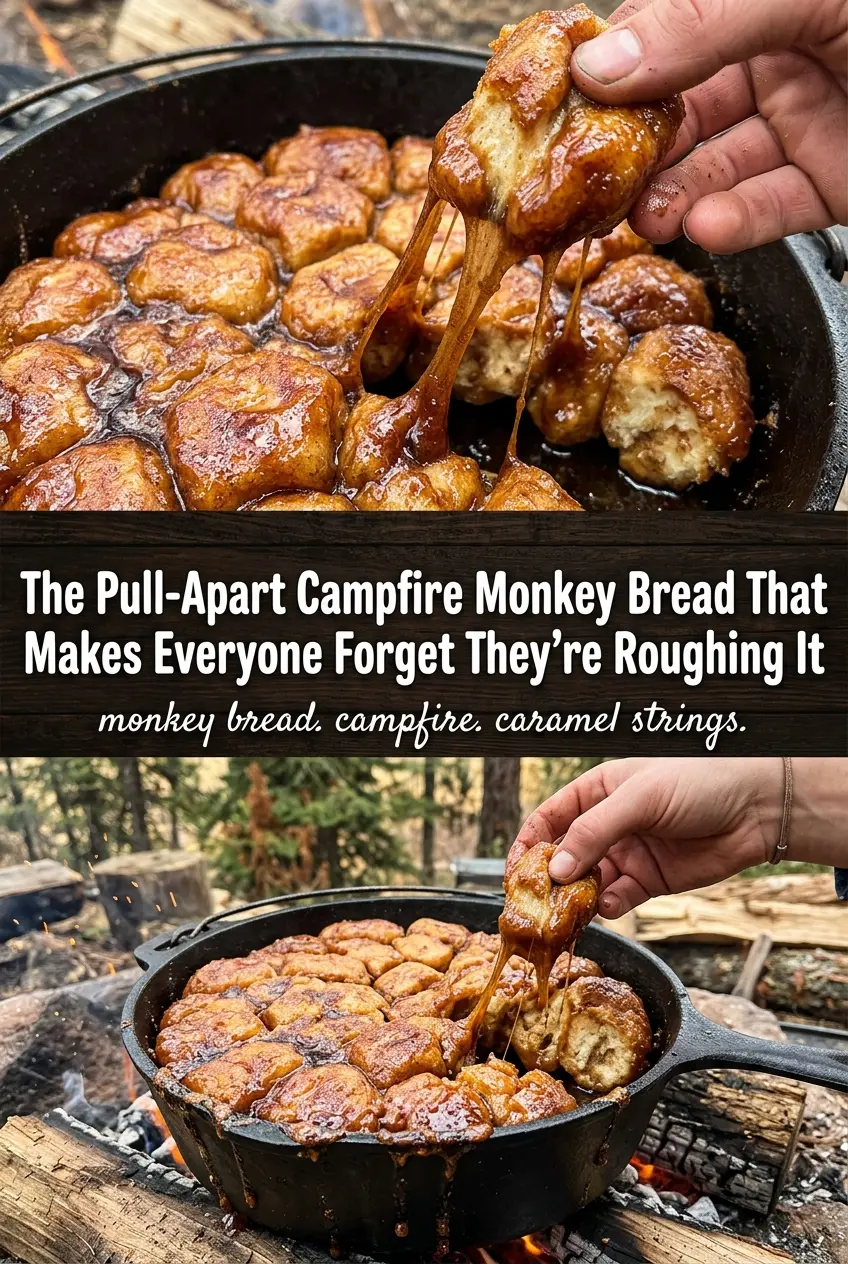
Campfire Monkey Bread
Ingredients
Equipment
Method
- Cut each refrigerated biscuit into quarters so you have bite-size pieces for even coating.
- Mix sugar and cinnamon in a large zip-top bag, then add biscuit pieces and shake until fully coated with cinnamon sugar.
- Spray a Dutch oven with cooking spray to prevent sticking.
- Layer the coated biscuit pieces in the Dutch oven in an even pile.
- Mix melted butter and brown sugar, then pour over the biscuit pieces so they’re glazed throughout.
- Cover the Dutch oven and place it on campfire coals with additional coals on top of the lid for steady heat.
- Cook for 25-30 minutes until the monkey bread is golden brown and cooked through.
- Let the monkey bread cool for 5 minutes to set the caramel glaze.
- Invert onto a plate, then pull apart to serve.