Campfire potatoes turn soft in the center, crisp at the edges, and soak up every bit of butter and seasoning in the foil. The best packets open up to golden slices that hold their shape instead of collapsing into mush, with onions that go sweet and silky underneath. It’s the kind of side dish that disappears fast because it tastes like the fire did half the work for you.
What makes this version work is the layering. Thin potato slices cook evenly, the onion sits between them and perfumes the whole packet, and the butter melts through in small pockets instead of all at once. Heavy-duty foil matters here because you want enough strength to flip the packet without tearing and losing steam, which is what actually cooks the potatoes through.
Below, you’ll find the small choices that keep the potatoes tender without turning them soggy, plus the easiest way to adjust this for a grill, a backyard fire pit, or a camp stove.
The potatoes came out tender with those little browned edges, and the onion melted right into the butter and paprika. I flipped the packet once like you said and nothing stuck or burned.
Save these campfire potatoes for a side dish with crispy edges, buttery layers, and easy foil packet cleanup.
The Trick to Keeping Foil Packet Potatoes Tender, Not Watery
The biggest mistake with campfire potatoes is sealing in too much moisture and then leaving them untouched until the end. Potatoes need steam to cook, but they also need enough heat on the foil to encourage browning, which is why a medium fire and a flip halfway through matter so much. If the packet is buried in coals that are too hot, the outside scorches before the center softens.
Thin slicing is what keeps the timing honest. Thick chunks take longer than the onions and butter can support, so the packet ends up either undercooked or drowned in steam. When the slices are even, the potatoes soften at the same rate and the seasoning spreads through every layer instead of sitting on top.
What Each Ingredient Is Actually Doing in This Packet
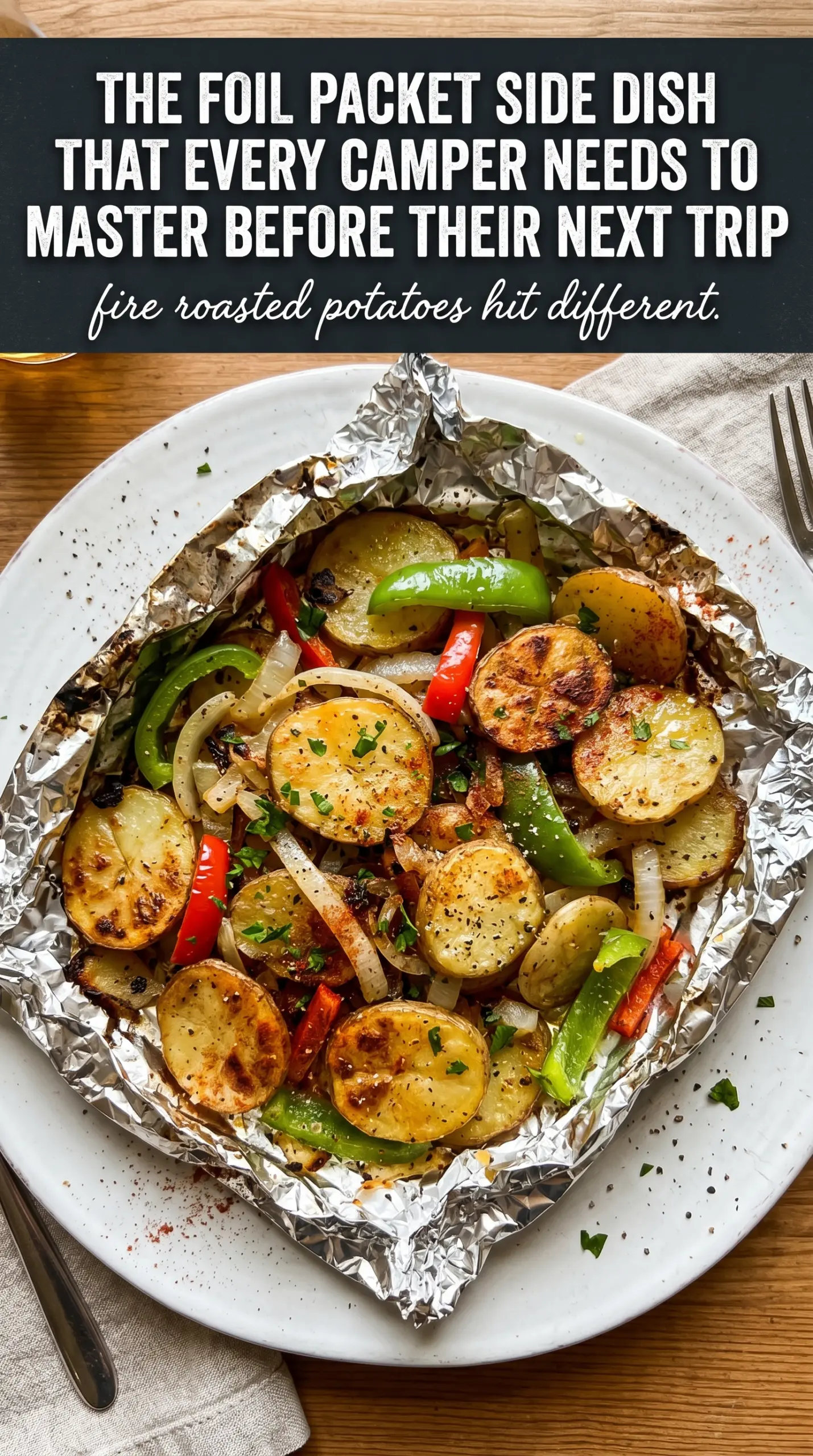
- Potatoes — Starchy potatoes like russets give you soft centers and edges that brown a little once the packet opens. Waxy potatoes hold their shape a bit better, so use them if you want firmer slices, but they won’t get quite as fluffy.
- Onion — The onion adds moisture and sweetness as it cooks under the potatoes. Slice it thin so it softens in the same window as the potatoes instead of staying crunchy.
- Butter — Butter carries the garlic powder and paprika into the layers and helps the potatoes brown once the foil is opened. If you swap in oil, the potatoes will still cook, but you’ll lose that richer, rounded finish.
- Garlic powder and paprika — Garlic powder gives even seasoning without burning, which fresh garlic is more likely to do in a foil packet. Paprika adds color and a little warmth; smoked paprika works if you want a deeper campfire note.
- Heavy-duty foil — This matters more than people think. Thin foil tears when you flip the packet, and once steam escapes, the potatoes take longer and cook less evenly.
Building the Packet So the Potatoes Cook Through
Layering the Slices
Spread the potato slices in an even layer, then tuck the onion in among them instead of dumping it all on top. That keeps the onion from steaming one section while the rest stays firm. If the potatoes are stacked in a thick mound, the center lags behind and the outside starts to overcook before the packet is done.
Sealing Without Crushing
Fold the foil into a tight packet with some room for steam, but don’t press it flat against the potatoes. You want a sealed pouch, not a compressed brick. Leave enough space inside for the steam to circulate; that’s what carries heat to the middle of the packet.
Cooking Over the Fire
Set the packet over medium heat on a grate and flip it once halfway through the cook time. The foil should sizzle gently, not roar. If the fire is too aggressive, move the packet to a cooler edge and give it more time rather than blasting the outside until it browns before the center softens.
Finishing With Cheese
Open the packet carefully because a burst of steam will come out fast. Sprinkle the cheese over the hot potatoes and reseal just long enough for it to melt. If you leave the packet open for this part, the cheese stays clumpy and the potatoes lose the heat they need to finish softening.
How to Adapt These Foil Packet Potatoes for Different Fires and Diets
Dairy-Free Campfire Potatoes
Swap the butter for olive oil or a plant-based butter. Olive oil gives you clean, savory potatoes with a lighter finish, while plant-based butter keeps more of the familiar richness. Skip the cheese or use a dairy-free shred that melts well, then keep the packet sealed for the same final minute.
Smokier Flavor on a Grill
If you’re cooking on a grill instead of a campfire grate, set the packet over indirect heat. Add smoked paprika in place of regular paprika for a deeper, woodsy note that matches the grill better. The potatoes still need the full cook time; rushing them over direct flame will burn the foil before the centers soften.
Extra-Cheesy Version
Use sharp cheddar for a stronger finish, or mix cheddar with Monterey Jack for a smoother melt. Add half the cheese before sealing and the rest at the end if you want the potatoes to taste cheesy all the way through without losing that molten top layer.
Storage and Reheating
- Refrigerator: Store leftovers in an airtight container for up to 4 days. The potatoes soften a little more as they sit, but the flavor holds up well.
- Freezer: These freeze, but the texture gets softer after thawing. Freeze only if you don’t mind a less firm bite, and reheat from thawed for the best result.
- Reheating: Reheat in a skillet over medium heat or in a 375°F oven until hot. The usual mistake is microwaving them until they steam out and turn mealy; dry heat brings back some of the edges.
Answers to the Questions Worth Asking

Campfire Potatoes
Ingredients
Equipment
Method
- Layer the potato and onion slices on a large double-layer of aluminum foil so the pieces are in an even layer.
- Dot the potatoes with butter cubes and season with garlic powder, paprika, salt, and pepper, distributing seasoning across the top.
- Fold the foil into a sealed packet, pressing edges firmly to prevent steam leaks.
- Place the sealed packet on a campfire grate over medium heat for 25-30 minutes, keeping the packet stable.
- Flip the foil packet halfway through cooking so the potatoes brown evenly on both sides.
- Open the packet and sprinkle shredded cheddar cheese on top if desired.
- Reseal the packet and return it to the grate for 2 minutes to melt the cheese.
- Serve the potatoes hot directly from the packet.