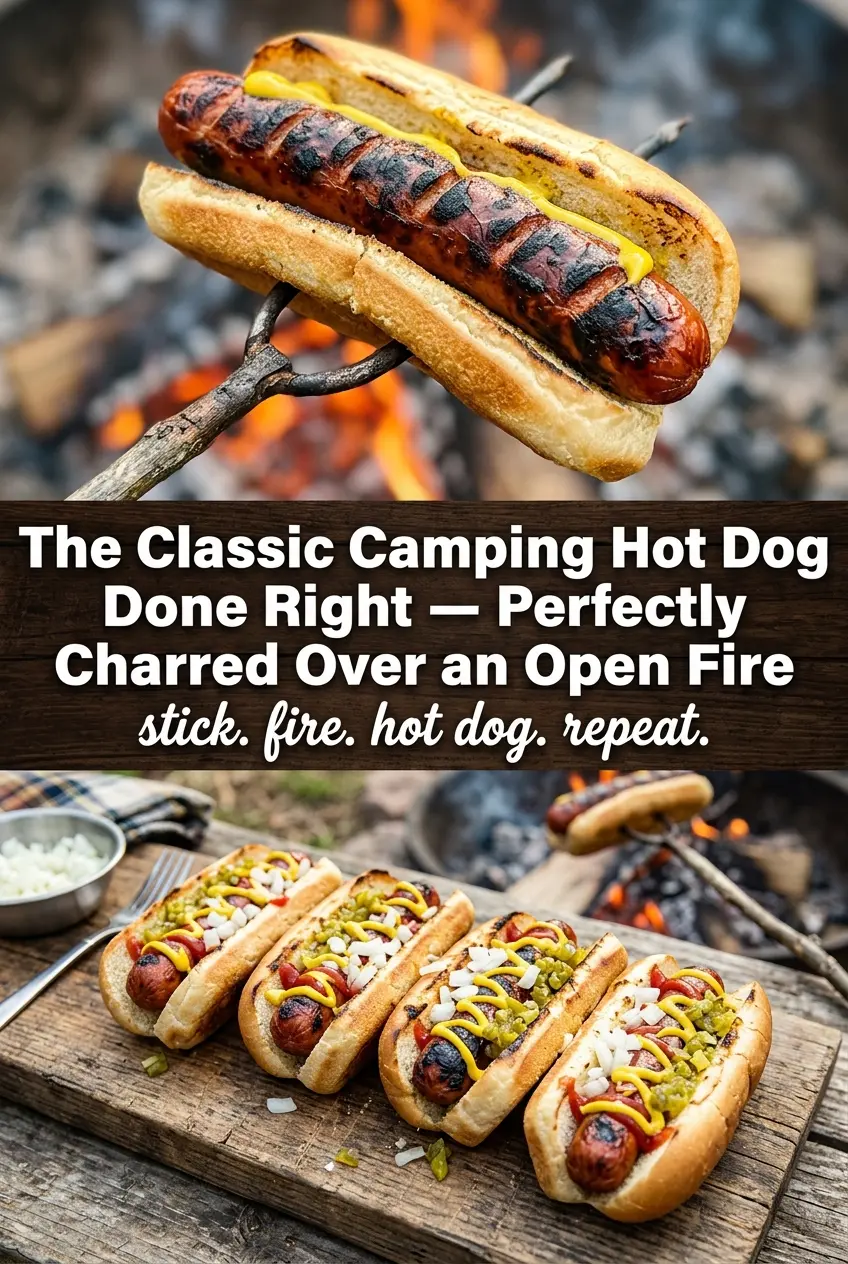
Camping hot dogs hit that sweet spot between no-fuss and genuinely satisfying: a little smoky from the fire, crisp at the edges, and tucked into a warm bun with whatever toppings you’ve packed along. When they’re cooked over real flames, they get the kind of char you can’t fake on a stovetop, and that tiny bit of blistering makes every bite taste like the trip was worth it.
The trick is keeping them moving. Hot dogs cook fast, and the difference between nicely roasted and split open is usually a few seconds too long in one hot spot. Rotate them often over the flames or coals, and use the heat to warm them through before you chase the deeper char. A quick toast on the buns keeps them from going soggy the second the condiments hit.
Below, you’ll find the easiest way to set up the fire, what toppings actually work well outdoors, and a few simple swaps if you’re feeding a mixed crowd around the campsite.
The hot dogs got this perfect smoky char without bursting open, and toasting the buns over the fire made them taste like a real camp meal instead of just dinner outside.
Save these campfire hot dogs for the night when you want smoky, charred flavor with almost no cleanup.
The Part Most People Get Wrong When Cooking Hot Dogs Over a Fire
Open-flame hot dogs fail for one simple reason: the heat is too aggressive. If you park them over the hottest flames and walk away, the outside splits before the inside warms through, and you lose both juice and texture. Coals give you more control, but even over flames, the fix is the same — keep the dogs moving so the heat hits them in short bursts instead of one hard blast.
The other mistake is treating the bun like an afterthought. A cold, dry bun makes the whole thing feel flat, even when the hot dog itself is spot-on. A brief toast adds structure and keeps the bread from collapsing under mustard, relish, or chili.
- Rotation matters — Turn the hot dogs every few seconds so the surface browns evenly instead of blistering in one spot.
- Coals are calmer than flames — If the fire is raging, wait for it to settle. You want steady heat, not flare-ups.
- Toast the buns fast — Just a quick pass over the heat gives them warmth without turning them brittle.
What Each Topping Is Actually Doing for These Campfire Hot Dogs
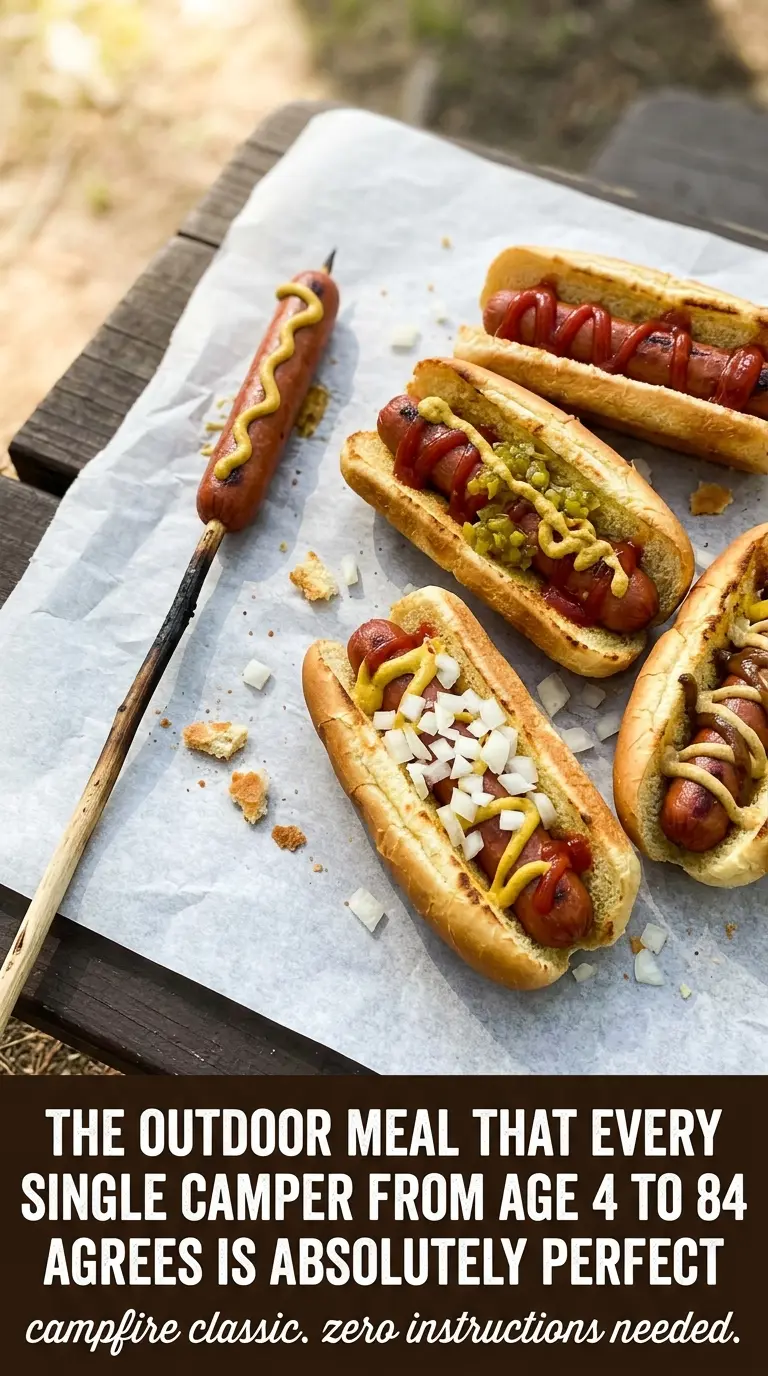
- Hot dogs — Regular beef, pork, or all-beef hot dogs all work. The key is starting with a dog that can handle direct heat without falling apart.
- Buns — Standard buns are fine, but sturdier bakery-style buns hold up better if you’re piling on chili or sauerkraut.
- Ketchup, mustard, and relish — These are the classic campfire trio and cover sweet, sharp, and briny in one bite. Use what you already like; there’s no technical trick here.
- Shredded cheese — Best added while the hot dog is still hot enough to soften it. Pre-shredded cheese is fine for camping because convenience beats perfection outdoors.
- Chili — This turns the hot dogs into a more substantial meal, but it needs a thicker chili so the bun doesn’t get soggy right away.
- Sauerkraut — Brings acidity and crunch, which helps cut through the smoke and richness.
Getting the Char Right Without Burning the Sausages
Skewer Securely and Leave Room to Turn
Push each hot dog lengthwise onto a roasting stick or long fork so it sits steady and doesn’t spin off the heat. Leave a little space at the end of the stick so your hand stays far enough from the fire to control the rotation. If the dog tears when you skewer it, the stick is too blunt or you’re forcing it too hard.
Roast in Short Bursts
Hold the hot dogs over flames or hot coals and rotate them often for 8 to 10 minutes. You’re watching for deepened color, light blistering, and a surface that looks taut, not wrinkled and split. If they start to buckle or burst, the heat is too intense, so move them higher or back them away from the hottest part of the fire.
Toast the Buns at the End
Place the buns near the fire for just a moment until they warm and pick up a little color. They should feel soft but not dry or stiff. If you toast them too long, they turn brittle and crack the second you add toppings.
Build and Serve Right Away
Slip each hot dog into a bun and add condiments and toppings while everything is still hot. That timing matters because the heat helps the cheese melt, the chili settle, and the bun stay pliable. Once they cool, the texture drops off fast, so this is one of those recipes that rewards serving immediately.
How to Adapt These Campfire Hot Dogs for Different Campsites and Eaters
Dairy-Free and Gluten-Free Build
Skip the cheese and use gluten-free buns if needed. The hot dogs themselves are already doing most of the work, so this version still tastes complete as long as you keep the condiments bold and the dogs nicely charred.
Chili Cheese Campfire Dogs
Warm the chili before you leave camp, then spoon it over the hot dogs right before serving. Thick chili works best because thin chili will run straight through the bun and make a mess fast.
Ketchup-Free, More Savory Topping Mix
Use mustard, relish, onions, sauerkraut, and jalapeños for a sharper, less sweet hot dog. This version stands up especially well to smoky fire flavor and feels a little less heavy after a big day outdoors.
Storage and Reheating
- Refrigerator: Store cooked hot dogs and buns separately for up to 3 days. The buns soften faster, so keep toppings off until serving.
- Freezer: Cooked hot dogs can be frozen for about 1 month, but the texture is best fresh. Buns don’t freeze as nicely once assembled, so freeze only the dogs if you need to.
- Reheating: Warm the hot dogs in a skillet over low heat or briefly over a fire until heated through. Don’t blast them over high heat again or the skins can split and dry out.
Answers to the Questions Worth Asking
Camping Hot Dogs
Ingredients
Equipment
Method
- Skewer each hot dog lengthwise on a roasting stick or long fork.
- Hold the hot dogs over campfire flames or coals, rotating frequently, for 8-10 minutes until heated through and slightly charred.
- Toast buns briefly over the fire if desired, until warmed and lightly toasty.
- Place hot dogs in buns.
- Add desired condiments and toppings, including ketchup, mustard, and relish.
- Top each with any optional toppings you like—shredded cheese, diced onions, chili, sauerkraut, or jalapeños.
- Serve immediately while hot.