Steaming ramen over a campfire turns a budget noodle packet into the kind of meal people hover around the pot for. The noodles stay springy, the broth picks up a little smokiness, and the eggs set into soft ribbons or poached whites right in the broth. It’s fast, filling, and has enough heat and salt to feel like a real dinner after a long day outside.
The trick is resisting the urge to dump in the seasoning right away. The noodles need a few minutes in plain boiling water first so they can soften without turning gummy, and the frozen vegetables go in early enough to warm through without losing all their texture. Cracking the eggs straight into the pot at the end gives you those tender, creamy yolks that make the whole bowl feel more substantial.
Below, I’ve included the timing that keeps the noodles from falling apart, a few easy swaps if you’re packing for a different kind of trip, and the one detail that makes this taste better than basic packet ramen.
The eggs turned out perfectly soft and the noodles didn’t get mushy even after I added the vegetables. I used a little extra soy sauce at the end and it tasted like way more effort than it took.
Save this campfire ramen for the nights when you want a hot, filling dinner from one pot and a handful of pantry staples.
The Mistake That Turns Camp Ramen Mushy
Most ramen goes wrong at the same point: people boil the noodles too long while the pot is still trying to heat up. Campfire heat is uneven, and once those noodles go from tender to soft, there’s no fixing the texture. This version keeps the broth at a real boil first, then adds the noodles and vegetables together so everything moves through the same short cooking window.
Eggs are the other place people hesitate. If you crack them in too early, the whites disappear into the broth and the yolks overcook before the noodles are done. Add them after the noodles have softened for a few minutes, then leave the pot alone long enough for the whites to set around the heat. That’s what gives you the soft, poached finish instead of scrambled bits.
- Boiling water first keeps the noodles from soaking too long while the fire catches up.
- Frozen vegetables work better than fresh on a camp trip because they’re already portioned, cold-stable, and ready to go straight into the pot.
- Reserved seasoning packets let you control the salt and keep the broth from tasting flat if the water evaporates a little.
- Egg timing matters more than anything else here. Add them near the end so they stay tender and don’t vanish into the broth.
What Each Ingredient Is Doing in the Pot
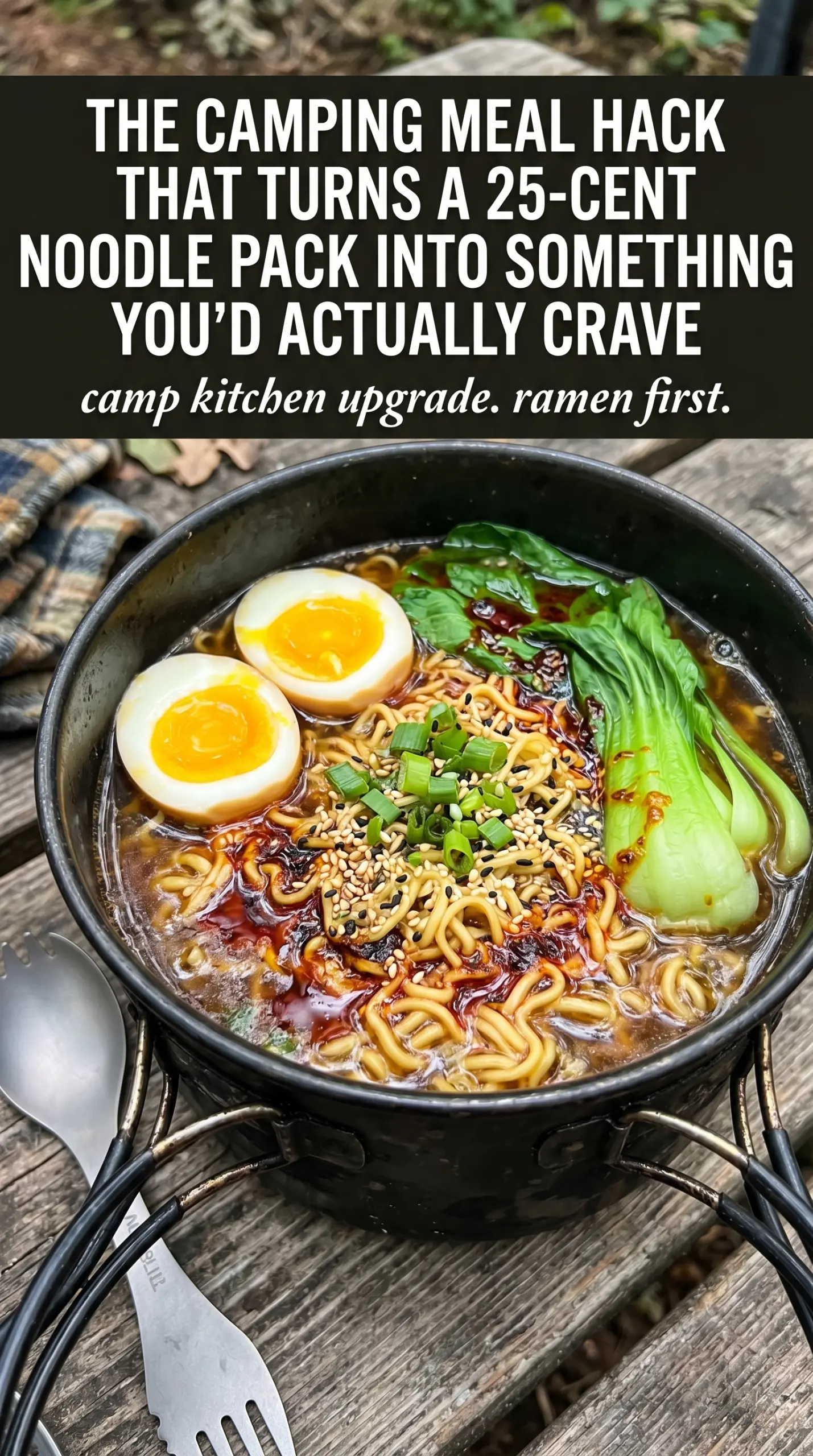
- Instant ramen noodles are the backbone here. The cheap packs work fine because you’re not leaning on the seasoning alone; you’re using the noodles as a fast, sturdy base that cooks in minutes.
- Frozen mixed vegetables add color and a little sweetness without any chopping. Fresh vegetables can work, but they need to be cut small so they soften before the noodles overcook.
- Eggs turn this from a snack into dinner. Crack them right into the broth if you want poached whites and soft yolks, or beat them first if you prefer egg ribbons.
- Green onions finish the bowl with a sharp, fresh bite. If you don’t have them, a little sliced chive or even a spoonful of dried onion works in a pinch.
- Soy sauce and hot sauce are the easiest way to adjust the bowl at the end. Use the ramen packet first, then season after tasting so you don’t oversalt the broth.
Building the Bowl Over the Fire Without Overcooking It
Getting the Water to a Real Boil
Start with enough water to cover the noodles by a few inches, then bring it to a full boil over the campfire. If the fire is weak, give it more time before adding anything else; lukewarm water is how you end up with bloated noodles and a thin broth. A pot with a lid helps a lot here because it traps heat and gets you to the boil faster.
Cooking the Noodles and Vegetables Together
Add the ramen noodles and frozen vegetables once the water is rolling. Stir once or twice so the noodles separate, then cook just until the noodles start to loosen and the vegetables are hot through. If the pot looks crowded, that’s fine; the noodles will settle fast, but if you let them sit clumped on the bottom, they’ll stick and break.
Poaching the Eggs at the End
Crack the eggs directly into the simmering broth and keep the heat steady. Don’t stir if you want distinct poached eggs; just let the whites turn opaque while the yolks stay soft. If you prefer a more rustic bowl, you can swirl the broth once after adding the eggs and get loose ribbons instead, but moving the pot too much will break the yolks before they set.
Seasoning and Serving Fast
Add the seasoning packets after the eggs have cooked through, then taste before adding soy sauce. Campfire evaporation can concentrate the broth faster than you expect, so season a little at a time. Spoon the ramen into bowls right away and top with green onions and hot sauce while everything is still steaming.
How to Change This for Different Camps and Eaters
Make it vegetarian
Skip the eggs and use a vegetable-based ramen packet if you have one, or season with soy sauce plus a little garlic powder and onion powder. You’ll lose some richness, so add more green onions or a drizzle of sesame oil if it’s in your camp kit.
Use leftover cooked chicken or sausage
Stir in pre-cooked meat at the end just long enough to warm it through. This adds a bigger, heartier finish without changing the broth, but if you add raw meat here, the noodles will overcook before the protein is safe.
Go gluten-free
Use gluten-free instant noodles and a tamari-style sauce instead of regular soy sauce. The cooking method stays the same, but watch the texture closely because some gluten-free noodles soften faster than wheat noodles.
Make it spicier without ruining the broth
Add hot sauce at the end, not during the boil. Heat can get harsh when it cooks too long, but finishing the bowl with hot sauce keeps the spice bright and lets each person control their own bowl.
Storage and Reheating
- Refrigerator: Store leftovers up to 2 days. The noodles will keep soaking up broth, so expect them to soften.
- Freezer: I don’t recommend freezing this. The noodles go mushy and the eggs turn grainy once thawed.
- Reheating: Warm it gently in a pot over low heat with a splash of water. High heat will push the noodles past tender and make the eggs rubbery.
Answers to the Questions Worth Asking
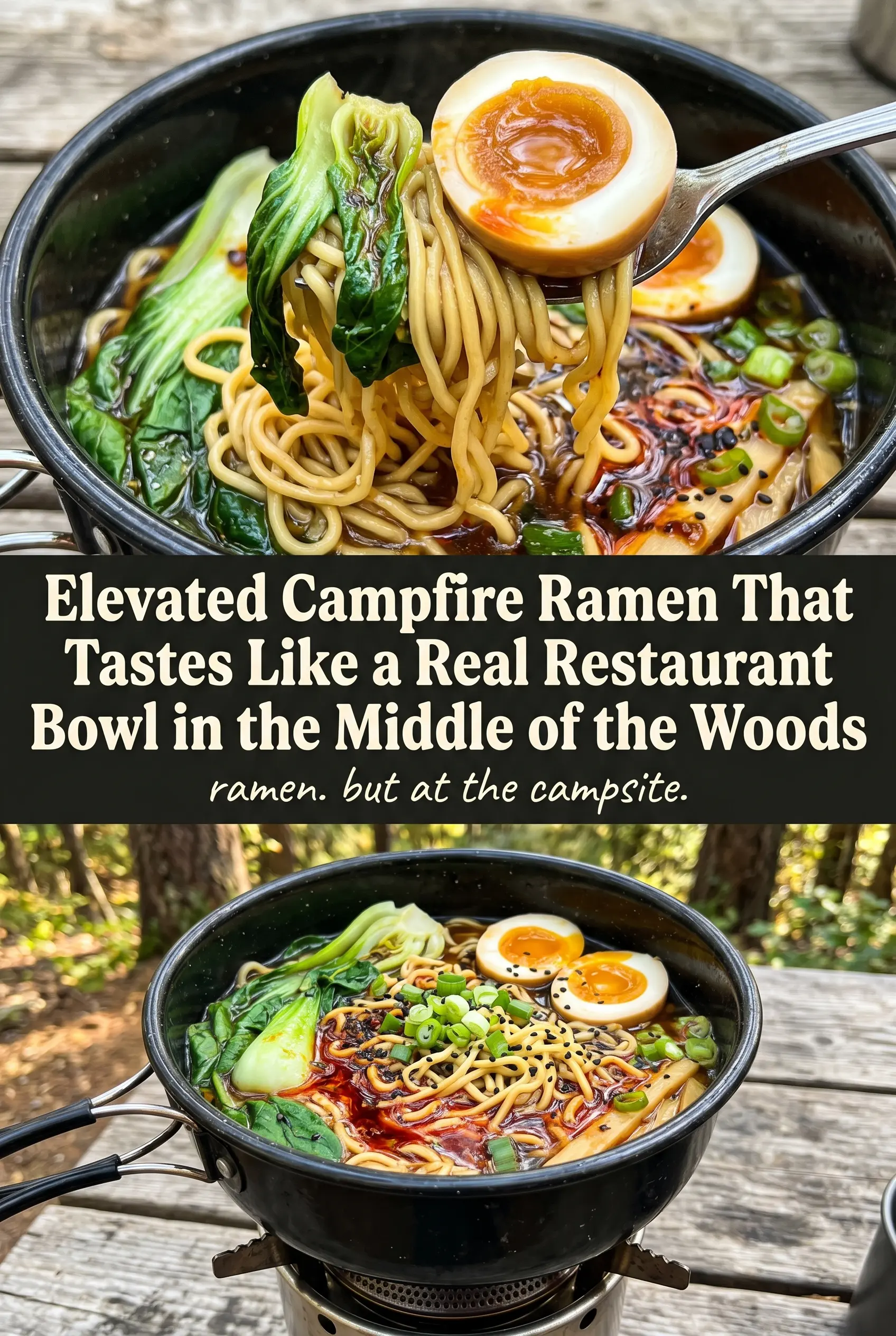
Ramen While Camping
Ingredients
Equipment
Method
- Bring 6 cups water to a boil in a pot over the campfire, then keep it actively bubbling for steady cooking.
- Add 4 packages instant ramen noodles (reserve seasoning packets) and 1 cup frozen mixed vegetables, stirring to submerge everything.
- Cook for 3 minutes at a boil until the noodles begin to soften, with visible bubbles around the vegetables.
- Crack 4 eggs directly into the pot, spacing them so the whites set in the surrounding broth.
- Continue cooking for 3-4 minutes until the eggs are poached and the noodles are tender, with the yolks still glossy.
- Turn off or lower the heat, add the reserved seasoning packets, and stir to combine until the broth looks evenly seasoned.
- Divide the ramen into bowls so each portion includes noodles, vegetables, and an egg.
- Top with sliced 2 green onions, then add soy sauce to taste and hot sauce if using for a bright finishing kick.